
Industrial automation trends reshaping factory layouts in 2026

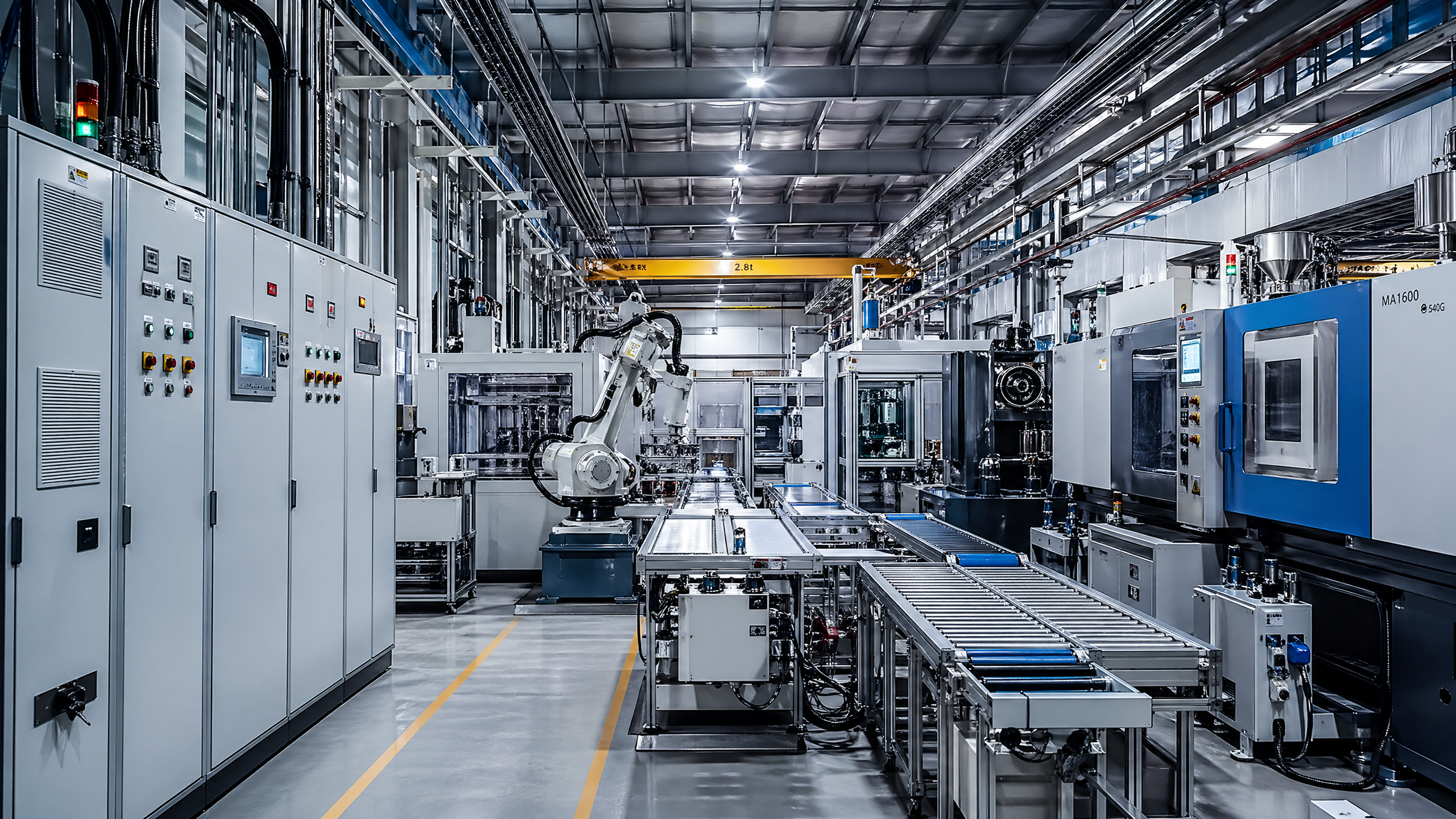
In 2026, industrial automation is doing more than upgrading machines—it is fundamentally reshaping factory layouts around speed, flexibility, and data-driven control. From fasteners and mechanical tools to injection molding, die casting, mold design, and electrical components, this technical analysis explores how precision engineering is redefining production flow, equipment placement, and decision-making for manufacturers, buyers, and industrial stakeholders worldwide.
Why are industrial automation trends changing factory layouts so quickly in 2026?
Factory layouts used to be planned around fixed production lines, long product runs, and labor travel paths. In 2026, the pace of change is faster because automation investments are now linked to three simultaneous pressures: shorter order cycles, greater product variation, and tighter traceability requirements. For many plants, layout design is no longer a once-every-10-years capital exercise. It is becoming a 12- to 36-month operational adjustment tied to equipment utilization, energy efficiency, and digital control.
The most important shift is that equipment is being positioned for data flow as much as material flow. Robotic cells, smart electrical cabinets, pneumatic islands, machine vision stations, and automated storage systems require cleaner communication paths, lower latency, and easier maintenance access. This changes aisle widths, cable routing, safety zoning, and the distance between machining, molding, fastening, testing, and packing stations.
Another reason for the redesign wave is flexibility. A plant making hand tools, stamped parts, molded housings, or electrical assemblies may now serve OEM, distributor, and aftermarket channels at the same time. Batch sizes can swing from 50 units to 5,000 units within a week. Layouts built only for maximum linear throughput struggle under that variability. Modular automation, mobile handling units, and quick-change tooling are pushing layouts toward reconfigurable production blocks rather than single-direction lines.
What does this mean for industrial components and tooling suppliers?
It means underlying components matter more than ever. Fasteners must withstand repeated maintenance access and vibration. Electrical connectors must support cleaner panel architecture. Pneumatic components must fit compact valve manifolds and support predictable cycle times. Mold tooling must be designed for shorter changeover windows, often under 30 to 90 minutes for mid-volume production environments.
For buyers and technical evaluators, layout-driven automation decisions are no longer isolated equipment purchases. They affect cable management, spare parts planning, fixture design, compliance review, operator training, and quality checkpoints. That is why industrial automation trends are now directly influencing sourcing strategy across mechanical tools, electrical systems, and precision mold ecosystems.
Quick signals that a facility may need layout redesign
- Changeover time exceeds 60 minutes in product families that require daily switching.
- Material handling distance regularly exceeds 100 to 200 meters between sequential operations.
- Electrical cabinets, compressors, or pneumatic lines are installed as afterthoughts rather than within planned service zones.
- Quality inspection is concentrated only at end-of-line instead of being embedded at 2 to 4 critical control points.
Which factory areas are being reshaped first by automation-led layout planning?
The first areas to change are usually high-friction process zones where labor movement, tool change, or part transfer creates delays. In metalworking plants, this often means the relationship between cutting, fastening, deburring, inspection, and packaging. In molding and die-casting environments, the priority is usually machine grouping, mold storage, cooling support, trimming, and in-process measurement.
Electrical assembly and control infrastructure are also moving closer to production logic. Rather than placing panels and distribution assets wherever space remains, many factories are creating dedicated utility corridors and service islands. This reduces downtime during maintenance and improves separation between power distribution, low-voltage control, air supply, and operator walkways. In practical terms, even a 5% to 12% reduction in unplanned stoppage can justify careful utility repositioning.
For mold manufacturing and precision tooling workshops, automation is changing not just machine placement but support process geometry. Tool presetting, electrode handling, CMM access, polishing benches, and small-parts storage now need to sit within a more deliberate sequence. The old model of placing expert stations wherever skilled technicians preferred is gradually being replaced by measurable flow design.
What layout patterns are becoming more common?
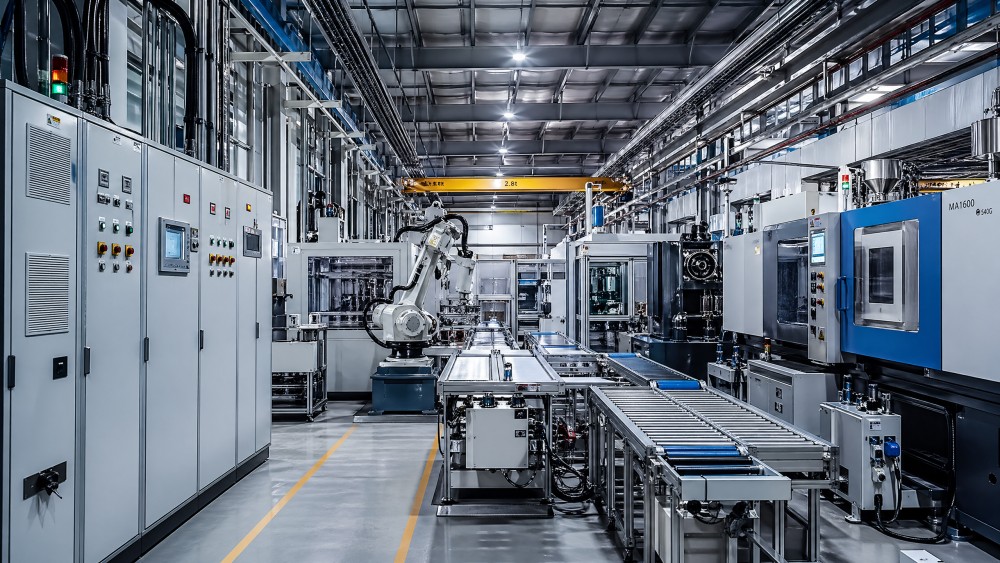
Instead of one long line, many factories are adopting cell-based, U-shaped, or hybrid modular layouts. A fastening cell may sit next to a vision inspection node and an automatic torque verification station. An injection molding area may be paired with nearby mold change support, robotic take-out, and packaging rather than sending parts across the building. The objective is to compress motion, reduce queue time, and improve process visibility.
The table below summarizes how industrial automation trends are changing specific layout zones across common manufacturing environments.
The pattern across these areas is consistent: automation is pushing facilities to shorten transfer distance, integrate quality checks earlier, and leave more deliberate maintenance clearance around equipment. For operators, this improves ergonomics and response time. For purchasing teams, it changes the specification requirements of tools, connectors, cable paths, fittings, sensors, and mold accessories.
How should buyers, engineers, and plant managers evaluate a new automation-driven layout?
A common mistake is to judge a layout only by floor capacity or machine count. In practice, a stronger evaluation uses at least 6 dimensions: throughput, changeover speed, maintainability, safety separation, utility accessibility, and data visibility. A line that appears dense and efficient may become expensive if maintenance teams need 45 minutes just to access a failed valve bank or electrical terminal section.
Technical assessment teams should also compare the layout against product mix volatility. If SKU variation changes every 1 to 2 weeks, fixed automation islands may underperform unless fixtures, feeders, and tool heads are designed for rapid conversion. Layout planning should therefore be linked to tooling interchangeability, spare component standardization, and software parameter management, not only mechanical placement.
For procurement and commercial reviewers, the right question is not simply “What is the machine cost?” but “What is the installed process cost over 24 to 60 months?” Utility routing, panel relocation, guarding, floor reinforcement, compressed air optimization, and training often change total implementation economics by 10% to 25% depending on plant maturity.
Which decision criteria matter most during layout evaluation?
The following comparison helps decision-makers review industrial automation trends in a way that supports practical factory planning rather than isolated equipment buying.
This kind of evaluation framework is especially useful for OEMs, distributors, project managers, and quality leaders who need to compare multiple supplier proposals. It also helps avoid under-specifying small but critical items such as industrial fasteners, cable glands, pneumatic fittings, mold bases, tool holders, and electrical protection components.
A practical review checklist before approval
- Map the top 5 bottlenecks by lost minutes per shift, not by opinion.
- Test whether maintenance and safety access remain workable after guards and utilities are installed.
- Confirm which components can be standardized across 2 to 4 production cells.
- Review whether mold, fixture, or tooling changes can be completed without crossing active traffic lanes.
- Check that quality capture points are embedded before final packing, not only after it.
What are the biggest mistakes companies make when adapting factory layouts to automation?
One frequent mistake is buying advanced automation while keeping a legacy layout. The result is a robot or smart machine placed inside a weak process architecture. Material still travels too far, technicians still struggle to reach tooling, and utilities remain poorly routed. In these cases, expensive equipment may improve one station while the overall line gains only marginally.
A second mistake is underestimating the role of small industrial components. Layout changes often fail because low-cost items were not specified for the new operating reality. Examples include fasteners that loosen under vibration, connectors not suited to repeated service cycles, pneumatic tubing routed through high-risk paths, or mold handling interfaces that slow changeover. These are not minor details; they define uptime consistency.
A third mistake is treating safety and quality as add-ons. In 2026, automation-led layouts need integrated guarding logic, lockout access, sensor validation points, and operator interface visibility from the start. If these are added late, the plant often loses floor efficiency and creates awkward workarounds that increase both risk and downtime.
Which misconceptions should teams avoid?
- “More automation always means less floor space.” In reality, service zones, guarding, buffer staging, and inspection access can require more disciplined space allocation.
- “One universal layout fits every product family.” High-mix factories usually need modular zones with shared utilities and configurable tool sets.
- “Software can compensate for poor physical flow.” Data systems help, but they do not eliminate long travel paths or awkward manual handling.
- “Only major equipment suppliers matter.” In many projects, the reliability of supporting hardware and precision tooling determines whether the system performs as planned for 18 to 36 months.
For quality managers and safety personnel, these misconceptions are especially important. A layout that reduces touchpoints from 8 to 5 but creates blind maintenance zones may not be a net improvement. The same is true if cycle time falls by 10% while rework rises because in-process verification was removed or moved too far downstream.
How do cost, lead time, and implementation risk affect layout decisions in 2026?
Implementation timing matters because automation-led layout changes usually involve more than machine delivery. A realistic project may include site preparation, utility modification, guarding design, component validation, software integration, trial runs, and operator training. Depending on plant size and process complexity, a moderate upgrade can take 8 to 20 weeks from final approval to stabilized operation, while more complex line transformations may extend beyond that window.
Lead time pressure also affects sourcing strategy. Standard mechanical tools, electrical hardware, and common pneumatic components may be available quickly, but custom mold bases, specialized fixtures, precision inserts, or non-standard fastening systems often require longer coordination. Buyers should therefore separate critical-path items from replaceable catalog items early in the project, ideally during the first specification review.
Risk increases when layout plans assume perfect compatibility across equipment, controls, and support components. In practice, companies should plan for trial adjustments in routing, sensor placement, fixture orientation, and operator reach. Building a staged validation process reduces disruption, especially where production cannot stop for more than 24 to 72 hours during installation windows.
What should be confirmed before implementation starts?
Before launching a factory layout change linked to industrial automation trends, teams should align engineering, procurement, operations, and quality around a common question set.
These checks are valuable across industries because the physical building blocks of automation remain similar even when end products differ. Precision tools, reliable electrical components, well-matched mold systems, and suitable fastening solutions all influence how smoothly a layout transition performs under real factory conditions.
How can companies prepare now if they are still evaluating automation and layout changes?
The best starting point is not a full rebuild plan but a structured audit of current flow, service pain points, and component constraints. Many factories can identify the first meaningful improvements by measuring travel distance, downtime root causes, changeover frequency, and inspection delays over a 2- to 4-week period. This creates a practical baseline before larger investment decisions are made.
Companies should then rank opportunities by implementation difficulty and business impact. Some gains come from layout-level actions such as relocating point-of-use storage, re-routing utilities, or placing inspection closer to the process. Others depend on better industrial components, including higher-durability fasteners, more suitable control hardware, quicker tool-change interfaces, or mold support systems designed for repeatability.
For distributors, agents, and sourcing partners, this is also the right time to improve technical communication. Customers increasingly need support not only with product availability but with application fit, compatibility, maintenance logic, and lead-time risk. Industrial automation trends are making specification depth more important than generic catalog selling.
Why choose us for automation-related component and tooling insight?
GHTN focuses on the hidden but decisive layer of modern manufacturing: underlying industrial components and precision manufacturing tools. Our coverage spans mechanical tools, electrical hubs, mold manufacturing, pneumatic logic, and the physical behavior of fasteners in demanding environments. That perspective helps readers connect factory layout strategy with the real parts and interfaces that make automation work day after day.
Because factory layouts in 2026 are being shaped by both production flow and technical detail, decision-makers need more than broad trend commentary. They need grounded guidance on material selection, tooling compatibility, electrical compliance considerations, serviceability, and market-facing sourcing choices. GHTN is built to support that level of industrial analysis across OEM, distribution, and project evaluation contexts.
Contact us to discuss the next step
If you need to confirm a specific automation-related layout direction, we can help you review key decision points before procurement or implementation. You can contact us to discuss parameter confirmation, component and tooling selection, lead-time planning, custom solution feasibility, certification-related considerations, sample support, or quotation communication for hardware, electrical, pneumatic, and mold-related applications.
Whether you are assessing a new production cell, comparing supplier proposals, planning a mold-area upgrade, or standardizing fasteners and control components across multiple lines, an early technical conversation can reduce rework and improve sourcing clarity. If your team is navigating industrial automation trends and factory layout changes in 2026, GHTN is ready to support the evaluation process with focused industrial insight.
Related News
- industrial components
- precision manufacturing tools
- mechanical tools
- electrical components
- mold manufacturing
- fasteners
- pneumatic components
- injection molding
- die casting
- precision tools
- electrical systems
- mold design
- industrial automation
- material selection
- precision engineering
- technical analysis
- electrical hubs
- die-casting
- precision mold
- electrical compliance
- industrial fasteners
- manufacturing tools