
Industrial automation upgrades that reduce manual bottlenecks

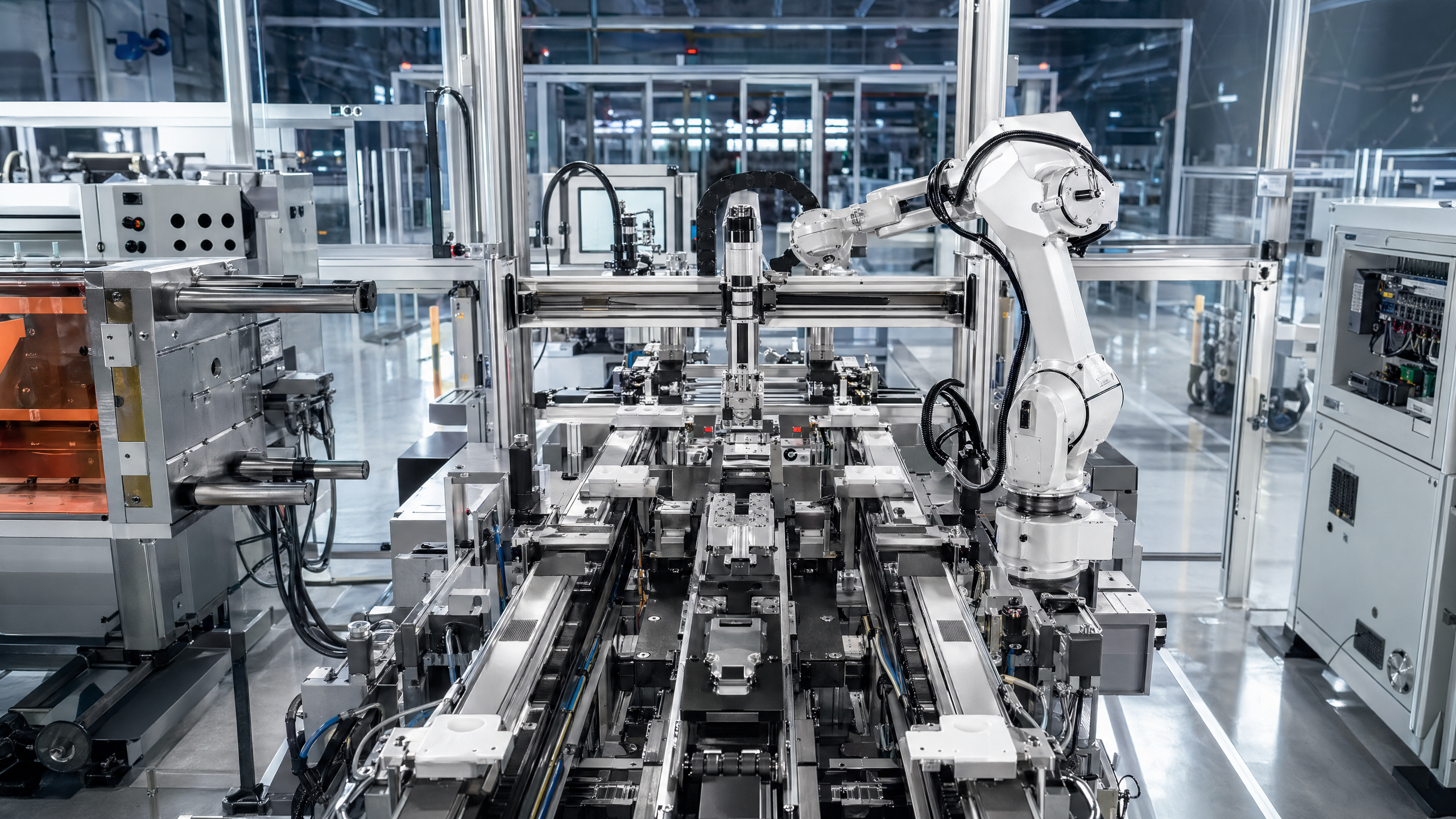
Industrial automation is reshaping how manufacturers eliminate manual bottlenecks across production lines, from fasteners assembly to injection molding, die casting, and mold design. This technical analysis explores how mechanical tools, electrical components, and precision engineering upgrades can improve throughput, consistency, and decision-making, helping operators, buyers, and industrial leaders evaluate practical paths to smarter, more scalable manufacturing.
Why manual bottlenecks are becoming a strategic risk across industries
A visible shift is taking place in industrial automation planning. Companies are no longer upgrading equipment only to increase output; they are upgrading to remove fragile points where production still depends on repetitive manual handling, subjective judgment, or delayed data feedback. In sectors as varied as automotive components, electronics assembly, packaging, metalworking, plastics, and general OEM production, these manual bottlenecks now affect lead time, labor stability, traceability, and quality consistency more directly than they did even 3 to 5 years ago.
The change is not driven by a single technology. It comes from the convergence of lower-cost sensors, more flexible PLC and motion control platforms, improved pneumatic and electric actuators, better tooling precision, and a stronger demand for documented process control. What used to be tolerated as an operator-dependent step is now more likely to be reviewed as a throughput constraint. A station that adds only 12 to 20 seconds of manual alignment per cycle can become the limiting factor for an otherwise balanced line.
For procurement teams and technical evaluators, this means industrial automation upgrades should be judged less as isolated capital purchases and more as bottleneck removal projects. The value is often found in improved line balance, reduced changeover variation, lower rework rates, and fewer unplanned stops. For operators and project leaders, the practical question is simpler: which manual actions still interrupt flow, and which of those can be stabilized through better tools, feeders, sensing, electrical control, or mold-related design changes.
The trend is especially clear where component accuracy matters. Fastener feeding, torque application, insert loading, cavity release, die casting part extraction, and visual checking are all common examples. In many factories, just 4 to 6 bottleneck stations account for a disproportionate share of missed output targets. That is why industrial automation upgrades are increasingly prioritized at the process-cell level before full factory-wide digital transformation.
The following table summarizes the most common changes now influencing automation decisions in cross-industry manufacturing environments.
The pattern is clear: manual bottlenecks are no longer seen as isolated shop-floor inconvenience. They are becoming business risks that affect delivery reliability, cost control, compliance readiness, and supplier competitiveness. That shift is shaping how industrial automation projects are scoped, approved, and measured.
What is driving the next wave of industrial automation upgrades
From labor substitution to process precision
A major trend is that industrial automation is moving beyond simple labor replacement. The stronger driver is process precision under variable conditions. When part tolerances tighten, materials change, or throughput targets rise above 30, 60, or 120 units per minute depending on the application, manual intervention becomes less stable. Precision tooling, sensor feedback, and closed-loop control are increasingly used to protect consistency, not just speed.
This is particularly relevant in tooling-intensive operations. In injection molding, a small mismatch in mold cooling balance or ejection timing can create downstream manual sorting. In die casting, inconsistent extraction or trimming can create handling delays and quality risk. In fastener assembly, the issue may be orientation, torque repeatability, or feeder interruption. These are not separate problems; they are linked through one common issue: the production system has not fully aligned machine capability with process variation.
Mechanical, electrical, and control upgrades are now converging
Another clear signal is convergence. Mechanical tools, electrical components, and control logic can no longer be evaluated in isolation when targeting manual bottlenecks. A higher-precision fixture without sensor verification may still require operator confirmation. A servo axis without suitable tooling geometry may move accurately but fail to improve part handling. A pneumatic circuit that lacks stable pressure control may introduce cycle variation of 0.3 to 1.5 seconds, which becomes significant over thousands of cycles.
For technical teams, this means bottleneck reduction should be approached as a systems upgrade. Evaluating only one layer often underestimates real constraints. For example, replacing manual loading with a pick-and-place unit may require parallel changes in gripper design, sensor placement, wiring architecture, guarding, and maintenance access. The strongest industrial automation outcomes usually come from coordinated upgrades across 3 to 5 linked subsystems rather than one headline machine purchase.
The push for measurable, auditable production control
Buyers and quality managers are also placing more emphasis on measurable process evidence. This affects how automation upgrades are justified. If a station can document cycle time, torque confirmation, cavity status, sensor alarms, or reject trends in near real time, it becomes easier to troubleshoot and easier to support customer audits. In many sectors, this operational visibility matters as much as the physical automation hardware itself.
Common drivers behind current automation investments include:
- Shorter delivery windows, often shrinking from several weeks to tighter rolling schedules.
- More SKU variation, requiring faster fixture change and recipe-based control.
- Greater sensitivity to scrap, especially in high-value alloys, engineered plastics, and precision electrical assemblies.
- Stronger documentation needs for quality assurance, maintenance planning, and supplier reviews.
- Pressure to improve line utilization without proportionally expanding floor labor.
These factors explain why industrial automation upgrades are being approved in a wider range of facilities, including mid-sized factories that previously focused only on stand-alone equipment improvements. The trend is less about adopting automation for image and more about reducing operational fragility in practical, measurable ways.
Where manual bottlenecks are most visible in today’s production environments
High-friction points from components to molds
Across industries, the same categories of manual bottlenecks appear repeatedly. They are often found between processes rather than inside the main machine cycle. Operators may manually orient parts, confirm presence, transfer hot or delicate components, separate conforming and nonconforming outputs, or compensate for fixture and tooling wear. These tasks look minor on paper, but they frequently determine whether the line runs smoothly for 8 hours or loses efficiency every 20 to 40 minutes.
In mold-related manufacturing, bottlenecks often arise from part release consistency, runner separation, insert placement, cooling time balance, or dimensional drift that creates extra manual checks. In electrical and hardware assembly, common friction points include screw feeding, terminal insertion, crimp verification, pneumatic actuation timing, and packaging count confirmation. Industrial automation upgrades are most effective when they target these repetitive interventions before expanding toward broader digital integration.
The table below highlights typical bottlenecks and the upgrade directions most often considered by engineering and sourcing teams.
A useful insight for project managers is that the most expensive station is not always the biggest bottleneck. Sometimes a low-cost mechanical transfer or feeder redesign removes more lost time than a major machine replacement. That is why bottleneck mapping should track intervention frequency, not just equipment value. If operators touch one station 80 to 150 times per shift, that station deserves close review.
How to identify the right upgrade target
A disciplined review usually starts with simple evidence collection over 1 to 2 weeks. Teams can log micro-stoppages, manual resets, quality escapes, waiting time between stations, and changeover loss. From there, a short list of upgrade candidates emerges. In many plants, only 10% to 20% of process points generate most of the repetitive disruption. This approach supports better communication between operators, engineers, quality staff, and purchasing teams.
Useful indicators include:
- Cycle variation beyond an acceptable range, such as repeated drift above 5% to 10%.
- Manual handling steps that require visual judgment or hand reorientation.
- Rework or sorting concentrated after a specific machine or tool station.
- Frequent pneumatic, fixture, or sensor-related intervention by maintenance staff.
- Changeovers that rely on operator memory rather than fixed setup logic.
This level of visibility is where many successful industrial automation programs begin. It grounds capital discussions in operational reality instead of broad assumptions about modernization.
How the impact differs for operators, buyers, engineers, and decision-makers
Operational impact on the shop floor
For operators and supervisors, industrial automation upgrades matter most when they reduce unstable work content. A better feeding system, smarter fixture, or clearer HMI can reduce repetitive handling, lower fatigue, and make cycle rhythm more predictable. The benefit is not only faster production; it is more manageable production. In many environments, reducing 15 to 30 unnecessary manual interactions per hour has a stronger effect on consistency than simply increasing machine speed.
Quality and safety personnel see a different benefit. Removing manual bottlenecks can reduce the chance of mixed parts, incomplete assembly, unsafe reaches into equipment, or undocumented deviations. This matters in cells where thermal exposure, sharp edges, pinch points, or electrical verification are part of normal operations. Better interlocks, sensors, and guided tooling can help standardize actions without overcomplicating the workstation.
Commercial and sourcing impact
For procurement and commercial evaluation teams, the trend changes how return is assessed. The lowest quoted automation package may not remove the actual bottleneck if it ignores tooling life, component compatibility, spare parts access, or commissioning support. A stronger sourcing review should compare not just equipment cost, but integration risk, maintenance burden, electrical compliance needs, and expected changeover flexibility over a 2- to 5-year period.
Distributors and industrial agents are also affected. Customers increasingly ask for more than standalone components; they want guidance on application fit, life-cycle stability, and cross-system compatibility. Whether the product is a pneumatic valve, sensor, fastening tool, mold component, or electrical connector, the commercial value increasingly depends on how well it supports reliable automation performance in the target process.
A practical stakeholder view
The following summary can help teams align priorities before launching an upgrade project:
- Operators focus on ease of use, intervention frequency, and repeatable rhythm.
- Engineers focus on control stability, tooling accuracy, sensor logic, and maintainability.
- Quality managers focus on traceability, defect prevention, and documented process control.
- Procurement teams focus on total ownership cost, lead time, and supplier responsiveness.
- Executives focus on throughput resilience, scalability, and business continuity.
When these viewpoints are reviewed together, industrial automation decisions become more balanced. Projects are less likely to overemphasize headline technology while missing the operational detail that determines long-term value.
What companies should evaluate before committing to an automation upgrade
Focus on bottleneck architecture, not isolated equipment
A common mistake is treating industrial automation as a machine purchase rather than a bottleneck architecture decision. Before approving a project, companies should confirm the exact source of delay: part presentation, fixture repeatability, control sequence, tooling wear, pneumatic instability, data blind spots, or operator workflow. Different causes require different solutions, and the wrong assumption can lock in cost without solving the real problem.
An effective evaluation framework usually includes process mapping, part variation review, available utilities, safety requirements, maintenance capability, and expected product mix over the next 12 to 36 months. This prevents overdesign in stable lines and underdesign in lines likely to see variation. It also helps identify where mechanical tools, electrical components, and mold-related improvements should be upgraded together.
Key questions for technical and commercial review
Before moving forward, teams should be able to answer these questions clearly:
- Which station currently limits output, and how often does it require manual intervention per shift?
- What part tolerances, environmental conditions, or material behaviors influence the bottleneck?
- Will the proposed upgrade support future product variants without major rework?
- What is the expected lead time for critical components, tooling adjustments, and spare parts?
- How will the new system support inspection records, alarms, or traceability requirements?
These questions are especially important for cross-border sourcing and multi-supplier projects, where delays often come from interface assumptions rather than hardware quality alone. For many factories, the difference between a successful and frustrating upgrade lies in early parameter confirmation, not in late-stage troubleshooting.
Signals worth watching over the next phase
Looking ahead, several signals deserve continuous attention. First, modular automation will continue gaining importance because many manufacturers need targeted upgrades rather than complete line replacement. Second, more process intelligence will be built into everyday components such as torque tools, sensors, actuators, and mold monitoring accessories. Third, maintainability will become a stronger buying factor as technical teams seek systems that can be serviced with reasonable downtime and standard spare strategies.
In practical terms, companies should expect industrial automation decisions to become more granular. Instead of asking whether to automate a whole process, more teams will ask which 3 to 7 manual friction points should be stabilized first. That is a healthier trend because it aligns investment with measurable production behavior, especially in mixed-volume, mixed-product environments.
Why work with a network that understands components, tooling, and manufacturing logic
For companies evaluating industrial automation upgrades, the challenge is rarely limited to one machine category. Real bottleneck reduction often depends on the interaction between mechanical tools, electrical architecture, fastening reliability, pneumatic logic, mold precision, and supplier coordination. That is why decision-makers benefit from a resource partner that understands the granular core of manufacturing, from base components to precision tools and process-critical interfaces.
The Global Hardware & Tooling Network focuses on these underlying industrial layers. Our perspective connects technological trend analysis with practical trade insight across hardware, electrical, and mold sectors. Whether you are reviewing fastener performance in demanding environments, assessing control components for automated lines, or comparing tooling directions for injection molding and die casting, the goal is the same: support more informed decisions with deeper process context.
If your team is assessing where manual bottlenecks are limiting output, we can help you structure the next discussion around concrete factors rather than generic automation claims. You can contact us to explore parameter confirmation, component and tooling selection, delivery cycle expectations, application matching, certification-related considerations, sample support, and quotation communication for your target market or production scenario.
For OEMs, distributors, project managers, and technical evaluators, that conversation can begin with a few practical details: current process type, bottleneck station, expected throughput range, part or mold characteristics, electrical or pneumatic requirements, and any quality documentation needs. With the right inputs, it becomes easier to judge which industrial automation upgrades are likely to reduce manual bottlenecks in a scalable and commercially realistic way.
Related News