Industrial Automation Technical Analysis for Unplanned Downtime

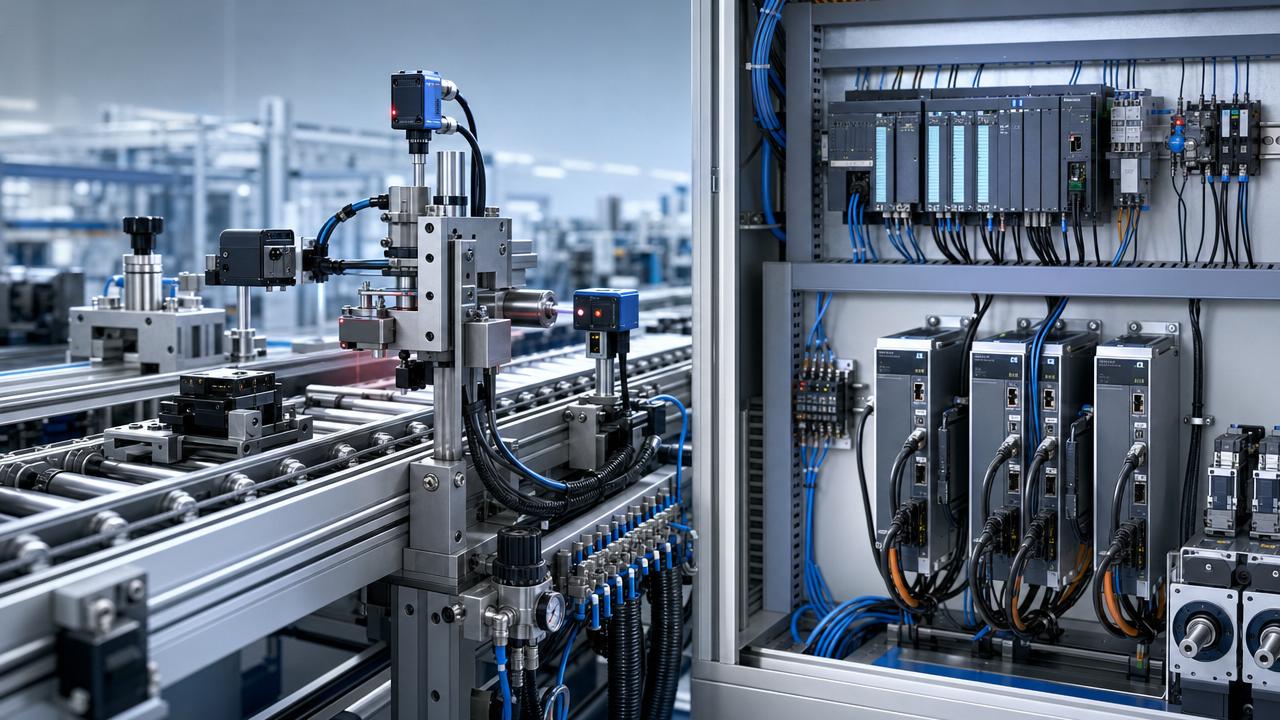
For aftermarket maintenance teams, unplanned downtime is more than a disruption—it directly impacts safety, output, and service costs. This industrial automation technical analysis explores how hidden control faults, component wear, and integration gaps trigger unexpected failures across modern production lines. By connecting maintenance realities with practical diagnostic insight, it helps technicians and service specialists identify root causes faster and improve equipment reliability.
Why scenario differences matter in industrial automation technical analysis
For aftermarket maintenance personnel, one of the biggest mistakes is treating every downtime event as a generic automation failure. In reality, the same alarm code can mean very different things depending on the operating environment, production rhythm, control architecture, and component age. An industrial automation technical analysis only becomes useful when it is tied to the actual service scenario: a high-speed packaging line behaves differently from a CNC cell, and a mold production system fails differently from a mixed electrical assembly line.
This is especially important in a broad industrial environment where mechanical tools, electrical systems, pneumatic devices, sensors, drives, and molds all interact. Maintenance teams are often called in after the fault has cascaded. What looks like a motor overload may start with a sticking pneumatic valve. What appears to be a PLC issue may be caused by unstable power quality, a damaged connector, or a misaligned sensor bracket. Scenario-based analysis helps service teams avoid replacing healthy parts, reduce repeat callouts, and make better decisions under time pressure.
For organizations that rely on global components and distributed supply chains, scenario awareness also supports smarter spare-part planning. GHTN’s industry perspective is valuable here because modern uptime depends not only on automation software but also on the physical behavior of fasteners, relays, molds, cable systems, and precision tooling inside the process.
Typical downtime scenarios aftermarket teams face
A practical industrial automation technical analysis should begin by sorting failures into recognizable field scenarios. This improves troubleshooting speed because teams can connect symptoms to likely weak points instead of starting from zero every time.
The value of this breakdown is clear: different scenarios demand different evidence. A line that stops every few hours under peak throughput should be investigated differently from a machine that fails only after maintenance work or only during product changeover.
Scenario 1: High-speed automated lines where small delays become full stoppages
On high-speed conveyors, pick-and-place systems, and packaging lines, downtime often comes from small timing losses rather than catastrophic component failure. In these environments, a few milliseconds of delay in sensor response, valve actuation, or drive synchronization can force the control system into a fault state. Aftermarket teams should focus on whether the issue appears only at full speed, after warm-up, or when vibration increases.
The most common weak points include photoelectric sensors contaminated by dust, aging pneumatic cylinders with inconsistent stroke speed, and terminal blocks that loosen under vibration. A strong industrial automation technical analysis in this setting compares commanded motion with real response. If the machine logic is correct but the physical action is late, the real root cause may sit in air quality, seal wear, mechanical backlash, or signal transmission quality.
For maintenance teams, the best fit actions are trend-based: record cycle times, compare shift-to-shift timing, inspect connectors under load, and verify whether spare parts match original switching speed and tolerance. In fast lines, “compatible” replacement parts are not always functionally equivalent.
Scenario 2: Precision machining cells where downtime hides behind quality drift
CNC systems and precision machining cells often provide early warning before a hard stop occurs. Surface finish changes, dimensional variation, repeated axis correction, or unusual spindle current patterns may appear first. In this scenario, aftermarket maintenance personnel should not wait for a full alarm sequence before acting. The downtime event may simply be the last stage of a long degradation process.
The industrial automation technical analysis here should link control data to mechanical reality. For example, encoder alarms may not originate in the encoder itself. They may be caused by cable shielding damage, coolant ingress, excessive drag chain stress, or electrical noise from nearby drives. Likewise, recurring servo faults can be tied to mounting looseness, thermal expansion, or poor grounding rather than controller failure.
This scenario requires a blended skill set. The technician must understand servo diagnostics, but also fastening integrity, tool loading, contamination paths, and electrical routing. GHTN’s cross-domain perspective matters because precision reliability depends on both digital control logic and the physical performance of underlying components.
Scenario 3: Molding and thermal processes where integration gaps cause unstable cycles
Injection molding, die-casting support equipment, and temperature-controlled process stations create a different maintenance challenge. Failures here are often intermittent because the line may continue operating while drifting outside the ideal process window. By the time the machine trips, the actual cause may be buried in earlier thermal imbalance, delayed pressure feedback, or mold protection misreads.
In this scenario, industrial automation technical analysis should prioritize interface points: thermocouples to controllers, pressure sensors to PLC logic, hydraulic or pneumatic actuators to machine sequence timing, and mold position signals to safety interlocks. Aftermarket teams frequently discover that a replacement sensor meets electrical specs but responds differently under heat, causing sequence instability that does not appear during a short test run.
Teams should also review whether maintenance history includes repeated adjustments to compensate for drift. Frequent manual setpoint correction is often a sign that the automation layer is masking a component-level issue. In mold-related processes, hidden instability can damage tooling, extend cycle time, and increase reject rates long before it causes visible downtime.
Scenario 4: Distributed electrical systems where communication faults are mistaken for device failure
In assembly lines, test benches, and retrofitted production cells, many outages are blamed on PLCs, HMIs, or remote I/O modules when the real problem lies in communication quality or power distribution. This is a high-risk misdiagnosis area for aftermarket teams because the symptoms are inconsistent: random faults, disappearing devices, false safety trips, or sudden resets after restarts.
A reliable industrial automation technical analysis for this scenario checks network topology, grounding paths, shield termination, power supply loading, and connector wear before replacing higher-value control hardware. Poor cabinet ventilation, oxidation at terminals, and mixed-quality replacement cables can all create intermittent faults that look like software problems.
This scenario is especially common in facilities that expanded in phases. Each new station may have been integrated successfully on its own, but over time the total system becomes more sensitive to electrical noise, IP conflicts, or timing mismatches between old and new devices. Maintenance teams should ask not just “What failed?” but “What changed?”—including firmware updates, added peripherals, rewiring, and production layout changes.
How different service conditions change maintenance priorities
Not all plants need the same depth of industrial automation technical analysis. The correct approach depends on throughput pressure, available spares, staff skill mix, and the criticality of the asset.
This is where maintenance judgment becomes strategic. Plants with limited instrumentation may need more disciplined manual inspection routines. Facilities with advanced data access should use trend correlation, not just live alarms, to detect the root causes of unplanned stoppages.
Common misjudgments that delay root-cause discovery
Several patterns repeatedly weaken industrial automation technical analysis in the field. First, teams often replace the component that raised the alarm without checking upstream causes. Second, they assume intermittent faults are software-related because they cannot reproduce the issue at low speed or during manual mode. Third, they overlook the role of basic industrial parts such as fasteners, brackets, seals, cable glands, and terminals, even though these low-cost items often trigger high-cost failures.
Another common mistake is failing to separate trigger conditions from root causes. A machine may stop during startup, but the underlying problem could be thermal expansion after the previous shift. It may fault after a product change, but the true issue could be a worn sensor mount that only misaligns at a certain recipe setting. Good analysis asks when, under what load, and after which intervention the problem appears.
Finally, many teams underestimate compatibility risks in replacement parts. Matching voltage and dimensions is not enough. Switching frequency, environmental rating, tolerance band, connector design, and response curve can all affect automation stability.
Practical scenario-fit recommendations for aftermarket maintenance teams
To make industrial automation technical analysis more useful in daily service work, aftermarket teams should build a simple scenario-based framework:
- Classify the stoppage by process type: motion, thermal, pressure, network, or safety-related.
- Identify whether the fault appears under speed, heat, vibration, product change, or after maintenance intervention.
- Check physical interfaces before replacing control hardware: connectors, mounting integrity, cables, air supply quality, and grounding.
- Compare replacement components against functional behavior, not just catalog specifications.
- Document recurring weak points by scenario so future technicians can narrow causes faster.
When maintenance teams combine control diagnostics with component-level awareness, they reduce repeated downtime and improve long-term reliability. This is also where a specialized industrial resource network adds value: by connecting service decisions with deeper insight into mechanical tools, electrical components, mold systems, and precision manufacturing realities.
FAQ for service teams evaluating downtime risk
When is industrial automation technical analysis most necessary?
It is most necessary when failures are intermittent, repeat despite part replacement, or appear only under production conditions. These are signs that the problem crosses mechanical, electrical, and control boundaries.
Which scenarios deserve the fastest escalation?
Escalate quickly when downtime involves safety circuits, servo instability, repeated communication loss, or thermal drift that threatens tooling or product quality. These conditions can spread beyond a single station.
What should teams verify before ordering replacement parts?
Verify the actual failure mode, environmental exposure, switching or response characteristics, connector compatibility, and whether the original fault may have been caused by installation conditions rather than part failure.
Turning analysis into a stronger maintenance strategy
The best industrial automation technical analysis is not a generic fault summary. It is a scenario-based tool that helps aftermarket maintenance teams decide what to inspect first, what evidence matters most, and which hidden component interactions are likely to cause unplanned downtime. In broad industrial environments, reliable uptime depends on both advanced control systems and the precision behavior of the underlying parts that support them.
For organizations serving complex production assets, the next step is to map recurring failures by application scenario, validate critical component compatibility, and strengthen the link between field service data and component-level intelligence. That approach shortens diagnosis time, lowers repeat failures, and supports more confident maintenance decisions across automation-heavy operations.
Related News