
Manufacturing Trends Reshaping Supply Chains, Costs, and Capacity Planning

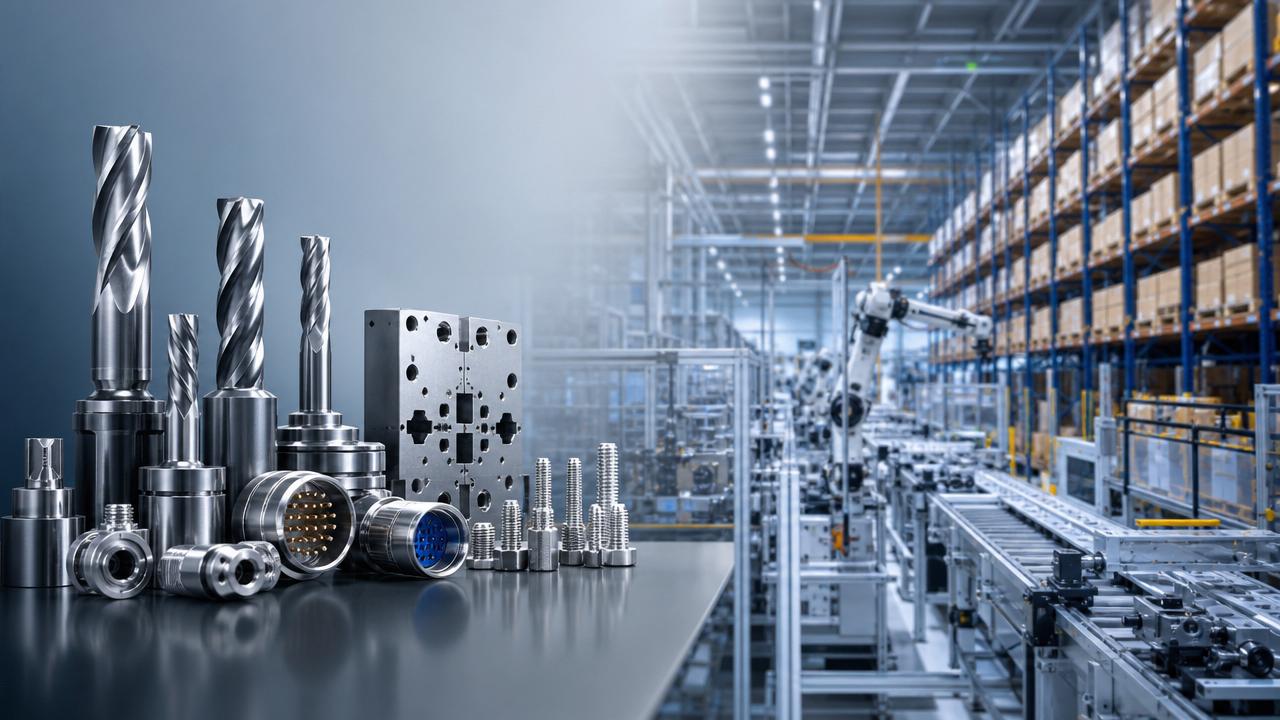
Manufacturing trends are changing how supply chains are built, how costs are managed, and how capacity is planned under uncertainty.
The shift is especially visible in industrial components, precision tooling, electrical systems, fasteners, molds, and automation-related hardware.
For organizations competing across global markets, manufacturing trends now influence sourcing risk, compliance exposure, production flexibility, and long-term competitiveness.
Why Manufacturing Trends Now Carry Strategic Weight
Manufacturing used to be evaluated mainly through output, unit price, and delivery speed.
Those factors still matter, but they no longer describe the full operating reality.
Supply disruption, energy volatility, geopolitical pressure, labor shortages, and compliance changes have made production decisions more interconnected.
A fastener specification can affect maintenance cycles in extreme environments.
A mold design adjustment can change scrap rate, lead time, and downstream assembly stability.
A pneumatic component in an automated line can influence uptime, safety, and energy consumption.
This is why manufacturing trends should be read at both macro and component level.
The broad story may be automation or reshoring, but the operational impact often appears inside granular industrial parts.
GHTN’s focus on hardware, electrical hubs, precision tools, and mold manufacturing reflects this deeper industrial logic.
A Practical View of Current Manufacturing Trends
The most relevant manufacturing trends are not isolated technologies.
They are operating patterns that reshape how factories source materials, configure lines, verify quality, and respond to demand.
In practical terms, manufacturing trends connect strategy with physical execution.
They show where investment pressure is moving and where hidden risks may appear.
Digital visibility across supply chains
Digital supply chain visibility is one of the most discussed manufacturing trends because uncertainty has become expensive.
Production teams increasingly need traceable data on supplier status, inventory depth, tooling availability, and shipment reliability.
This visibility is especially important for industrial components that seem small but stop entire systems when unavailable.
Automation that reaches the component layer
Automation is no longer limited to robots or control software.
It depends on sensors, pneumatic units, connectors, cutting tools, fixtures, and repeatable mold performance.
Among manufacturing trends, this one often demands the closest cooperation between design, sourcing, and production teams.
Resilience instead of pure low-cost sourcing
Low-cost sourcing remains relevant, but resilience has become a stronger decision factor.
Many organizations now compare suppliers by redundancy, tooling backup, compliance readiness, and ability to scale under stress.
This change makes manufacturing trends more closely linked to risk management than before.
How Supply Chains Are Being Rebuilt
Supply chains are moving from linear purchasing routes toward more layered networks.
The goal is not simply to add suppliers, but to understand where each supplier fits operationally.
For precision tools and industrial parts, technical equivalence is often harder than commercial substitution.
Two components may look similar, yet behave differently under heat, vibration, corrosion, or repetitive loading.
Manufacturing trends therefore encourage a more disciplined view of supplier qualification.
Material certificates, tolerance control, process capability, and test data now carry greater weight in supplier evaluation.
Regionalization is another important pattern.
Production networks may keep global sourcing advantages while adding regional capacity for critical components.
This creates a hybrid model: global intelligence, local responsiveness, and technical standardization across sites.
For GHTN’s industry scope, this is where hidden specialist suppliers become strategically relevant.
Niche enterprises with strong process knowledge can support complex requirements if their capabilities are visible and verifiable.
Cost Control Is Moving Beyond Purchase Price
One of the clearest manufacturing trends is the shift from price comparison to total cost thinking.
A cheaper part may raise maintenance cost, inspection workload, warranty risk, or downtime exposure.
A more expensive tool may reduce cycle time, improve surface quality, and extend equipment life.
The cost question becomes more complex, but also more useful.
Instead of asking which option is cheapest, decision models should ask where the real cost is created.
This approach also changes how manufacturing trends are evaluated internally.
A trend becomes relevant only when it improves measurable production economics or reduces specific operational risk.
Capacity Planning in a Less Predictable Market
Capacity planning has become harder because demand signals are less stable.
Order patterns can shift quickly due to inventory correction, policy changes, or customer redesign cycles.
Manufacturing trends now favor flexible capacity over maximum fixed utilization.
This does not mean every factory needs spare equipment sitting idle.
It means capacity should be planned with tooling flexibility, supplier backup, material alternatives, and modular process design.
Mold manufacturing offers a useful example.
A micron-level adjustment can affect cooling efficiency, part consistency, and cycle duration.
When demand rises, weak mold performance limits capacity even if machines are available.
The same logic applies to cutting tools, electrical assemblies, and pneumatic systems.
Capacity is not only machine count; it is the reliability of the whole production chain.
Sustainability and Standardization Are Becoming Operational Issues
Sustainability is often discussed as a corporate goal, but its manufacturing impact is very practical.
Energy use, recyclable materials, coating selection, waste reduction, and product lifespan all affect cost and compliance.
Among manufacturing trends, greening is increasingly tied to procurement standards and customer qualification.
Industrial components may face stricter documentation requirements across regions.
Electrical products can encounter evolving safety, environmental, and performance standards.
Precision tools may be assessed through both productivity and environmental footprint.
Standardization also reduces complexity.
When specifications, inspection methods, and documentation systems are aligned, supplier switching becomes safer.
This is one reason manufacturing trends increasingly connect technical standards with market access.
The strongest suppliers are not only capable of production.
They can explain, document, and reproduce their quality under consistent conditions.
Where These Changes Appear in Daily Operations
Manufacturing trends become easier to judge when connected to daily operating scenarios.
They usually appear through recurring problems, investment decisions, or supplier conversations.
Several areas deserve particular attention.
- Material selection for parts exposed to heat, vibration, pressure, or corrosive environments.
- Tooling choices that influence cycle time, surface finish, and equipment utilization.
- Electrical component compliance for exports across different regulatory markets.
- Mold design decisions that affect repeatability, scrap rate, and production scaling.
- Automation components that determine line stability, maintenance frequency, and energy use.
These examples show why manufacturing trends should not be reviewed only at executive or technology level.
They must be translated into specifications, supplier audits, engineering reviews, and procurement rules.
How to Evaluate Manufacturing Trends Before Acting
Not every popular idea deserves immediate investment.
The value of manufacturing trends depends on fit, timing, technical readiness, and measurable business impact.
A practical evaluation should combine market signals with production evidence.
It should also consider whether internal teams can absorb process changes without creating new bottlenecks.
Look for evidence at the process level
Claims about efficiency should be supported by cycle data, defect rates, tool life, and maintenance records.
For electrical systems, compliance documentation and field performance matter as much as product catalogs.
Separate short-term pressure from structural change
Some manufacturing trends are responses to temporary shortages.
Others reflect long-term changes in regulation, labor economics, customer expectations, or technology maturity.
The difference affects capital planning and supplier commitments.
Check whether the supply base can support the change
A new design direction is only useful if qualified suppliers can deliver consistently.
This is where technical trade intelligence and supplier visibility become important.
Networks focused on industrial parts can help identify capable specialists before capacity becomes constrained.
The Role of Technical Intelligence in Better Decisions
Interpreting manufacturing trends requires more than tracking headlines.
It requires understanding how material behavior, tooling geometry, compliance standards, and production methods interact.
GHTN’s perspective is built around this granular view of modern industry.
Mechanical tool analysis can reveal whether higher cutting speed truly lowers total cost.
Electrical compliance tracking can reduce risk when entering markets with changing standards.
Mold expertise can show how small design iterations improve scaling reliability.
This type of intelligence supports more confident decisions across sourcing, investment, and capacity planning.
It also helps connect niche suppliers with applications where their precision capabilities create real value.
A More Disciplined Path Forward
Manufacturing trends will continue to reshape supply chains, costs, and capacity models.
The strongest responses will not come from chasing every new technology.
They will come from building clearer links between market change and production reality.
A useful next step is to map critical components, tooling dependencies, compliance risks, and capacity constraints.
From there, supplier evaluation can become more technical, and investment choices can become more evidence-based.
Manufacturing trends are most valuable when they sharpen judgment, not when they add noise.
By reviewing specifications, supplier capabilities, and operating data together, organizations can build manufacturing strategies that remain resilient under pressure.
That is the practical direction for linking precision, controlling cost, and tooling the future with confidence.
Related News