
Tooling technology shifts that are changing lead time expectations

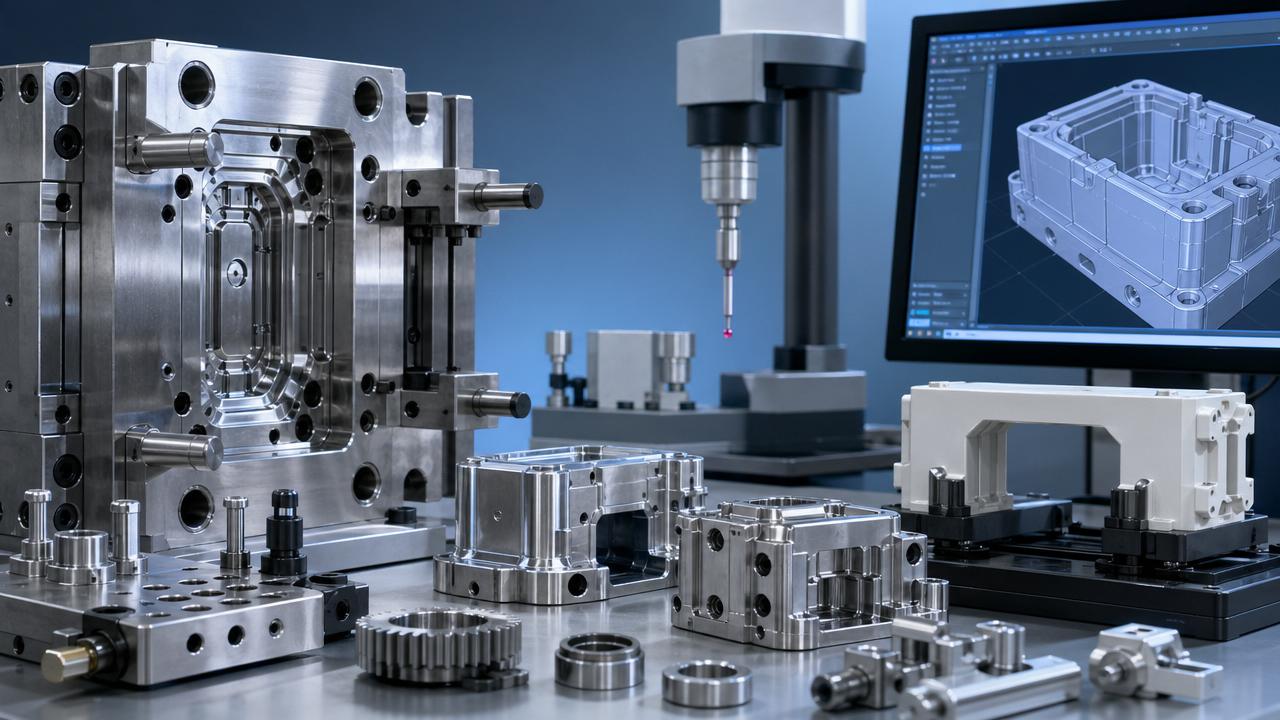
For procurement teams, lead time is no longer shaped by capacity alone. New tooling technology is redefining how quickly suppliers can move from design approval to production, while improving consistency, cost control, and supply resilience. Understanding these shifts helps buyers evaluate partners more accurately, reduce sourcing risks, and respond faster to changing demand in increasingly competitive industrial markets.
In hardware, electrical, mold, and precision component sourcing, a quoted lead time of 4 to 10 weeks may look acceptable on paper, yet the real difference often lies in what happens before the first production run. Tool design, mold validation, fixture preparation, process simulation, and change control now determine whether a supplier can shorten ramp-up by 20% to 40% or lose days in rework.
For buyers working across OEM programs, aftermarket demand, or multi-region supply chains, tooling technology has become a practical procurement indicator. It helps reveal whether a supplier can support low-volume pilots, engineering changes within 48 to 72 hours, stable repeatability across batches, and predictable cost performance over 12 to 24 months.
Why tooling technology now has a direct impact on lead time
In the past, lead time discussions focused heavily on machine count, labor availability, and raw material supply. Those factors still matter, but they no longer explain the full delivery picture. In many industrial categories, especially molds, stamped parts, machined tools, and custom fixtures, 30% to 60% of project delay risk emerges in pre-production tooling activities rather than in final manufacturing capacity.
Modern tooling technology compresses this early-stage timeline by improving three areas at once: design accuracy, process predictability, and tool change responsiveness. A supplier with digital simulation, rapid toolmaking, in-process measurement, and structured revision control can often move from approved drawing to trial run in 7 to 15 days for simpler parts, while a conventional workflow may require 3 to 6 weeks for the same scope.
The pre-production bottlenecks that buyers should watch
Procurement teams frequently receive similar promises from different suppliers, but the bottlenecks behind those promises are not equal. A short headline lead time may hide long internal approval loops, manual toolpath programming, outsourced heat treatment, or limited mold trial capacity. These details affect schedule reliability more than list price in many projects.
- Tool design revisions taking more than 2 to 3 business days
- Prototype tooling outsourced to a second or third subcontractor
- Manual inspection reports delivered only after the full trial batch
- No digital record of corrective actions between T0, T1, and T2 trials
- Fixture rebuild required after every engineering change
For sourcing managers, these are not only technical details. They are commercial risk signals. Each missed iteration can add 3 to 7 days, increase expedited freight costs, and create uncertainty in launch timing for downstream assemblies.
How newer tooling methods change delivery expectations
Several tooling technology shifts are now resetting buyer expectations across industrial procurement. The most influential include CAD/CAM integration, mold flow and process simulation, additive support for inserts and fixtures, modular tooling systems, and real-time measurement feedback. These capabilities do not eliminate all delays, but they narrow the gap between design intent and production reality.
For example, modular fixture systems can cut setup preparation by 25% to 50% in repeat jobs. In mold manufacturing, digital simulation can reduce the number of trial loops from 3 or 4 down to 1 or 2 in stable projects. In precision machining, in-machine probing can detect dimensional drift before a full lot is completed, reducing scrap and preventing a second production cycle.
The table below outlines how specific tooling technology capabilities typically influence procurement outcomes and lead time risk.
The key takeaway is that tooling technology affects lead time in two ways: it shortens the initial path to production, and it lowers the probability of delay after production starts. For buyers, that dual effect is more valuable than a nominally fast quote with weak process control behind it.
The tooling technology shifts procurement teams should prioritize
Not every new manufacturing tool matters equally in a sourcing decision. Procurement teams need to identify which tooling technology investments actually improve delivery reliability, engineering agility, and total landed cost. In most industrial categories, five shifts deserve closer attention.
1. Digital design-to-tool workflows
When tooling design, CNC programming, electrode planning, and revision control are linked digitally, suppliers can react faster to drawing updates and process changes. This is especially important in mold manufacturing and custom machined tooling, where one geometric revision may affect multiple operations. Buyers should ask how many approval steps are needed from final drawing release to toolpath creation and whether revision history is centralized.
A practical benchmark is whether a supplier can confirm manufacturability feedback within 24 to 48 hours and issue a revised tooling plan within 1 to 2 business days. Longer cycles may indicate fragmented engineering systems.
What to verify
- File compatibility across STEP, IGES, and native CAD formats
- Revision traceability from RFQ to trial run
- Documented tool approval checkpoints
- Ability to handle 2D to 3D conversion without rework delays
2. Simulation before steel cutting or fixture build
Simulation is no longer a premium extra reserved for highly complex molds. It is increasingly a standard risk-reduction method for injection molds, die-casting tooling, stamping dies, and even some assembly fixtures. By modeling fill behavior, thermal performance, stress points, or tool access, suppliers can catch design conflicts before material and labor are committed.
For procurement, this means fewer expensive surprises. If a supplier skips simulation on parts with thin walls, tight sealing areas, or complex undercuts, the probability of T1 failure rises sharply. Even one extra mold trial can add 5 to 12 days depending on transportation, machine availability, and correction scope.
3. Additive manufacturing for tooling support
Additive manufacturing does not replace hardened production tooling in most industrial use cases, but it is changing early-stage lead time expectations. 3D printed gauges, prototype inserts, nest fixtures, cooling verification aids, and assembly templates can be produced in 24 to 72 hours rather than waiting 1 to 2 weeks for conventional machining.
This matters most when buyers need sample validation, pilot production, or bridge tooling before final volumes are stable. In fast-moving categories, shortening prototype support by even 4 days can protect a launch schedule or prevent excess buffer stock at the distribution stage.
4. Modular and standardized tooling components
Suppliers with modular bases, standardized guide systems, common insert libraries, and repeatable fixture platforms can move faster than those rebuilding everything from zero. This is highly relevant for recurring part families, spare-part programs, and platform products with small dimensional changes. Standardization improves both speed and maintainability.
From a sourcing perspective, modular tooling technology also supports dual objectives: shorter initial build times and lower future modification costs. A mold or fixture designed around replaceable sections can often absorb engineering changes with less downtime and less scrap material.
5. Measurement integrated into the tooling process
Dimensional verification used to be treated mainly as a final QC activity. Today, the stronger approach is to build metrology into toolmaking and first-article development. Probing, CMM validation, optical inspection, and gauge planning help confirm tool condition before batch output expands.
For buyers of precision components, electrical hardware interfaces, or mold-dependent parts, this can reduce the risk of hidden variation. It also provides more reliable PPAP-style documentation, first article inspection records, and corrective action evidence when tolerance windows are narrow.
How procurement teams can evaluate tooling maturity during supplier selection
A supplier may mention advanced tooling technology in presentations, but buyers need a practical way to test whether those capabilities influence real lead time. The most useful approach is to review workflow evidence, not only equipment lists. A company with fewer machines but stronger process integration may outperform a larger workshop with fragmented controls.
Five evaluation areas that matter most
- Engineering response speed: Can design feedback be issued within 24 to 48 hours?
- Trial management: How many trial stages are typical, and what is the correction cycle between them?
- Tool maintenance strategy: Are wear parts tracked after 10,000, 50,000, or 100,000 cycles where relevant?
- Change control: Can the supplier separate urgent revisions from full redesigns without disrupting all open jobs?
- Inspection linkage: Are dimensional reports connected to tooling adjustments in a closed feedback loop?
These questions help procurement teams compare process maturity rather than relying on broad claims. They are also useful in RFQ documents, supplier audits, and quarterly performance reviews.
The following matrix can support a more disciplined assessment of tooling technology when evaluating industrial suppliers.
A strong supplier does not need perfect answers in every category, but they should provide clear timelines, defined checkpoints, and realistic tolerances. Transparency itself is a useful procurement signal.
Common sourcing mistakes when assessing tooling technology
One common mistake is focusing only on unit price while ignoring correction speed. Another is treating prototype and production tooling as separate conversations, even though prototype decisions often lock in later lead time. Buyers also underestimate the value of documentation. If tool revisions, maintenance history, and trial data are not documented, repeat orders become slower and less predictable.
A third mistake is assuming that all “advanced” tooling technology automatically shortens lead time. Some systems add complexity if the supplier lacks trained engineers or if the process is unsuitable for the part. Procurement teams should look for fit-for-purpose adoption rather than technology labels alone.
What these shifts mean for lead time planning, cost control, and supply resilience
The broader implication is that lead time should now be evaluated as a combination of tool readiness, process stability, and change agility. For industrial buyers, that changes sourcing strategy in at least three ways. First, RFQs should separate tool build time from production cycle time. Second, supplier comparison should include engineering response metrics. Third, safety stock decisions should reflect tooling recovery capability, not only shipping time.
Better cost visibility over 12 to 24 months
Tooling technology can improve total cost visibility even when the initial quote is not the cheapest. Faster validation reduces emergency air freight, repeated sampling, and duplicated inspection effort. Modular tooling reduces the cost of version updates. Better measurement control lowers internal sorting and customer complaint exposure. Over a 12 to 24 month sourcing horizon, those factors often outweigh a 3% to 8% gap in the first purchase price.
Greater resilience during demand shifts
Markets are less stable than they were a decade ago. OEM schedules move, component demand spikes, and product variants expand. Suppliers with more mature tooling technology can usually absorb these changes with less disruption. They can reschedule fixtures, modify inserts, re-run validation, and restore output faster after a quality interruption. That makes them strategically valuable even when volumes are moderate rather than massive.
A practical buyer checklist
- Ask for a stage-by-stage timeline from drawing release to first article
- Confirm whether simulation is used for complex geometries or critical fit areas
- Review how tooling changes are documented and approved
- Check whether modular components can shorten future revisions
- Evaluate if metrology is integrated before full-batch production
- Align service expectations for spare parts, maintenance, and corrective response within 24 to 72 hours where needed
These points help procurement teams move from reactive expediting to more informed supplier development. They also create a stronger basis for comparing custom component, tooling, and mold suppliers across regions.
Tooling technology is no longer a background engineering detail. It is a measurable driver of lead time performance, quality stability, and sourcing flexibility across hardware, electrical, mold, and precision manufacturing supply chains. Buyers who understand how digital workflows, simulation, modular systems, additive support, and integrated measurement affect delivery can make more accurate supplier decisions and reduce avoidable launch risk.
At GHTN, we focus on the manufacturing logic behind industrial parts and precision tools, helping procurement professionals connect technical capability with commercial outcomes. If you are reviewing suppliers, planning a new tooling program, or looking to improve lead time visibility across your sourcing network, contact us to get tailored insight, discuss technical details, and explore more practical solutions.
Related News