
Why niche manufacturing survives where scale does not

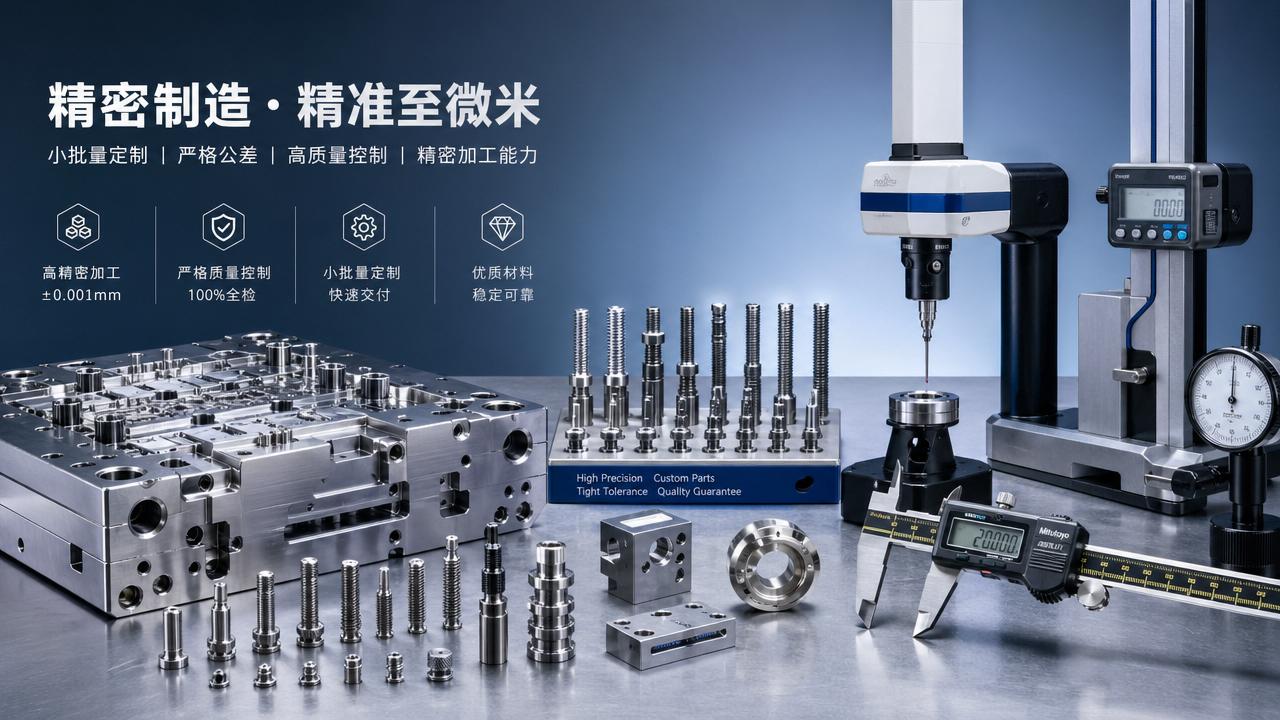
In an era obsessed with volume, niche manufacturing continues to outperform where scale alone fails. For business evaluators, the real advantage lies in specialized capabilities, tighter quality control, and the ability to serve complex industrial demands with precision. Understanding why these focused manufacturers endure reveals not only resilient business models, but also where long-term value, supply chain stability, and premium market opportunities are truly created.
For evaluators assessing suppliers, acquisition targets, or strategic partners, the key question is not whether a manufacturer is large, but whether it is defensible. In many industrial segments, niche manufacturing survives because it solves problems that mass-scale producers cannot address efficiently. It operates where tolerances are tighter, customer requirements are less standardized, and technical reliability matters more than price per unit alone.
The commercial logic is straightforward. When a product category demands deep process know-how, certification discipline, material expertise, or low-volume customization, scale can actually become a disadvantage. Large producers are optimized for throughput and uniformity. Niche manufacturers are optimized for adaptability, engineering collaboration, and consistency in specialized output. That distinction often determines who retains margin, customer loyalty, and relevance over time.
What business evaluators are really trying to determine
When people search for why niche manufacturing survives where scale does not, they are usually not looking for a philosophical defense of small factories. They want to understand whether specialization creates a more durable business model. For business evaluators, that means testing whether niche positioning translates into pricing power, lower competitive pressure, stronger customer retention, and more stable long-term demand.
The most important concern is risk-adjusted value. A specialized manufacturer may appear limited because it serves a narrower market, but that narrowness can be the source of its strength. If the company operates in a technically demanding category such as precision tooling, specialty fasteners, electrical subcomponents, or mold systems, barriers to entry may be significantly higher than in broad, commoditized manufacturing lines.
Evaluators also want to know whether specialization is structural or temporary. A true niche manufacturer is not merely small. It usually owns process knowledge, customer-specific validation experience, or production discipline that makes substitution difficult. This is especially relevant in industrial supply chains, where a failed component can stop an assembly line, create warranty exposure, or compromise compliance in export markets.
Why scale stops working in certain manufacturing segments
Scale is powerful in markets where demand is standardized, specifications are stable, and buyers can switch suppliers with minimal operational friction. In those contexts, larger manufacturers benefit from lower unit costs, stronger purchasing leverage, and wider distribution reach. But those same strengths weaken when production environments become more variable and quality expectations become more exacting.
In specialized industrial categories, production is often shaped by low-to-medium volumes, frequent design adjustments, demanding material requirements, or unusually strict tolerances. A high-volume factory built for repeatability may struggle with these conditions. Changeovers become costly, engineering communication slows down, and internal incentives favor larger orders rather than technically sensitive work. As a result, scale creates rigidity just when the customer needs flexibility.
This is one reason niche manufacturing remains competitive. It is structured around precision rather than throughput alone. In sectors such as mold manufacturing, complex fastening systems, pneumatic logic components, or application-specific hardware, the ability to fine-tune process steps matters more than running the largest possible production line. Evaluators should recognize that operational focus, not absolute size, often determines commercial resilience.
Specialization creates pricing power that commodity producers rarely keep
One of the clearest reasons niche manufacturers endure is that they are less exposed to pure price competition. When buyers need a component to perform under extreme temperature, corrosive environments, tight fatigue cycles, or exact dimensional constraints, the purchasing decision becomes risk-based rather than price-led. In those cases, the cheapest supplier is rarely the safest choice.
This shifts the economics of the relationship. A niche manufacturer that consistently delivers validated performance can command a premium because its value lies in failure prevention, engineering confidence, and application fit. In industrial procurement, avoiding downtime, nonconformance, and field failures often outweighs marginal unit savings. That creates pricing power that large commodity producers struggle to defend when their products are more interchangeable.
For business evaluators, the practical implication is important. Margin quality matters more than revenue size alone. A specialized company with moderate output but strong gross margins, low customer churn, and recurring program-based orders may be economically stronger than a much larger producer trapped in constant price erosion. Niche manufacturing often survives because it earns trust where commoditized scale only wins temporary volume.
Deep process knowledge is a stronger moat than production capacity
In manufacturing, capacity can be purchased, expanded, or replicated over time. Process knowledge is harder to copy. This is especially true in industries where production outcomes depend on tacit expertise, tooling refinement, material behavior, and accumulated problem-solving experience. A niche manufacturer often builds its advantage through years of learning that are not obvious on a balance sheet.
Consider precision tooling or mold production. Success depends not only on machinery but on micron-level judgment, thermal control, toolpath optimization, wear prediction, and iterative corrections across multiple production cycles. The same applies to specialized electrical or mechanical components used in demanding assemblies. The manufacturer that understands failure modes in real operating conditions holds a defensible position that a larger but less focused producer may not match.
Evaluators should therefore look beyond equipment lists. A modern machine park is useful, but it is not the moat. The real asset is the integration of engineering, inspection discipline, process repeatability, and field feedback into a stable production capability. In many cases, niche manufacturing survives because customers depend on this embedded expertise, not just on the factory’s available floor space.
Customer intimacy makes niche manufacturers harder to replace
Large-scale manufacturers often rely on transactional selling. Niche manufacturers tend to build closer technical relationships with customers. That difference matters because industrial buying frequently involves co-development, customization, validation testing, and post-delivery adjustment. When a supplier becomes part of the customer’s problem-solving process, replacement costs rise substantially.
In sectors covered by GHTN’s industrial matrix, this is common. OEMs sourcing precision fasteners, tooling systems, molds, or electrical subassemblies may need a supplier that understands specific operating loads, assembly interfaces, international compliance requirements, or automation-line behavior. A niche producer that responds quickly, adapts specifications, and supports engineering dialogue becomes embedded in the customer’s workflow.
From an evaluation perspective, this embeddedness is a major indicator of durability. It often leads to longer account life, repeat business, lower tender volatility, and better visibility into future demand. It also reduces the threat from low-cost competition. A lower quote from an unfamiliar supplier does not matter much if switching introduces requalification cost, process risk, or delivery uncertainty. Niche manufacturing survives because its relationships are operationally sticky.
Quality control is not just better in niche manufacturing, it is often more relevant
Business evaluators frequently hear that smaller specialized manufacturers offer better quality. That claim should be tested carefully, but in many cases it is true for structural reasons. Niche producers are often designed around critical applications where acceptable variation is narrower. Their quality systems may be more tightly aligned with the actual failure risks of the product, rather than built for broad statistical control across high-volume commodity lines.
This distinction matters in industrial components. A fastener used in corrosive or high-vibration conditions, a mold insert for repeated thermal cycling, or an electrical component required to meet export compliance standards cannot be judged only by generic pass rates. The quality process must reflect application-specific performance. Niche manufacturers are often better at linking inspection criteria to real-world use conditions because they work closer to the technical problem.
For evaluators, the question is not simply whether the supplier has certifications. It is whether the company can explain its control logic from material selection through final verification. Can it trace process drift? Does it understand root causes of field failure? Can it document capability over time? Niche manufacturing earns its place when quality is not a slogan but a highly relevant operating discipline.
Supply chain resilience increasingly favors focused specialists
Recent years have changed how companies assess supplier value. Lowest-cost sourcing and oversized global scale no longer guarantee reliability. Geopolitical shifts, logistics disruptions, and raw material volatility have exposed the fragility of overly standardized sourcing models. In this environment, niche manufacturers often provide resilience because they are more agile, more communicative, and more committed to specific product families.
Focused specialists tend to know their upstream material dependencies in detail and monitor downstream customer requirements more closely. They may be better positioned to propose substitutions, redesigns, tolerance adjustments, or phased delivery plans when disruptions occur. A mass producer managing a huge and diverse order book may not offer the same responsiveness to a technically complex but comparatively small program.
This does not mean every niche supplier is resilient by default. Some are vulnerable due to customer concentration or limited capital buffers. But evaluators should avoid assuming that larger scale automatically means safer supply. In many industrial categories, resilience comes from control over critical processes, clarity of specialization, and strong communication across the supply chain. Niche manufacturing survives because it often handles disruption with more precision than scale-driven systems do.
How to evaluate whether a niche manufacturer is truly defensible
Not every specialized company is a strong one. Some are simply too small, underinvested, or dependent on a shrinking customer base. Business evaluators need a practical framework to separate durable niche manufacturing from fragile under-scale operations. The first test is technical indispensability. What specific capability does the company perform that customers would struggle to replace quickly or cheaply?
The second test is margin evidence. If the manufacturer claims to be specialized, its economics should show some sign of that position. Look for healthier margins than commodity peers, lower volatility in customer retention, and repeat orders linked to application expertise rather than one-off low-price wins. If performance looks fully commoditized, the niche may be more marketing language than reality.
The third test is process maturity. A defensible specialist should show disciplined quality systems, engineering responsiveness, controlled lead times, and a clear understanding of where failures occur. The fourth test is market relevance. Is the niche growing, stable, or declining? A company can be excellent in a segment with weak future demand. Specialization only creates value when it aligns with ongoing industrial need.
Where niche manufacturing creates the most long-term value
The strongest opportunities usually appear in categories where technical failure is expensive, qualification is demanding, and customer applications are diverse. Precision mold systems, performance-critical fasteners, electrical control components, specialized tooling, and automation-related mechanical parts often fit this profile. These are not glamorous categories, but they are foundational to industrial continuity and product reliability.
This is also why platforms such as GHTN matter in the evaluation process. The underlying industrial component layer is where real manufacturing defensibility often resides. Trend analysis, material intelligence, process insight, and trade knowledge help evaluators see beyond supplier size and toward actual operational value. The most attractive companies are often hidden champions in narrow fields, not the broadest names in the market.
For SMEs in particular, niche manufacturing can be a path to premium positioning in global value chains. Instead of competing on labor cost alone, they compete through precision, compliance, responsiveness, and application depth. That model is often more sustainable and more investable than expansion into crowded, price-sensitive categories where scale leaders dominate. Specialized manufacturing survives because it creates value that broad competition cannot easily flatten.
Conclusion: size matters less than fit, control, and replaceability
Why does niche manufacturing survive where scale does not? Because in many industrial markets, customers are not buying volume. They are buying assurance, fit, and technical reliability. When products are complex, tolerances are unforgiving, and failure costs are high, focused expertise beats broad capacity. Scale remains important, but only when it matches the structure of demand.
For business evaluators, the takeaway is clear. Do not judge manufacturing strength by size alone. Judge it by replaceability, process depth, quality relevance, customer embeddedness, and margin integrity. A true niche manufacturer is often more defensible than a larger competitor because it occupies a position that is operationally difficult to substitute and commercially difficult to commoditize.
In the end, niche manufacturing is not surviving by accident. It survives because modern industry still depends on specialized parts, precise tooling, and controlled processes that scale by itself cannot guarantee. For those evaluating long-term business value, that is where some of the most resilient and overlooked opportunities continue to be found.
Related News