
CPHI China 2026 Opens New ODM Route

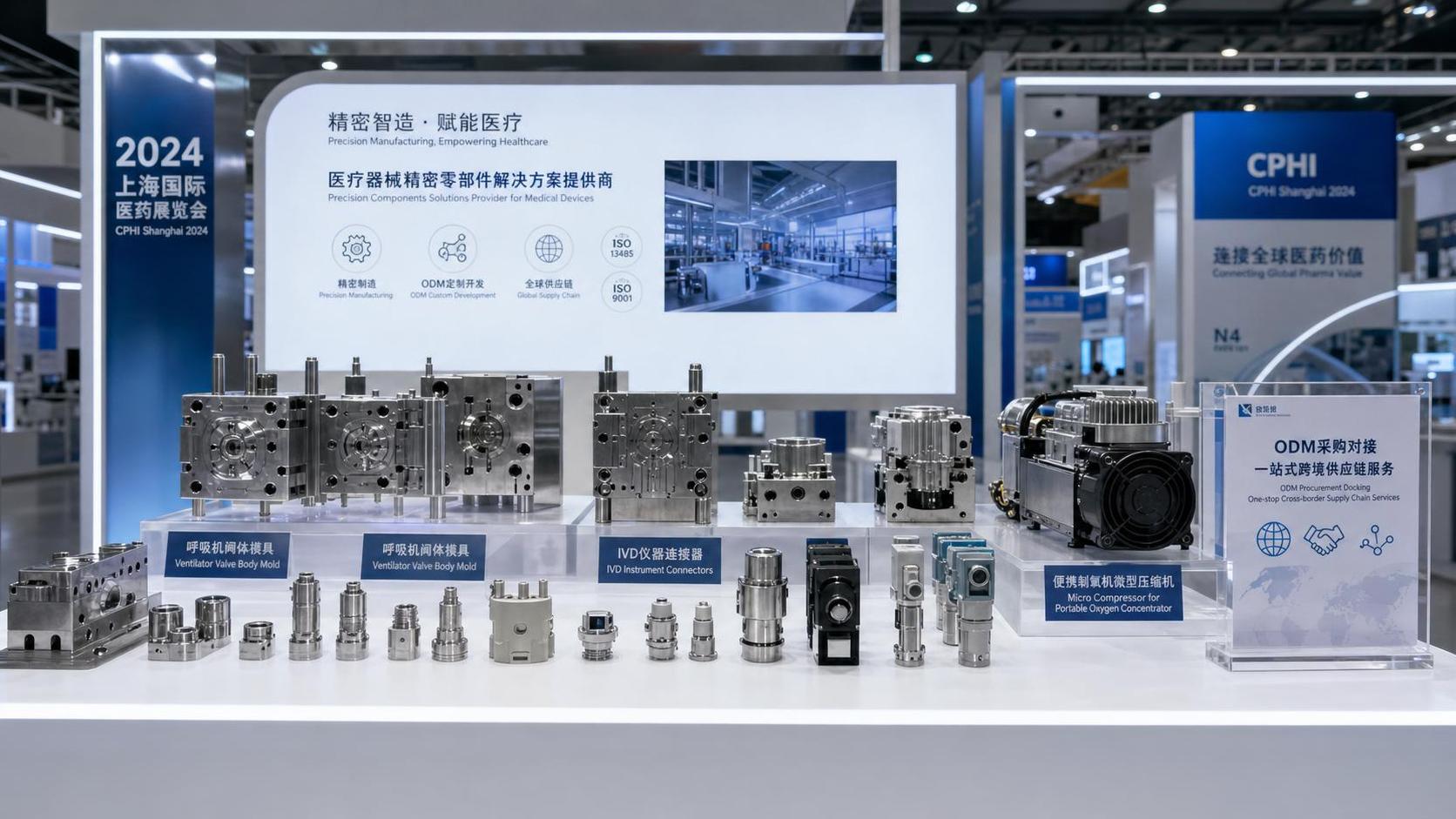
On June 17, 2026, CPHI China 2026 opened in Shanghai under the organization of China’s Ministry of Commerce, with a dedicated precision manufacturing area for medical devices drawing attention beyond a standard trade fair update. The event matters because it turns overseas OEM purchasing requirements for components such as ventilator valve body molds, IVD instrument connectors, and miniature compressors for portable oxygen concentrators into a more visible specification- and procurement-led entry point for Chinese suppliers, which may affect sourcing alignment, technical documentation, qualification review, delivery planning, and export compliance preparation across the medical device supply chain.
What the event has clearly put on the table
Confirmed information shows that CPHI China 2026 took place in Shanghai on June 17, 2026 and included a dedicated zone focused on precision manufacturing for medical devices. The matching focus covered procurement demand for high-precision industrial components including ventilator valve body molds, connectors for IVD testing instruments, and miniature compressors used in portable oxygen concentrators. More than 20 overseas medical device OEM manufacturers from Southeast Asia, the Middle East, and Latin America released technical specifications and annual procurement lists on site, creating a direct business development channel for relevant Chinese suppliers.
Why this matters for supply-chain execution
Component manufacturers now face a more specification-led sales process
Analysis shows that for connector, mold, and compressor suppliers, the main change is not simply increased exposure but a clearer shift toward buyer-defined technical alignment at an earlier stage. The practical impact is likely to fall on drawing review, tolerance matching, material and process documentation, sample validation readiness, and the ability to respond to annual procurement schedules rather than only one-off inquiries.
Export-oriented suppliers may need stronger compliance preparation
From an industry perspective, suppliers seeking to convert these leads into ODM-related business should pay closer attention to the documentation and qualification layer that usually accompanies cross-border medical device sourcing. What deserves closer attention is whether procurement requests begin to demand more complete technical files, testing records, traceability materials, quality-system evidence, or market-specific certification support as part of supplier screening, even where the fair itself does not define those requirements in detail.
Procurement and supply-chain service providers may see earlier involvement
Observably, the publication of annual procurement lists can affect not only manufacturers but also sourcing teams, contract managers, and supply-chain service providers. Their work may shift toward earlier demand forecasting, supplier pre-screening, lead-time coordination, shipment planning, and document consistency checks, especially where high-precision parts are involved and delivery reliability matters as much as price.
What companies should watch next
Track how technical specifications translate into qualification requirements
Analysis shows that the most immediate task for suppliers is to review whether released specifications imply stricter expectations for dimensional control, performance consistency, compatibility, or production repeatability. Companies should focus on whether future requests for quotation, bid documents, or supplier onboarding materials ask for supporting test reports, process capability records, or other technical evidence.
Prepare document packages for cross-border procurement discussions
What deserves closer attention is the practical completeness of export-facing document sets. For companies entering discussions with overseas OEM buyers, readiness may depend on how clearly they can organize product specifications, manufacturing information, quality records, delivery commitments, and after-sales response arrangements. The current event does not confirm a unified rule set, but it does signal that documentation quality may become a differentiator in follow-up negotiations.
Watch delivery planning against annual purchasing cycles
From an industry perspective, the release of annual procurement lists may change how suppliers evaluate capacity and scheduling. Companies should pay attention to whether potential orders require more stable production windows, faster sample turnaround, or more structured inventory and delivery commitments than conventional industrial component business.
Stay alert to market-specific compliance expectations
Observably, buyers from different overseas markets may apply different certification, registration, or quality review expectations during supplier selection. Since the event summary does not provide detailed execution rules, it is more appropriate to understand this as a signal to verify target-market requirements case by case rather than as confirmation of a single harmonized compliance threshold.
How this signal should be read
Analysis shows that this development is better understood as an execution signal than as a fully defined regulatory change. The notable point is that procurement demand, technical specifications, and annual buying plans were presented directly to Chinese suppliers in a setting organized at ministerial level, which may tighten the connection between trade promotion and medically relevant manufacturing standards. At the same time, the available facts do not establish new formal regulations, mandatory certification rules, or uniform purchasing conditions, so continued observation is necessary.
A practical reading of the event
For the industry, the significance of this event lies in the visibility of a more structured overseas sourcing channel for precision components used in medical devices. It is more appropriate to understand this as a concrete market-access and execution signal: opportunities may increase for qualified suppliers, but actual conversion will likely depend on follow-up specification matching, compliance review, documentation readiness, and delivery performance rather than on exhibition exposure alone.
Source basis and points still requiring verification
This article is generated based on the user-provided news title, event date, and event summary. For events of this kind, relevant source types often include official event announcements, releases from trade or regulatory authorities, customs or commerce information, industry association updates, standard-setting documents, and reporting by authoritative trade media. No specific official source link was provided in the input, so further verification is still required. Observably, the areas that merit continued tracking include any later official wording, market-specific certification expectations, changes in tender or procurement documents, industry feedback from participating suppliers and buyers, and how enterprise-level execution develops after the event.