
International electrical standards that affect export approval

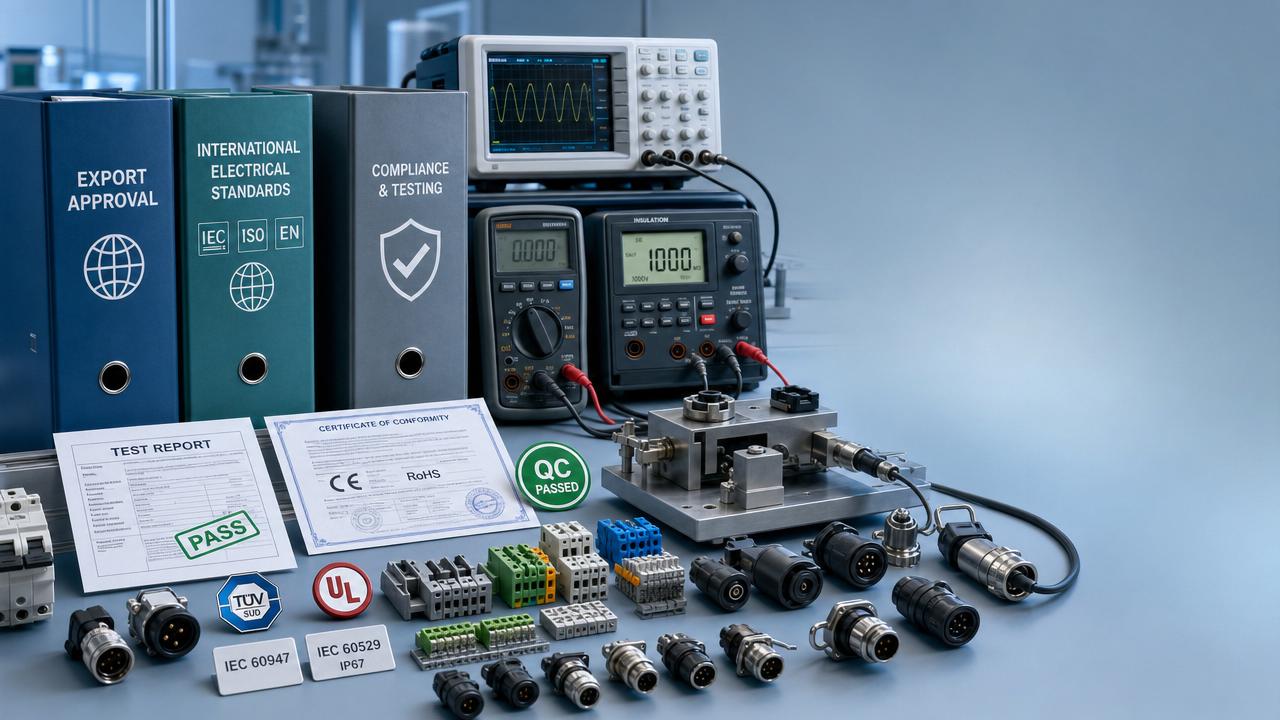
For business evaluators navigating cross-border market entry, understanding international electrical standards is essential to export approval, risk control, and supplier selection. From product safety and certification pathways to compliance costs and regional market access, these standards directly influence commercial feasibility. This article outlines the key frameworks that shape export decisions and helps you assess opportunities with greater confidence and precision.
Why export approval is becoming more standards-driven
A clear shift is taking place in global trade: export approval for electrical products is no longer determined only by product performance, price, or delivery capacity. It is increasingly shaped by international electrical standards, regional conformity rules, traceability expectations, and post-market accountability. For business evaluators, this means that commercial viability must now be tested against compliance readiness at a much earlier stage.
Several signals explain this change. Regulators are tightening safety oversight for connected and energy-using equipment. Buyers are reducing sourcing risk by demanding verifiable certifications before onboarding suppliers. Customs and market surveillance authorities are sharing data more effectively, making non-compliant exports easier to identify. At the same time, product categories once treated as simple hardware now often contain electrical, electronic, or smart-control functions that bring them into stricter regulatory scope.
For companies operating across hardware, tooling, electrical components, and industrial systems, the practical consequence is straightforward: international electrical standards are moving from a technical afterthought to a front-end business filter. Market entry decisions, supplier comparison, quotation logic, and launch schedules all depend on how well a product aligns with the standards landscape of target regions.
The main standards frameworks influencing export decisions
Business evaluators do not need to become design engineers, but they do need a working view of the standards architecture. In most export cases, international electrical standards operate through a layered model: core safety standards, electromagnetic compatibility requirements, environmental or energy-related obligations, and country-specific certification schemes.
At the international level, IEC standards remain a central reference point for electrical safety, performance, insulation, creepage and clearance, testing methods, and equipment classification. However, IEC alignment alone does not guarantee market access. In many destinations, these standards are adopted with local deviations or are embedded within mandatory frameworks.
In the European market, CE-related conformity routes typically involve the Low Voltage Directive, EMC Directive, and in some cases RoHS, Eco-design, or machinery-related requirements. In North America, UL, CSA, and NRTL pathways often define acceptance. In the Middle East, Latin America, and parts of Asia, national certification bodies may require local registration, testing, or representative arrangements even when products already meet IEC-based criteria.
This is why export approval should be evaluated as a standards map rather than a single certificate question. A product may be technically sound, yet still face approval delays if labeling, test reports, component recognition, plug configurations, or documentation format do not match the destination market.
Current trend signals in international electrical standards
What is driving these changes
The tightening around international electrical standards is not random. It is being driven by three overlapping forces. First, product complexity is increasing. Even in broad industrial categories, more equipment contains embedded electronics, digital interfaces, or power management features. That raises risk if design validation is weak or if components are sourced inconsistently.
Second, regulatory expectations are becoming lifecycle-based. Authorities and major buyers are no longer satisfied with a one-time test result. They increasingly expect stable manufacturing control, version consistency, technical files, and rapid corrective action if issues emerge in the field. This means export approval is linked to operational discipline, not just engineering design.
Third, geopolitical and supply-chain uncertainty has made importers more cautious. They want lower liability exposure, clearer audit trails, and stronger confidence that shipments will not be delayed by certification disputes. As a result, international electrical standards are now used as a practical proxy for supplier reliability and business continuity.
Where business evaluators see the biggest impact
For business assessment teams, the impact is most visible in five areas: market selection, quotation accuracy, supplier qualification, launch timing, and margin forecasting. A product that appears attractive in a broad export model may become uncompetitive once local testing, redesign, factory inspection, marking updates, and certification maintenance are included.
This is especially relevant in mixed industrial portfolios where products range from simple metal tools to electrically assisted equipment, control accessories, charging units, or industrial connectors. In such cases, the standards burden can vary sharply by model, voltage range, end-use environment, and whether the product is sold to consumers, commercial users, or OEM assemblers.
A new evaluation mindset: from certificate checking to compliance capability
One important market change is that buyers and evaluators are moving beyond simple certificate collection. A certificate may confirm that a sample once passed testing, but it does not automatically prove ongoing compliance across production batches, variant models, or destination markets. This is why stronger commercial teams now assess compliance capability as a system.
That system includes product design control, bill-of-material discipline, access to recognized components, version management, test lab coordination, declaration accuracy, and readiness for re-certification when standards are updated. In practical terms, a supplier with modest pricing but weak compliance governance may create more export friction than a higher-priced supplier with stable approvals and transparent files.
For sectors connected to industrial hardware and tooling, this shift matters because many products are evolving into cross-disciplinary offerings. A formerly mechanical product may now integrate power units, control boards, or connected safety features. When that happens, international electrical standards become part of core product strategy rather than an external checklist.
How to judge whether a product is approval-ready
A useful assessment approach is to divide approval readiness into stages. This helps business evaluators identify where commercial risk is concentrated and whether a project is merely testable or truly exportable.
Signals worth watching over the next planning cycle
Looking ahead, several signals deserve ongoing attention. First, standards harmonization will continue, but local divergence will remain commercially significant. This means global product platforms are still valuable, yet regional adaptation will not disappear. Second, digital documentation and traceability expectations are likely to grow, especially where importer accountability is rising. Third, electrical safety will increasingly intersect with cybersecurity, energy performance, repairability, and sustainability in certain product groups.
Another important signal is buyer behavior. Large distributors, platforms, and industrial procurement teams are building stricter qualification models that treat international electrical standards as part of supplier scoring. In other words, compliance competence is becoming a commercial differentiator, not just a legal necessity. Companies that can present clear approval pathways, stable component control, and credible update management are likely to gain trust faster.
Practical decision guidance for exporters and evaluators
If your role is to assess export feasibility, focus less on whether a product can eventually be certified and more on whether it can be certified efficiently, maintained reliably, and scaled profitably across markets. That distinction is where many export plans succeed or fail.
Start by identifying the intended markets, voltage conditions, end-user environments, and distribution model. Then confirm which international electrical standards and local schemes actually apply. Review whether the product architecture uses approved parts from stable sources. Examine the supplier’s ability to maintain technical files, declarations, labels, and manufacturing consistency. Finally, include compliance maintenance in the long-term cost model instead of treating it as a one-time launch expense.
For organizations active in industrial components, tooling, and electrical accessories, the best strategic move is to integrate compliance judgment earlier in product planning and supplier screening. This reduces redesign cycles, protects launch timing, and improves confidence when entering regulated markets.
Final takeaway for confident export approval decisions
The role of international electrical standards is expanding from technical reference to business gatekeeper. The most important change is not simply that more rules exist, but that standards now influence approval speed, sourcing risk, buyer trust, and margin quality at the same time. For business evaluators, that makes standards literacy a practical decision tool.
If a company wants to judge how these changes affect its own export opportunities, it should confirm five issues: which standards apply in each target market, where local deviations increase cost, whether critical components are approval-ready, how stable the supplier’s compliance process is, and who will manage updates after launch. Answering those questions early leads to stronger market selection, cleaner approvals, and more resilient global growth.
Related News