
International electrical standards that change export readiness

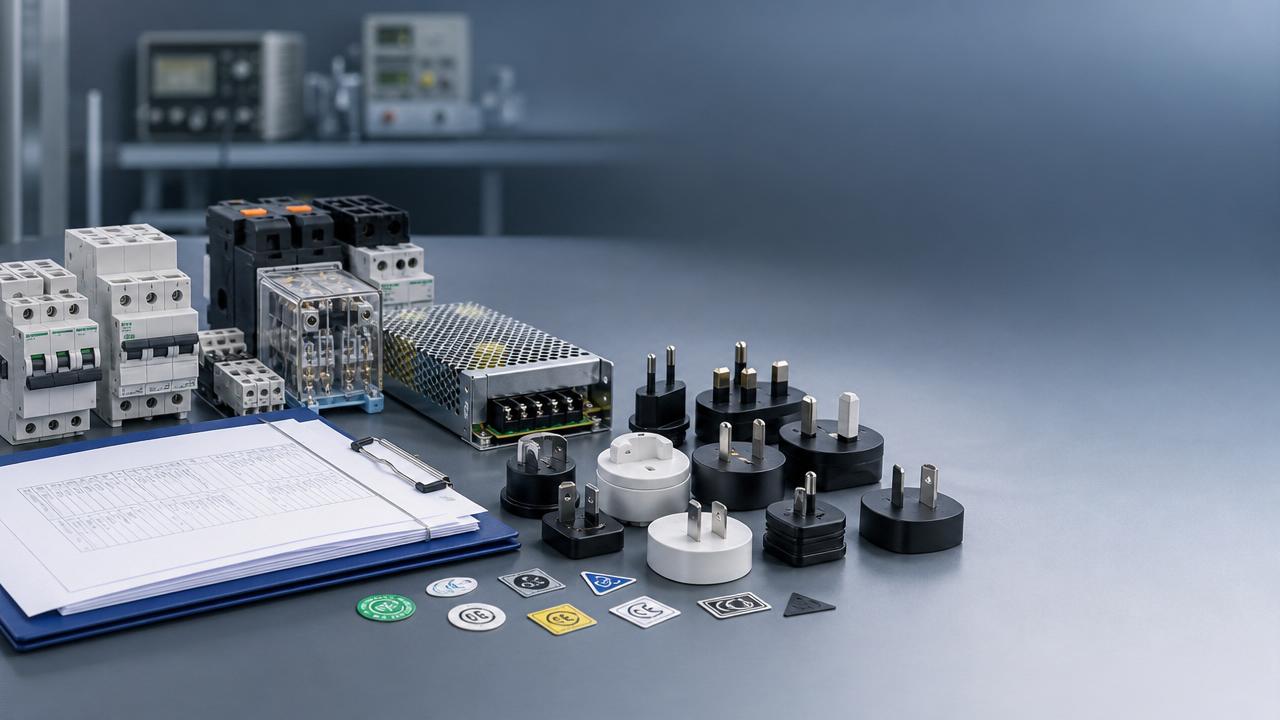
For business evaluators assessing global market entry, international electrical standards are more than compliance rules—they directly shape export readiness, product risk, and commercial viability. Understanding how certification frameworks, safety requirements, and regional technical variations affect electrical products helps companies reduce delays, control costs, and improve buyer confidence before entering competitive overseas markets.
Why a checklist approach works best for export readiness
For evaluation teams, the challenge is rarely a lack of information. The problem is that international electrical standards are spread across safety rules, EMC requirements, energy efficiency mandates, labeling obligations, testing pathways, and importer responsibilities. A product may look technically sound and commercially attractive, yet still fail at customs clearance, distributor onboarding, or customer approval because one standard was misunderstood or one regional deviation was missed.
A checklist-based review turns a broad compliance topic into a practical decision tool. It helps business evaluators identify what to verify first, what can block export timing, what affects landed cost, and which issues should be escalated to engineering, sourcing, or legal teams. For manufacturers, OEMs, and distributors working across the hardware and electrical value chain, this method supports faster go/no-go decisions and more reliable market-entry planning.
First-pass checklist: the key questions to confirm before deeper evaluation
Before studying detailed clauses, evaluators should confirm a few high-impact points. These determine whether the product is realistically export-ready or still at an early compliance stage.
- Is the target market clearly defined by country or region, such as the EU, North America, the Middle East, or Southeast Asia? International electrical standards are not applied uniformly, and market ambiguity creates cost and timing risk.
- What is the exact product category: component, finished device, industrial control assembly, power accessory, or consumer-facing electrical item? Product classification drives the applicable standards and certification route.
- Has the product already been tested to IEC, EN, UL, or other recognized standards? Prior test data may shorten the path to market, but only if scope, edition, and construction are still valid.
- Are there design features likely to trigger extra scrutiny, such as high voltage, heat generation, wireless functions, battery integration, or safety-critical use?
- Who will hold the compliance responsibility in-market: manufacturer, importer, brand owner, or authorized representative? This affects documentation, labeling, and liability exposure.
Core evaluation checklist for international electrical standards
1. Match the product to the right standards family
The first judgment standard is relevance. International electrical standards often begin with IEC frameworks, but export readiness depends on how those frameworks are adopted regionally. A business evaluator should confirm whether the product is governed mainly by product safety, EMC, energy performance, hazardous substance controls, or a combination of all four.
For example, an industrial power distribution component may need low-voltage safety assessment, temperature-rise testing, enclosure protection review, and electromagnetic compatibility analysis. A simple plug-in accessory may seem lower risk, but plug type, wiring instructions, and national deviations can still stop market entry.
2. Verify regional adoption and national deviations
One of the most overlooked realities in international electrical standards is that “international” does not always mean “globally accepted without change.” IEC standards are widely influential, but regions often adopt them with modifications. The EU may require conformity under CE-related directives and harmonized EN standards. The United States may rely on UL or other NRTL pathways. Canada may require CSA alignment. Gulf markets, Australia, and Asian countries may impose local registration or approved lab requirements.
If the export plan covers multiple countries, ask whether the product can be designed once and certified broadly, or whether country-specific variants are unavoidable. This directly affects margin, inventory complexity, and after-sales support.
3. Check certification pathway, not just standard names
Many export projects fail because teams confirm the standard but not the acceptance route. Evaluators should ask whether the target market requires self-declaration, third-party certification, factory inspection, local registration, or ongoing surveillance. The same product may pass testing but still be commercially delayed if the certification body is not recognized by the importing market.
This is especially important for private-label projects and contract manufacturing. If the certificate is held under another brand or legal entity, transferability can become a serious market-entry obstacle.
4. Review technical file completeness
Export readiness is not only about passing tests. Business evaluators should verify whether the technical file is complete and commercially usable. A strong file normally includes product specifications, drawings, bill of materials, component certifications, risk assessment, test reports, labels, user instructions, and declarations where needed.
Incomplete documentation creates hidden costs. It can delay customs review, disrupt distributor onboarding, and weaken defense in product liability disputes. In sectors supported by GHTN’s industrial intelligence model, upstream component traceability is often as important as the final assembly report.
5. Confirm component-level compliance dependencies
For many electrical products, export readiness depends on subcomponents: connectors, switches, relays, insulation materials, cords, plugs, terminals, molded housings, or thermal protection devices. International electrical standards may require these parts to meet recognized specifications or carry approved ratings.
If a low-cost supplier substitution has occurred, even without changing product function, prior certification may no longer be valid. Evaluators should ask whether any component changes have been made since the last report and whether change-control procedures are documented.
6. Evaluate lifecycle cost, not only initial testing cost
A product may appear compliant but commercially weak if the long-term compliance burden is too high. International electrical standards can trigger recurring expenses through annual factory audits, retesting after design changes, document translation, local representation, and multi-market label management. Business evaluators should compare compliance cost against expected sales volume, channel strategy, and expected price positioning.
Quick comparison table: what evaluators should look at by market pathway
The table below helps organize high-priority review points when international electrical standards affect different export destinations.
Scenario-based checks for different business models
For OEM manufacturers
OEMs should prioritize platform compatibility. If one product family is expected to serve several markets, design decisions must consider voltage range, plug systems, enclosure ratings, and approved component sourcing from the start. Retrofitting to meet international electrical standards after tooling, procurement, and packaging are fixed is usually expensive and slow.
For distributors and brand owners
Distributors should verify who controls the documentation, whether reports match the exact SKU, and whether private-label changes affect markings or instructions. International electrical standards often become a contract risk when the distributor assumes the product is already compliant but later discovers that the existing reports belong to another model or legal entity.
For sourcing and commercial due diligence teams
Commercial teams should connect compliance with supply-chain resilience. If the product depends on a narrow set of certified parts, alternate sourcing may be limited. That can influence pricing flexibility, lead time reliability, and negotiation strength. In electrical and tooling sectors, compliance status is often a hidden proxy for operational maturity.
Commonly missed issues that delay export readiness
- Old test reports based on withdrawn editions of standards.
- Instruction manuals that do not match required language, warning content, or installation conditions.
- Uncontrolled design changes after certification, especially in plastics, terminals, power cords, or internal spacing.
- Overlooking EMC, environmental, or hazardous substance requirements while focusing only on electrical safety.
- Incorrect assumptions about importer obligations, authorized representatives, or local record-keeping periods.
- Label content that omits traceability information, ratings, or mandated symbols.
Practical execution plan for evaluators
A disciplined review process makes international electrical standards easier to manage. Start by collecting the target-market list, exact product configuration, current certificates, recent test reports, key component approvals, and labeling samples. Next, compare the evidence against the intended sales route: direct export, local importer distribution, private-label resale, or project-based industrial delivery.
Then assign each product to one of three categories: ready for launch, conditionally ready with defined gaps, or not ready pending redesign or recertification. This simple classification helps management make decisions on launch timing, budget allocation, and customer commitments.
For organizations tracking industrial parts and electrical systems at a strategic level, this is where structured market intelligence adds value. GHTN’s sector perspective is especially relevant because export readiness is shaped not only by final-device compliance, but also by the quality logic of underlying components, manufacturing controls, and standardization trends across the global supply network.
FAQ: fast answers on international electrical standards
Does compliance with IEC standards guarantee acceptance everywhere?
No. IEC alignment is valuable, but many countries apply national deviations, local marks, or separate certification procedures.
What should be checked first in a commercial evaluation?
Confirm the target market, product category, certification pathway, and ownership of compliance documents. These four factors shape most export decisions.
Why do compliant products still get delayed?
Because export readiness depends on more than technical testing. Labeling, documentation, importer setup, local registration, and component traceability often cause the delay.
Final decision guide and next-step questions
International electrical standards should be treated as a commercial readiness framework, not a late-stage paperwork task. For business evaluators, the best results come from checking market scope, applicable standards, certification route, document ownership, component dependencies, and lifecycle compliance cost in a structured order. This reduces launch risk and improves confidence in pricing, scheduling, and channel planning.
If your team needs to move forward, prioritize discussion around five practical questions: which markets matter first, which standards editions apply, what evidence already exists, what gaps affect timing or budget, and who will carry legal responsibility after import. Clarifying those points early makes export readiness more predictable and turns international electrical standards into a competitive advantage rather than a barrier.
Related News