
Cutting tool wear patterns that signal the wrong setup

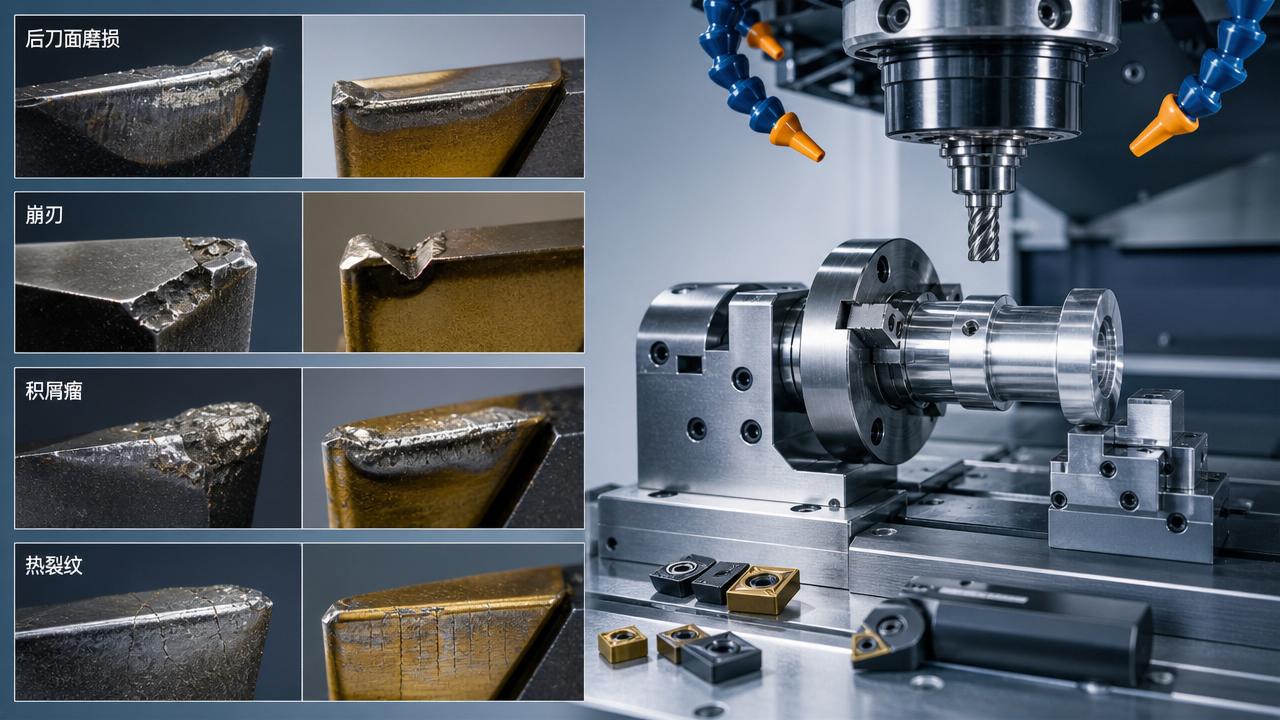
Unexpected tool wear rarely happens by chance—it often points to the wrong speed, feed, alignment, or coolant strategy. This technical analysis of cutting tools helps after-sales maintenance teams recognize wear patterns early, trace them back to setup errors, and reduce unplanned downtime. By reading wear marks correctly, maintenance staff can support faster troubleshooting, improve machining consistency, and protect both tooling life and production quality.
Why wear patterns matter more than the damaged edge itself
For after-sales maintenance personnel, a worn insert, drill, end mill, or reamer is not just a consumable problem. It is often the most visible symptom of a setup fault somewhere in the machining chain. A practical technical analysis of cutting tools starts with this idea: wear morphology is diagnostic evidence. If the team replaces the tool without reading the pattern, the same failure usually returns in the next shift, next batch, or next machine.
In mixed industrial environments—job shops, mold workshops, electrical hardware production, and OEM support centers—maintenance teams face several pressures at once. They must restore output quickly, explain root causes to operators, coordinate with purchasing, and avoid over-ordering expensive tooling. That is why wear pattern recognition is not only a machining topic. It is a service, reliability, and cost-control topic.
- It reduces repeated stoppages caused by the same hidden setup error.
- It helps separate true tool quality issues from machine, coolant, fixturing, or parameter problems.
- It supports better communication between maintenance, operators, production engineers, and procurement.
- It improves evidence-based replacement decisions instead of guesswork under time pressure.
For organizations following GHTN’s cross-sector industrial perspective, this matters because cutting performance is connected to the wider component ecosystem: spindle condition, pneumatic stability, clamping reliability, fastener integrity, mold tolerances, and thermal management all influence tool wear. A useful technical analysis of cutting tools therefore looks beyond the edge and into the system.
Which cutting tool wear patterns usually signal the wrong setup?
The fastest way to troubleshoot is to match visible wear to the most likely setup fault. The table below is designed for after-sales maintenance teams who need a practical bridge between what they see on the tool and what they should inspect on the machine, fixture, coolant line, or program.
The value of this technical analysis of cutting tools is not in memorizing terms. It is in shortening diagnosis. If the wear is localized and irregular, suspect rigidity, runout, fixturing, or intermittent engagement. If the wear is smooth and thermal in appearance, suspect speed, chip load balance, and coolant strategy before blaming the tool supplier.
A simple rule for field service teams
Uniform wear often points to parameter mismatch. Sudden breakage often points to mechanical instability. Adhesive wear often points to lubrication or speed error. Heat damage often points to thermal control failure. This rule is not perfect, but it gives maintenance staff a fast first-pass framework during line stoppages.
How to separate tool quality complaints from setup-driven failures
One of the most difficult service situations is the claim that “the tool is bad.” Sometimes that is true. More often, the tool is being used in a setup outside its intended operating window. A disciplined technical analysis of cutting tools helps avoid costly misjudgment, unnecessary returns, and repeated downtime.
Ask these questions before changing supplier or grade
- Has the actual spindle speed been verified against the programmed value? Belt slip, calibration drift, or controller mismatch can distort the real cutting condition.
- Has radial or axial runout been measured at the cutting edge, not only at the holder? Small runout can overload one flute or one insert corner.
- Is the workholding stable across the full cycle? A fixture that shifts only during peak load can create wear patterns that resemble poor tool toughness.
- Is coolant concentration within control range, and is delivery reaching the cutting zone instead of flooding the general area?
- Did the material lot change? Scale, hardness spread, internal inclusions, or surface treatment can alter wear behavior sharply.
In support environments across mechanical tooling, electrical hardware housings, and mold components, the same pattern repeats: maintenance teams save time when they validate system conditions before escalating the issue as a tool defect. GHTN’s broader industrial lens is useful here because tooling life is often linked to hidden variables outside the cutter itself.
What setup variables should maintenance teams inspect first?
When production is down, inspection order matters. The checklist below prioritizes variables that most commonly create misleading wear signals. It is especially useful for after-sales maintenance staff who support multiple machines and cannot afford long diagnostic loops.
The table highlights a key maintenance principle: do not inspect parameters in isolation. If speed is increased to improve cycle time while coolant reach is poor and runout is already high, the wear pattern may look confusing. Only a combined technical analysis of cutting tools and machine condition will reveal the root cause.
Recommended troubleshooting sequence
- Capture the worn tool and compare all active edges or flutes, not just the most damaged area.
- Review the program, actual machine data, and recent process changes such as material batch, coolant refill, or fixture maintenance.
- Measure runout and inspect holder contact surfaces for dirt, fretting, or clamp wear.
- Check coolant path, pressure consistency, and whether chips are evacuated or recut.
- Only after these checks should the team trial a different tool grade, geometry, or coating.
Application scenarios: how the same wear pattern means different things in different shops
A strong technical analysis of cutting tools always considers application context. The same edge chipping can come from different causes in mold machining, fastener production, or electrical enclosure manufacturing. After-sales maintenance teams should avoid copying corrective actions from one line directly to another.
Mold and die components
In hardened steel cavity work, crater wear and thermal damage often grow quickly when surface speed is pushed for finish targets but coolant access is weak in deep features. Here, maintenance should focus on heat control, engagement strategy, and holder extension length. Chipping may also be amplified by long overhangs that reduce rigidity.
Fastener and small hardware production
In high-volume runs, uniform flank wear may look acceptable at first, but accelerated wear often signals inconsistency in material coating, wire condition, or lubrication. Because cycle time pressure is high, maintenance teams should monitor whether the tool is failing gradually or crossing suddenly into burr, size drift, and thread quality issues.
Electrical housings and mixed-alloy parts
Built-up edge is common when machining aluminum alloys or ductile nonferrous materials if the lubrication strategy is weak or if edge geometry is too conservative. In these cases, a maintenance team should also inspect chip packing, especially in blind features, because recutting can mimic poor tool sharpness.
Procurement and replacement decisions: when should you change the tool, the holder, or the process?
After-sales maintenance personnel are often pulled into purchasing decisions because repeated tool failures trigger urgent orders. That is risky if the root cause has not been isolated. A practical technical analysis of cutting tools should guide whether the business needs a new cutter, a different holder system, a coolant upgrade, or a setup correction only.
Decision guide for urgent support cases
- Replace the tool first when wear is predictable, evenly distributed, and close to normal life limits.
- Inspect or replace the holder when wear is asymmetrical, one flute carries most damage, or insert seating marks show instability.
- Adjust the process when multiple new tools fail in the same short interval despite consistent supply quality.
- Review machine condition when wear patterns spread across different tools and materials on the same spindle.
This is where GHTN’s value becomes practical. Because the platform connects tooling analysis with adjacent industrial components and manufacturing logic, maintenance teams can assess not only the cutting edge but also clamping hardware, pneumatic actuation stability, and downstream quality effects before making replacement decisions.
Common mistakes that make wear analysis less reliable
Even experienced teams can misread wear if the inspection process is rushed. These mistakes are common in field service environments and often lead to wasted tooling spend or inaccurate supplier escalation.
- Comparing a failed tool with memory instead of retaining a reference sample from a stable production period.
- Ignoring machine-side evidence such as vibration logs, spindle temperature, or coolant pressure fluctuation.
- Assuming all chipping means the tool is too brittle, when the real cause may be runout or interrupted cutting.
- Changing too many variables at once, which makes the next wear pattern impossible to interpret clearly.
- Treating tool life alone as the target without checking part finish, dimensional stability, and burr formation.
The best corrective action is controlled change. Adjust one major variable, document the result, and compare the new wear pattern to the old one. This approach turns technical analysis of cutting tools into a repeatable maintenance method rather than a one-time judgment call.
FAQ: practical questions from after-sales maintenance teams
How can I tell whether flank wear is normal or a warning sign?
Flank wear is often part of normal tool aging if it develops evenly and gradually. It becomes a warning sign when the wear land grows faster than expected, appears on one side only, or starts causing measurable dimensional drift, burrs, higher spindle load, or finish deterioration. In technical analysis of cutting tools, the pattern trend is more informative than the appearance alone.
Why does a new batch of tools fail even though the program did not change?
Because the setup may have changed indirectly. Common hidden causes include holder wear, spindle condition drift, different coolant concentration, nozzle repositioning after maintenance, or a material lot with different surface behavior. A stable NC program does not guarantee stable cutting conditions.
Which is more urgent to check first: coolant or runout?
It depends on the wear signature. If you see thermal cracks, built-up edge, or crater wear, coolant and heat control should be checked immediately. If you see uneven flute wear, corner breakage, or edge chipping concentrated on one side, runout and clamping should move to the front of the queue. In many real cases, both factors interact.
Should maintenance teams keep worn tools for analysis?
Yes, especially representative samples from stable and unstable production periods. Keeping labeled samples by material, machine, holder, and program revision helps create a visual baseline. Over time, this becomes one of the most practical internal databases for technical analysis of cutting tools and failure prevention.
Why choose us for cutting wear diagnosis and sourcing support
GHTN supports maintenance and sourcing decisions by connecting wear interpretation with the wider industrial system behind it. Instead of treating tooling as an isolated product category, we help teams assess machining behavior in relation to component performance, process logic, and real production constraints across mechanical tools, electrical hardware, and mold manufacturing environments.
If your team is dealing with recurring tool wear, unstable tool life, or unclear replacement decisions, you can consult us for specific support areas such as parameter confirmation, tool and holder selection, delivery lead time evaluation, customized application scenarios, certification-related documentation needs, sample support discussions, and quotation planning for replacement or process optimization.
When you share photos of wear patterns, workpiece material, machine type, holder condition, coolant method, and current cutting parameters, the discussion becomes faster and more useful. That is the most efficient starting point for a technical analysis of cutting tools that leads to fewer repeat failures, better service response, and more stable production outcomes.
Related News