
When a cutting tools manufacturer becomes a quality risk

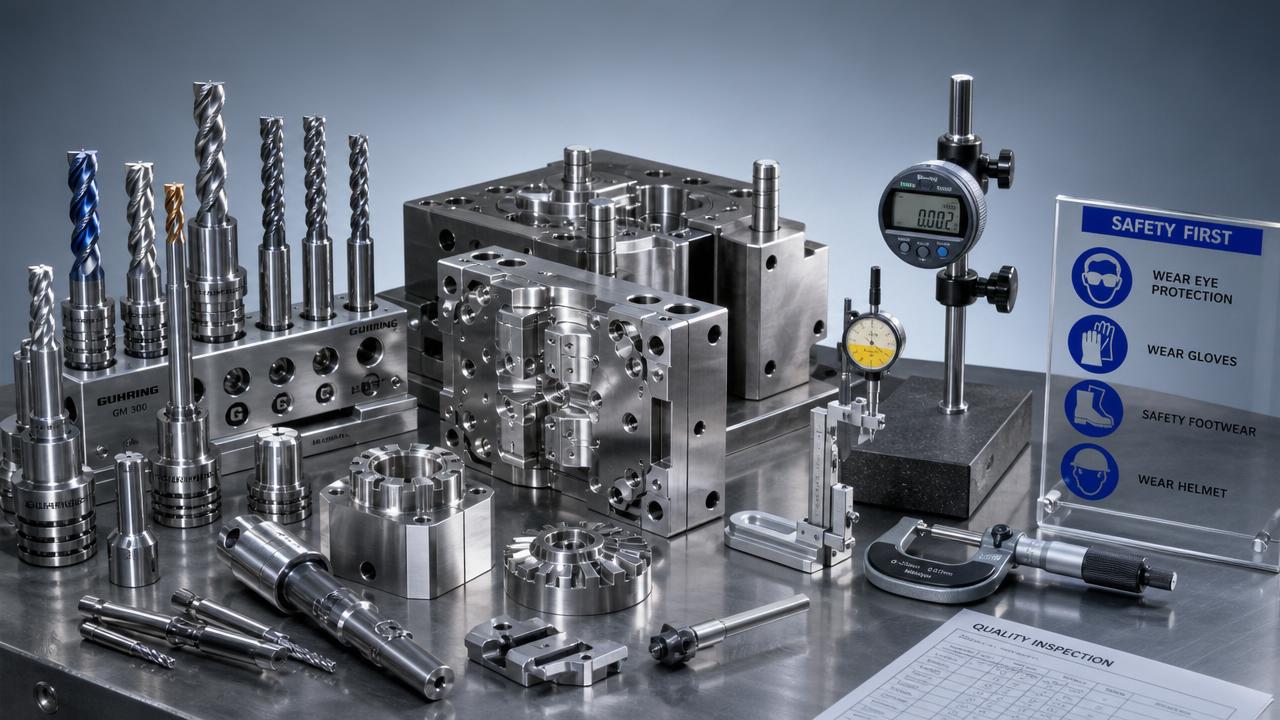
When a cutting tools manufacturer becomes a quality risk, the consequences can extend far beyond scrap rates to worker safety, compliance exposure, and supply chain disruption. For quality control and safety managers, recognizing early warning signs in tooling performance, process consistency, and supplier reliability is essential to preventing costly failures and maintaining operational confidence.
Understanding the risk behind a cutting tools manufacturer
A cutting tools manufacturer is not simply a component supplier. In modern industrial systems, tool makers influence dimensional accuracy, machine stability, operator exposure, preventive maintenance cycles, and the reliability of final products. When quality begins to drift at the manufacturing source, the impact often appears first as minor inconsistency: shorter tool life, unusual heat generation, burr formation, surface roughness variation, or unstable chip evacuation. Yet these early symptoms can quickly escalate into broader operational risk.
For quality personnel and safety managers, the phrase “quality risk” should be interpreted broadly. It includes not only defective tools, but also weak process control, inconsistent raw material selection, inadequate coating quality, poor lot traceability, unstable geometry tolerance, incomplete test records, and insufficient response to complaints or corrective actions. In this sense, a cutting tools manufacturer becomes a risk factor when its management system can no longer support predictable performance in real production environments.
This issue matters across the wider industrial ecosystem covered by GHTN, where precision tools are foundational to parts production, mold processing, metalworking efficiency, and repeatable assembly quality. Whether the application is mold cavity machining, automotive component finishing, electrical enclosure fabrication, or general OEM production, tooling inconsistency weakens the integrity of the whole process chain.
Why the industry pays close attention to supplier-side tooling quality
The industrial sector increasingly depends on lean inventories, automated machining, and tighter tolerance windows. In this environment, a cutting tools manufacturer has a direct effect on process capability. If tools fail unpredictably, the result is not limited to one machine or one shift. It can trigger line stoppages, rework, missed delivery commitments, customer complaints, and avoidable safety incidents during tool change or failure investigation.
Several trends make the issue more visible today. First, global sourcing has expanded the pool of tool suppliers, but not all manufacturers maintain the same level of metallurgical discipline or quality assurance maturity. Second, advanced materials such as hardened steels, composites, and heat-resistant alloys place higher demands on tool design and coating reliability. Third, digital manufacturing has made process variation easier to detect, revealing that some tooling failures once accepted as “normal wear” are actually signs of inconsistent supplier quality.
For companies focused on industrial resilience, the reliability of a cutting tools manufacturer is now part of enterprise risk management. It affects product conformity, machine availability, operator behavior, customer audits, and regulatory preparedness. Quality and safety teams therefore need a structured way to judge when a supplier is supporting process control and when it is silently undermining it.
What quality risk looks like in practical operations
A risky cutting tools manufacturer rarely announces itself through a single dramatic failure. More often, warning signs appear in patterns. Tool wear may vary sharply between lots. Recommended cutting parameters may produce inconsistent results across similar machines. Edge preparation may differ enough to affect heat concentration. Coatings may delaminate early under conditions that should be stable. Documentation may be incomplete, especially when users request lot history, substrate data, or corrective action reports.
For quality control teams, these issues reduce confidence in root cause analysis. If a drilled hole goes out of tolerance or a milling operation creates chatter marks, the question becomes difficult: is the problem machine rigidity, operator setup, coolant delivery, workpiece material variation, or the tool itself? A capable cutting tools manufacturer helps isolate that answer through traceable data and repeatable product quality. A weak one adds noise to the system.
For safety managers, tooling inconsistency creates a different set of concerns. Premature breakage can produce projectile hazards. Excessive cutting forces can drive unstable machine behavior. Frequent manual intervention during unplanned stoppages exposes personnel to pinch points and hot chips. In short, poor tool quality is not only a process issue; it is a workplace exposure issue.
Industry overview: where the risks concentrate
The table below summarizes how a cutting tools manufacturer can influence quality and safety outcomes across common industrial settings.
Who gains the most from assessing a cutting tools manufacturer carefully
Although procurement teams often manage supplier onboarding, the practical value of evaluating a cutting tools manufacturer is greatest for departments that live with production consequences every day.
Quality control teams
QC personnel benefit from tighter consistency, better traceability, and more credible root cause investigations. A mature supplier can provide batch-level records, dimensional inspection data, coating consistency indicators, and clear deviation management. These inputs reduce ambiguity when nonconformities occur.
Safety managers
Safety teams gain from lower breakage rates, fewer emergency interventions, and more stable machine behavior. Reliable tools support safer maintenance timing and reduce the number of incidents linked to sudden edge failure or chip control problems.
Production and maintenance leaders
These functions benefit from stable cycle times, predictable replacement intervals, and fewer unplanned stoppages. Tooling reliability improves machine utilization and allows preventive maintenance planning to remain disciplined.
OEMs and distributors
For organizations operating in international supply chains, the credibility of a cutting tools manufacturer also influences brand trust, customer retention, and after-sales burden. In sectors where end users expect documented performance claims, weak supplier quality creates reputational exposure.
Common categories of supplier-related tooling risk
A useful way to assess a cutting tools manufacturer is to classify risk by source rather than by isolated incident.
Practical evaluation points for quality and safety managers
To determine whether a cutting tools manufacturer is becoming a quality risk, companies should move beyond price and catalog range. A stronger review framework includes technical, system, and operational dimensions.
Start with process consistency. Ask whether the supplier can demonstrate control over substrate selection, grinding repeatability, coating process windows, and final inspection criteria. Review whether tool performance data is application-specific or simply promotional. A serious cutting tools manufacturer should be able to explain why a tool behaves as it does in particular materials, speeds, feeds, and coolant conditions.
Next, test traceability discipline. Can the supplier identify production lots quickly? Can it provide nonconformance response records, failure analysis reports, and corrective action timelines? If complaint handling depends on opinion rather than evidence, the supplier may not be ready for high-risk production environments.
Then examine field performance. Internal users should compare actual tool life dispersion, dimensional stability, breakage frequency, and changeover burden across lots and across suppliers. The goal is not to eliminate normal variation, but to identify whether one cutting tools manufacturer produces disproportionately unstable outcomes.
Finally, include safety observations in tooling reviews. If certain tools correlate with repeated chip control issues, spindle load spikes, operator complaints, or unsafe manual intervention, those findings should be escalated through supplier quality channels rather than treated as isolated shop-floor inconvenience.
How to reduce exposure before failures become systemic
The most effective response is preventive rather than reactive. Companies should qualify each cutting tools manufacturer through staged application trials, not only by checking certificates. Pilot runs should measure tool life spread, surface finish stability, dimensional repeatability, and operator handling implications under actual production conditions.
Supplier scorecards should also be expanded. In addition to cost and delivery, include complaint closure speed, lot consistency, documentation quality, field support responsiveness, and safety-related incident association. This creates a balanced picture of supplier reliability.
Cross-functional review is equally important. Quality, safety, production, maintenance, and procurement should share tooling data instead of assessing suppliers in isolation. A cutting tools manufacturer that appears acceptable in purchase records may reveal hidden problems when machine stoppage logs, rejected part data, and near-miss reports are analyzed together.
For strategic categories such as mold machining or automated line tooling, dual-source planning can reduce dependence on a single unstable supplier. However, dual sourcing should not become an excuse to tolerate poor controls. The stronger approach is to define minimum technical expectations and remove suppliers that repeatedly fail them.
A broader industrial perspective
In the broader manufacturing landscape, precision tools are part of the hidden infrastructure that supports competitiveness. This is why platforms such as GHTN emphasize deep industrial intelligence rather than surface-level supplier lists. Understanding a cutting tools manufacturer requires attention to material science, application engineering, production discipline, and market reliability all at once. A low-visibility component can still be a high-impact risk node.
For organizations seeking resilient operations, the right question is not only whether a tool works today, but whether its manufacturer can sustain repeatable quality tomorrow across batches, applications, and production pressure. That distinction separates short-term purchasing success from long-term operational confidence.
Conclusion and next-step focus
A cutting tools manufacturer becomes a quality risk when inconsistency at the supplier level begins to erode process stability, worker safety, and confidence in decision-making. For quality control and safety managers, the priority is early detection: monitor tool life variation, lot traceability, failure patterns, documentation quality, and the supplier’s ability to respond with evidence instead of assumptions.
The strongest industrial organizations treat tooling suppliers as process partners, not interchangeable catalog sources. By combining technical review, field performance tracking, and cross-functional risk assessment, companies can reduce scrap, protect operators, and strengthen supply chain resilience. In a manufacturing world built on precision, the reliability of every cutting tools manufacturer matters more than it appears at first glance.
Related News