
How to judge a cutting tools manufacturer fairly

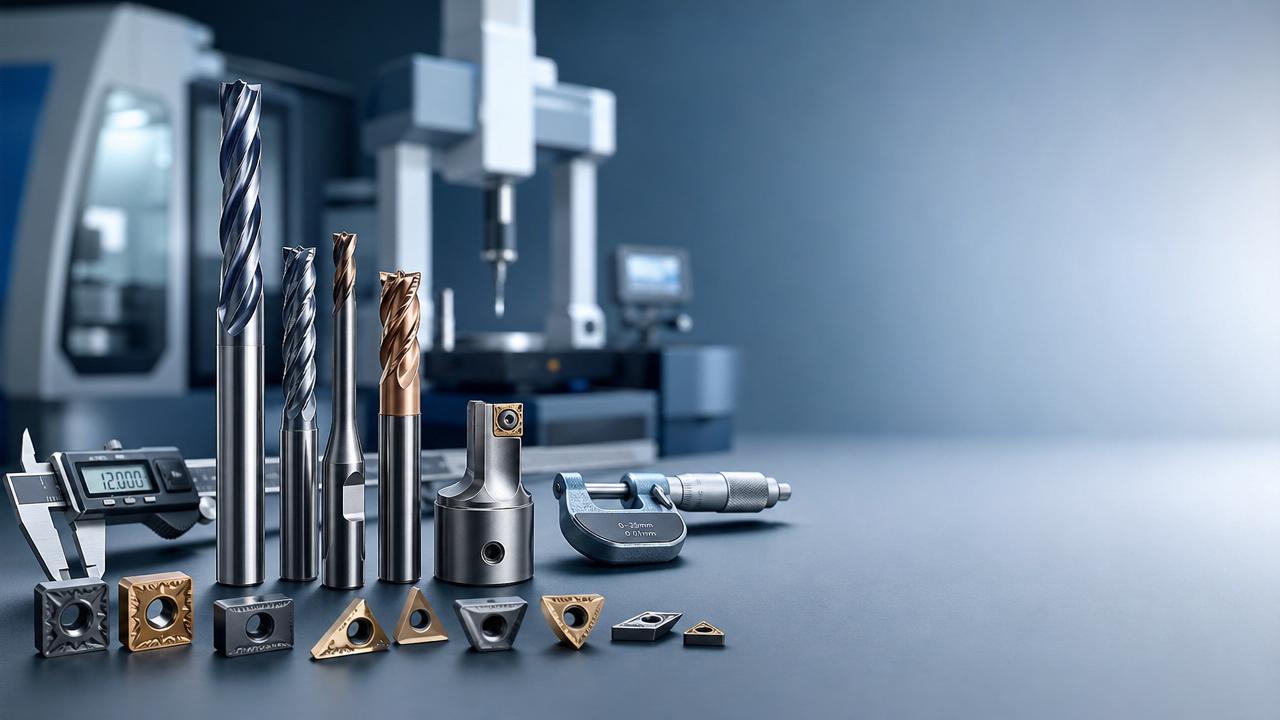
Choosing a cutting tools manufacturer is not just about price or delivery speed. A fair judgment requires evidence from product quality, process control, engineering strength, capacity planning, and service performance. In industrial sourcing, an objective review lowers supply risk, improves machining stability, and supports better long-term value. This guide explains how to evaluate a cutting tools manufacturer with a practical checklist and how to compare suppliers without bias.
Why a Fair Evaluation Matters
A cutting tool affects cycle time, surface finish, machine load, scrap rate, and tool change frequency. When the supplier is judged only by quotation, hidden costs often appear later.
A reliable cutting tools manufacturer should deliver stable geometry, repeatable coatings, accurate tolerances, and technical advice that fits the application. Fair evaluation means using the same criteria for every supplier.
This approach is especially important in the broader industrial sector, where tools may serve automotive parts, molds, general machining, electrical hardware, or precision components with different performance demands.
Core Checklist to Judge a Cutting Tools Manufacturer Fairly
Use the following checklist to compare each cutting tools manufacturer on measurable points rather than sales claims or isolated samples.
- Verify material expertise by checking carbide grades, substrate selection, grain structure, and matching logic for steel, stainless steel, cast iron, aluminum, and hardened alloys.
- Inspect manufacturing consistency through batch records, dimensional control, edge preparation standards, coating thickness variation, and documented inspection frequency across production lots.
- Review tool design capability by comparing flute geometry, chip evacuation performance, rake angle options, and application-specific features for drilling, milling, turning, and reaming.
- Check process equipment such as grinding machines, coating systems, measuring instruments, and automation level to understand whether precision claims are supported by real production assets.
- Measure quality control maturity through ISO certifications, incoming material checks, in-process inspection, final verification, traceability systems, and documented handling of nonconforming products.
- Compare performance data using the same workpiece material, machine conditions, cutting parameters, coolant method, and toolpath so every tested cutting tools manufacturer faces equal conditions.
- Ask for wear analysis reports showing flank wear, crater wear, built-up edge, chipping patterns, and failure causes instead of accepting tool life claims without technical context.
- Evaluate customization responsiveness for special diameters, corner radii, coatings, shank standards, and nonstandard geometries needed in mold making or niche component production.
- Confirm supply capacity by checking lead time stability, safety stock policy, raw material sourcing, peak season planning, and recovery plans for equipment downtime or logistics disruption.
- Assess technical support quality through application engineering speed, parameter optimization ability, on-site troubleshooting, and willingness to improve tool performance after trial feedback.
- Review total cost of ownership by combining tool price, machining efficiency, scrap risk, spindle uptime, and tool change labor instead of comparing unit price alone.
- Check communication discipline by testing quotation clarity, drawing review accuracy, revision control, and response speed when tolerances, coatings, or packaging requirements change.
How to Compare Suppliers Objectively
Build a weighted scorecard
A fair review becomes easier when every cutting tools manufacturer is scored against the same matrix. Common categories include quality, performance, delivery, engineering support, and commercial terms.
For high-precision applications, quality and repeatability may deserve the highest weight. For standard tools in large volumes, supply continuity and cost control may matter more.
Run controlled trials
Trial results are useful only when cutting conditions stay constant. Use the same machine, holder, program, material batch, coolant condition, and operator practice for each supplier test.
Record tool life, dimensional drift, burr formation, vibration, chip color, surface finish, and machine load. These details reveal whether a cutting tools manufacturer offers true process stability.
Audit beyond the sample
One excellent sample does not prove full-scale capability. Ask how the supplier controls repeat orders, substitutes raw materials, calibrates measuring devices, and handles urgent production changes.
Evaluation Points by Application Scenario
General machining and hardware production
In general machining, broad compatibility matters. A strong cutting tools manufacturer should provide stable standard drills, end mills, inserts, and taps with dependable lead times.
Focus on consistency across batches, not just peak test performance. In repetitive production, small variations in edge quality can quickly become large losses in downtime and rejection.
Mold and die work
Mold manufacturing often needs tight tolerances, long reach tools, and predictable finishing results. Here, micro-geometry, coating behavior, and runout control deserve close attention.
A suitable cutting tools manufacturer should also support custom tool design, because standard catalogs may not meet cavity, corner, or hardened steel requirements.
Automated or high-volume lines
In automated production, stability is more valuable than isolated tool life records. Tool change intervals must be predictable enough for planned maintenance windows and low intervention rates.
For this scenario, judge the cutting tools manufacturer by process repeatability, supply reliability, barcode traceability, and fast corrective action when wear behavior shifts.
Commonly Overlooked Risks
Unclear raw material origin
If substrate sourcing is vague, tool behavior may change between orders. Ask for grade specifications and supplier control methods, especially for carbide and coating materials.
Overreliance on catalog claims
Catalog data is useful, but not enough. Every cutting tools manufacturer can publish ideal parameters. What matters is verified performance under your actual machining conditions.
Weak change control
Even a good supplier becomes risky if design revisions, coating changes, or packaging updates are not formally controlled. Minor undocumented changes can affect line stability.
Limited post-sales support
A low initial price loses value when troubleshooting is slow. Fair judgment should include how quickly the supplier analyzes failure and proposes corrected cutting data or tool geometry.
Practical Execution Tips
- Create a standard supplier review form covering quality, engineering, delivery, compliance, and communication, then use it for every cutting tools manufacturer under consideration.
- Request three levels of evidence: documents, physical samples, and production-case references, so the evaluation reflects both paper capability and real operating results.
- Score at least two production lots, not one sample batch, because repeatability is usually the key difference between an average and excellent cutting tools manufacturer.
- Document failure modes with photos, wear measurements, and machining records to keep supplier discussions technical, specific, and easy to compare across trials.
Conclusion and Next Steps
To judge a cutting tools manufacturer fairly, focus on evidence, not impressions. Compare material knowledge, tool design, production control, test results, delivery discipline, and technical response in a structured way.
The best choice is rarely the lowest quote or the broadest catalog. It is the supplier that can repeatedly support your machining target with stable quality and transparent cooperation.
Start with a scorecard, run controlled trials, audit process consistency, and review total cost of ownership. That method will help identify a cutting tools manufacturer that supports durable industrial performance and lower sourcing risk.
Related News