
MIIT Launches Industrial Data Foundation Initiative
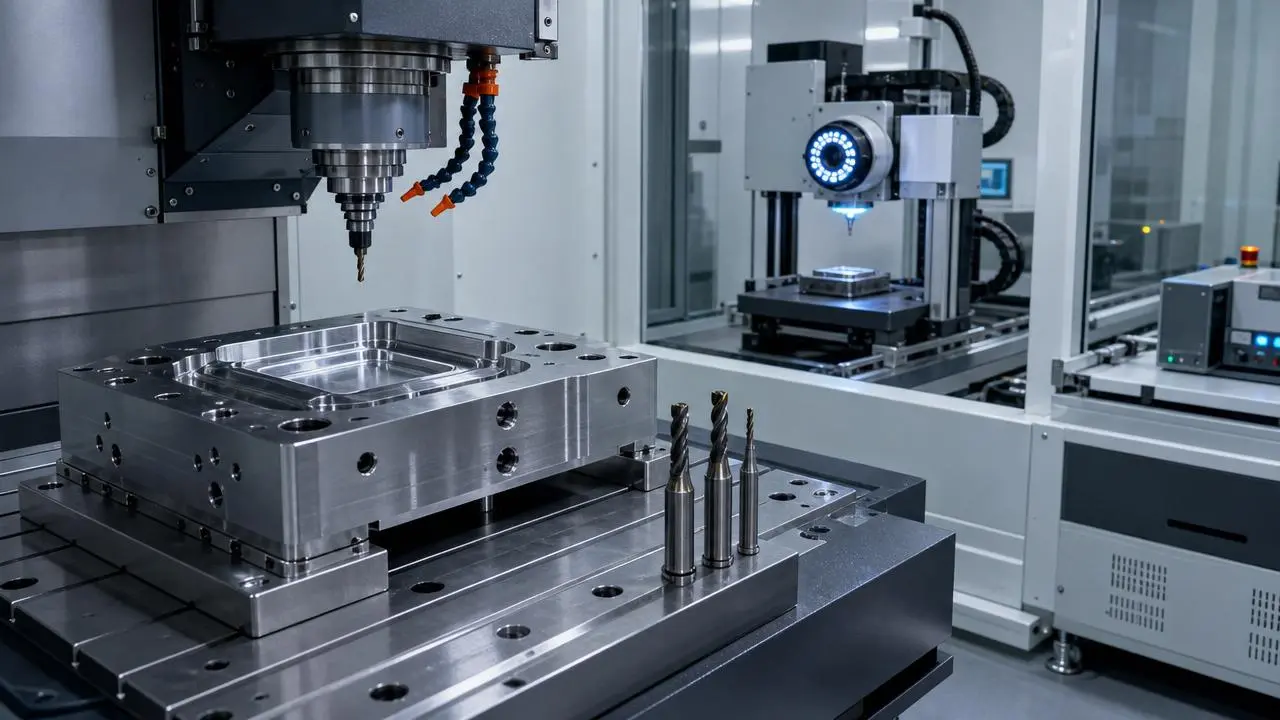
China's Ministry of Industry and Information Technology (MIIT) launched the Industrial Data Foundation Initiative on April 28, 2026, issuing the Reference Guidelines for Industrial Scenario Data Element Applications and announcing the first cohort of Joint Consortia for High-Quality Industry-Specific Datasets. The move targets critical data gaps in AI-driven quality inspection for export-oriented precision manufacturing sectors — particularly molds and cutting tools — where digital traceability and statistical process control (SPC) compliance are increasingly mandated by overseas buyers.
Event Overview
On April 28, 2026, MIIT issued the Reference Guidelines for Industrial Scenario Data Element Applications and published the inaugural list of Joint Consortia for High-Quality Industry-Specific Datasets. The listed consortia cover application scenarios including injection molds, cutting tools, and stamped components. These datasets are explicitly designed to support AI-powered visual inspection systems in industrial settings.
Industries Affected
Direct Export Enterprises: Companies exporting molds and cutting tools to North America and the EU face tightening contractual requirements — especially mandatory digital delivery of SPC process data, defect taxonomy traceability, and AQL sampling reports. With standardized, high-quality training data now available through MIIT-endorsed consortia, exporters can more rapidly deploy compliant AI inspection systems, reducing non-conformance risks in overseas audits and lowering reported return rates by over 15% — as cited in MIIT’s supporting documentation.
Raw Material Procurement Enterprises: Suppliers of tool steels, carbide blanks, and mold-grade aluminum alloys may experience upstream demand shifts. As manufacturers adopt AI-driven inline inspection, their tolerance specifications and surface finish consistency requirements become more stringent — prompting procurement teams to prioritize suppliers with certified material traceability systems and granular batch-level metallurgical data, which align with the new dataset standards.
Contract Manufacturing & OEM Enterprises: Firms engaged in precision machining or mold fabrication will need to integrate validated AI inspection modules into existing production lines. This requires not only hardware upgrades (e.g., calibrated imaging stations, edge inference devices), but also staff retraining and internal data governance adjustments — notably around labeling protocols, defect annotation consistency, and metadata tagging aligned with the MIIT guidelines.
Supply Chain Service Providers: Third-party inspection agencies, SaaS vendors offering quality analytics platforms, and industrial AI model developers must now align their offerings with the reference data schemas and annotation conventions defined by the consortia. For instance, defect classification taxonomies in commercial vision models will need cross-walk mapping to MIIT’s standardized categories (e.g., ‘micro-crack at gate region’ vs. ‘flow mark near ejection pin’) to ensure interoperability and audit readiness.
Key Focus Areas and Recommended Actions
Validate alignment with consortium data schemas
Exporters and Tier-1 manufacturers should map their current defect labeling frameworks against the publicly released annotation specifications from the首批 (first batch) consortia — particularly those covering cutting tool flank wear patterns and mold cavity surface micro-defects. Misalignment may hinder model fine-tuning efficiency and certification acceptance.
Assess internal data readiness for AI integration
Before deploying AI inspection, firms must audit existing image capture infrastructure (lighting uniformity, camera resolution, lens distortion), metadata completeness (tool ID, cycle count, operator code), and storage compliance (ISO/IEC 27001-aligned access controls). MIIT’s guidelines emphasize that dataset quality depends as much on provenance rigor as pixel resolution.
Engage early with consortium members
Participation in consortium working groups — even as observers — provides advance insight into upcoming scenario expansions (e.g., EDM electrode wear monitoring, hot-runner nozzle fouling detection) and helps shape future data standardization priorities. Membership is not restricted to large enterprises; SMEs are explicitly invited via provincial MIIT branches.
Editorial Perspective / Industry Observation
Observably, this initiative marks a strategic pivot from infrastructure-led digitalization (e.g., smart factory hardware subsidies) toward data-led industrial intelligence. Unlike previous top-down data collection efforts, MIIT’s approach delegates curation authority to industry-led consortia — a structure intended to balance regulatory coherence with domain-specific realism. Analysis shows that the emphasis on ‘export competitiveness’ in the official announcement signals prioritization of near-term trade facilitation over long-term foundational AI research. That said, the absence of open licensing terms for the datasets — and limited clarity on cross-border data transfer provisions — remains a constraint for multinational manufacturers operating dual-stack (domestic + global) AI deployment strategies.
Conclusion
This initiative does not introduce new regulatory mandates, but rather lowers the operational threshold for meeting existing international quality assurance expectations. Its significance lies less in immediate compliance pressure and more in accelerating convergence between China’s domestic industrial data practices and globally accepted digital quality frameworks. For the mold and cutting tool sectors — historically strong in physical capability but fragmented in digital maturity — it represents a coordinated, sector-specific on-ramp to AI-enabled export resilience.
Source Attribution
Official documents: MIIT Notice No. [2026]XX on the Reference Guidelines for Industrial Scenario Data Element Applications; List of First-Batch Joint Consortia for High-Quality Industry-Specific Datasets (April 28, 2026), published on www.miit.gov.cn. Further details on consortium governance, dataset access protocols, and technical annexes remain pending publication — these elements warrant continued observation over Q3 2026.
Related News