
Tooling technology upgrades that improve repeat accuracy

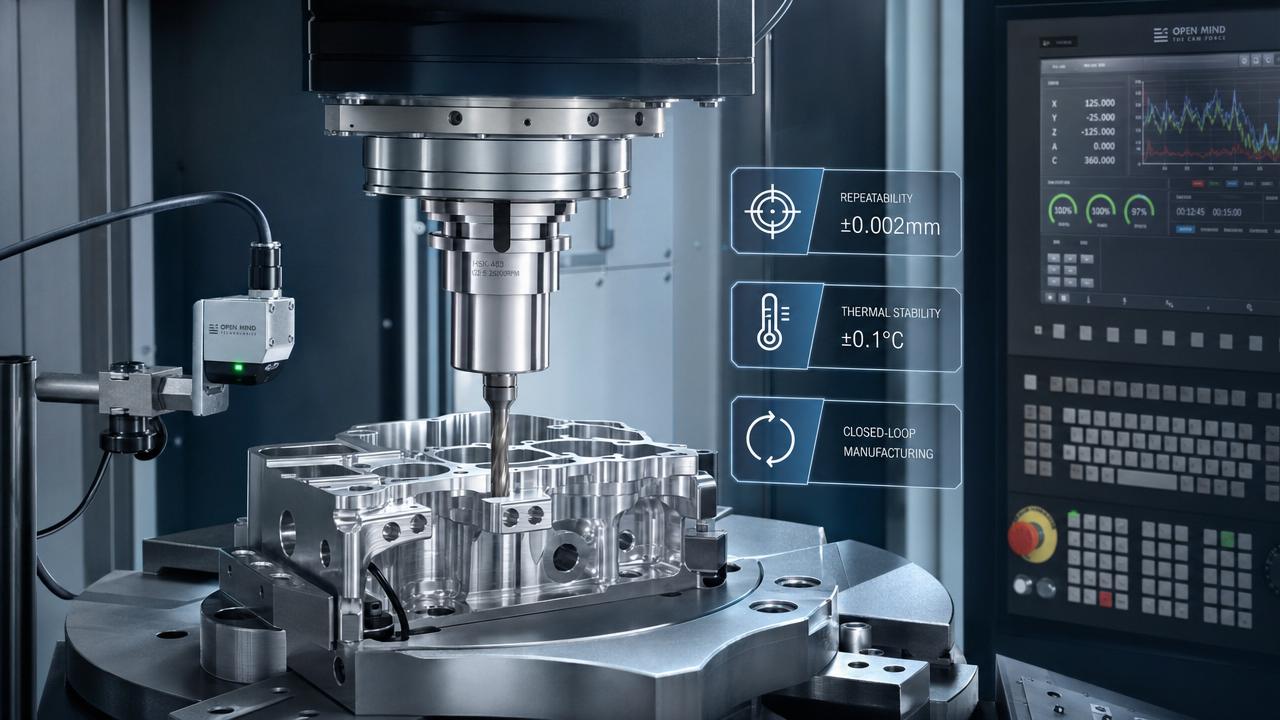
For technical evaluators, repeat accuracy is not just a quality metric—it is the foundation of stable output, lower scrap, and process confidence. As tooling technology advances, manufacturers are upgrading machining systems, mold components, and monitoring methods to reduce variation at every cycle. This article explores the tooling technology upgrades that most effectively improve repeat accuracy and support smarter precision manufacturing decisions.
Why repeat accuracy is becoming a sharper evaluation priority
Across the broader industrial landscape, the discussion around tooling technology has shifted. The old focus on peak speed or theoretical machine capability is being replaced by a more practical question: can a process produce the same result, cycle after cycle, under real operating conditions? This change is visible in machining, molding, die work, fastening systems, electrical component production, and automated assembly. Technical evaluators are increasingly asked to judge not only whether a tool can hit tolerance once, but whether it can maintain that result through thermal drift, operator variation, material changes, and long production runs.
Several industry signals explain this shift. First, product designs are becoming less forgiving, especially where components must fit into tightly integrated systems. Second, global supply chains are pushing suppliers to prove process stability before volume orders are released. Third, the cost of hidden variation is rising: one unstable cavity, one drifting spindle, or one misaligned fixture can trigger scrap, rework, missed delivery, and quality claims. In this environment, tooling technology upgrades are no longer optional enhancements. They are risk-control tools.
The strongest trend signal: precision now depends on the whole tooling system
A major market change is the move away from evaluating tools as isolated items. Repeat accuracy is now understood as a system outcome shaped by machine structure, cutting tools, holders, fixtures, mold bases, cooling control, sensors, software, and maintenance discipline. This is one of the most important tooling technology trends for evaluators, because it changes how upgrades should be prioritized.
For example, a premium cutting insert will not deliver stable results if tool runout is inconsistent. A high-precision mold cavity will still drift if cooling is uneven or if the mold base lacks rigidity. A robotic cell may place components accurately in theory, but repeat accuracy will decline if pneumatic response varies or if fixture wear is not monitored. The practical implication is clear: improvements now come from integrated tooling technology decisions rather than from single-point product substitution.
Which tooling technology upgrades are improving repeat accuracy most
The most effective upgrades share one feature: they reduce variation at its source instead of only detecting defects at the end. For technical evaluators, the following areas deserve close attention when comparing suppliers, production cells, or capital investment plans.
1. Higher-rigidity tool holding and fixturing
Improved holders, balanced assemblies, modular quick-change systems, and more stable workholding reduce micro-movement during cutting or forming. This directly improves dimensional repeatability, surface consistency, and tool life predictability. In many factories, fixturing upgrades generate faster repeat-accuracy gains than machine replacement because they address actual part-location error and vibration.
2. Thermal control in molds and machining environments
Thermal variation remains one of the most underestimated causes of repeat error. Advanced cooling channel design, temperature-managed mold components, thermal compensation software, and more stable shop-floor control are all becoming important tooling technology investments. Evaluators should pay attention to whether a system can hold output consistency after warm-up, during shift changes, and across long batch runs.
3. In-process sensing and closed-loop correction
Sensors built into spindles, fixtures, molds, and automated lines are changing the role of quality control. Instead of finding variation after production, manufacturers can now detect force changes, vibration signatures, cavity pressure shifts, or positioning errors during the cycle. This makes tooling technology more adaptive. Closed-loop systems can adjust offsets, cycle parameters, or maintenance alerts before variation becomes scrap.
4. Wear-resistant materials and engineered coatings
Repeat accuracy often declines gradually, not suddenly. Better substrate materials, surface treatments, and coatings delay this drift. In cutting tools, this means more predictable edge retention. In molds and dies, it means better cavity integrity and reduced dimensional change over time. For evaluators, the key is not only hardness data, but stability under the actual production material, lubrication condition, and cycle frequency.
5. Digital setup standardization
Another significant tooling technology trend is the standardization of setup data. Digital presets, tool libraries, setup verification, and traceable parameter records reduce human variation between operators, shifts, and sites. This matters especially for multi-location manufacturing, contract manufacturing, and high-mix environments where repeat accuracy often fails during changeovers rather than steady-state production.
A practical view of current upgrade directions
The table below summarizes how today’s tooling technology upgrades are changing repeat-accuracy performance and what evaluators should verify.
What is driving these tooling technology changes now
The current acceleration is not coming from one cause alone. It is the result of several converging pressures that affect both suppliers and buyers across the industrial value chain.
One driver is automation. As more production moves into semi-automated and fully automated cells, repeat accuracy must be designed into the tooling system because there is less room for manual correction. Another driver is compliance and customer qualification. OEMs increasingly require documented process capability, and that demand pushes investment toward measurable tooling technology upgrades. A third driver is cost structure. Labor, energy, and material waste are harder to absorb, so stable first-pass yield becomes more valuable than headline machine speed.
There is also a strategic factor. Companies are trying to build more resilient manufacturing footprints. That means process knowledge must travel across plants and suppliers. Tooling technology that enables standardized setup, traceable performance, and predictable repeat accuracy supports that goal far better than operator-dependent methods.
Who is affected most by the repeat-accuracy upgrade cycle
The impact is uneven. Some roles and business models feel these changes more strongly than others, especially where tolerance windows are tight or production transfer risk is high.
How technical evaluators should judge the next wave of tooling technology
A useful evaluation method is to separate claims into three layers: initial precision, sustained repeat accuracy, and recoverability after disturbance. Initial precision asks whether the system can hit target. Sustained repeat accuracy asks whether it holds target after wear, heat, and shift changes. Recoverability asks how quickly it returns to control after maintenance, restart, or material change. Many tooling technology solutions look strong in the first layer but become less convincing in the second and third.
Evaluators should also favor evidence that reflects actual operating conditions. Short lab demonstrations are less useful than data from long runs, multiple setups, and realistic material loads. In molds, this may mean studying cavity balance over time. In machining, it may mean comparing part variation across tool-life stages. In automated lines, it may mean checking whether sensors produce actionable corrections or simply generate alarms after the fact.
Signals worth tracking over the next planning cycle
Looking ahead, several signals will help companies judge whether a tooling technology investment is aligned with future repeat-accuracy demands. The first is the growth of data-linked tooling ecosystems, where machine, holder, fixture, and inspection records can be connected. The second is the spread of modular tooling platforms that shorten setup without giving away stability. The third is wider use of predictive maintenance based on wear signatures rather than fixed schedules.
Another signal is the market preference for suppliers that can explain variation control clearly. Buyers increasingly want process logic, not just component catalogs. This is especially relevant in sectors where hidden industrial parts determine overall system reliability. For networks such as GHTN, this reinforces the value of expert-led analysis that links underlying tooling technology decisions with larger manufacturing performance outcomes.
What actions make sense now
For companies reviewing tooling technology options, the smartest next step is not to chase every upgrade at once. Start by identifying where repeat accuracy is actually lost: thermal drift, workholding movement, setup inconsistency, wear progression, or poor in-process visibility. Then rank upgrades by their ability to reduce that specific source of variation at scale. This keeps investment tied to measurable production impact.
A second action is to require cross-functional evaluation. Engineering, quality, maintenance, and sourcing should all be involved because repeat accuracy is a business outcome, not just a tooling specification. A third action is to test standardization potential. If a solution improves one cell but cannot be documented, transferred, and maintained across sites, its long-term value may be limited.
If a business wants to judge how these trends affect its own operations, the most important questions are straightforward: Where does variation emerge first? Which tooling technology upgrades remove the cause instead of masking the symptom? Can the supplier prove stable repeat accuracy across realistic production conditions? And will the upgrade still support future automation, traceability, and multi-site consistency? Those answers will do more to guide sound decisions than any single performance claim.
Related News