
What defines a reliable cutting tools manufacturer today?

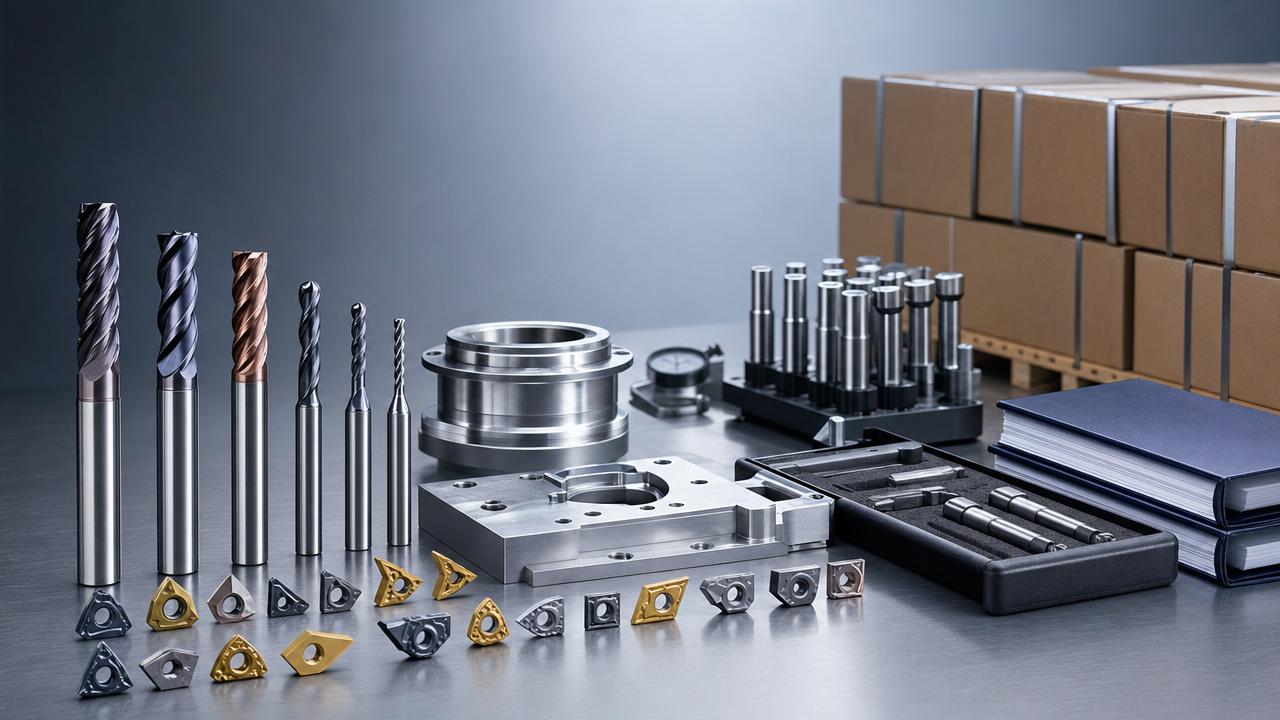
In today’s precision-driven industrial landscape, a reliable cutting tools manufacturer is defined by more than product range or price. For business evaluators, the real differentiators lie in process stability, material expertise, quality consistency, compliance capability, and long-term supply reliability. Understanding these factors is essential when assessing partners that can support performance, reduce operational risk, and strengthen competitiveness across global manufacturing markets.
Why reliability depends on application context
A reliable cutting tools manufacturer looks different across machining environments. Heavy stock removal, medical finishing, mold making, and automated production create very different technical priorities.
That is why evaluation should begin with application fit. Reliability is not a slogan. It is the ability to deliver repeatable tool performance under specific production conditions.
In the broader industrial ecosystem, cutting tools affect cycle time, scrap rate, machine utilization, and dimensional stability. A weak source can quietly damage downstream profitability.
For this reason, GHTN tracks cutting technologies not only by catalog claims, but by process evidence, material behavior, and global trade capability.
Scenario one: high-volume metalworking needs process consistency first
In mass production lines, the best cutting tools manufacturer is the one that protects stability over long runs. Even small tool variation can multiply into major cost losses.
Key indicators include batch consistency, coating uniformity, edge preparation control, and stable carbide substrate quality. These factors directly influence wear rate and tool life predictability.
Core judgment points in volume machining
- Can the supplier keep dimensional tolerance stable across multiple batches?
- Is there proven control over coating thickness and adhesion?
- Are tool life data available under realistic spindle and feed conditions?
- Can the cutting tools manufacturer support quick replenishment during demand spikes?
For automotive parts, fasteners, shafts, and structural components, reliability usually means lower variation, faster changeovers, and fewer unplanned stoppages.
Scenario two: precision mold and die work demands geometry control
Mold and die applications place greater emphasis on edge accuracy, runout control, and fine surface generation. Here, a reliable cutting tools manufacturer must deliver precision beyond basic hardness.
Ball nose end mills, micro tools, and finishing cutters must maintain geometry through complex paths. Inconsistent flute form can disrupt cavity accuracy and polishing efficiency.
What matters most in mold-related scenarios
- Tight radius accuracy and low runout performance
- Reliable machining behavior in hardened steels
- Clean edge quality for long finishing passes
- Technical guidance for tool paths, feeds, and coolant strategy
This is where process knowledge separates an ordinary supplier from a dependable cutting tools manufacturer. Tool design must match machine dynamics and workpiece material behavior.
Scenario three: difficult materials require material science strength
Titanium, nickel alloys, stainless steel, composites, and hardened materials raise the bar sharply. A reliable cutting tools manufacturer needs strong substrate engineering and coating expertise.
Catalog descriptions are not enough. The important question is whether the supplier understands heat concentration, chip evacuation, built-up edge risk, and work hardening behavior.
Decision signals for hard-to-machine applications
- Documented performance in aerospace, energy, or medical components
- Application-specific grades rather than generic tool offerings
- Ability to recommend cutting parameters with evidence
- Failure analysis support when premature wear appears
In these sectors, tool failure can damage expensive workpieces. The value of a reliable cutting tools manufacturer is therefore risk reduction, not simply lower unit price.
Scenario four: global supply chains require compliance and continuity
For cross-border production, reliability extends beyond machining results. A cutting tools manufacturer must also support documentation, traceability, packaging integrity, and delivery continuity.
This matters in regulated markets and distributed operations. Delayed certificates, unstable lead times, or poor labeling can stop production as effectively as poor tool quality.
Operational reliability checks
- Traceable lot records and inspection documentation
- Stable export capability and packaging standards
- Clear communication on lead times and safety stock options
- Alignment with relevant quality and environmental systems
A dependable cutting tools manufacturer supports continuity from factory floor to international shipment. That full-chain stability is increasingly important in modern industry.
How scenario needs differ when selecting a cutting tools manufacturer
Practical ways to match supplier strength with real conditions
A reliable cutting tools manufacturer should be judged through structured verification, not broad claims. The best results come from comparing technical fit, support depth, and operational resilience.
Recommended evaluation actions
- Define the exact workpiece materials, tolerances, and machine conditions first.
- Request trial data tied to similar applications, not generic brochures.
- Check whether the cutting tools manufacturer can explain failure modes clearly.
- Review quality records, inspection frequency, and lot traceability practices.
- Verify emergency supply response and replacement lead time.
- Assess whether technical service continues after the initial order.
In many cases, the most suitable cutting tools manufacturer is not the largest one. It is the source that consistently aligns engineering detail with supply discipline.
Common mistakes when judging cutting tools reliability
One common mistake is focusing only on unit price. A cheaper tool can raise total cost through shorter life, unstable finish, and additional machine downtime.
Another mistake is assuming certification alone proves performance. Formal systems matter, but they do not replace application knowledge or process repeatability.
It is also risky to ignore communication speed. A reliable cutting tools manufacturer should respond quickly when machining problems emerge or specifications change.
Finally, many evaluations overlook packaging and logistics details. Damaged edges, mixed batches, or unclear labels can undermine otherwise strong technical products.
What defines a reliable cutting tools manufacturer today
Today, a reliable cutting tools manufacturer is defined by verified performance within real applications, stable quality across batches, strong material science, and dependable supply execution.
In a connected industrial market, reliability must cover the full cycle. That includes engineering support, traceability, compliance readiness, and responsive service after delivery.
GHTN follows this practical view of industrial value. Precision tools matter because they shape process confidence, product quality, and long-term competitiveness across global manufacturing networks.
To move forward effectively, compare suppliers by scenario, run controlled trials, review documentation depth, and measure response quality. That is how the right cutting tools manufacturer becomes clear.
Related News