
When Cutting Tools Wear Too Fast in Automation Lines

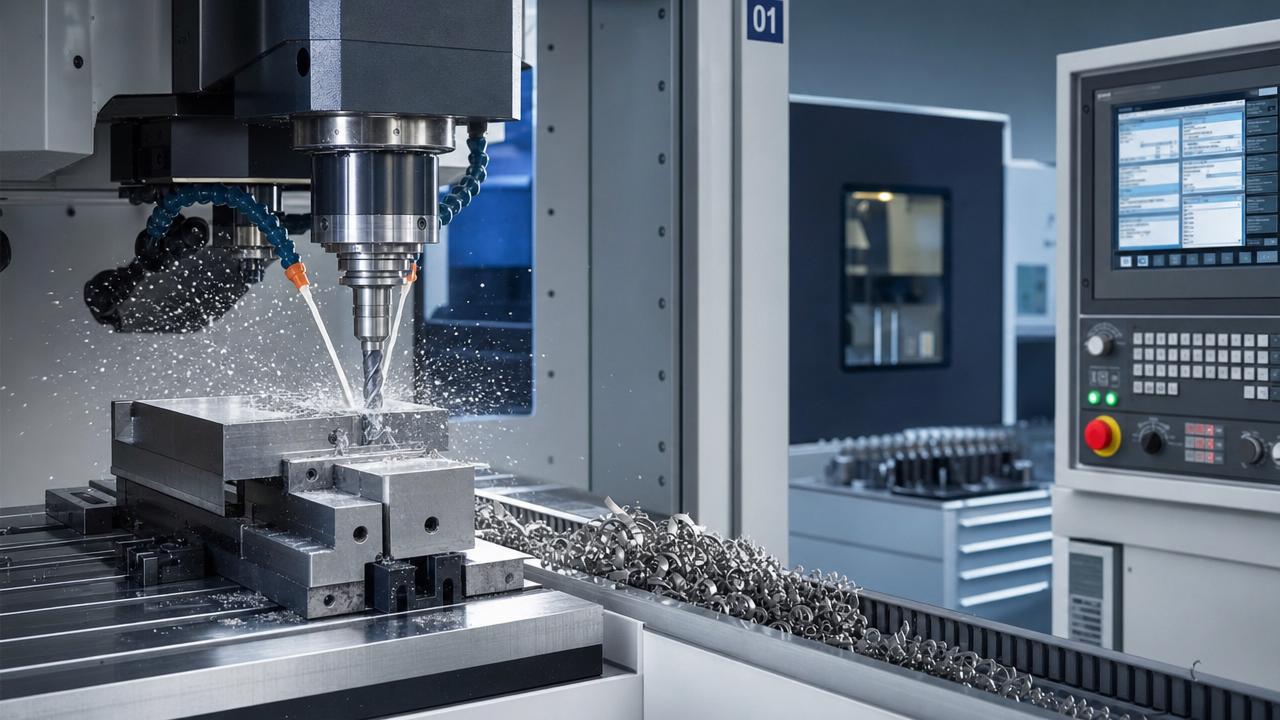
When cutting tools wear too fast in automated production, downtime, scrap, and unstable quality follow. For operators and line users, understanding why cutting tools for industrial automation fail early is the first step toward restoring efficiency. This article explores the practical causes behind rapid wear and how smarter tool selection, setup, and monitoring can improve performance across demanding manufacturing lines.
Why do cutting tools for industrial automation wear out earlier than expected?
In automated lines, tool wear rarely comes from one single cause. More often, it is the result of several small mismatches that accumulate: spindle speed is slightly too high, coolant does not reach the cutting edge consistently, workpiece material varies by batch, and the tool grade was selected for general use rather than continuous production. What looks like a tooling problem may actually be a process stability problem.
For operators, the biggest challenge is that rapid wear often appears first as a quality issue. Burrs increase. Surface finish drifts. Dimensional variation widens. The machine may continue to run, but output becomes less predictable. In high-volume cells using cutting tools for industrial automation, this hidden wear pattern is often more expensive than sudden breakage because it creates scrap before anyone reacts.
Across general industry applications such as metalworking, mold components, fastener machining, electrical enclosure fabrication, and pneumatic part production, the wear pattern depends on the interaction between tool material, workpiece hardness, coating, clamping rigidity, chip evacuation, and thermal load. That is why line users need a practical diagnosis framework rather than generic advice.
- Abrasive wear usually points to hard inclusions, scale, fiberglass-filled materials, or a tool grade that is too soft for the application.
- Crater wear often indicates excessive cutting speed and unstable heat concentration at the rake face.
- Chipping at the edge commonly suggests vibration, poor workholding, interrupted cuts, or an overly brittle insert or end mill grade.
- Built-up edge usually appears when cutting sticky materials with the wrong geometry, weak lubrication, or feed conditions that are too conservative.
What operators should check first on the line
Before changing suppliers or switching to a more expensive tool, verify the process basics. Many premature failures are caused by setup drift rather than poor tool quality. On automated lines, even a small offset in coolant nozzle position or toolholder runout can shorten life dramatically over hundreds of cycles.
- Check spindle and holder runout, especially for small-diameter drills, reamers, and end mills.
- Confirm actual feed and speed values in the control match the approved process sheet.
- Inspect coolant concentration, pressure, nozzle direction, and filter cleanliness.
- Review part clamping and fixture rigidity to reduce chatter during repeat cycles.
- Compare current workpiece material certificates or hardness checks with previous stable batches.
How wear mechanisms change across automation scenarios
Not all automated applications punish tools in the same way. A robotic trimming cell, a CNC transfer line, and a flexible mold-component machining station impose different thermal and mechanical loads. Choosing cutting tools for industrial automation without considering scenario-specific stress is one of the most common reasons tool life targets are missed.
The table below helps operators match wear behavior to typical production conditions and likely process risks.
This comparison shows why line users should avoid blanket settings. The right solution for one cell may fail in another, even if the part material looks similar. A more reliable approach is to review the full cutting chain: workpiece, fixture, spindle, holder, tool, coolant, and tool-change logic.
A line-user view of process instability
In many plants, operators are asked to hold cycle time while also reducing tooling costs. That pressure can lead to risky compromises, such as stretching insert life beyond the wear limit or reusing holders with marginal clamping accuracy. The result is false economy. One damaged batch of mold inserts or precision brackets can erase the savings of many extended tool cycles.
How to select cutting tools for industrial automation without guesswork
Tool selection in automation should start with process repeatability, not catalog price. The best cutting tools for industrial automation are not simply the hardest or most expensive. They are the ones that maintain predictable wear, support scheduled replacement, and fit the machine’s real rigidity, coolant system, and cycle-time target.
Operators and production engineers can use the following selection matrix when evaluating drills, inserts, taps, end mills, and specialty tooling for automated lines.
This kind of evaluation reduces trial-and-error purchasing. It also helps operators explain to procurement teams why a low unit price does not always equal lower cost per part. In automated production, predictable life is often more valuable than nominally cheaper tooling.
Selection mistakes that create hidden cost
- Choosing one universal tool grade for all materials on a mixed-production line.
- Ignoring holder quality and spending only on the cutting edge itself.
- Using manual-line parameters in automated high-duty cycles without thermal review.
- Comparing tooling suppliers by piece price instead of cost per accepted part.
What process parameters matter most when tool life drops?
When cutting tools for industrial automation fail too early, operators should focus on a few high-impact process variables. Speed, feed, radial engagement, depth of cut, and coolant strategy directly shape heat generation and chip load. Even if the selected tool is appropriate, poor parameter balance can still destroy edge life.
Parameter priorities in practical troubleshooting
- Reduce cutting speed first when crater wear, oxidation, or thermal cracking appears.
- Increase feed carefully when built-up edge forms due to rubbing instead of clean shearing.
- Shorten tool overhang and improve holder balance before assuming the insert grade is wrong.
- Review toolpath smoothness in CNC automation to reduce shock loading at entry and exit points.
- Monitor chip color, chip shape, and evacuation pattern because they reveal heat and load conditions quickly.
For high-volume lines, parameter control should be linked to preventive maintenance and tool-change discipline. If one machine in a line starts producing shorter tool life than identical sister machines, check spindle condition, holder wear, lubrication delivery, and fixture repeatability before changing the full tooling strategy.
Cost per part versus tool price: which number should drive decisions?
A common mistake in general industry purchasing is to compare tools only by invoice value. For automated lines, the more useful metric is cost per good part. A lower-priced tool that fails unpredictably can cause machine stoppage, operator intervention, quality checks, and scrap. A moderately higher-priced tool that runs steadily across longer intervals may reduce the true manufacturing cost.
The table below compares typical cost drivers that should be reviewed when selecting cutting tools for industrial automation.
This is especially relevant for OEMs, component suppliers, and distributors managing multiple material families. Process-stable tooling supports clearer inventory planning, more reliable delivery schedules, and fewer quality surprises for downstream assembly.
What standards, documentation, and compliance points should users review?
While cutting tools themselves are application-driven, documentation and process control still matter. Operators and buyers should ask for consistent technical data, recommended parameter windows, substrate and coating descriptions where applicable, and traceable product identification. In regulated or export-oriented production, stable documentation helps maintain process discipline across shifts and plants.
- Verify dimensional consistency and tolerance data for indexable and solid tooling where relevant.
- Check whether the supplier provides application notes for steel, stainless steel, cast iron, and nonferrous materials.
- Confirm compatibility with your holder systems, coolant method, and programmed cutting strategy.
- For international supply chains, review packaging traceability and batch labeling to support incoming inspection.
GHTN’s value in this area is not limited to listing products. Its cross-sector view of mechanical tools, mold manufacturing, electrical infrastructure, and automated line logic helps users connect tooling decisions with broader manufacturing requirements such as reliability, maintainability, and scalable sourcing.
FAQ: practical questions operators ask about cutting tools for industrial automation
How do I know if the issue is the tool or the machine setup?
Look for pattern consistency. If the same tool wears differently across similar machines, setup variation is likely involved. Check runout, holder condition, clamping force, coolant delivery, and fixture stability. If wear remains consistent across machines and batches, the tool grade or geometry may be the primary issue.
Which cutting tools for industrial automation are better for mixed-material production?
Mixed-material lines usually benefit from a balanced strategy rather than a single universal solution. Use broader-application tools only when process variation is moderate and quality tolerance allows it. If materials differ widely in hardness, abrasiveness, or chip behavior, separate tool families often deliver better cost per part and more stable quality.
What is the most overlooked cause of fast wear in automated cells?
Coolant delivery is one of the most overlooked factors. Operators may verify coolant concentration but miss nozzle alignment, pressure loss, filter blockage, or poor through-tool flow. In fast-cycle automation, small cooling inconsistencies can create major thermal stress at the cutting edge.
Should we always push for the longest possible tool life?
Not necessarily. The goal is stable, economical life that supports quality and throughput. If a tool can run longer but does so with rising burrs, higher spindle load, or greater risk of sudden breakage, a shorter scheduled replacement interval may be more profitable. Automation rewards predictability more than heroic tool-life extension.
Why work with GHTN when tooling decisions affect the whole production line?
When premature wear disrupts output, users need more than a catalog recommendation. They need a partner that understands the granular links between material behavior, tool design, automated line conditions, and market sourcing. GHTN brings that broader industrial perspective by connecting insights from mechanical tooling, electrical systems, pneumatic logic, mold production, and international supply intelligence.
That matters because tooling performance is never isolated. A fastener component line, a mold shop, and an electrical enclosure plant may all use different cutting processes, yet they share the same need for repeatable output, practical selection guidance, and sourcing clarity. GHTN helps users and buyers evaluate not only product fit, but also process suitability and supply-side decision risk.
What you can contact us about
- Parameter confirmation for specific workpiece materials, hardness ranges, and machine conditions.
- Product selection support for drills, inserts, end mills, threading tools, holders, and related tooling systems.
- Lead-time and delivery planning for automated line maintenance, pilot runs, and production ramp-up.
- Custom solution discussion for unstable wear, mixed-material production, or difficult mold and precision-part applications.
- Documentation and compliance questions related to traceability, technical data, and export-oriented sourcing requirements.
- Sample evaluation and quotation communication for new projects or supplier comparison.
If your cutting tools for industrial automation are wearing too fast, bring the actual process details into the conversation: material, hardness, cycle time, tool type, holder, coolant method, wear photos, and current replacement interval. With that information, the discussion moves quickly from guesswork to workable action. Linking Precision, Tooling the Future starts with making every tool decision more measurable and more aligned with real production demands.
Related News