
Why Tooling Technology Upgrades Fail to Cut Lead Times

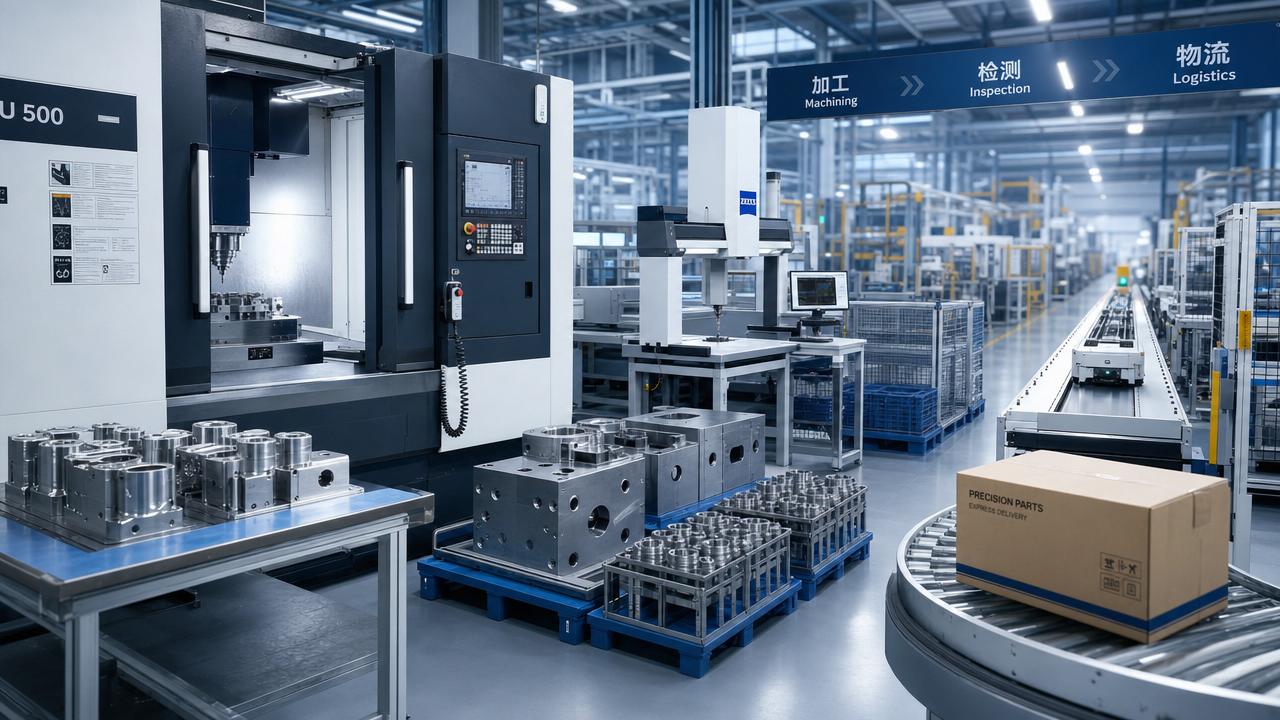
Many manufacturers invest heavily in tooling technology expecting faster turnaround, yet lead times often remain stubbornly unchanged. For enterprise decision-makers, the real issue is rarely the equipment alone—it is the gap between upgraded tools, process integration, supplier coordination, and execution discipline. Understanding why these investments fail is essential to turning capital spending into measurable operational gains.
In hardware, electrical, mold, and precision manufacturing environments, lead time is rarely determined by a single machine or software package. It is shaped by quoting speed, design release discipline, toolpath preparation, material readiness, trial loops, quality approval, and supplier responsiveness. When one of these stages still runs at the old pace, new tooling technology may improve one cell while the total order cycle remains unchanged.
This matters most to OEM leaders, sourcing directors, plant managers, and operations executives who are expected to justify capital budgets in 6 to 18 months. A tooling technology upgrade can be valuable, but only when it is deployed as part of a broader operating model. For decision-makers, the right question is not whether the tool is advanced, but whether the system around it can convert speed into delivered output.
Why faster tooling technology does not automatically shorten lead times
A modern machining center, automated tool changer, digital presetter, mold flow platform, or high-speed EDM can reduce cycle time by 10% to 40% in a specific step. Yet most industrial lead times span 7 to 45 days, and machining itself may account for only 15% to 30% of the total calendar duration. If the rest of the chain stays unchanged, the investment creates isolated efficiency rather than end-to-end acceleration.
The hidden difference between process time and calendar time
Many teams evaluate tooling technology through spindle hours, feed rates, setup reduction, or tool life extension. Those metrics matter, but lead time is a calendar metric. A mold insert may be cut in 6 hours instead of 8, but if design approval waits 2 days, raw material confirmation takes 3 days, and first article validation adds another 2 days, the total benefit is barely visible at customer level.
This is common in global supply chains where components move across 2 to 4 locations before final release. Fasteners may require coating approval, electrical housings may need compliance checks, and mold components often depend on external heat treatment or surface finishing. Tooling technology improves one node, but the queue between nodes remains the real bottleneck.
Equipment upgrades often outpace management upgrades
The most frequent failure pattern is buying advanced tooling technology without redesigning planning rules. Shops still release jobs in large batches, maintain outdated approval gates, and tolerate incomplete engineering packages. In that environment, machine utilization may rise while order responsiveness does not. Decision-makers then see a paradox: capital spending increased, but customer promise dates remain flat.
Another issue is data fragmentation. CAM data, ERP schedules, quality records, and supplier communications are often stored in separate systems. If operators re-enter dimensions manually or if purchasing confirms steel grades by email instead of structured workflows, even a highly capable toolroom can lose 12 to 24 hours per job in preventable waiting time.
Three common signs of a system-level gap
- Machine cycle time improves, but average order lead time changes by less than 5% over 3 to 6 months.
- Engineering change requests continue after release, forcing 1 to 3 rework loops per project.
- External processes such as heat treatment, coating, calibration, or compliance review still define the schedule.
The table below shows how local gains from tooling technology can be diluted when non-machining stages dominate the workflow.
For many plants, the largest opportunity is not another machine specification upgrade. It is the reduction of waiting time between stages. A 20% machining gain can be neutralized by a 2-day delay in material approval, while a disciplined release process can cut total lead time without any new hardware at all.
Where tooling technology investments fail in real industrial operations
Tooling technology projects usually fail at the interface between departments. The machine, software, or automation unit may perform as specified, but the factory system around it is not prepared. In precision tooling, mold manufacturing, and industrial component production, this mismatch appears in at least four operational layers.
1. Unstable input quality
High-end tooling technology assumes stable upstream data. If CAD files are incomplete, tolerances are unclear, or BOM revisions are still moving after release, the shop floor cannot convert digital speed into physical speed. In some operations, up to 20% of lost time comes from clarification loops rather than cutting or assembly work.
2. Supplier coordination remains manual
Precision manufacturing often depends on steel suppliers, insert vendors, electrical component partners, heat treatment houses, and logistics providers. If these partners are managed through ad hoc calls or fragmented spreadsheets, upgraded tooling technology inside the plant cannot compress the external chain. A 48-hour delay on one outsourced process can erase gains from a week of internal optimization.
3. KPI design rewards utilization, not flow
Many factories still optimize for machine occupancy above 85% rather than order flow. This encourages large batches, queue accumulation, and delayed changeovers. For enterprise decision-makers, the better target is flow efficiency: how much of the total 10-day or 20-day lead time is actual value-added work. In some mixed-model plants, value-added time is under 25% of total elapsed time.
4. Training ends at installation
Suppliers often provide 2 to 5 days of commissioning support, but real adoption takes 8 to 12 weeks. During that period, programming habits, maintenance routines, fixturing logic, and quality checkpoints must be stabilized. Without this second phase, teams use only a fraction of the tooling technology they purchased, and expected lead time gains remain theoretical.
Operational mistakes that delay payback
- Buying high-speed capability without verifying fixture repeatability and tool library discipline.
- Automating one cell while upstream release and downstream inspection stay manual.
- Ignoring external vendors whose delivery windows still run 3 to 7 days.
- Tracking machine output by shift, but not measuring quote-to-approval or trial-to-release time.
The next table highlights frequent failure points and the corrective actions that usually produce better lead-time results than equipment investment alone.
The main lesson is simple: tooling technology succeeds only when the workflow, supplier network, and governance model are upgraded at the same time. Otherwise, the plant becomes more modern in appearance but not materially faster in delivery.
How decision-makers should evaluate tooling technology before approval
For B2B leaders, the evaluation process should move beyond catalog specifications. The goal is to estimate whether the new tooling technology will reduce total order lead time, improve schedule reliability, and support commercial growth. A practical review should cover at least four dimensions before any purchase order is issued.
Map the full lead-time structure
Break the current workflow into 6 to 10 stages: quotation, engineering, material release, machining, external processing, trial, inspection, and shipment. Measure each stage in calendar time, not just labor hours. This often reveals that the targeted tooling technology affects only one narrow window of the process, sometimes less than 20% of total lead time.
Define a realistic payback mechanism
A payback claim should be linked to one of three mechanisms: more output from the same headcount, fewer premium freight events, or higher quote conversion because customers trust shorter delivery windows. If none of these mechanisms is measurable within 2 quarters, the investment case is incomplete.
Check compatibility with the industrial ecosystem
In the hardware and tooling sectors, compatibility extends beyond the shop floor. It includes tool holder standards, electrode workflows, inspection protocols, digital file formats, and supplier readiness. For example, a faster mold manufacturing process loses value if standard components still arrive in 5 to 7 days from an inflexible vendor.
A practical pre-approval checklist
- Does the target stage account for at least 25% of current lead time?
- Are engineering inputs stable enough to avoid repeated release changes?
- Can external suppliers support shorter response windows within 24 to 48 hours?
- Is there a 90-day adoption plan with ownership across engineering, production, quality, and purchasing?
When these questions are answered early, tooling technology becomes part of a strategic operating system rather than a standalone purchase. That shift is especially important for international OEM suppliers and distributors balancing margin pressure, compliance demands, and volatile order patterns.
How to make tooling technology upgrades actually reduce lead times
If the goal is shorter lead time, the implementation plan must begin before the equipment arrives and continue well after installation. The most effective programs combine process design, supplier synchronization, performance tracking, and operator discipline. In practice, four actions deliver the strongest results.
Build around flow, not only speed
Start by identifying the largest queues and handoff delays. If jobs wait 18 hours for programming, 24 hours for setup approval, or 3 days for outside processing, those delays deserve the same priority as spindle speed or automation capacity. Flow-focused redesign often reduces total lead time by more than isolated machine gains.
Synchronize internal and external response windows
A shortened machining cycle requires parallel commitments from material suppliers, logistics partners, and quality teams. Decision-makers should establish response bands such as 24-hour drawing confirmation, 48-hour raw material dispatch, and same-day nonconformance escalation for critical jobs. Without synchronized windows, tooling technology remains disconnected from delivery performance.
Use a limited but disciplined KPI set
Track 5 to 6 metrics that matter: total lead time, on-time delivery, engineering release accuracy, queue time by stage, external supplier adherence, and first-pass approval rate. Review them weekly for the first 12 weeks after launch. This creates visibility on whether the tooling technology is changing customer outcomes or only internal activity levels.
Treat ramp-up as an operational project
A structured ramp-up should include a 30-day stabilization phase, a 30-day optimization phase, and a 30-day validation phase. During this 90-day cycle, teams should document best parameters, reduce setup variation, standardize program libraries, and confirm preventive maintenance intervals. This is where investment expectations are converted into repeatable lead-time performance.
Recommended implementation sequence
- Map current-state lead time and isolate the top 3 delay sources.
- Confirm supplier and quality readiness before installation.
- Launch tooling technology with a named cross-functional owner.
- Measure weekly calendar-time impact for at least 12 weeks.
- Adjust planning rules, batch sizes, and approval gates based on actual flow results.
For companies operating across hardware, electrical, and mold supply networks, this systems approach is the difference between expensive modernization and measurable competitiveness. The real win is not owning faster tools. It is building a manufacturing chain that can respond faster from inquiry to shipment.
What this means for industrial buyers, OEMs, and supply chain leaders
For enterprise decision-makers, tooling technology should be evaluated as a business enabler, not just a technical asset. In sectors where precision, repeatability, compliance, and delivery reliability shape margins, the smartest investments are those that improve the complete industrial workflow. That includes component readiness, mold development, electrical integration, and supplier execution.
GHTN follows these issues closely because the future of industrial competitiveness depends on more than visible machinery. It depends on how base components, precision tools, and manufacturing intelligence work together across the value chain. When companies connect technical capability with disciplined execution, shorter lead times become achievable and commercially meaningful.
If your organization is reviewing tooling technology investments, reassessing supplier coordination, or planning a lead-time reduction program across hardware, electrical, or mold operations, now is the time to build a system-level roadmap. Contact us to discuss your application, get a tailored evaluation framework, or explore more solutions for precision manufacturing performance.
Related News