
MIIT Launches 2026 Industrial Energy-Saving & Carbon-Reduction Diagnostics

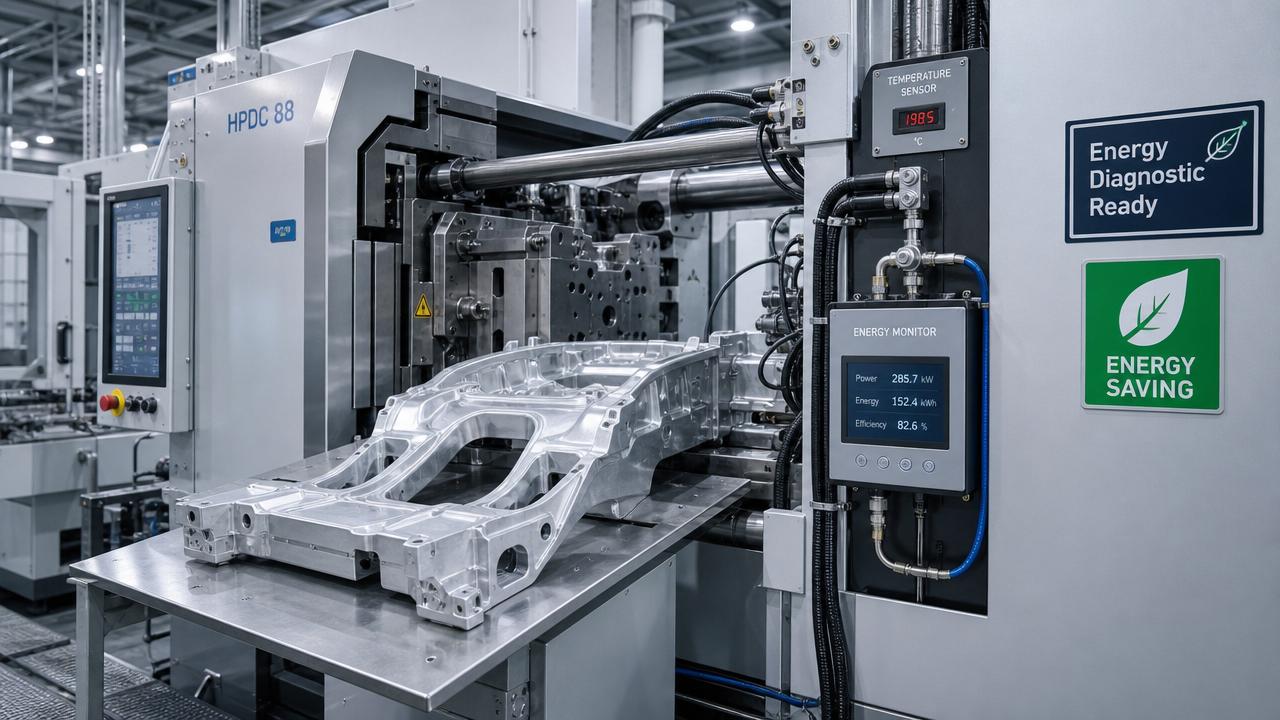
On May 13, 2026, the Ministry of Industry and Information Technology (MIIT) launched its annual industrial energy-saving and carbon-reduction diagnostic service, with initial coverage targeting 127 enterprises in die-casting, injection mold, and precision casting sectors. This initiative signals a tightening of energy efficiency compliance requirements for exporters to the EU, South Korea, and Southeast Asian markets — turning third-party energy performance verification into a de facto entry condition for certification renewal and green procurement access.
Event Overview
On May 13, 2026, MIIT initiated the 2026 Industrial Energy-Saving and Carbon-Reduction Diagnostic Service. The first phase covers 127 enterprises engaged in die-casting, injection mold manufacturing, and precision casting. Under the new requirement, suppliers exporting to the European Union, South Korea, and Southeast Asia must submit a third-party energy efficiency assessment report. The report must include six mandatory metrics: comprehensive energy consumption per unit product, waste heat recovery rate, mold temperature control accuracy, among others. Enterprises failing to meet these criteria may face delays or denials in CE/UKCA/KC certification renewals and exclusion from government and corporate green procurement white lists.
Industries Affected
Die-casting and Precision Casting Manufacturers
These enterprises are directly subject to the diagnostic service and reporting mandate. As primary producers of metal components for automotive, electronics, and industrial equipment, they bear full responsibility for measuring and verifying energy use across melting, casting, cooling, and finishing processes. Non-compliance affects not only export eligibility but also downstream customer qualification — especially for OEMs requiring verified sustainability data.
Injection Mold Design and Fabrication Firms
Mold makers are impacted due to the inclusion of ‘mold temperature control accuracy’ as one of the six hard metrics. This shifts performance accountability upstream: mold design and thermal management capabilities now directly influence energy compliance outcomes. Clients increasingly require documented thermal stability validation during mold acceptance — making calibration traceability and process monitoring essential.
Export-Oriented Tier-2 and Tier-3 Suppliers
Suppliers embedded in multinational supply chains — particularly those serving EU- or Korean-headquartered OEMs — face cascading compliance pressure. Even if not directly audited by MIIT, their buyers may require aligned reporting formats or pre-validated energy data to satisfy their own regulatory disclosures (e.g., EU CSRD, Korean ESG Reporting Guidelines). Lack of baseline diagnostics limits responsiveness to buyer requests.
What Enterprises and Practitioners Should Monitor and Do Now
Track official implementation guidelines and sector-specific diagnostic protocols
MIIT has announced the launch but has not yet published detailed technical specifications for the six metrics, sampling methods, or accredited assessment bodies. Enterprises should monitor MIIT’s official website and provincial industry bureaus for upcoming guidance documents — especially those clarifying acceptable measurement standards for ‘mold temperature control accuracy’ and ‘waste heat recovery rate’ in non-standardized production environments.
Prioritize diagnostics for high-volume export SKUs and top-tier markets
Given resource constraints, companies should focus initial assessments on product lines destined for the EU, South Korea, and key ASEAN economies (e.g., Vietnam, Thailand), where regulatory enforcement is most advanced. This includes identifying which SKUs carry the highest energy intensity per unit and which customers have already introduced contractual energy-efficiency clauses.
Distinguish between policy signal and operational readiness
The May 13 launch is an administrative initiation — not an immediate enforcement deadline. However, CE/UKCA/KC certification cycles typically span 12–24 months; delays in obtaining required reports could disrupt scheduled renewals. Companies should treat this as a lead-time-sensitive preparation step, not a distant compliance horizon.
Begin internal data collection and cross-functional alignment
Energy-related KPIs like unit product energy consumption require consistent metering, process logging, and data reconciliation across production, maintenance, and quality departments. Firms should initiate internal scoping: identify existing metering infrastructure, define boundaries for ‘unit product’, and assign ownership for data aggregation — ahead of engaging third-party assessors.
Editorial Perspective / Industry Observation
Observably, this initiative is less about immediate penalties and more about institutionalizing energy performance as a core operational metric — akin to quality or delivery KPIs. Analysis shows that the selection of die-casting, mold, and precision casting sectors reflects their high thermal energy demand and growing scrutiny under global carbon border mechanisms (e.g., EU CBAM expansion discussions). From an industry perspective, the inclusion of technical parameters like mold temperature control accuracy suggests a shift toward process-level granularity — moving beyond facility-wide energy audits to embedded manufacturing capability assessment. It is currently best understood as a structural signal: one that embeds energy efficiency into product qualification, supplier evaluation, and international market access — rather than a standalone environmental regulation.
This development underscores how energy performance is evolving from a sustainability reporting item into a functional trade requirement. For affected enterprises, it marks the beginning of a multi-year alignment process — not a one-off compliance task. The diagnostic service itself is likely to evolve into a recurring, tiered program, with deeper technical benchmarks introduced in subsequent years.
Conclusion
The MIIT’s 2026 diagnostic service represents a formal step in integrating energy efficiency verification into the operational prerequisites for global market participation — particularly for capital-intensive, thermally driven manufacturing segments. Its significance lies not in immediate enforcement, but in establishing a standardized, auditable framework that links domestic industrial policy with international trade gateways. Currently, it is more appropriately understood as an early-phase capability-building mandate — one that rewards proactive measurement, documentation, and cross-functional coordination over reactive certification chasing.
Source Attribution
Main source: Official announcement issued by the Ministry of Industry and Information Technology (MIIT) on May 13, 2026.
Points requiring ongoing observation: Specific technical definitions of the six mandated metrics; list of MIIT-accredited third-party assessment institutions; timeline for mandatory reporting deadlines beyond the initial diagnostic phase.
Related News