
What technical analysis reveals in die-casting defects

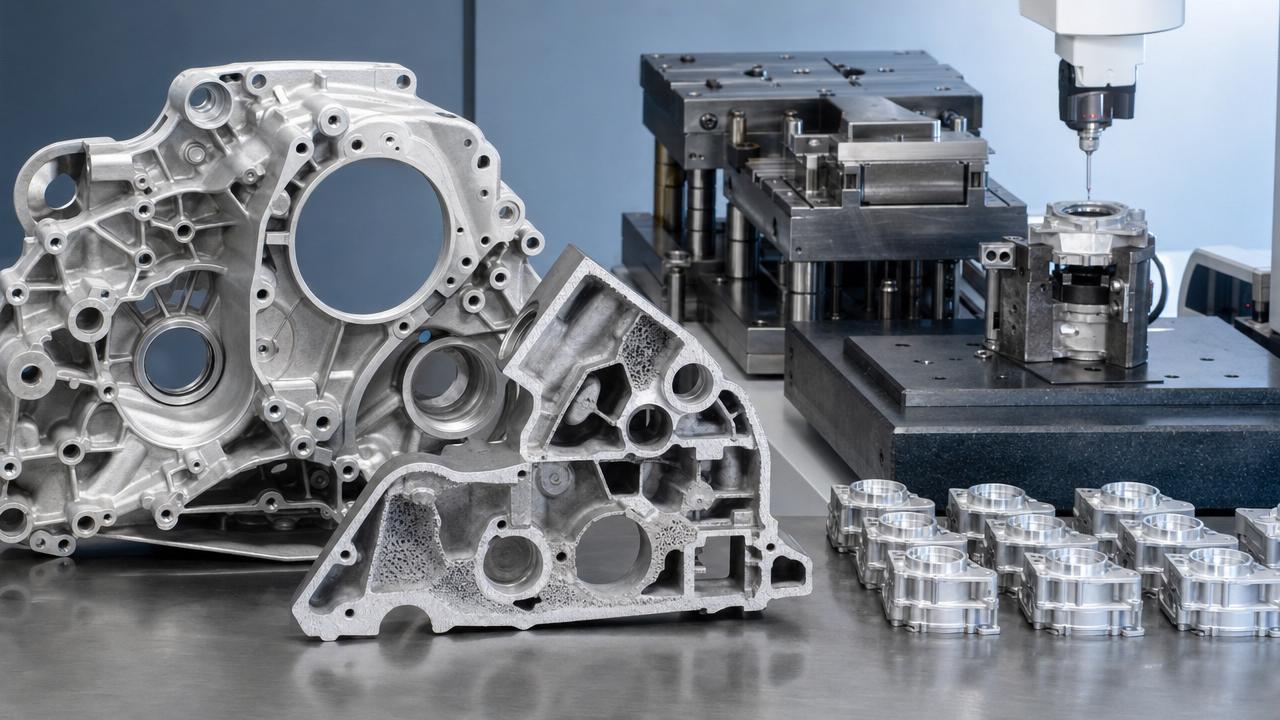
For technical evaluators, defects in die-cast parts are not random blemishes. They are measurable signals from the die-casting process technical analysis that point to hidden instability.
Porosity may indicate turbulent filling, poor venting, or gas entrapment. Shrinkage often reflects thermal imbalance, feeding limitations, or alloy behavior during solidification.
Cracks and dimensional drift reveal further issues in die design, cooling paths, ejection force, and process repeatability. Surface inspection alone rarely explains these patterns well enough.
A useful die-casting process technical analysis links visible defects with pressure curves, melt condition, gating design, die temperature, and cycle control. That connection improves audits, sourcing reviews, and production decisions.
Defect Interpretation in the Die-Casting Process Technical Analysis
In precision manufacturing, defect interpretation starts with mechanism, not appearance. Two pores can look similar while originating from different process failures.
That is why die-casting process technical analysis combines metallurgical evidence, tooling review, and production data. It turns defect mapping into a structured diagnostic method.
A sound evaluation usually examines five linked variables:
- alloy cleanliness and melt handling
- shot profile, velocity, and intensification pressure
- gating, overflow, and vent design
- die thermal balance and cooling layout
- part extraction, trimming, and downstream stress
Without this chain view, the same corrective action may be applied repeatedly while the root cause remains active. That increases scrap, repair cycles, and quality uncertainty.
Current Industry Signals Behind Common Defect Patterns
Across hardware, electrical housings, and mold-dependent components, defect analysis has become more data-centered. Tolerance requirements are tighter, while lightweight designs reduce process margin.
As a result, die-casting process technical analysis now focuses less on isolated rejection events and more on recurring pattern recognition across tools, batches, and production windows.
These signals matter because many industrial parts are later machined, sealed, coated, or electrically integrated. A hidden defect may become critical only after secondary operations.
What Major Defect Types Reveal About Root Manufacturing Variables
Porosity
Porosity is often divided into gas porosity and shrinkage porosity. The distinction is essential in any die-casting process technical analysis.
Rounded pores commonly suggest trapped gas, often caused by excessive turbulence, inadequate venting, poor vacuum support, or contaminated lubricant behavior.
Irregular interdendritic voids usually point toward shrinkage. These appear when local sections solidify late and intensification cannot compensate effectively.
Shrinkage
Shrinkage defects highlight thermal design weakness. Thick-to-thin transitions, isolated hot spots, and inadequate overflow design often create local feeding limitations.
This issue is not only material related. It also reflects shot timing, die temperature distribution, and whether the metal front reaches critical regions uniformly.
Cracks
Cracks require careful timing assessment. Hot cracks form during solidification under restrained contraction. Cold cracks often result from later handling, trimming, or residual stress release.
In die-casting process technical analysis, crack location often reveals the dominant stress path. Gates, ejector positions, thin ribs, and sharp corners deserve immediate review.
Dimensional instability
Dimensional variation is sometimes treated as a separate quality issue. In practice, it is frequently a symptom of thermal inconsistency or progressive die condition change.
Part warpage may indicate uneven cooling, asymmetrical filling, early ejection, or residual internal stress. Stable dimensions require stable thermal equilibrium first.
Business Value of Technical Defect Reading in Industrial Component Supply
For global industrial parts, defect reading supports more than quality control. It strengthens technical communication across tooling, casting, machining, and compliance-related evaluation.
A disciplined die-casting process technical analysis can improve decision quality in several ways:
- distinguishing superficial cosmetic issues from structural concerns
- comparing supplier capability beyond simple defect counts
- prioritizing tool modification where return is highest
- reducing uncertainty before machining or leak testing
- supporting root-cause records for recurring field complaints
This is especially valuable in sectors using aluminum or zinc die-cast housings, brackets, covers, connectors, pump bodies, and precision mold-related inserts.
GHTN’s industry perspective is relevant here because defect patterns rarely stay inside one process boundary. They influence tooling life, downstream fit, and long-term product confidence.
Typical Evaluation Scenarios and Defect Reading Priorities
Not every application demands the same inspection depth. The priority depends on function, post-processing route, and service environment.
Using scenario-based priorities keeps die-casting process technical analysis practical. It avoids spending equal effort on defects that carry very different operational consequences.
Practical Recommendations for More Reliable Analysis
Strong analysis needs evidence from multiple layers. Visual inspection alone should never close the investigation when functional risk remains possible.
- Record exact defect location by cavity, section thickness, and flow path position.
- Separate gas-related pores from shrinkage-related voids using sectioning or imaging.
- Review shot parameters together with die temperature history, not independently.
- Check overflow, vent cleanliness, and wear at critical parting surfaces.
- Compare defect frequency before and after trimming, machining, or heat exposure.
- Link dimensional data to cycle stability and cooling consistency over extended runs.
It is also useful to classify findings by severity: cosmetic, process-warning, and function-threatening. That creates better alignment between inspection effort and business impact.
When recurring defects appear across tools or suppliers, the review should extend to alloy handling standards, maintenance discipline, and the maturity of process monitoring methods.
Next-Step Focus for Better Quality Decisions
Effective die-casting process technical analysis does not stop at naming a defect. Its value lies in translating defect evidence into process questions that can be verified.
A practical next step is to build a defect matrix for each critical part family. Map pore type, crack location, shrinkage zone, and dimensional trend against tooling and process variables.
That method creates a clearer basis for audits, engineering review, and continuous improvement. It also supports more confident sourcing decisions in complex industrial component programs.
Within the broader manufacturing ecosystem, GHTN advocates this evidence-driven approach because precision parts perform best when defect interpretation is tied to real process logic.
Linking defect symptoms to tooling behavior, thermal control, and material flow helps transform inspection from reactive filtering into informed technical judgment.
Related News