
EAEU Extends China Aluminum Strip Duties to 2031

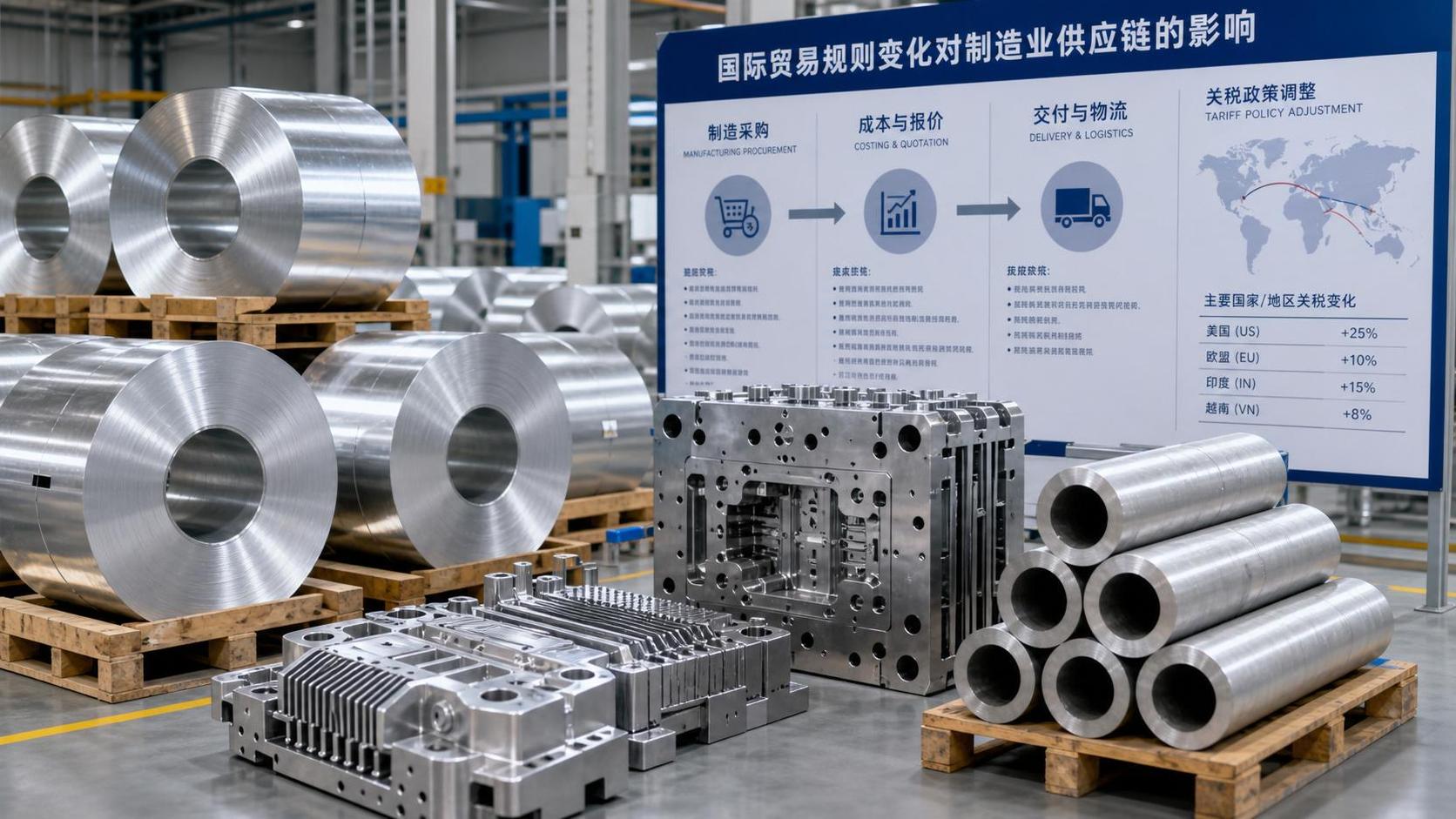
On June 20, 2026, the Eurasian Economic Commission announced a five-year extension of anti-dumping duties on aluminum strip from China under HS 7606, keeping the rate range at 18.2% to 24.7% through 2031. Because this material is used in heat-dissipation structural parts for injection molds, valve body blanks, and base material for air cylinder tubes, the change deserves attention not only as a trade rule update but also as a practical factor affecting export quotations, procurement timing, and customer-side material review.
The rule change now confirmed
The confirmed facts are limited and clear. The EEC formally announced on June 20, 2026 that the anti-dumping duties on Chinese aluminum strip classified under HS 7606 will be extended for five years, through 2031. The duty range remains at 18.2% to 24.7%.
The material involved is widely used in upstream manufacturing for injection molds, valves, and air cylinders, including mold cooling or heat-dissipation structural parts, valve body blanks, and cylinder tube base material. The event summary also indicates that export quotation cycles for related mold and pneumatic component business have already become longer, while some European customers have begun validation procedures for substitute materials.
Where the pressure is likely to appear first
Quotation and contract handling may become slower
From an industry perspective, exporters and direct trading companies are likely to feel the change first in pricing work. When a key upstream material remains subject to anti-dumping duties for a longer period, quotation validity, cost assumptions, and contract review may all require more caution. What deserves closer attention is whether commercial documents, technical offers, and delivery commitments still match the material route originally assumed in the export offer.
Upstream sourcing and production planning face closer scrutiny
For manufacturers that use aluminum strip in mold-related thermal structures, valve body blanks, or air cylinder tube applications, the immediate issue is not only material cost pressure but also planning reliability. Analysis shows that procurement teams may need to review whether existing sourcing arrangements, supplier confirmations, and delivery schedules remain workable under the extended duty period. In practice, this can affect production sequencing, batch planning, and the timing of customer confirmation.
Customer-side technical review may expand beyond price
For buyers and channel-side participants, the summary already points to a concrete shift: some European customers have started substitute-material validation. Observably, this means the effect is moving beyond customs treatment and into technical review, specification comparison, and approval workflows. Companies involved in testing support, technical documentation, or after-sales coordination should pay attention to whether customers request updated material descriptions, supporting reports, or revised specification alignment during procurement or bid review.
What companies should watch in day-to-day execution
Keep technical and commercial files aligned
Analysis shows that firms should pay close attention to consistency between quotations, bills of materials, material descriptions, and customer-facing technical documents. If substitute-material validation expands, any mismatch between commercial assumptions and technical files may create avoidable delays in approval or delivery discussions.
Track how customers describe material acceptance
What deserves closer attention is not only the duty extension itself, but also how customers reflect it in purchasing language, qualification requests, and specification review. Where the input does not provide detailed enforcement practice, it is more appropriate to monitor whether future tender files, procurement terms, or project documentation begin to use stricter wording around material origin, replacement approval, or supporting evidence.
Review lead-time assumptions in export offers
The event summary already notes longer quotation cycles. From an execution standpoint, exporters and supply-chain service providers should therefore pay attention to whether internal lead-time assumptions still match customer review speed, especially where material substitution, design confirmation, or document resubmission may be involved.
Prepare for traceability and after-sales questions
Observably, once material routes are reviewed more closely, traceability can become more important in practice. Companies should therefore be ready to organize material-related records, technical support files, and quality documentation in case customers ask for additional confirmation during delivery, acceptance, or after-sales follow-up. This is a compliance and service-readiness issue, not yet a confirmed new requirement in the provided information.
Why this matters beyond a single duty notice
Analysis shows that this development is more than a routine trade headline for companies tied to molds and pneumatic components. It signals that an upstream trade measure can quickly transmit into quotation discipline, customer approval timing, and material-route discussions. It is more appropriate to understand this as an already landed rule change with downstream execution implications, while the precise business impact still depends on how customers, procurement teams, and project documents respond in practice.
Observably, the most important next step for the market is not broad prediction but close observation of follow-on signals: whether substitute-material review becomes more common, whether customer documentation requirements become more detailed, and whether delivery negotiations increasingly reflect material-origin sensitivity.
How the market should read the change now
At this stage, the event is best understood as a confirmed extension of an existing trade measure that creates real pressure on upstream cost assumptions and transaction timing for certain mold and pneumatic component applications. It does not by itself prove a uniform market outcome, but it does justify closer attention to procurement coordination, export documentation, customer validation processes, and delivery planning.
A rational reading is that the rule change has already landed, while its full operational impact still needs to be observed through customer behavior, technical review practice, and execution feedback across the supply chain.
Basis of this article and points still requiring verification
This article is generated based on the user-provided news title, event date, and event summary. For events of this kind, relevant information is commonly associated with official announcements, regulatory releases, customs or trade authority updates, industry association information, standards-related documents, and reporting by authoritative media.
No specific official source link was provided in the input, so the exact official publication path still requires follow-up verification. What still needs continued observation includes any later detailed wording, enforcement interpretation, certification-related execution practice, changes in tender or procurement documents, industry feedback, and how companies implement adjustments in real transactions.
Related News