
How tooling technology cuts mold rework and delays

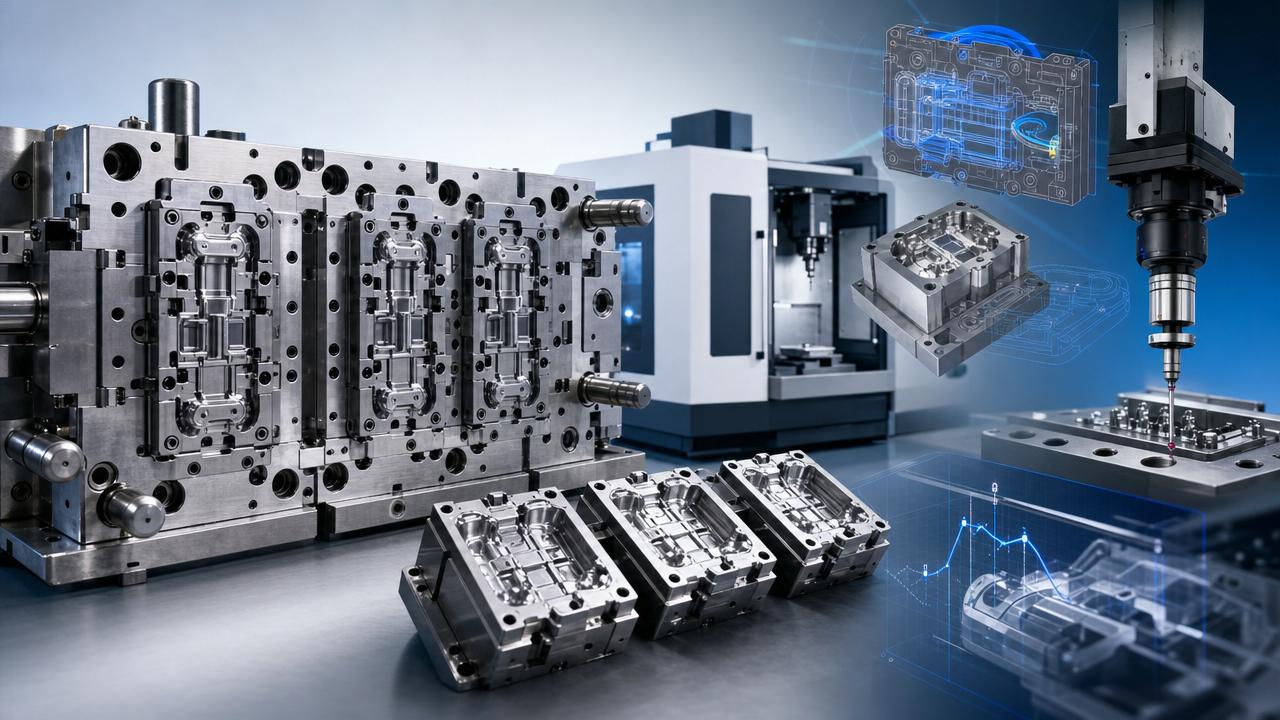
For complex manufacturing programs, mold rework quickly becomes a chain reaction. It adds machining hours, shifts validation dates, disrupts assembly planning, and raises total project risk.
That is why tooling technology matters far beyond the toolroom. Better digital design, process monitoring, and machining control reduce errors early and protect delivery performance later.
In today’s integrated industrial environment, tooling technology supports stronger mold launches across automotive, electrical, consumer products, medical components, and general engineering applications.
When mold delays become business delays
Not every mold project fails for the same reason. Some suffer from weak part data. Others break down during machining, fitting, sampling, or process transfer.
The value of tooling technology appears when teams identify which project stage carries the highest rework risk. That judgment shapes investment, timing, and technical control.
In high-mix industries, even small dimensional drift can trigger steel correction, vent changes, cooling revisions, or repeated texture restoration. Each step extends lead time.
A more mature tooling technology stack helps prevent that cycle. It connects design intent, machine execution, inspection data, and mold trial feedback into one decision chain.
Background signals that rework risk is rising
- Frequent late design changes after steel cutting begins
- Unstable parting line or shutoff decisions in early reviews
- Poor alignment between CAD, CAM, and inspection references
- Manual fitting dependence for critical surfaces
- Trial parts showing recurring sink, flash, warp, or short shot issues
Scenario 1: New product launches with tight validation windows
Launch programs often compress design freeze, tooling release, and trial approval into a narrow schedule. In this setting, tooling technology protects the path to first-pass success.
Simulation-driven gating helps verify fill balance, cooling behavior, and deformation before steel is cut. That reduces corrections after T1 and supports faster approval loops.
High-speed machining with verified toolpaths also improves cavity consistency. When electrodes, inserts, and reference datums are controlled digitally, fit-up time drops significantly.
Core judgment points in launch scenarios
- Whether part geometry is stable enough for final steel decisions
- Whether cooling and venting were validated before machining
- Whether inspection references match machining references
- Whether trial data can be traced back to design assumptions
Scenario 2: Multi-cavity production tools where variation multiplies rework
A single-cavity correction is manageable. In a multi-cavity mold, the same issue can appear across four, eight, or sixteen impressions at once.
Here, tooling technology must focus on repeatability. Electrode wear tracking, cutter compensation, thermal control, and in-process inspection become essential, not optional.
When cavity-to-cavity balance is poor, rework spreads from steel correction to runner redesign and molding parameter changes. That is costly and difficult to recover quickly.
What matters most in this scenario
The main question is not only whether the mold works. It is whether every cavity performs within a predictable window under the same production conditions.
Scenario 3: Precision molds for electrical and functional components
Electrical housings, connector parts, and functional inserts require strict dimensional control. Small deviations can affect fit, insulation spacing, sealing, or downstream assembly quality.
In these projects, tooling technology must combine micro-feature machining, fine surface control, and strong metrology discipline. Rework often comes from details that are hard to see early.
For this reason, measurement strategy should be planned before manufacturing starts. Datums, tolerance stacks, and inspection frequency must align with final function, not only geometry.
Scenario 4: Tool transfer, refurbishment, or regional production scaling
Mold rework is common when tools move between plants, suppliers, or countries. Drawings may be incomplete, maintenance history may be weak, and process assumptions may not transfer cleanly.
Modern tooling technology helps rebuild technical visibility. Reverse engineering, digital scanning, wear mapping, and process documentation reduce guesswork during refurbishment or duplication.
Without that visibility, teams may correct symptoms instead of causes. The result is repeated shutdowns, unstable quality, and long recovery cycles after restart.
How scenario needs differ across mold projects
Practical tooling technology choices that reduce rework
The most effective tooling technology decisions usually happen before machining begins. Prevention is cheaper than correction in every mold environment.
Recommended actions by priority
- Use mold flow and cooling analysis on geometry with high shrink or warp sensitivity.
- Build a single datum strategy across design, machining, assembly, and inspection.
- Apply toolpath verification to avoid overcut, collision, and surface mismatch.
- Track electrode, cutter, and insert life for repeatable accuracy.
- Capture trial results in a structured database for future tooling decisions.
- Standardize design review checkpoints before steel release and before T1.
These measures strengthen tooling technology as a system, not as a disconnected set of machines or software licenses.
Common misjudgments that keep delays alive
One common mistake is treating rework as a shop-floor problem only. In reality, many delays begin with incomplete assumptions upstream.
Another mistake is adding advanced tooling technology without process discipline. Software cannot fix unclear approval rules or weak data ownership.
Some teams also underestimate mold maintenance feedback. Wear patterns, vent damage, and thermal imbalance often reveal why recurring corrections continue.
A final blind spot is measuring output but not stability. A tool may pass one trial and still fail under sustained production conditions.
Warning signs that tooling technology is underused
- Repeated manual spotting on critical shutoff areas
- Frequent steel-safe corrections with poor traceability
- Inspection reports that cannot guide machining adjustments
- Trial approvals based on short-run success only
Next steps for reducing mold rework and schedule risk
A practical starting point is to map where rework usually appears: design, machining, fitting, trial, or transfer. That reveals where tooling technology will deliver the fastest return.
Then compare current controls against project scenario needs. Launch tools, multi-cavity molds, precision electrical parts, and transferred assets require different technical priorities.
For organizations tracking industrial best practice, GHTN highlights how precision methods, reliable components, and data-based tooling technology support stronger manufacturing outcomes.
The goal is simple: fewer surprises after steel cutting, fewer corrections after trial, and more confidence in delivery. Better tooling technology makes that goal far more achievable.
Related News