
What Injection Molding Technical Analysis Reveals About Part Defects

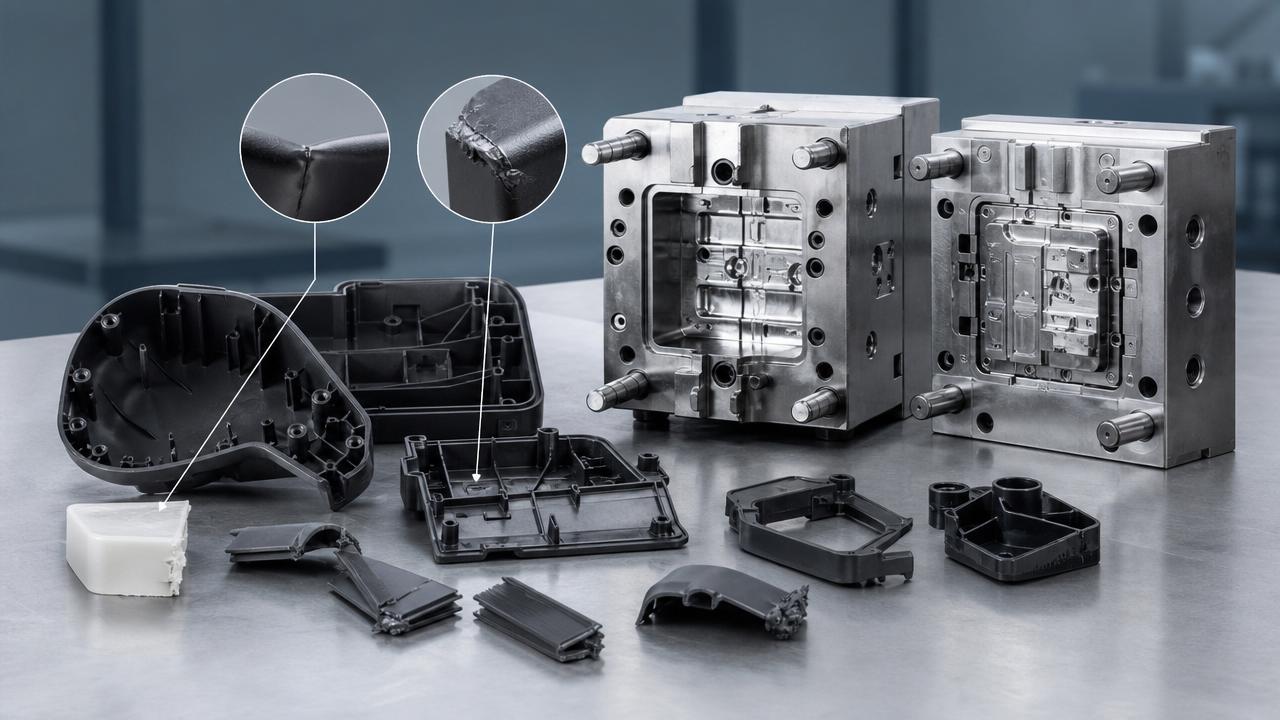
For quality control and safety teams, injection molding technical analysis is more than a troubleshooting method—it is a practical way to trace part defects back to material behavior, tooling conditions, and process variation. By turning defect patterns into measurable insights, manufacturers can reduce risk, improve consistency, and build more reliable molded components across demanding industrial applications.
Why defect analysis in injection molding is becoming a strategic issue
Across industrial supply chains, molded parts are being asked to do more while tolerating less variation. Components used in electrical housings, tool assemblies, fastening systems, fluid-control modules, and safety-related subassemblies now face tighter dimensional requirements, broader environmental exposure, and more demanding traceability expectations. In that environment, injection molding technical analysis is shifting from a reactive factory-floor activity to a strategic quality function.
The change is driven by three visible signals. First, part designs are becoming lighter, thinner, and more integrated, which raises the probability of sink marks, warpage, short shots, and weld line weakness. Second, raw material portfolios are expanding to include recycled blends, flame-retardant compounds, filled resins, and application-specific engineering plastics, each with its own processing window and defect sensitivity. Third, global buyers increasingly want evidence that process control is stable, not just that a shipment passed final inspection.
For quality control personnel and safety managers, this means defect review can no longer stop at visual sorting. The stronger question is: what does injection molding technical analysis reveal about hidden process drift, risk accumulation, and future field failure? That question matters because many molded defects are not isolated cosmetic events. They are often early warnings of instability in melt temperature, mold cooling, moisture management, venting, clamp force, gating balance, or tool wear.
The most important trend signal: defects are increasingly interpreted as process intelligence
A major shift in manufacturing is that defect patterns are no longer treated only as production losses. They are being used as process intelligence. When repeated correctly, injection molding technical analysis can reveal whether a defect belongs to a material issue, a tooling issue, a machine capability limit, an operator setting problem, or a design-for-manufacturing mismatch.
This trend is especially relevant in sectors where molded parts support electrical insulation, mechanical fastening, enclosure sealing, or user contact surfaces. A burn mark may suggest poor venting, but it can also indicate flow hesitation and local thermal stress. Flash may look like a trimming problem, but it may point to parting-line wear, cavity pressure imbalance, or a clamp-force mismatch that can worsen over time. Warpage may be blamed on cooling alone, while the real cause is often a combination of mold temperature imbalance, gate location, fiber orientation, and uneven shrinkage.
As a result, companies that build stronger defect-classification logic are improving more than scrap rates. They are improving audit readiness, supplier communication, preventive maintenance timing, and confidence in safety-critical part performance.
What is driving the deeper use of injection molding technical analysis
Several forces are pushing manufacturers toward more disciplined technical analysis rather than basic defect screening.
- Higher functional integration: one molded part may now replace several assembled components, so a single defect has greater downstream impact.
- Material complexity: filled, reinforced, recycled, and compliance-driven resins react differently to moisture, shear, residence time, and cooling behavior.
- Traceability expectations: OEMs increasingly want root-cause logic, corrective action evidence, and process capability visibility.
- Tool longevity pressure: mold wear, vent contamination, gate erosion, and cooling channel scaling can create defect drift before obvious failure appears.
- Safety and liability concerns: defects that affect fit, insulation, retention strength, or sealing can escalate from quality issues to field-risk events.
These drivers explain why injection molding technical analysis is gaining importance not only in mold shops and molding plants, but also in procurement reviews, supplier audits, and cross-functional risk assessments.
Trend change table: how defect analysis is evolving
The table below summarizes how the role of defect investigation is changing in practical manufacturing environments.
Which defects now deserve more attention than before
Not all molded defects carry the same future risk. Cosmetic issues still matter for customer acceptance, but current industry conditions are making some technical defects more significant because they reveal deeper variation.
Warpage and dimensional drift
As assemblies become tighter and automated installation becomes more common, even minor deformation can cause fit failures, misalignment, sealing problems, or uneven load transfer. Injection molding technical analysis often shows that warpage is not a single-parameter problem. It is usually linked to shrinkage behavior, cavity filling balance, local wall-thickness transitions, cooling asymmetry, and resin orientation effects.
Weld lines and structural weakness
In functional parts, weld lines are increasingly reviewed not only for appearance but for mechanical integrity. They may reveal poor flow-front meeting conditions, low melt temperature, venting limitations, or geometry that traps air. For safety teams, this is important where clips, brackets, covers, and retention features face vibration or repeated loading.
Burn marks, splay, and moisture-related surface evidence
These defects often indicate hidden material handling or thermal control issues. In some cases, they point to resin degradation, poor drying discipline, trapped gas, or excessive shear. The wider use of technical resins and recycled content makes such analysis more critical because the safe processing window may be narrower.
Flash and parting-line instability
Flash is sometimes underestimated as a trimming nuisance. But repeated flash may reveal tool mismatch, wear progression, overpacking, or changing clamp behavior. For quality and safety functions, that is a valuable trend signal because it can precede dimensional inconsistency and assembly interference.
How the impact differs across roles and business functions
The value of injection molding technical analysis is not limited to process engineers. Its influence is spreading across multiple decision points.
What quality and safety teams should monitor next
Looking ahead, the most useful injection molding technical analysis will be the kind that links visual evidence to measurable process behavior over time. Teams should pay attention to several signals.
- Whether the same defect appears at one cavity, one gate area, one shift, or one material lot.
- Whether corrective actions focus only on settings, while mold condition and resin preparation remain unverified.
- Whether defect rates rise after tool maintenance, material substitution, regrind ratio changes, or cycle-time pressure.
- Whether dimensional checks and surface checks are reviewed together rather than in isolation.
- Whether recurring “minor” defects correlate with customer complaints, installation difficulty, or field returns.
These are practical indicators of process maturity. They help organizations move from event-by-event firefighting to trend-based judgment.
A practical response framework for the next stage
Companies do not need a complex digital transformation to strengthen defect intelligence. They do need a more disciplined response framework. A useful approach is to organize injection molding technical analysis around four linked questions: What changed? Where is it visible? Which mechanism is most likely? What control should be tightened first?
For quality teams, that may mean revising defect libraries so that each common issue is connected to likely process variables, material conditions, tool features, and validation checks. For safety teams, it may mean ranking molded defects by functional consequence rather than appearance alone. For supplier-facing teams, it means asking for evidence of drying records, cavity balance review, mold maintenance history, and parameter windows—not just replacement parts.
This is also where the broader industrial perspective matters. Organizations such as GHTN, which track precision tooling, mold iteration, industrial component performance, and manufacturing logic across sectors, reflect a wider reality: competitive advantage increasingly comes from understanding how small physical deviations create large business consequences.
Conclusion: better analysis now leads to stronger decisions later
The most important takeaway is that injection molding technical analysis now carries value far beyond defect explanation. It reveals process capability, tool condition, material sensitivity, supplier discipline, and hidden safety exposure. In a market that rewards consistency, compliance, and durable component performance, these insights help manufacturers make better judgments before defects become claims, downtime, or field failures.
If your organization wants to judge how these trends affect current molded parts, focus on a few questions first: Which recurring defects are being treated as isolated events instead of trend signals? Which molded features carry the highest functional or safety consequence if variation increases? And which suppliers or internal lines can clearly connect defect patterns to material, tooling, and process evidence? Those answers will show where injection molding technical analysis can create the fastest improvement in risk control and product reliability.
Related News