
What OEM manufacturing really saves in injection molds

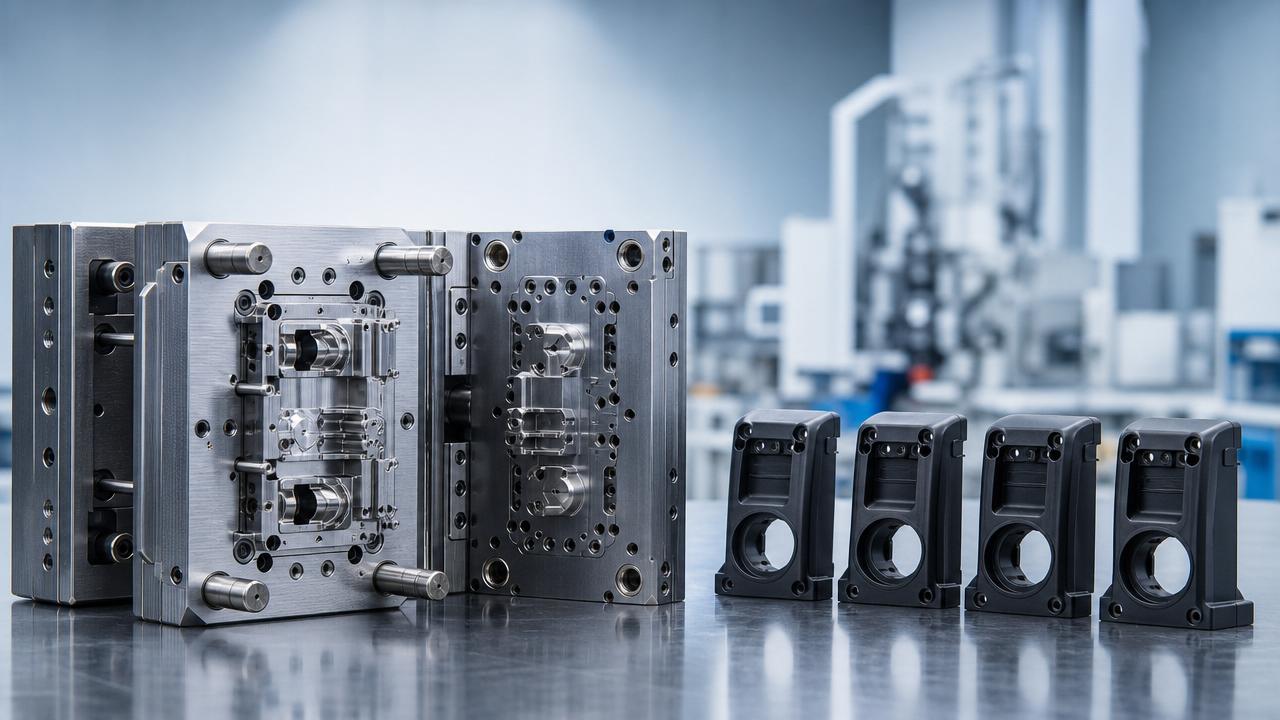
For procurement teams, the real value of OEM manufacturing in injection molds goes far beyond the initial quote. It can reduce tooling costs, shorten lead times, improve production consistency, and lower long-term sourcing risks.
Those savings are not automatic, however. They come from supplier capability, mold design discipline, material choices, process control, and the buyer’s ability to evaluate total cost instead of unit tooling price alone.
This matters because injection molds are rarely a one-time expense. They affect launch timing, defect rates, maintenance budgets, engineering changes, and the stability of future production across the product lifecycle.
For buyers comparing suppliers, the key question is simple: what does OEM manufacturing really save, and where do those savings become measurable in procurement and operations?
What procurement teams are really trying to learn from this topic
When buyers search for information on OEM manufacturing and injection molds, they are usually not looking for a basic definition. They want to know whether outsourcing mold development creates real commercial savings.
More specifically, they want to compare the visible cost of mold making with the hidden costs tied to rework, delays, poor part quality, low tool life, and weak engineering support.
They also want a practical way to judge supplier claims. Many manufacturers promise lower tooling costs, but procurement teams need evidence that savings will survive pilot runs, production ramp-up, and ongoing maintenance.
So the decision is rarely about the cheapest quote. It is about total value, supply continuity, and whether the selected OEM partner can deliver predictable results under commercial pressure.
Where OEM manufacturing creates the biggest savings in injection molds
The most important point is that OEM manufacturing saves money in several layers. Some savings appear upfront in tooling quotes, while others emerge later in production efficiency and reduced sourcing risk.
The first layer is engineering efficiency. Experienced OEM manufacturers often reuse proven design standards, mold base systems, cooling concepts, and workflow templates that reduce avoidable development hours.
That does not mean every mold is standardized. It means the supplier is not reinventing routine elements, so custom effort is focused only where product geometry or performance truly requires it.
The second layer is process integration. When one OEM partner manages design review, DFM feedback, tooling build, sampling, and early production troubleshooting, handoff errors and communication delays are reduced.
The third layer is manufacturing discipline. A capable supplier controls machining accuracy, electrode quality, steel selection, heat treatment, polishing, fitting, and testing more consistently than fragmented vendors can.
The fourth layer is lifecycle cost. Better molds usually require fewer repairs, produce more stable parts, and sustain output longer before major refurbishment. For procurement, that can be more valuable than an initial discount.
Upfront tooling savings are real, but they are only part of the story
Many buyers begin by looking at the mold quotation, and that is reasonable. OEM manufacturing can lower upfront tooling cost through labor efficiency, scale advantages, and integrated sourcing of steel and components.
Suppliers with mature operations often purchase mold bases, hot runner systems, standard components, and machining capacity more efficiently. Those cost advantages can be reflected in the final customer quote.
In addition, an OEM manufacturer that handles similar products regularly can reduce engineering trial-and-error. Fewer design revisions before cutting steel often means lower non-recurring engineering cost.
However, the lowest initial tooling price should not be treated as the biggest saving. A cheap mold that needs repeated modification can quickly become the most expensive option in the sourcing program.
Procurement teams should therefore separate “quoted tooling price” from “fully landed tooling cost.” The second figure includes validation rounds, shipping, communication overhead, revision costs, and launch delay exposure.
Lead time savings can be commercially more important than direct mold price savings
In many projects, the largest financial benefit of OEM manufacturing is not the quote reduction. It is the ability to shorten the path from design freeze to qualified production parts.
Faster lead times matter because delayed tooling often causes delayed revenue, missed customer programs, excess expediting cost, and pressure on internal teams to approve marginal samples.
An experienced OEM supplier can save time through concurrent engineering. Mold flow review, gate optimization, cooling layout, parting line decisions, and ejection planning happen earlier and with fewer iterations.
Tool shops with strong in-house coordination also reduce waiting time between machining, EDM, fitting, polishing, trial sampling, and corrective actions. That internal rhythm creates schedule reliability buyers can plan around.
For procurement, schedule reliability is a savings category in itself. A supplier who ships on time reduces the need for emergency logistics, buffer inventory, and repeated management escalation.
OEM manufacturing can lower quality cost by improving mold performance
One of the most overlooked savings areas is quality cost. Injection molds directly influence dimensional consistency, flash control, sink marks, warpage, surface finish, and cycle stability.
If the mold is poorly designed or built, the buyer may face scrap, sorting, line interruptions, customer complaints, and recurring engineering intervention. Those costs rarely appear in the original tooling quote.
A stronger OEM manufacturing partner typically improves quality through better venting, balanced filling, stable cooling, proper shutoff design, and tighter machining control in critical mold areas.
That translates into more repeatable parts and fewer production surprises. For procurement professionals managing supply performance, repeatability often matters more than one-time sample success.
A mold that runs consistently at scale reduces the hidden cost of firefighting. It lowers the burden on incoming inspection, production support, and supplier quality teams over the life of the program.
Tool life and maintenance savings matter more in long-running programs
Procurement teams sometimes underestimate the cost of mold wear. But in medium- to high-volume projects, tool longevity can strongly affect total ownership cost and supply continuity.
OEM manufacturing can improve tool life through appropriate steel grade selection, heat treatment control, wear-resistant inserts, proper cooling design, and easier access for maintenance-critical components.
A mold built for maintainability saves money every time it is serviced. Standardized inserts, accessible wear zones, and documented spare-part specifications reduce downtime and maintenance labor.
This is especially valuable when molds are expected to support multiple years of production. In these cases, a slightly higher upfront investment can produce much larger savings in uptime and part stability.
Buyers should therefore ask not only how much the mold costs today, but how many shots it is designed for, what preventive maintenance it needs, and how fast service actions can be completed.
Engineering change savings are a major advantage of capable OEM partners
Product changes are common in real manufacturing programs. Tolerance updates, resin substitutions, cosmetic revisions, and assembly adjustments can all require mold modification after initial build.
OEM manufacturing saves money when the supplier anticipates changeability. Modular inserts, thoughtful shutoff design, and clear design documentation make later revisions faster and less disruptive.
A weak supplier may quote a low initial price but create expensive downstream change costs because the mold architecture is difficult to adjust. That is a hidden procurement risk.
By contrast, a capable OEM partner can recommend design choices that reduce future modification work. For buyers handling evolving customer requirements, that flexibility has measurable value.
This is why early DFM collaboration is not just a technical exercise. It is a cost-management tool that protects the sourcing budget against avoidable engineering changes later.
What savings look like in total cost of ownership terms
Procurement should evaluate OEM manufacturing in injection molds through total cost of ownership rather than isolated piece-price logic. This gives a clearer view of where the real savings are created.
Total cost includes the mold quote, trial cost, shipping, taxes, engineering communication time, sample approval cycles, production scrap, downtime, maintenance, spare parts, and end-of-life refurbishment.
It also includes commercial factors such as delayed launch, unstable capacity, supplier responsiveness, and the internal cost of managing recurring quality or delivery problems.
When viewed this way, a supplier with a moderately higher mold quote may still be the lower-cost option over the full program lifecycle if performance is more stable and intervention is lower.
This framework helps procurement teams defend sourcing decisions internally. Instead of arguing from intuition, they can show why the cheapest quote may not be the best commercial choice.
How buyers can tell whether an OEM supplier’s savings are credible
Procurement teams should ask for evidence tied to process capability, not just pricing. A trustworthy OEM manufacturer should be able to explain where cost efficiencies come from in practical terms.
Useful proof points include DFM reports, mold flow analysis, trial history, steel specifications, component brands, maintenance plans, cycle time assumptions, and examples of similar completed programs.
Buyers should also evaluate communication speed and technical clarity during quotation. If a supplier cannot explain parting lines, gate strategy, cooling logic, or likely risk areas, hidden costs may follow.
Another strong indicator is revision discipline. Suppliers that document design changes, approval stages, and trial outcomes tend to manage tooling programs more predictably than those relying on informal updates.
For larger programs, it is also worth reviewing capacity planning and backup arrangements. Savings disappear quickly if the supplier cannot support production continuity after the tool is approved.
Common misconceptions that lead to poor sourcing decisions
One common mistake is assuming that OEM manufacturing savings come only from lower labor cost. In reality, the most durable savings usually come from engineering quality and execution discipline.
Another mistake is treating sample acceptance as proof of long-term mold performance. A mold can produce acceptable first samples and still become unstable under sustained production conditions.
Some buyers also focus too heavily on cavity count without analyzing throughput, cycle time, maintenance intervals, and actual forecast demand. More cavities do not always mean better economics.
It is also risky to compare mold quotes without normalizing scope. Differences in steel grade, hot runner brand, polishing standard, spare parts, validation rounds, and warranty terms can distort price comparisons.
Finally, procurement teams should avoid assuming that every OEM supplier offers the same value. Cost savings depend heavily on specialization, technical depth, and fit with the actual product requirement.
When OEM manufacturing is most likely to deliver meaningful savings
OEM manufacturing tends to provide the strongest value in projects with recurring volume, tight launch schedules, demanding dimensional requirements, or a need for coordinated engineering support.
It is especially useful when buyers need one supplier to bridge technical review and commercial execution, reducing the friction that often exists between separate design and tooling vendors.
The savings are also more visible when the molded part has complex geometry, cosmetic demands, thin walls, insert molding features, or narrow process windows that punish weak tooling decisions.
For simpler, low-volume tools, the advantage may be smaller. In those situations, buyers should still compare lifecycle factors, but the savings opportunity may not justify a premium supplier structure.
In short, the more a program depends on repeatability, speed, and technical predictability, the more likely OEM manufacturing is to create measurable and defensible savings.
Conclusion: the real savings come from fewer problems, not just lower prices
What OEM manufacturing really saves in injection molds is broader than most quotations show. Yes, there can be direct tooling cost advantages, but the bigger gains often come from time, stability, and lower risk.
For procurement professionals, the most valuable OEM partner is not simply the one with the lowest quote. It is the one that reduces total program cost through stronger design, faster execution, and better production consistency.
That means the smartest buying decision usually comes from evaluating total cost of ownership, engineering support, tool life, maintainability, and change responsiveness together.
If buyers use that framework, OEM manufacturing becomes easier to assess. The real savings reveal themselves not in a single price line, but in fewer delays, fewer defects, fewer revisions, and more reliable supply.
In competitive sourcing environments, that is the difference between buying a mold and securing a manufacturing asset that supports long-term commercial performance.
Related News