
What injection molding technical analysis misses often

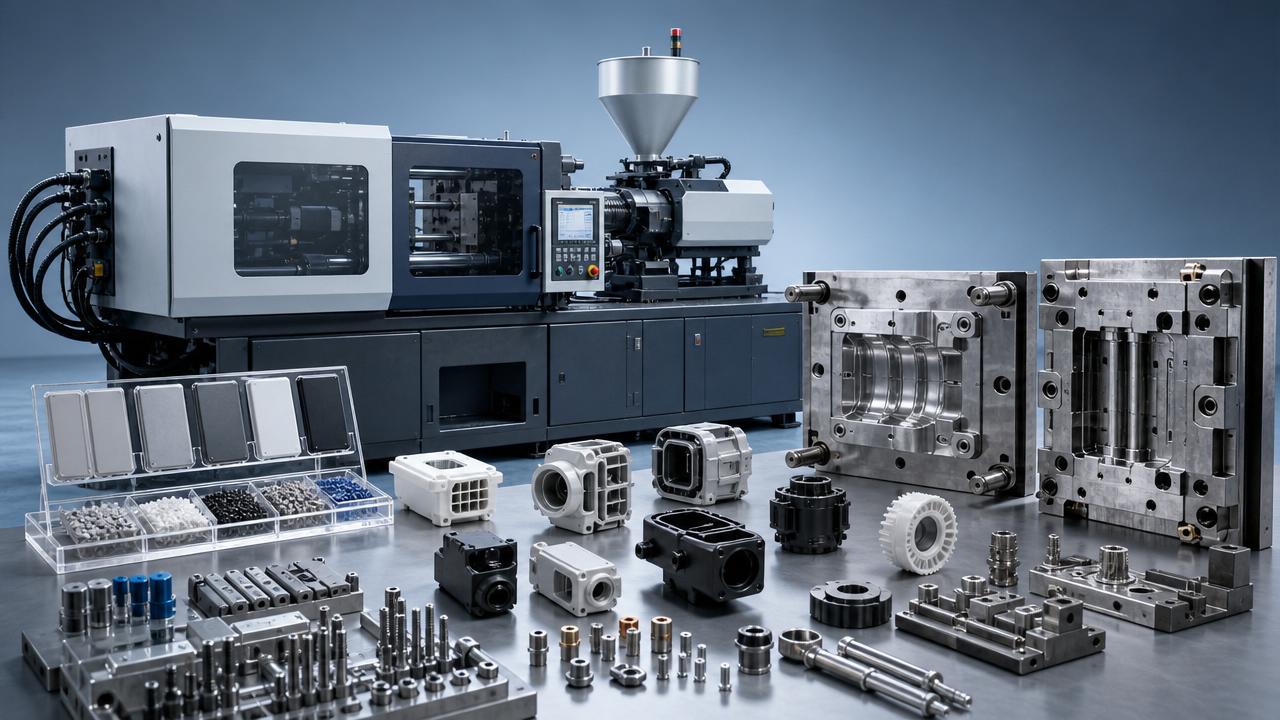
Many teams use injection molding technical analysis to judge part quality, tooling readiness, unit cost, and cycle performance.
That approach is necessary, but it is often too narrow for real industrial decision-making.
Conventional reviews may confirm dimensions and appearance while missing process instability, hidden wear, and field-condition variation.
In hardware, electrical, and mold-related sectors, those missed details can affect assembly fit, compliance, maintenance cycles, and long-term cost.
A stronger injection molding technical analysis should connect material science, tooling physics, machine behavior, and downstream application requirements.
Core Meaning of Injection Molding Technical Analysis
At its base, injection molding technical analysis examines how resin, mold, machine, and settings interact during production.
It usually includes dimensional reports, cavity balance, fill time, gate design, cooling behavior, shrinkage, and defect review.
It may also cover mold flow simulation, cycle estimates, sampling data, and visual inspection records.
These elements are useful, yet they do not automatically reveal what happens after extended runs or variable factory conditions.
That is why injection molding technical analysis must move beyond snapshot validation toward system-level interpretation.
What standard reviews usually capture well
- Nominal dimensions and tolerance conformance
- Visible defects such as flash, sink, short shot, or burn marks
- Basic cycle time and shot consistency
- Initial mold function and part release behavior
- Material certificate alignment with design intent
What Injection Molding Technical Analysis Misses Often
The largest gaps appear when analysis stays centered on the first acceptable sample.
An approved sample can still hide future instability across volume production.
Material behavior shifts under real processing windows
Resins do not behave identically across all drying levels, regrind ratios, ambient conditions, or residence times.
A narrow lab result may not represent daily production variation.
For reinforced polymers, fiber orientation can alter strength, warpage, and electrical performance in subtle but important ways.
Tooling wear is often treated as a maintenance issue only
Wear changes venting efficiency, gate geometry, shutoff integrity, and surface transfer.
Those changes gradually affect part consistency before failure becomes visible.
A robust injection molding technical analysis should include wear trend interpretation, not only final repair records.
Machine-to-machine variation remains underestimated
The same mold on different presses may produce different pressure responses, cooling results, and repeatability.
Differences in screw design, clamp rigidity, sensor calibration, and controller behavior matter more than many reports show.
Downstream use conditions are disconnected from molding data
A molded component may pass inspection and still fail in vibration, humidity, thermal cycling, or chemical exposure.
This is especially relevant in electrical housings, tool handles, connectors, clips, and precision support parts.
Industry Signals Behind the Growing Concern
Across industrial supply chains, expectations for precision, traceability, and sustainability continue to rise.
As a result, injection molding technical analysis is receiving more strategic attention.
For industrial component networks, these signals connect directly to sourcing confidence and lifecycle performance.
Business Value of a Deeper Evaluation Model
A broader injection molding technical analysis reduces uncertainty in both technical and commercial judgments.
It improves understanding of whether a part is merely acceptable today or sustainable across repeat production.
Key benefits for industrial decisions
- Better prediction of total tooling cost over time
- Lower risk of hidden quality drift in multi-cavity molds
- Clearer link between molded part data and field performance
- Stronger basis for material selection and validation updates
- More reliable comparisons between suppliers, machines, and process windows
This matters in integrated sectors where molded parts interface with metal hardware, electrical systems, seals, and automation assemblies.
The physical behavior of one plastic part can influence the performance of an entire industrial subsystem.
Typical Scenarios Where Blind Spots Create Risk
The missed factors in injection molding technical analysis often appear in repeatable, high-impact situations.
Practical Framework for Better Injection Molding Technical Analysis
A stronger method should combine static inspection with dynamic production evidence.
It should also connect molding data with actual service requirements.
Recommended checkpoints
- Review process window width, not only target settings.
- Track pressure, temperature, and cooling trends across long runs.
- Compare cavity-to-cavity behavior using statistical evidence.
- Audit resin handling, drying control, and regrind discipline.
- Map known wear points and correlate them with defect emergence.
- Validate molded parts under realistic mechanical and environmental loads.
- Record machine-specific effects when production transfer is possible.
This framework makes injection molding technical analysis more predictive and less dependent on one-time sample success.
Operational Cautions for Cross-Industry Component Programs
Industrial programs often combine plastics with metals, coatings, conductive elements, and sealing interfaces.
That complexity means analysis should not stop at the molded geometry alone.
- Check interaction between molded tolerances and fastener preload behavior.
- Verify heat exposure near electrical or pneumatic systems.
- Review chemical contact if oils, cleaners, or outdoor conditions are present.
- Align mold maintenance intervals with actual defect trend data.
For knowledge platforms such as GHTN, this integrated view reflects how precision parts behave inside complete industrial ecosystems.
Next-Step Direction for More Reliable Judgments
If current reports focus mainly on dimensions, appearance, and nominal cycle time, the evaluation model is incomplete.
A more mature injection molding technical analysis should test variation tolerance, long-run durability, and end-use relevance together.
Start by expanding data collection from sample approval to process behavior, wear progression, and application-linked validation.
That shift supports better tooling decisions, stronger quality confidence, and more resilient industrial component strategies.
In modern manufacturing, deeper insight is not extra analysis. It is the basis for more accurate judgment.
Related News