
What Technical Analysis Reveals Before Final Mold Approval

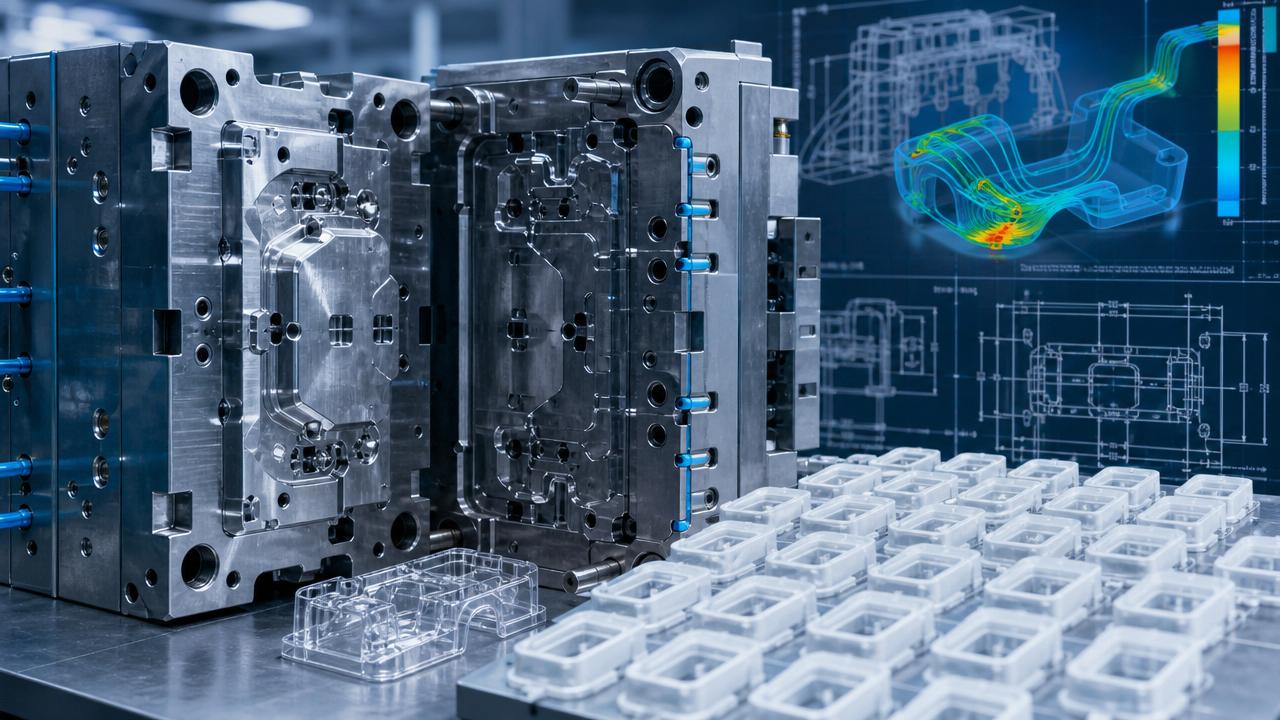
Before a mold reaches final approval, the right technical analysis for mold design can reveal hidden risks, cost drivers, and performance gaps that may affect long-term production value. For business evaluators, these insights go beyond engineering detail—they clarify supplier capability, tooling reliability, and return on investment, helping decision-makers reduce uncertainty and approve molds with greater confidence.
In industrial sourcing, final mold approval is rarely a simple technical signoff. It is a commercial decision tied to unit economics, launch timing, maintenance exposure, and supplier stability. For OEM buyers, distributors, and evaluation teams, the question is not only whether a mold can produce parts, but whether it can do so consistently over 50,000, 200,000, or even 1,000,000 cycles without creating unacceptable scrap, downtime, or change-order costs.
This is where technical analysis for mold design becomes a business tool rather than an engineering checklist. By reviewing structural strength, cooling balance, gate design, material compatibility, tolerance strategy, and manufacturability before approval, business evaluators can identify which mold programs are likely to scale smoothly and which ones may introduce hidden cost after SOP. For organizations following industrial intelligence platforms such as GHTN, this type of review is essential for linking precision decisions to long-term supply chain value.
Why Final Mold Approval Requires More Than Visual Inspection
Many approval processes still rely too heavily on sample appearance, dimensional pass rates, and supplier assurance. Those indicators matter, but they only show a snapshot. A mold that performs well for a 300-shot trial may behave differently after 5,000 cycles, after thermal buildup, or under a faster production cadence. Technical analysis for mold design helps evaluators look beyond first-pass appearance and measure operational resilience.
The difference between trial success and production readiness
A mold may pass T1 or T2 trials yet still carry unresolved risks in venting, cooling distribution, ejection force, or wear concentration. In precision mold manufacturing, those issues often emerge only when output rises from pilot volumes of 100 to 500 parts per day to sustained production volumes of 3,000 to 10,000 parts per day. Business evaluators should therefore ask whether the design has been analyzed for full-cycle performance, not just sample conformity.
Key questions for commercial review
- Can the mold maintain dimensional stability within the required tolerance band, such as ±0.02 mm to ±0.10 mm, over extended runs?
- Does the cooling layout support target cycle time, for example 18–35 seconds for injection molds or application-specific die-casting windows?
- Are expected wear parts accessible enough to keep maintenance intervals predictable every 20,000–80,000 shots?
- Has the mold base and cavity steel selection matched resin, filler content, and projected annual volume?
These questions matter because the cost of correction rises sharply after approval. A late-stage gate relocation, vent redesign, or cooling rework can delay launch by 2–6 weeks and trigger additional machining, sample validation, logistics, and line scheduling costs. For business teams, technical analysis for mold design is therefore a preventive control against downstream commercial disruption.
What hidden issues technical analysis often reveals
A proper review typically uncovers patterns that are easy to miss during a standard buyoff. Common examples include uneven cooling channels causing localized warpage, insufficient vent depth increasing burn marks, unbalanced runners producing cavity-to-cavity variation, and weak support near thin ribs leading to deflection over time. In multi-cavity molds, a 3% to 5% imbalance between cavities may already be enough to affect downstream assembly yields.
For business evaluators, the value is straightforward: each technical finding can be translated into a commercial implication such as scrap rate risk, maintenance frequency, energy use, labor dependency, or inventory buffer requirements. This bridge between engineering evidence and financial exposure is what makes technical analysis for mold design especially relevant at approval stage.
Core Technical Analysis Areas That Influence Approval Decisions
A comprehensive review should not be limited to one simulation screenshot or one sample report. Decision-makers need a structured framework that covers both mold functionality and business performance. In practice, at least 6 review domains should be examined before final release.
1. Material and steel compatibility
Mold life depends heavily on matching tool steel to resin abrasiveness, filler percentage, corrosion exposure, and target output. For example, glass-filled materials at 20%–40% can accelerate wear in gates, runners, and shut-offs. If the mold is expected to support medium-to-high annual output, a stronger steel strategy may reduce maintenance events even if the initial tooling cost is 8%–15% higher.
2. Flow, gate, and pressure balance
Flow analysis helps verify whether melt front progression, pressure drop, and weld-line position align with product requirements. A gate that appears functional may still cause shear sensitivity, cosmetic marks, or excessive packing demand. In commercial terms, poor balance often means longer cycles, unstable part weight, and more operator adjustment during production shifts.
3. Cooling efficiency and cycle time economics
Cooling usually drives 50%–70% of the total molding cycle in many thermoplastic applications. Even a 2-second reduction in cycle time can materially change annual output and machine utilization. Technical analysis for mold design should therefore evaluate channel layout, thermal concentration zones, and temperature consistency between cavities or core areas.
The following table shows how common analysis domains connect directly to approval and sourcing outcomes.
The main takeaway is that each technical checkpoint has a measurable operational consequence. When evaluation teams ask for technical analysis for mold design, they are not adding complexity; they are improving cost visibility before the approval decision becomes irreversible.
4. Tolerance stack-up and assembly fit
Dimensional compliance at single-part level does not guarantee system fit. For components entering electrical housings, tool assemblies, or multi-part mechanical products, tolerance stack-up should be reviewed across the assembly chain. A part that passes at the upper end of tolerance may still create clipping force issues, sealing gaps, or alignment problems when paired with another part at the opposite end of its range.
5. Maintainability and tool access
High-performing molds are not only accurate; they are maintainable. Business evaluators should confirm whether inserts, slides, ejector components, and wear surfaces can be serviced quickly. If a common maintenance action requires 6 hours instead of 2 hours because of poor access, the hidden lifecycle cost may exceed the original tooling saving within the first year.
6. Process window robustness
A narrow process window is a warning sign. If the mold only produces acceptable parts within a very small temperature, pressure, or fill-speed range, production transfer becomes harder and quality drift becomes more likely. In sourcing terms, robust molds offer more flexibility across machines, operators, and production sites, which is highly valuable for global manufacturing networks.
How Business Evaluators Can Use Technical Findings in Supplier Assessment
For commercial teams, the biggest challenge is translating engineering evidence into a clear approval recommendation. A practical method is to score mold readiness across capability, cost, risk, and scalability rather than reviewing all comments as isolated technical notes.
A 4-part approval lens
- Capability: Can the supplier consistently build to the required tolerance, finish, and cavity balance?
- Reliability: Does the technical analysis for mold design indicate stable performance over the expected tool life?
- Economics: Are cycle time, scrap, and maintenance levels aligned with the target piece cost?
- Scalability: Can the mold and supplier support ramp-up, engineering change control, and spare support over 12–36 months?
This approach helps prevent a common mistake in procurement: approving a mold because the upfront quote looks competitive, while underestimating long-term conversion cost. In many industrial categories, a 5% tooling saving can be erased quickly by a 1% to 2% scrap increase, one delayed launch window, or repeated line stoppages caused by mold instability.
Supplier signals worth checking before approval
Strong suppliers usually provide more than a trial sample and a promise. They present mold flow or equivalent simulation outputs, steel and heat-treatment rationale, cooling logic, maintenance recommendations, and change history between T0, T1, and final trials. The presence of that documentation often indicates process maturity, especially in sectors where precision, repeatability, and traceability matter.
The table below can be used as a working reference for business-side mold approval decisions.
Used properly, this framework turns technical analysis for mold design into a sourcing language that procurement, engineering, quality, and operations can all align around. That alignment is especially useful when multiple regions or business units share the same mold investment decision.
Common Approval Risks and How to Reduce Them Early
Some mold programs fail not because the supplier lacks basic capability, but because the approval process overlooks predictable risks. Early intervention is usually cheaper than late correction, especially when the mold is tied to a launch milestone or customer delivery contract.
Risk 1: Approving based on one successful run
A single stable run may hide thermal drift, cavity imbalance, or wear sensitivity. It is often better to review results across at least 2 to 3 runs, ideally under slightly different settings, to understand whether the tool has a stable process window. This does not always require extended testing, but it does require disciplined evidence.
Risk 2: Ignoring maintenance design
If maintenance access is poor, the real cost appears later in lost machine time, delayed shipments, and inconsistent preventive care. Approval teams should ask for estimated service intervals, common wear points, and a spare component list. Even a basic 90-day maintenance strategy can improve planning for high-use tools.
Risk 3: Treating technical review as separate from ROI
Technical findings should feed directly into commercial models. For instance, if cooling limits cycle time to 32 seconds instead of the quoted 24 seconds, annual capacity may fall by roughly 25% on the same machine platform. That gap changes labor loading, machine allocation, and revenue timing, which means it belongs in the approval decision.
A practical pre-approval checklist
- Confirm target tool life range and key wear components.
- Review at least 6 core technical items: steel, flow, cooling, venting, ejection, tolerance strategy.
- Validate cycle time with actual trial conditions, not only supplier estimates.
- Check documentation consistency between design revision, sample data, and final mold status.
- Map each unresolved technical issue to cost, timeline, or quality risk.
For industrial buyers working across hardware, electrical, and mold-related supply chains, this discipline creates a stronger bridge between detailed manufacturing logic and market-facing performance. That is also why platforms focused on industrial intelligence, such as GHTN, emphasize not just component selection but the deeper manufacturing analysis behind long-term competitiveness.
From Technical Review to Confident Approval
Final mold approval should confirm three things at once: the tool can produce to specification, the supplier can support stable output, and the economics remain sound across the mold’s intended life. Technical analysis for mold design provides the evidence needed to make that decision with fewer assumptions and better cross-functional alignment.
For business evaluators, the most valuable insight is often not a single simulation result or sample dimension. It is the pattern that emerges when design strength, process stability, maintainability, and cost behavior are reviewed together. That broader view helps distinguish a mold that merely passes inspection from one that truly supports scalable manufacturing.
If your team is reviewing new tooling programs, comparing supplier readiness, or seeking clearer risk visibility before approval, now is the right time to apply a more structured technical review. Connect with GHTN to get deeper industrial insight, discuss your evaluation criteria, and explore solutions tailored to precision tooling, mold manufacturing, and global sourcing strategy.
Related News