
What injection molding technical analysis reveals about defects

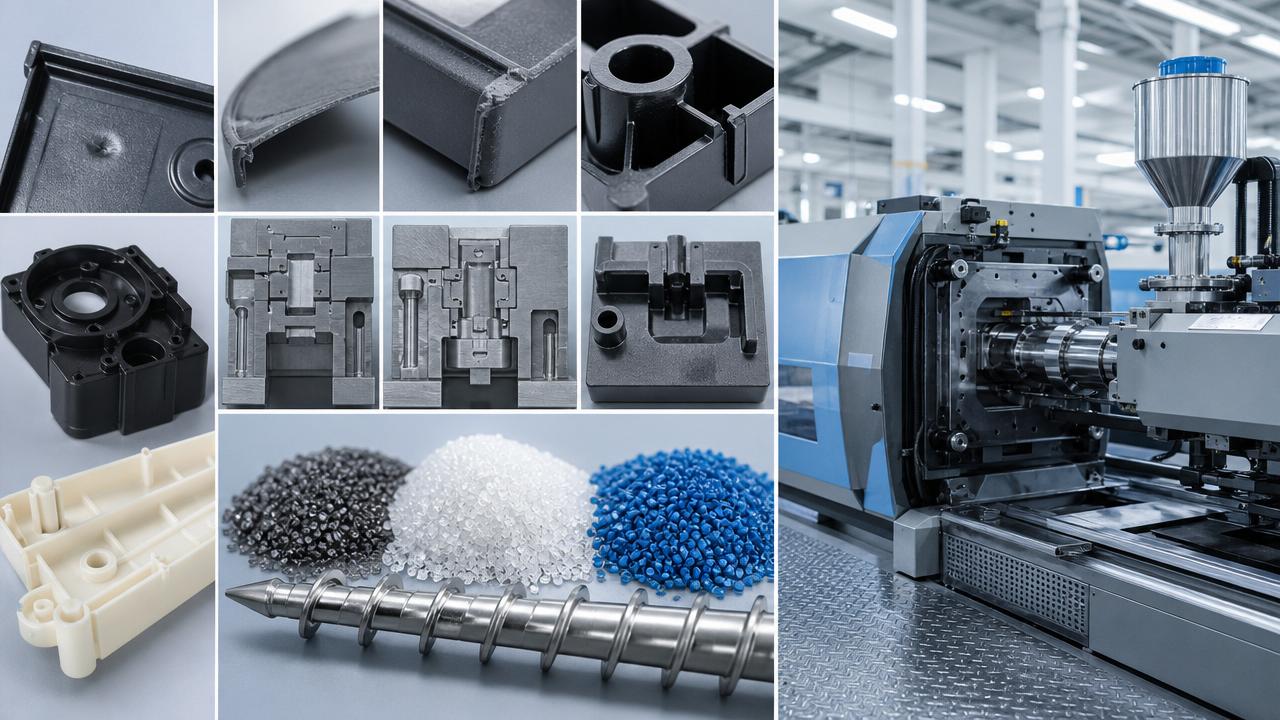
For technical evaluators, injection molding technical analysis is the fastest way to trace defects back to their real causes.
From sink marks and warpage to flash and short shots, defect patterns expose links between resin behavior, mold design, processing windows, and tooling condition.
In today’s industrial environment, faster cycles and tighter tolerances make this analysis more important than routine visual inspection alone.
A structured diagnostic approach improves quality decisions, reduces hidden scrap, and supports more reliable manufacturing across hardware, electrical, and mold-related applications.
Defect signals now reveal more than cosmetic failure
Current production trends show that defects are no longer treated as isolated surface issues.
Instead, injection molding technical analysis is used to interpret each visible symptom as evidence of process imbalance.
This shift matters because modern molded components often serve structural, electrical, and dimensional functions at the same time.
A small gate blush, minor burn mark, or subtle warp may signal deeper instability that affects assembly, sealing, or long-term durability.
As component geometries become thinner and materials become more specialized, failure analysis must move upstream.
That is why injection molding technical analysis increasingly combines part inspection, mold review, machine data, and maintenance history.
Why the industry is relying more on injection molding technical analysis
Several manufacturing signals are driving the rise of deeper defect interpretation.
- More engineering resins with narrow processing windows increase sensitivity to moisture, shear, and cooling variation.
- Multi-cavity molds amplify cavity-to-cavity variation, making localized defects harder to judge without systematic analysis.
- Shorter development timelines reduce the margin for trial-and-error process tuning.
- Precision hardware and electrical parts require stronger dimensional consistency and surface repeatability.
- Global supply chains need traceable quality evidence, not only pass or fail outcomes.
These conditions make injection molding technical analysis a decision tool rather than a troubleshooting afterthought.
A defect-to-cause framework is replacing guesswork
The strongest trend is the move from symptom correction to root-cause mapping.
This means asking whether a defect comes from filling, packing, cooling, venting, ejection, or material preparation.
Effective injection molding technical analysis also compares machine settings with actual part behavior, not only with standard recipes.
How common defects point to deeper process and tooling issues
Different defect families often reveal distinct physical mechanisms.
This table shows why injection molding technical analysis must examine both symptom location and process sequence.
A sink mark near a rib does not carry the same meaning as one near the gate.
Likewise, flash only at one corner often suggests local wear or vent imbalance, not simply high injection pressure.
What these findings mean across industrial components and production stages
The implications of defect analysis extend beyond the molding press.
In hardware applications, dimensional drift can affect fastening fit, enclosure closure, and load transfer performance.
In electrical assemblies, subtle warpage may reduce connector alignment or compromise insulation spacing.
For mold programs, repeated flash or burn patterns may signal tooling wear that threatens future cavity stability.
This is where injection molding technical analysis supports broader quality intelligence.
It links inspection findings with design intent, maintenance planning, and production capability.
Effects by business and process area
- Part design: reveals whether geometry encourages uneven packing, trapped air, or stress concentration.
- Mold engineering: identifies venting limits, gate sizing problems, and cooling asymmetry.
- Material control: confirms whether drying, regrind ratio, or resin grade affects defect frequency.
- Production control: clarifies whether machine variation or parameter drift is destabilizing output.
- Maintenance planning: detects when recurring defects are tied to wear, fouling, or alignment loss.
The most important signals to monitor in injection molding technical analysis
High-value analysis depends on watching a few indicators with discipline.
- Defect location consistency: fixed positions usually indicate tooling or flow path influence.
- Time-based appearance: defects emerging later in a run often suggest heat buildup or wear progression.
- Cavity-specific variation: one-cavity failure points toward local cooling, venting, or insert condition.
- Parameter sensitivity: if a small setting change removes the defect, the process window may be too narrow.
- Correlation with lot changes: shifts after resin replacement may expose moisture or viscosity variation.
- Dimensional relationship: visible defects combined with size drift usually indicate shrinkage imbalance.
Using these signals, injection molding technical analysis becomes more predictive and less reactive.
A practical judgment model for more reliable next-step decisions
A useful response framework should separate immediate containment from structural correction.
This model helps injection molding technical analysis produce evidence-based conclusions rather than broad assumptions.
Where stronger analysis creates long-term advantage
Organizations that analyze defects well usually gain benefits beyond scrap reduction.
They improve mold acceptance criteria, refine material specifications, and strengthen cross-functional communication.
They also reduce repeated debugging cycles during product transfer or new tool launch.
For industrial portals such as GHTN, this perspective matters because precision components depend on hidden process discipline.
When injection molding technical analysis is integrated with tooling insight and material knowledge, quality evaluation becomes more accurate and commercially useful.
What to do next when defect patterns begin to repeat
Start by documenting defect type, location, cavity number, lot data, and machine conditions in one record.
Then compare visible symptoms with mold structure, resin handling, and process history before adjusting multiple variables at once.
Use injection molding technical analysis as a structured review method, not only a reaction to failed parts.
That approach creates clearer quality decisions, better tooling strategies, and stronger confidence in precision manufacturing outcomes.
For ongoing industrial insight, follow GHTN’s coverage on molding behavior, tooling performance, and component-level manufacturing trends.
Related News