
China Customs Tightens Drone Export Declarations

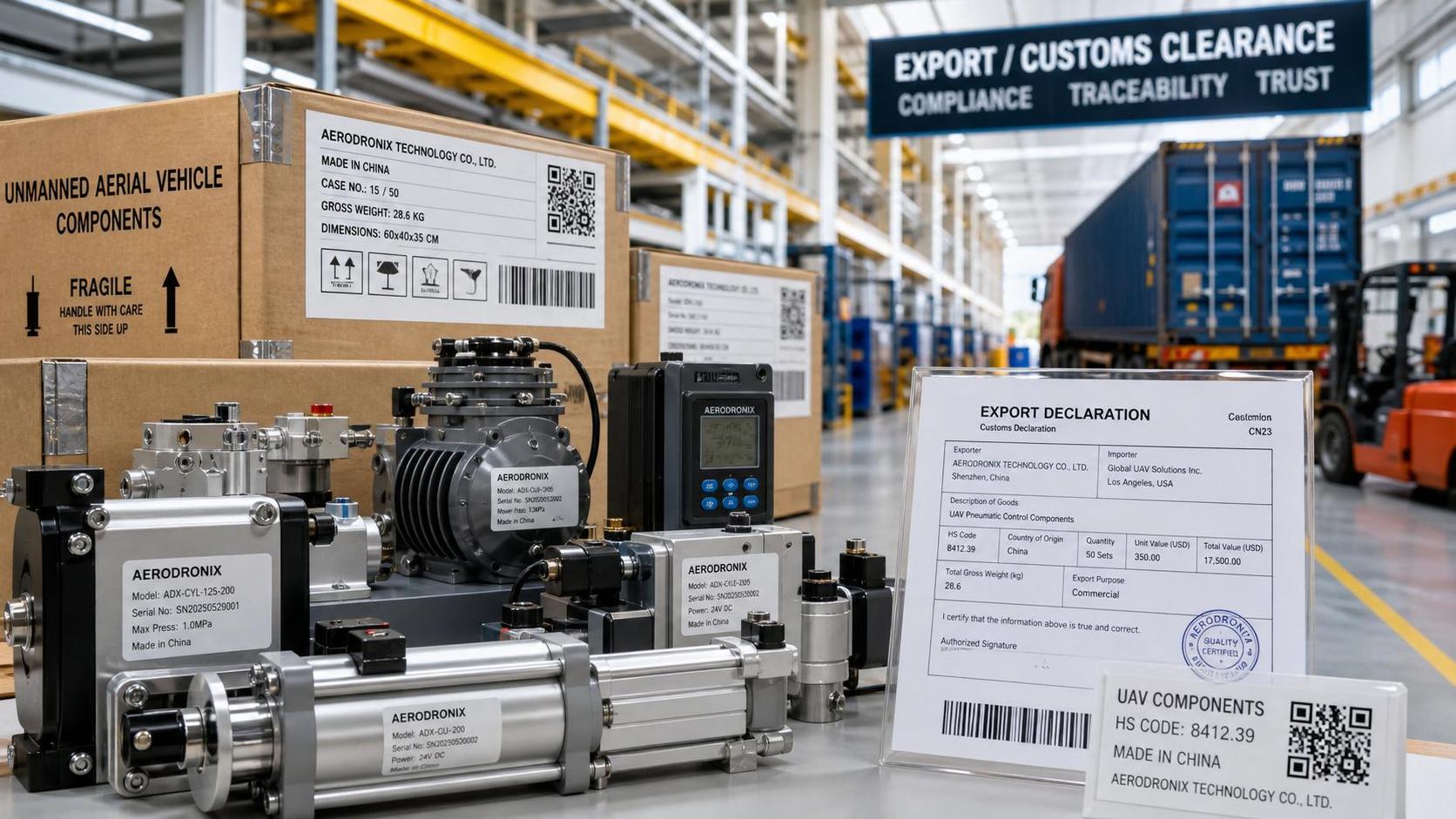
On June 30, 2026, a new customs requirement tied to drone-related export control moves from notice to execution, and its reach extends beyond finished drones into industrial equipment that integrates flight-control, wireless communication, or AI recognition functions. For exporters, manufacturers, procurement teams, and supply chain service providers handling smart Air Cylinders, Valves, and Compressors control units, the issue is not only product classification but also whether declaration files, manufacturer linkage, and shipment preparation can keep pace with the new filing standard.
What the new filing requirement confirms
According to the provided event summary, the General Administration of Customs issued an announcement on June 20, 2026 on strengthening export management for drones and related items. The requirement takes effect on June 30. Industrial equipment containing flight-control, wireless communication, or AI recognition functions must be declared using a 10-digit HS code and linked to domestic manufacturer information. The scope described in the summary includes smart-sensing control units used in Air Cylinders, Valves, and Compressors. The stated impact is on customs clearance efficiency and the time needed for compliance preparation.
Where the pressure is likely to appear first
Export declaration teams may face a narrower margin for error
From an industry perspective, exporters handling pneumatic control modules with embedded intelligent functions may be the first to feel the operational effect. The reason is straightforward: the rule change directly touches customs declaration content. The main business impact is likely to fall on HS code accuracy, document consistency, and the completeness of manufacturer-related information. What deserves closer attention is whether internal product descriptions, commercial documents, and filing materials are aligned before goods reach the clearance stage.
Manufacturers of smart control units need cleaner product mapping
For manufacturers, the likely issue is not only production but product identification. If a control unit for Air Cylinders, Valves, or Compressors contains functions named in the summary, its export-facing documentation may require more precise mapping between technical features and declaration data. Analysis shows that engineering, compliance, and trade documentation teams may need closer coordination so that feature descriptions do not diverge across technical files, sales paperwork, and customs submissions.
Procurement and delivery planning may need more lead time
Procurement teams and buyers may also be affected where delivery schedules depend on cross-border shipment timing. Observably, if customs clearance efficiency is influenced by the new declaration requirement, purchasing plans and delivery commitments may require more buffer. The practical concern is less about demand change and more about whether suppliers can provide complete compliance-related materials early enough to avoid shipment disruption.
Logistics and trade service providers may need tighter document checks
Supply chain service providers, including parties involved in export documentation and customs handling, may need to screen affected goods more carefully. Their main point of attention is whether the product falls into the function-based scope described in the summary and whether the declaration package properly links the domestic manufacturer. It is more appropriate to understand this as a documentation and workflow adjustment signal rather than a confirmed market outcome.
What companies should review now
Check which products contain covered functions
Companies should first identify whether exported industrial equipment includes flight-control, wireless communication, or AI recognition functions as described in the provided summary. This is a threshold issue because the declaration requirement appears to be tied to functional characteristics rather than only to a conventional product label.
Reconcile HS coding and manufacturer information
Another practical focus is the connection between the 10-digit HS code declaration and domestic manufacturer information. Where multiple parties participate in design, assembly, branding, or export, companies should pay attention to whether internal records and filing documents can support consistent submission. The summary confirms the requirement, but it does not provide detailed execution criteria, so firms should treat this as an area for continued checking rather than as a fully clarified process.
Prepare technical and trade documents with more discipline
Analysis shows that product specifications, declaration descriptions, and shipment documents may need closer review for smart pneumatic control products. For affected exporters, the immediate concern is whether technical language used in product files could trigger additional scrutiny if it conflicts with customs-facing descriptions. This is especially relevant for control units attached to Air Cylinders, Valves, and Compressors that incorporate intelligent sensing or related functions.
Watch for follow-up wording and implementation practice
What deserves closer attention is the gap between the published requirement and day-to-day execution. Since the provided information does not include detailed operational guidance, companies should continue watching for official wording, implementation practice, and any changes in how related documents, product features, or manufacturer linkage are reviewed in export procedures.
How this development is best understood at this stage
Observably, this update should be read as an execution-stage compliance signal rather than as a broad industry demand indicator. The rule has a defined effective date and a clear documentary focus, which makes it relevant for shipment readiness and trade compliance now. At the same time, because the available input does not include detailed enforcement examples or clarification notes, it is also appropriate to view this as a developing compliance topic that still requires close observation of how the requirement is applied in practice.
A measured takeaway for the pneumatic equipment trade
For the pneumatic equipment segment, the main significance of this development lies in how intelligent functions can move products into a more sensitive declaration pathway. The immediate issue is not a confirmed change in end-market demand, but a higher need for precision in export classification, manufacturer traceability, and document preparation. At present, it is more appropriate to understand this news as a concrete compliance change with direct operational implications, while the full execution rhythm still warrants continued monitoring.
Basis of this article and what still needs verification
This article is generated from the user-provided news title, event date, and event summary. For developments of this type, commonly relevant source categories include official announcements, releases from customs or trade authorities, industry association updates, standard-setting documents, and reporting by established professional media. A specific official source link was not provided in the input, so that point still needs to be verified on an ongoing basis. Follow-up attention should remain on implementation details, compliance interpretation, document review practice, tender or procurement wording changes, industry feedback, and how companies adapt their export processes after the June 30 effective date.
Related News