
US Subsidy Ruling Raises Compliance Pressure on Trailer Components

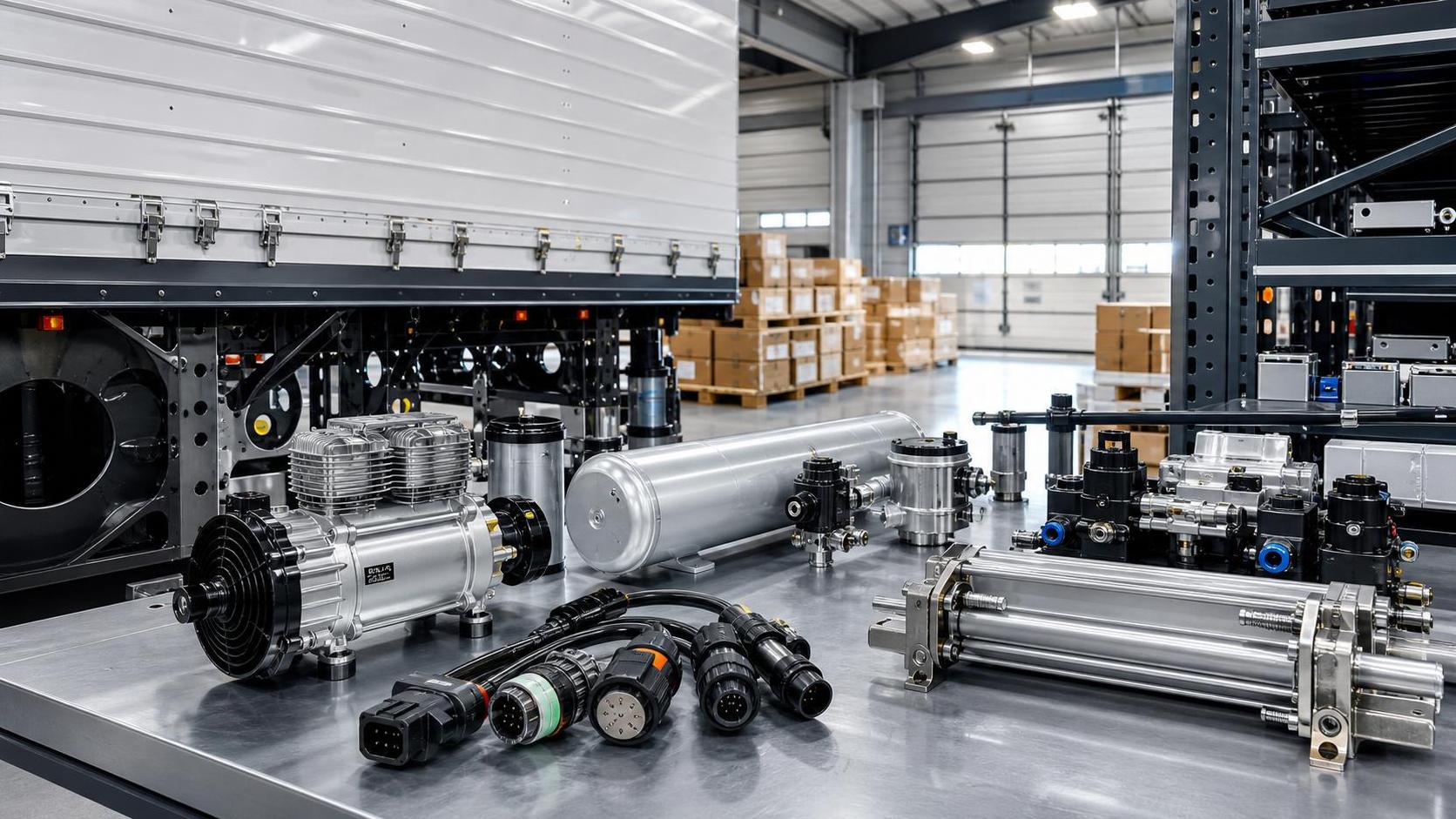
On June 2, 2026, the U.S. Department of Commerce issued a preliminary countervailing duty determination involving Chinese box semi-trailer products, setting subsidy rates of 82.37% for Shanghai CIMC Baowei, Qingdao CIMC Reefer and certain other named respondents, while non-responsive companies were assigned 128.78%. Although the case centers on complete trailers, it matters more broadly to suppliers of Air Cylinders, Valves, Compressors, and Electrical Connectors used in hydraulic and pneumatic control systems, because importers in the U.S. and Europe now face a sharper need to review supply-chain linkage, screening exposure, and layered compliance costs.
What the preliminary determination confirms
The confirmed facts provided for this update are limited but material. The preliminary countervailing duty determination was released by the U.S. Department of Commerce on June 2, 2026. The determination identified an 82.37% subsidy rate for Shanghai CIMC Baowei, Qingdao CIMC Reefer, and related responding companies, while companies that did not respond were assigned a 128.78% rate.
The case is described as focusing on box semi-trailer products. At the same time, the supplied information notes that these products widely use Air Cylinders, Valves, Compressors, and Electrical Connectors within their hydraulic and pneumatic control systems.
The same information also indicates that importers in the U.S. and Europe need to verify whether Chinese suppliers are included in related supply-chain review lists and assess the added compliance burden associated with EPR, UL, and CSA requirements.
Why the effect may extend beyond the finished trailer
Component exporters may face indirect scrutiny
From an industry perspective, suppliers that do not export complete semi-trailers may still come under closer review if their products are regularly integrated into the affected equipment category. The likely pressure point is not only tariff exposure itself, but whether a component maker is treated as part of a reviewed or closely linked supply chain in customer due diligence.
For exporters of valves, compressors, connectors, and related motion-control parts, the practical impact may show up in quotation reviews, supplier onboarding checks, document requests, and customer questions about production and shipment linkage.
Importers and procurement teams will need deeper supplier mapping
Analysis shows that importers are likely to focus first on supplier identification and chain-of-supply visibility. If a buyer cannot clearly determine whether a Chinese supplier is connected to a scrutinized supply chain, purchasing decisions may slow, especially for parts tied to trailer control systems.
The most immediate business effect may therefore appear in procurement workflow rather than in end-market demand: additional screening, more internal approvals, and more detailed compliance review before orders move forward.
Compliance service providers may see broader review scope
For testing, certification, and trade compliance service providers, the case points to a more layered workload. The supplied information specifically highlights EPR, UL, and CSA as cost factors that importers must evaluate alongside supply-chain review.
That means the issue is not limited to a single trade measure. In practice, buyers may increasingly assess whether the supplier relationship, product documentation, and certification status can withstand simultaneous trade and compliance checks.
What companies should watch now
Watch official wording and scope development separately from market reaction
What deserves closer attention is the difference between the current preliminary determination and any later official clarification, follow-up wording, or scope-related interpretation. Analysis shows that companies should avoid treating every customer inquiry as proof of a final market outcome, while still preparing for stricter review standards.
Recheck supplier files for linked categories and supporting documents
For businesses selling Air Cylinders, Valves, Compressors, and Electrical Connectors into trailer-related applications, the immediate priority is document readiness. This includes confirming how products are described in commercial files, how customer applications are identified, and whether supporting records are consistent when buyers ask about supply-chain linkage.
Assess certification costs as part of total delivery risk
The supplied information specifically notes EPR, UL, and CSA as compliance items that importers may need to evaluate. Observably, the practical question for exporters is not only whether these certifications are required in a general sense, but whether the added time and cost of certification work could change landed-cost calculations, delivery timing, or customer acceptance thresholds.
Prepare customer communication before disputes emerge
Companies exposed to the affected component categories may benefit from preparing consistent explanations for overseas customers on product use, supplier identity, documentation status, and compliance readiness. Analysis shows that early communication can matter because buyers may first respond by tightening internal review rather than canceling activity outright.
How this signal should be read
This section is analysis rather than confirmed fact. It is more appropriate to understand the June 2 determination as a near-term compliance and screening signal with possible broader supply-chain implications, rather than as a fully settled conclusion for every component category connected to trailer systems.
Observably, the issue matters because the case is centered on finished trailer products while the business response may spread into associated parts procurement, especially where those parts are essential to hydraulic or pneumatic control assemblies. That does not by itself confirm the same outcome for all upstream suppliers, but it does suggest that scrutiny can move through the chain via importer risk controls.
For that reason, the development still requires continued observation. The main question is less about immediate universal disruption and more about how buyers, compliance teams, and certification requirements interact after the preliminary ruling.
A measured takeaway for the market
The current development points to a stricter operating environment for companies linked to trailer-related exports from China, especially those supplying valves, compressors, connectors, and other control-system parts into this equipment chain. The confirmed facts are limited to the preliminary U.S. determination, the named subsidy rates, the relevance of key component categories, and the need for importer-side review of linked supply chains and compliance costs.
From a practical standpoint, it is more appropriate to read this as a development that raises review intensity, documentation expectations, and cost assessment pressure. It should not yet be overstated as a final outcome for every supplier, but it clearly warrants close tracking by exporters, importers, and compliance-facing teams.
Basis of this article
This article is generated from the user-provided news title, event date, and event summary. It is based on the supplied facts regarding the June 2, 2026 preliminary countervailing duty determination, the stated subsidy rates, the referenced component categories, and the noted compliance issues involving EPR, UL, and CSA.
For this type of development, relevant source categories typically include official government notices, company disclosures, industry association updates, authoritative media coverage, and certification or standards-related documents. A specific official source link was not provided in the input, so the exact document path still requires ongoing verification. Areas that merit continued monitoring include any later official wording, scope clarification, and how importer review practices develop in response.
Related News