
When industrial digitalization improves compressor uptime

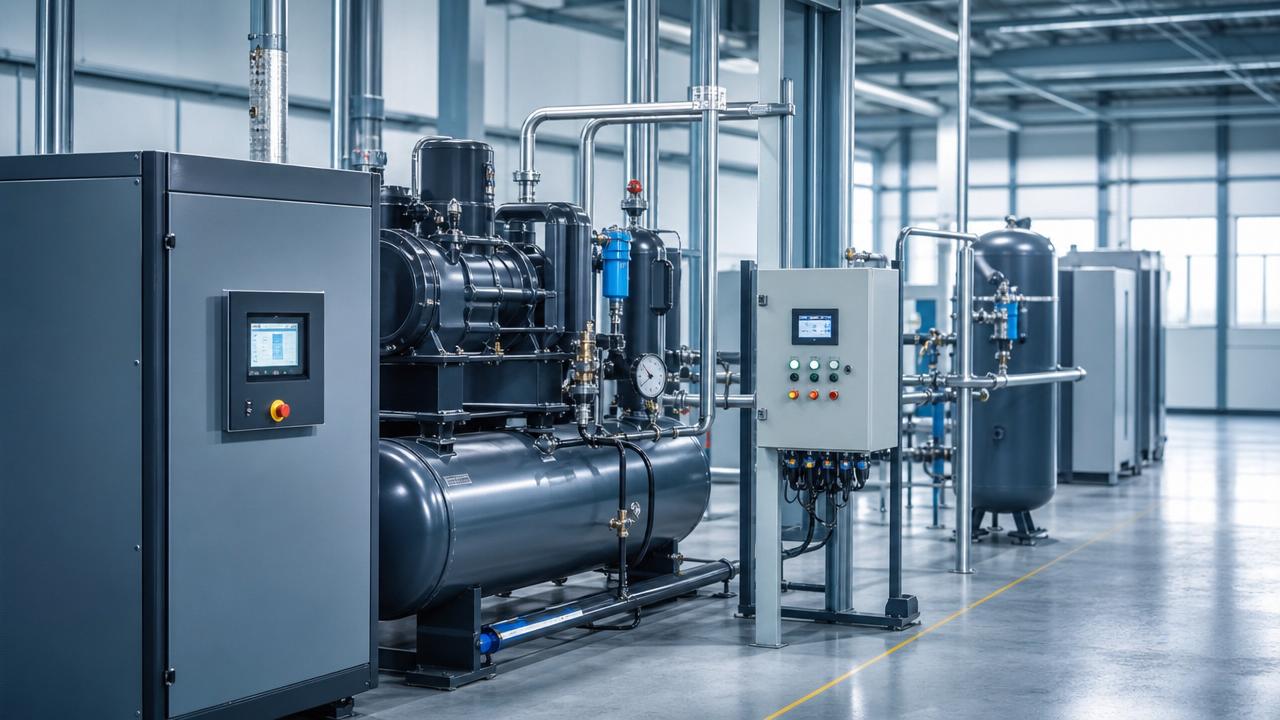
For aftermarket maintenance teams, compressor uptime is no longer secured by routine checks alone. Industrial digitalization is reshaping service strategies through real-time monitoring, predictive diagnostics, and data-driven decision-making, helping technicians detect faults earlier and reduce unplanned shutdowns. As operating demands rise across industrial environments, understanding how digital tools improve reliability, maintenance efficiency, and asset performance has become essential.
Why industrial digitalization matters for compressor uptime in aftermarket service
Compressed air systems sit behind packaging lines, CNC cells, molding machines, electrical assembly stations, and many other industrial processes. When a compressor stops unexpectedly, maintenance teams do not just lose air supply. They also face stalled production, quality variation, overtime labor, and urgent spare-part sourcing.
This is where industrial digitalization changes the maintenance model. Instead of relying mainly on calendar-based inspections, service teams can use sensor feedback, alarm history, load profiles, and operating trends to understand equipment health before a failure becomes critical.
For aftermarket personnel, the value is practical. Better visibility reduces guesswork. Faster diagnosis shortens intervention time. More accurate parts planning lowers emergency purchases. In mixed industrial environments, these gains are often more important than chasing theoretical peak efficiency.
- Unexpected shutdowns can be linked to heat, pressure fluctuation, contamination, lubrication issues, motor overload, or control faults that are difficult to identify through manual checks alone.
- Industrial digitalization allows maintenance teams to track these variables continuously, making service actions more precise and less disruptive.
- For plants with multiple compressor brands or legacy assets, digital monitoring creates a common language for performance review and maintenance prioritization.
What usually causes uptime loss?
Most uptime losses are not caused by a single dramatic event. They develop from small deviations that go unnoticed: a clogged intake filter, rising discharge temperature, unstable dew point, poor condensate management, or repeated short cycling. Industrial digitalization helps expose these hidden patterns early.
Which digital tools have the strongest impact on compressor reliability?
The most useful digital tools are not always the most complex. Aftermarket maintenance teams usually benefit first from technologies that improve fault visibility, standardize service decisions, and simplify communication between plant operators, technicians, and spare-part suppliers.
The table below outlines how industrial digitalization functions map to common compressor service pain points in general industrial operations.
The strongest uptime improvement often comes from combining simple sensing with disciplined response rules. A sensor alone does not prevent failure. A sensor paired with threshold logic, parts readiness, and service workflow does.
Why alarms must be contextual
One common mistake is treating every alarm as equally urgent. In practice, maintenance teams need context. A brief temperature spike during high ambient load may not justify shutdown, while a slow increase in vibration over several weeks may indicate a bearing issue that deserves immediate planning.
How industrial digitalization changes daily work for maintenance teams
Aftermarket technicians usually work under tight time pressure. They must balance urgent repairs, planned maintenance, parts coordination, and production demands. Industrial digitalization helps by turning reactive work into prioritized work.
From routine rounds to condition-based action
In many plants, technicians still perform fixed inspection rounds regardless of actual machine condition. Digital monitoring does not eliminate these rounds, but it makes them more targeted. Teams can spend more time on assets showing abnormal behavior and less time on healthy units.
From fault chasing to root-cause analysis
A compressor trip often leads to rushed component replacement. If the root cause is not confirmed, the same fault may return. Historical trend data, event logs, and operating patterns help technicians distinguish between symptom and source.
From isolated service to networked maintenance
General industry sites often mix mechanical tools, electrical systems, pneumatic controls, and automated production cells. GHTN’s perspective is especially useful here because compressor uptime depends on more than the compressor itself. Fasteners, seals, valves, connectors, filtration elements, and control components all influence reliability.
- A leaking fitting can trigger excessive cycling and energy waste.
- A poor-quality electrical connector can create intermittent control faults.
- An unsuitable seal material can shorten service life in hot or contaminated environments.
This system-level view is where industrial digitalization becomes more than software. It becomes a decision framework linking components, operating conditions, and maintenance outcomes.
What should you monitor first when budgets are limited?
Budget constraints are real, especially for aftermarket teams managing aging assets. The best approach is to prioritize variables that reveal failure progression and service urgency. The goal is not to digitize everything at once. The goal is to monitor what matters most for uptime.
The following table can help maintenance teams decide where industrial digitalization should start for compressors in mixed industrial applications.
For many plants, these four data points deliver the fastest return because they connect directly to the most common service events. Once the team can interpret them consistently, additional layers such as vibration, dew point, or remote analytics become more valuable.
A practical rollout sequence
- Identify the compressors linked to the highest production risk or the highest repair frequency.
- Install basic monitoring on thermal, pressure, and operating-hour points first.
- Define alarm thresholds and escalation responsibilities before data starts flowing.
- Link the monitoring output to spare-part lists, inspection routines, and service records.
- Review trend accuracy monthly and refine thresholds based on actual site behavior.
How to compare digital maintenance approaches before procurement
Procurement decisions are often difficult because the market mixes sensors, software, gateways, retrofit kits, and service packages. Aftermarket teams need a comparison method that focuses on supportability, compatibility, and decision quality rather than feature count alone.
This comparison table highlights practical criteria for evaluating industrial digitalization options for compressor maintenance.
The right choice depends on asset age, available staff, IT readiness, and spare-part complexity. Many organizations start with retrofit monitoring on critical compressors, then expand into a wider industrial digitalization program once the maintenance team proves value internally.
Key procurement questions
- Can the system work with different compressor vintages and control architectures?
- Will alarm logic be configurable to match local process conditions?
- Can service records be linked to parts consumption and replacement intervals?
- What communication standards or cybersecurity requirements apply at the site level?
- How quickly can technicians learn to interpret the dashboard without constant vendor support?
Implementation risks, compliance points, and common misconceptions
Industrial digitalization improves compressor uptime only when implementation is disciplined. Many projects underperform because teams buy technology before defining the maintenance response process. Data without action rules can increase workload instead of reducing it.
Common mistakes to avoid
- Assuming predictive maintenance removes the need for physical inspection. Digital signals must still be verified against actual wear, contamination, and installation condition.
- Installing sensors on the compressor while ignoring downstream leaks, poor piping layout, or unstable electrical supply.
- Using generic alarm thresholds that do not reflect ambient temperature, process cycles, or compressor loading pattern.
- Digitizing without spare-part standardization, which leaves teams informed about failure risk but unable to respond quickly.
Compliance and technical caution
When adding sensors, gateways, or control interfaces, maintenance teams should check electrical compatibility, enclosure suitability, communication security, and site safety procedures. Depending on region and application, general reference points may include electrical safety practices, EMC considerations, pressure-system rules, and plant cybersecurity policies. Exact requirements should always be confirmed locally.
This is another area where GHTN adds value. Because compressor uptime often depends on a chain of mechanical, electrical, and pneumatic parts, component-level insight matters. Understanding material behavior, connection integrity, and control logic helps maintenance teams avoid weak links during digital upgrades.
FAQ: what aftermarket teams ask about industrial digitalization
How does industrial digitalization help older compressors?
Older compressors often lack native smart controls, but they can still benefit from retrofit monitoring. Temperature, pressure, run hours, current draw, and selected vibration points can provide enough visibility to support condition-based maintenance. The main limitation is integration depth, not basic uptime benefit.
Which sites should prioritize digital monitoring first?
Start with compressors that serve bottleneck processes, high-value automated lines, molding operations, or sites where downtime causes expensive production interruption. Also prioritize units with repeated fault history, high ambient stress, or difficult spare-part lead times.
What is the most important factor during selection?
For most aftermarket teams, the most important factor is not the number of features but the clarity of maintenance decisions the system enables. If the platform helps technicians identify urgency, root cause, and needed parts faster, it is valuable. If it only adds more screens and alerts, adoption will be weak.
Can industrial digitalization reduce spare-part costs?
It can reduce emergency purchasing and unnecessary replacement, but only when service intervals and parts usage are linked to condition signals. The benefit usually appears through better planning, fewer rush shipments, and more accurate stocking of wear items such as filters, seals, connectors, and control components.
Why choose us for component insight and digital maintenance decisions
GHTN supports industrial decision-makers from the component layer upward. That matters in compressor uptime projects because digital success depends on more than software selection. It also depends on reliable fittings, suitable sealing materials, stable electrical interfaces, compliant parts sourcing, and practical understanding of automated line behavior.
Our coverage across hardware, electrical systems, pneumatic logic, and mold-driven manufacturing environments helps aftermarket teams assess industrial digitalization with a broader operational lens. Instead of viewing compressors as isolated assets, we help connect maintenance choices to parts performance, site conditions, and implementation risk.
- Need help confirming which monitoring parameters are worth adding first for your compressor fleet?
- Need support comparing retrofit monitoring with a wider digital maintenance platform?
- Need guidance on compatible components, spare-part planning, delivery timing, or material selection for harsh industrial conditions?
- Need to review certification expectations, sample support, quotation communication, or a customized service path for mixed mechanical and electrical environments?
Contact GHTN to discuss parameter confirmation, product selection, component compatibility, delivery lead time, custom solution planning, certification-related concerns, sample evaluation, or quotation alignment. For aftermarket maintenance teams under uptime pressure, industrial digitalization works best when every sensor decision is backed by sound component knowledge and practical service logic.
Related News
- How to Use an Air Compressor Selection Chart to Size CFM, PSI, and Tank CapacityTime : Aug 06, 2026
- How to Choose Compressed Air Equipment for Automation Based on Load, Speed, and Duty CycleTime : Jul 23, 2026
- How to Improve Compressed Air System Efficiency: 7 Loss Points to Check FirstTime : Jul 13, 2026