
CBP Origin Rule Starts Aug. 5 for Pneumatic Imports

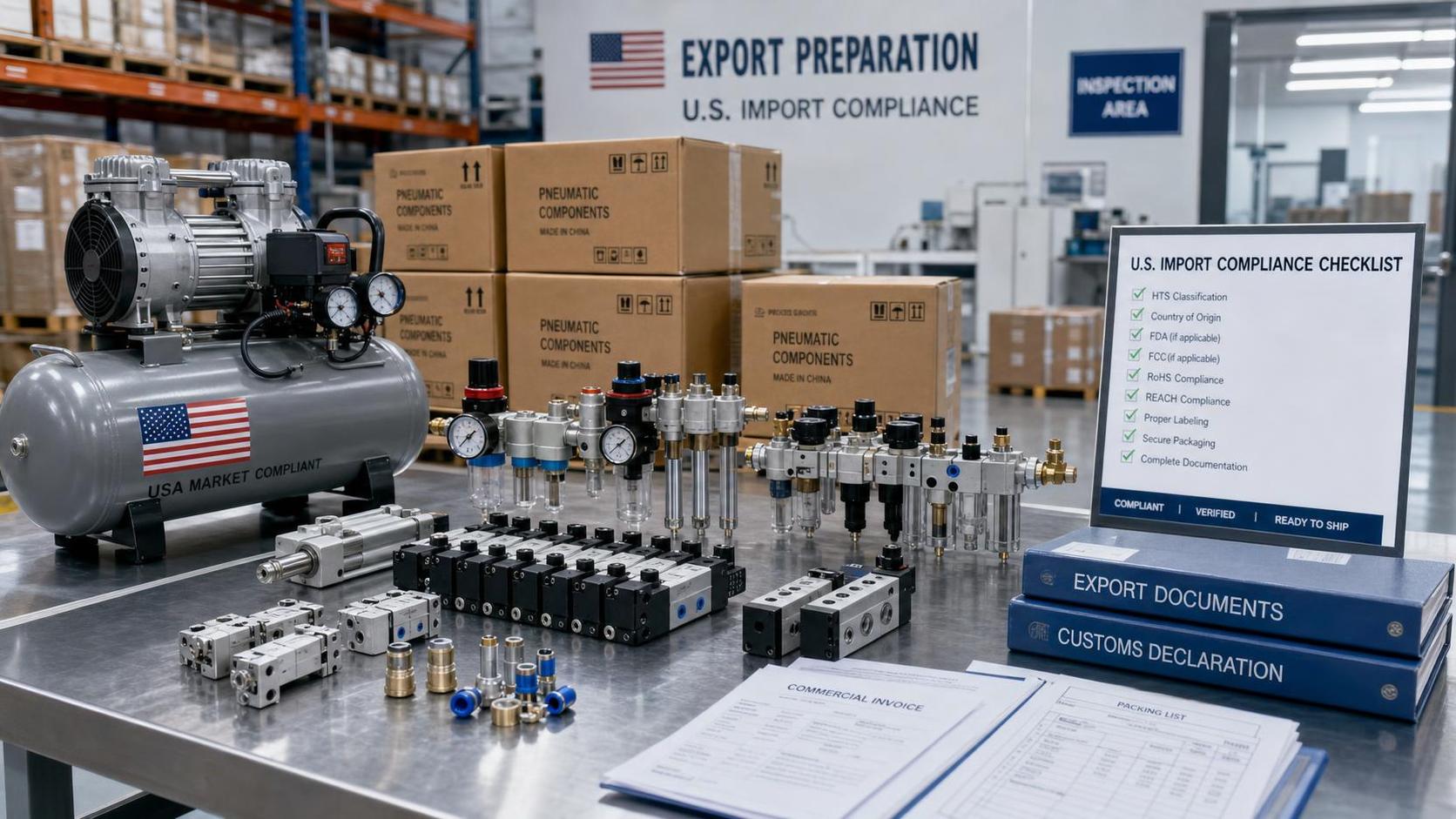
On August 5, 2026, U.S. Customs and Border Protection (CBP) is set to begin enforcing an emergency requirement that imports of pneumatic valves, air compressors, and related pneumatic components into the United States be accompanied by a Certified Origin Statement. For exporters serving the U.S. market, especially China-based OEM and ODM suppliers shipping to distributors and industrial system integrators, the issue is not only customs documentation but also whether delivery preparation and clearance timing can still be managed without disruption.
What the new CBP requirement confirms
According to the provided event information, CBP issued an emergency notice stating that, from August 5, 2026, all pneumatic valves, air compressors, and related pneumatic components imported into the United States must include a Certified Origin Statement. The provided summary also states that shipments without this document may face customs clearance delays or the risk of being returned. The requirement directly applies to Chinese export enterprises and is described as having a particular effect on the compliance preparation cycle for OEM and ODM suppliers delivering to U.S. distributors and industrial system integrators.
Where the pressure is likely to appear first
Export shipments tied to U.S. customs entry
From an industry perspective, direct exporters are the first group likely to feel the operational impact because the new requirement is attached to goods entering the United States. The immediate pressure point is documentation readiness before shipment or customs processing. What deserves closer attention is whether origin-related paperwork is prepared in a form that supports timely clearance once the rule takes effect.
OEM and ODM delivery chains
Analysis shows that OEM and ODM suppliers may face a tighter preparation window because their shipments often move through customer-specific delivery schedules. In this context, the issue is less about product demand and more about whether compliance documents can be aligned with production, packing, and export release steps. Any gap in origin documentation could translate into delivery friction for downstream U.S. customers.
Distributors and industrial system integrators in the U.S.
U.S. distributors and industrial system integrators are also relevant parties because they depend on predictable inbound supply. Observably, their concern is likely to center on whether imported pneumatic products can clear customs on time and whether upstream suppliers have adjusted their document processes before the effective date. For these buyers, supplier coordination may become part of routine shipment planning.
Supply chain and customs service participants
Logistics coordinators, customs brokers, and related service providers may also need to pay closer attention to shipment files involving pneumatic valves, compressors, and associated components. The likely impact is concentrated in document review, filing completeness, and exception handling when paperwork is missing or inconsistent. While the provided information does not specify procedural details, the practical implication is that documentation gaps could become a direct operational risk.
What companies should monitor now
Whether product scope is interpreted consistently
What deserves closer attention is how companies internally define the covered product scope based on the notice wording: pneumatic valves, air compressors, and related pneumatic components. Since the provided information does not give further classification detail, businesses involved in mixed product lines should carefully monitor whether their U.S.-bound items may fall within the requirement and avoid assuming that only core finished products are affected.
How origin statements fit into shipment preparation
Analysis shows that the practical question for exporters is not only obtaining a Certified Origin Statement, but also embedding it into the existing shipment release process. Companies should pay attention to whether document preparation is occurring early enough to support delivery commitments, especially where U.S. orders are handled under OEM or ODM arrangements with fixed customer timelines.
Customer communication before the effective date
For suppliers serving U.S. distributors and industrial system integrators, advance communication may become an important operational step. The key issue is whether both sides have the same expectation on required documents, shipment timing, and contingency handling if customs review slows. This is a business execution issue rather than a market signal, but it is directly tied to avoiding preventable clearance delays.
Whether official wording changes or expands
Observably, companies should continue tracking any follow-up official language around this emergency notice. The provided information confirms the requirement and its effective date, but it does not include a full official text or additional implementation detail. That means businesses should distinguish between the confirmed rule itself and any later clarification on document format, scope, or enforcement practice.
Why the notice matters beyond one filing step
Analysis shows that this development is more appropriate to understand as a compliance signal with immediate operational consequences rather than as a fully settled long-term industry outcome. The confirmed fact is narrow but important: a Certified Origin Statement becomes mandatory for the specified products entering the U.S. from August 5, 2026. The broader industry question is how consistently that requirement will be translated into day-to-day export preparation, supplier coordination, and customs handling across the pneumatic equipment supply chain.
Observably, the notice also deserves attention because it affects timing as much as formal compliance. For sectors where delivery schedules are tied to distributor replenishment or industrial project integration, even a document-based rule can reshape how suppliers organize pre-shipment review. At this stage, however, it would be premature to treat the notice as proof of a wider structural shift beyond the specific requirement stated in the provided information.
How this development is best understood for now
At present, this update is best read as a near-term compliance change with potential ripple effects across export documentation, delivery coordination, and customer communication for pneumatic products entering the U.S. market. It does not by itself confirm a broader market outcome, but it does signal that origin documentation has become a more immediate operational checkpoint for affected shipments. For companies exposed to U.S. orders in this category, the most rational reading is that preparation discipline now matters as much as production readiness.
Basis of this article and points for continued verification
This article is based on the user-provided news title, event date, and event summary concerning the CBP emergency notice taking effect on August 5, 2026. For developments of this kind, commonly relevant source types may include official government notices, company statements, industry association updates, authoritative media coverage, and standard-setting or trade-related documents. A specific official source link was not provided in the input, so the exact source text and any later clarification still require ongoing verification. Continued attention should focus on any follow-up official wording, scope clarification for covered products, and implementation details affecting shipment documentation and customs clearance practice.
Related News