
Which niche industrial fields are gaining steady demand

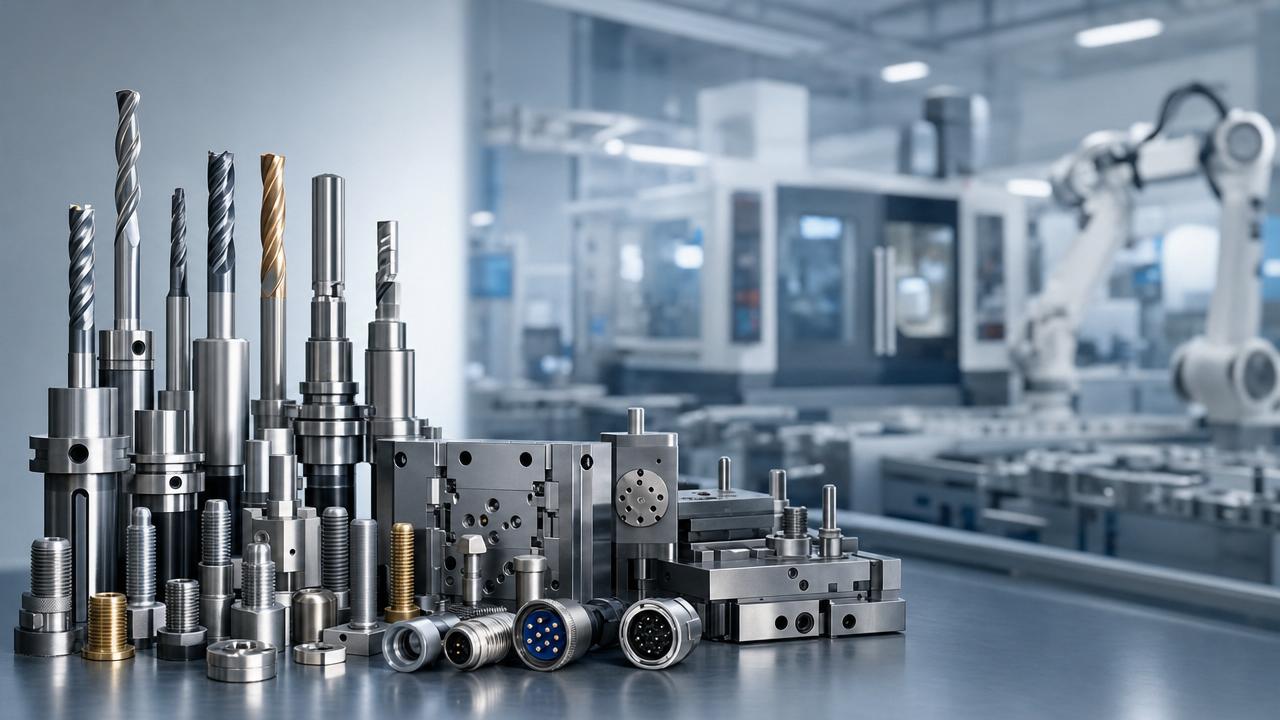
As global manufacturing adjusts to supply chain shifts, automation, and stricter quality standards, niche industrial fields are gaining steady demand among OEMs and buyers worldwide. For distributors, agents, and channel partners, understanding where demand is strengthening—from precision tooling and fasteners to electrical components and mold systems—can reveal profitable opportunities and long-term market advantages in an increasingly specialized industrial landscape.
For channel partners, the opportunity is no longer in broad catalog expansion alone. It increasingly depends on choosing the right product families, qualifying reliable suppliers, and building technical sales capability around components that are small in size but critical in performance. In many industrial supply chains, a tolerance shift of ±0.02 mm, a lead-time reduction of 7–10 days, or compliance with 2–3 major export standards can directly influence repeat orders.
This is where niche industrial fields stand out. They serve specialized production environments, often require engineering-level evaluation, and tend to create stickier distributor relationships than generic MRO items. For firms serving OEMs, contract manufacturers, and regional assemblers, these categories can offer healthier margins, lower price-only competition, and more defensible market positioning.
Why niche industrial fields are moving into the mainstream of industrial demand
Demand is becoming more specialized because manufacturing itself is becoming more segmented. Automotive electrification, medical device miniaturization, industrial automation, energy equipment upgrades, and stricter export compliance are pushing buyers toward components and tooling that meet exact process requirements. Instead of buying one standard part for 10 applications, many OEMs now want 3–5 tailored versions for different operating conditions.
For distributors, this shift changes the sales model. The focus moves from simple stock turnover to solution matching: corrosion-resistant fasteners for offshore equipment, high-cycle mold components for consumer electronics, low-loss electrical connectors for control cabinets, or carbide cutting tools for difficult alloys. Each category may serve a smaller market than general hardware, but it often brings stronger reorder frequency and a replacement cycle of 3–12 months.
Four structural drivers behind steady demand
- Automation expansion: pneumatic, electrical, and tooling parts are needed in new lines and retrofit projects.
- Quality control pressure: OEMs are tightening tolerance, durability, and traceability requirements in 4–6 key categories.
- Regionalized sourcing: buyers are diversifying supplier bases to reduce overdependence on a single geography.
- Higher compliance thresholds: UL, CE, RoHS, REACH, and sector-specific rules are making technically screened products more valuable.
What this means for channel partners
When demand moves toward technically defined products, channel partners that can interpret drawings, material specifications, and application environments gain an edge. This is one reason portals such as GHTN matter: the industrial parts market is too complex for surface-level catalog selling. Buyers increasingly expect sourcing intelligence covering material selection, tool life, compliance risk, and production suitability before they commit to annual or quarterly procurement plans.
The following table highlights several niche industrial fields gaining stable attention and why they matter to distributors working across hardware, electrical, and mold-related supply chains.
The key takeaway is that steady demand often comes from categories with performance dependency, not just high volume. Niche industrial fields tend to win where failure is costly, downtime is expensive, and component consistency affects end-product quality.
The niche segments worth tracking now
Not every specialized product category offers the same commercial value. Distributors should prioritize segments where technical barriers are meaningful, replacement or replenishment is predictable, and customer qualification can be repeated across multiple accounts. In practical terms, the strongest niches usually combine 3 features: clear application need, measurable performance criteria, and manageable sourcing complexity.
Precision tooling for higher-speed and higher-accuracy machining
Precision tooling remains one of the most reliable niche industrial fields because machining quality depends heavily on cutter geometry, substrate, coating, and stability. As more manufacturers work with stainless steel, titanium alloys, hardened steel, and engineered plastics, standard tooling often becomes insufficient. Buyers look for repeatability, chip evacuation performance, surface finish control, and longer tool life over 500–2,000 cutting cycles depending on the process.
For a distributor, the opportunity lies in becoming application-aware rather than SKU-heavy. End mills, inserts, drills, reamers, and tool holders can all be positioned around machining type, spindle speed range, and tolerance expectations. A customer running a 2-shift CNC operation values reduced tool change frequency and stable dimensional output more than the lowest unit price.
Fasteners designed for extreme or regulated environments
Fasteners may seem mature, but specialized demand keeps rising in sectors such as renewable energy, rail, electronics assembly, fluid handling, and outdoor infrastructure. Stainless grades, alloy steel selections, thread-locking features, anti-vibration designs, and surface treatments all matter when equipment faces salt spray, thermal cycling, or constant mechanical stress.
This creates room for channel partners that can sort applications by load class, corrosion category, and maintenance interval. In some projects, moving from a general zinc-plated part to a higher-grade stainless or coated fastener can extend service intervals from 6 months to 18 months, reducing field failure risk and warranty exposure.
Electrical components for control reliability and compliance
Industrial electrical demand is becoming more specialized because panel builders, machine integrators, and OEMs need dependable connection, switching, insulation, and protection under diverse regional standards. Terminal blocks, connectors, relays, cable glands, busbar accessories, and compact power distribution components all sit inside growing demand pockets.
For export-oriented customers, compliance screening can be as important as electrical performance. Voltage range, temperature rating, ingress protection, flame resistance, and documentation readiness are all part of the buying decision. Lead times of 2–4 weeks versus 8–10 weeks can also decide whether a distributor becomes a preferred vendor.
Mold components and tooling systems linked to shorter product cycles
Injection molding and die-casting customers are under pressure to launch products faster while holding tighter dimensional targets. That supports steady demand for mold bases, ejector systems, guide elements, hot runner-related accessories, wear components, and precision inserts. In many factories, downtime caused by mold wear or poor cooling consistency can cost more than the component itself.
Because mold programs often follow phased builds, repair cycles, and engineering changes, this category can generate layered orders over 6–24 months. Distributors that understand steel selection, cavity wear patterns, and replacement scheduling can move from transactional supply into technical account support.
How distributors should evaluate which niche industrial fields to enter
Entering niche industrial fields without a screening framework can tie up cash and create slow-moving inventory. A practical evaluation method should balance commercial attractiveness with technical support burden. In most cases, four questions matter first: Is the application stable? Is the specification clear? Can supply quality be controlled? Will customers reorder within 90–180 days?
A five-point filter for product line selection
- Check whether the product solves a measurable production issue such as wear, downtime, heat resistance, or assembly consistency.
- Confirm whether the specification can be standardized into 10–30 core SKUs before expanding into long-tail variants.
- Assess lead time stability, ideally within 2–6 weeks for standard items and 4–8 weeks for custom variants.
- Review documentation readiness, including material reports, dimensional records, and compliance declarations where relevant.
- Estimate after-sales complexity, especially if installation guidance, replacement cycles, or troubleshooting support will be needed.
Commercial signals that reduce risk
The best niche categories are often those where customers buy based on failure cost rather than unit cost alone. If a $2 connector, $5 fastener set, or $30 tooling item can interrupt a line worth thousands of dollars per hour, the buyer is more likely to value consistency, response speed, and traceability. That makes technical stocking and consultative selling more effective.
The table below can help distributors compare niche industrial fields using common qualification criteria before adding them to a portfolio.
Using this filter helps separate attractive niche industrial fields from technically impressive but commercially inefficient categories. The goal is not to chase every specialty product, but to build a focused portfolio aligned with your customer base and service capacity.
Common sourcing and sales risks in specialized industrial categories
Steady demand does not mean risk-free demand. In niche industrial fields, the most common failures happen when distributors underestimate technical variation, approve suppliers too quickly, or stock items without enough application data. A fastener that looks interchangeable may differ in fatigue performance. A mold insert with the same dimensions may behave differently due to steel grade or heat treatment. An electrical part may fit physically but fail regional compliance expectations.
Where channel partners lose time and margin
- Specification mismatch between drawing and operating conditions
- Insufficient batch traceability for quality-sensitive accounts
- Underestimating customization lead times by 2–3 weeks
- Quoting without confirming standards, testing needs, or packaging requirements
- Building inventory around rare variants instead of 20/80 fast movers
Risk control measures that work in practice
A disciplined sourcing process is essential. For most specialized categories, distributors should use a 3-stage approval model: technical qualification, pilot order verification, and repeat batch monitoring. Even when formal certification is not mandatory, retaining dimensional inspection records, material declarations, and process notes can reduce disputes and speed up customer approval cycles.
This is also why technical content matters in B2B industrial distribution. GHTN’s focus on underlying components and precision manufacturing tools reflects the reality that market intelligence must go beyond generic product descriptions. Understanding cutting efficiency, electrical compliance evolution, or micron-level mold design iteration helps distributors answer buyer questions before those questions become objections.
How to turn niche demand into long-term channel growth
The distributors that win in niche industrial fields usually do three things well: they narrow their focus, build technical trust, and package supply with decision support. Instead of listing hundreds of unrelated parts, they organize offers by application scenario such as automated assembly, high-wear machining, corrosive outdoor installations, or high-precision mold maintenance.
Practical go-to-market actions
- Select 2–3 vertical demand clusters, such as CNC shops, panel builders, or mold manufacturers.
- Build a core range of 15–40 high-probability SKUs supported by clear datasheets and replacement guidance.
- Train sales teams on 5–8 recurring technical questions per category.
- Offer sample evaluation or pilot supply where feasible to shorten first-order hesitation.
- Track reorder timing, complaint causes, and lead-time reliability every quarter.
Why information quality now affects conversion
In specialized industrial sales, buyers often compare suppliers before requesting a quotation. They want to know whether a distributor understands load conditions, machining challenges, compliance risk, and lifecycle cost. A seller that can explain why one mold component lasts 15–20% longer in a high-cycle application, or why one connector is better suited for a certain temperature band, is far more likely to secure a qualified inquiry.
That makes industrial knowledge platforms strategically useful. GHTN’s positioning around hardware, electrical, and mold sectors is especially relevant for channel partners that need more than product listings. They need market visibility, technical trend interpretation, and practical sourcing intelligence that links hidden specialist manufacturers with real downstream demand.
Niche industrial fields are gaining steady demand because manufacturing is asking more of every component, tool, and subsystem. For distributors, agents, and trading partners, the most attractive opportunities are often found in precision tooling, specialized fasteners, industrial electrical components, and mold-related systems where performance, consistency, and technical matching matter more than simple volume.
A focused portfolio, stronger qualification process, and better technical communication can turn these specialized categories into durable revenue streams. If you are evaluating new industrial segments, refining supplier selection, or looking for deeper insight into hardware, electrical, and mold markets, now is the time to build a more informed channel strategy. Contact GHTN to explore tailored sourcing intelligence, discuss product details, or learn more solutions for your target market.
Related News
- precision manufacturing tools
- electrical components
- fasteners
- injection molding
- mold design
- industrial automation
- material selection
- industrial supply chain
- global manufacturing
- industrial parts
- die-casting
- precision mold
- niche industrial fields
- electrical compliance
- manufacturing tools
- cutting tools