
Greening Industrial Components Without Raising Failure Rates

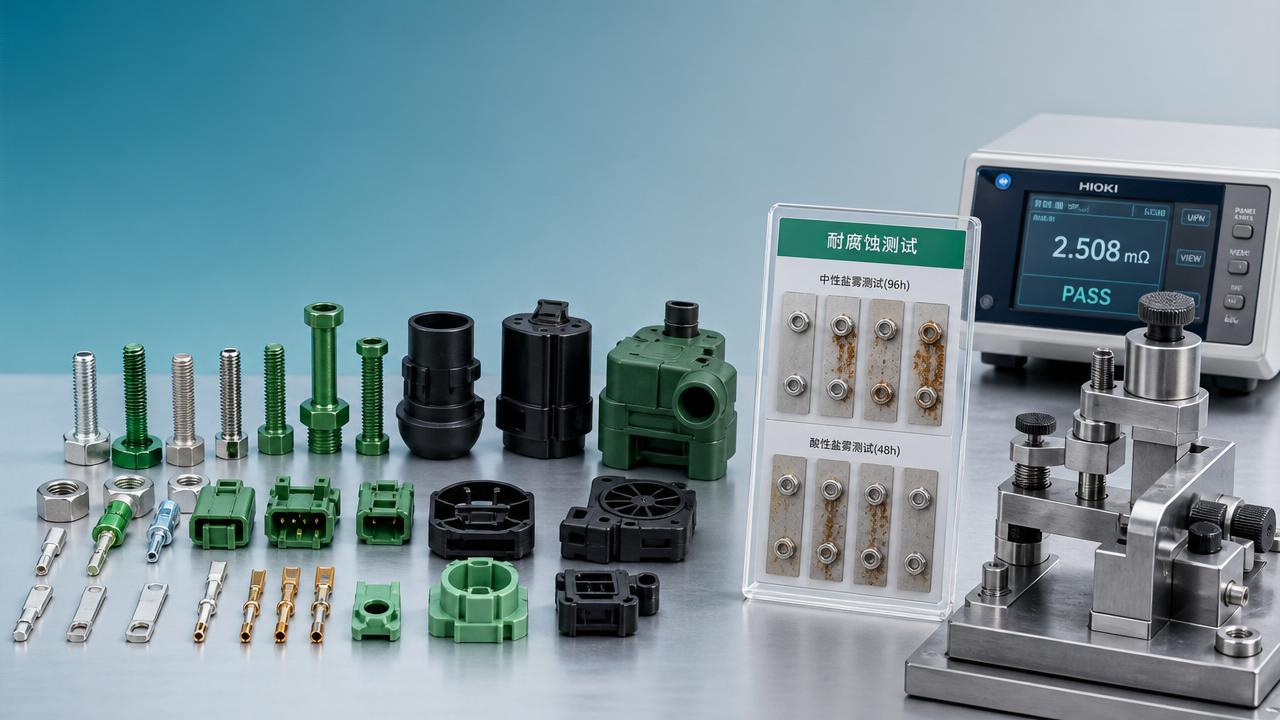
For quality control and safety managers, greening industrial components is no longer just a sustainability goal—it is a performance and risk challenge. The key is reducing environmental impact without introducing defects, compliance gaps, or durability issues. This article explores how manufacturers can balance material innovation, process control, and reliability standards to achieve greener components while keeping failure rates firmly under control.
Why greening industrial components creates a quality and safety dilemma
In industrial supply chains, component greening rarely happens in isolation. A plating change affects corrosion resistance. A recycled alloy changes tensile behavior. A low-VOC molding aid may alter surface finish, adhesion, or cure stability.
For quality and safety teams, the real question is not whether greener materials are desirable. It is whether they can survive fatigue cycles, temperature swings, chemical exposure, torque loads, and compliance audits without raising field risk.
This is especially relevant across hardware, electrical, mold, and tooling applications, where a small deviation in an underlying part can trigger line stoppage, warranty cost, or operator hazard.
- Fasteners may lose clamp force if material substitution changes yield strength or friction coefficient.
- Electrical connectors may pass initial assembly but fail later if eco-friendly coatings reduce long-term conductivity stability.
- Molded components may appear dimensionally correct while hidden resin variability increases crack sensitivity.
Greening industrial components therefore requires a controlled engineering decision, not a marketing claim. The safest route is to connect sustainability targets with validation logic, supplier discipline, and application-specific risk thresholds.
Where failure rates rise during greener component transitions
Most failure-rate increases appear during transition points rather than during normal steady-state production. Quality managers should map these risk windows before approving any green substitution.
Material substitution risk
Replacing virgin metal, resin, elastomer, or coating chemistry can change mechanical strength, ductility, hardness, thermal expansion, outgassing behavior, and environmental stress cracking resistance. Even when datasheets look similar, process response may differ.
Manufacturing process drift
Greener lubricants, lower-temperature curing, reduced plating thickness, and solvent changes often require tighter process windows. Without updated control plans, scrap and latent defects can increase before anyone notices a trend.
Validation blind spots
Many teams approve greener components based on cost and restricted-substance declarations but skip accelerated aging, vibration, salt spray, insertion-force testing, or thermal cycling. That is where avoidable failures begin.
Supplier inconsistency
Secondary suppliers may source recycled inputs from varying streams. If traceability is weak, lot-to-lot variation becomes the hidden driver of unstable failure rates.
Which component categories need the strictest review?
Not every item deserves the same validation budget. Quality and safety managers should prioritize greener component review according to consequence of failure, environmental severity, and process criticality.
The table below helps identify where greening industrial components demands the closest control.
The pattern is clear: the closer the component is to load-bearing, conductive, sealing, or safety-critical function, the more rigorous the green transition review should be. Greening industrial components works best when risk ranking is done before procurement approval.
How to evaluate greener materials without guessing
A practical evaluation framework combines material science, process capability, and field-use simulation. GHTN’s value in this stage is that it links fastener behavior, electrical compliance trends, and mold-process realities instead of treating each part family as a silo.
Start with function, not sustainability claims
Define the component’s non-negotiable duties first: load retention, dielectric stability, tolerance retention, wear life, flame behavior, or corrosion margin. If the green alternative cannot match the duty profile, no declaration can compensate.
Request process-sensitive data
Do not rely only on nominal material properties. Ask for lot variation range, coating thickness control, recycled-content consistency, curing profile sensitivity, and known application limits.
Build a validation matrix
For greening industrial components, test plans should reflect actual service conditions. A warehouse fixture and an offshore enclosure should never share the same approval logic.
- Mechanical parts: tensile strength, hardness, fatigue, torque-tension repeatability, corrosion cycling.
- Electrical parts: contact resistance, insertion/withdrawal force, thermal rise, insulation integrity, aging under humidity.
- Molded parts: dimensional stability, impact resistance, creep, flammability category where relevant, mold-flow consistency.
What should procurement and QC check before approving a greener part?
A greener component should move through a joint gate review. Purchasing may focus on cost and lead time, but quality and safety managers must anchor the decision in evidence and control readiness.
Use the following procurement and qualification checklist when greening industrial components across mixed industrial applications.
This checklist reduces rushed approvals. It also helps safety managers defend decisions during internal audits, customer reviews, or incident investigations.
How standards and compliance fit into greener component decisions
Greening industrial components often starts with substance reduction, but compliance should be broader than chemical restriction alone. The component must still meet the functional and market-entry requirements of its destination industry.
Depending on product category and export market, teams may need to review restricted-substance frameworks, electrical safety expectations, flammability behavior, corrosion performance, and documentation traceability. For industrial buyers, incomplete compliance mapping is a common source of delayed launch or rejected shipment.
- Check whether the green substitution changes the declaration package required by the customer or destination market.
- Review whether electrical and mechanical performance standards still apply after chemistry or structure changes.
- Verify traceability down to batch level if recycled or reformulated inputs are involved.
This is where GHTN’s cross-sector view matters. Hardware, electrical, and mold decisions often interact. A compliant resin that molds poorly or a greener plating that disrupts torque control can still become a safety issue even if paperwork looks complete.
Cost savings or hidden costs: what decision-makers often miss
Some greener components lower waste, reduce hazardous handling, or simplify compliance exposure. Others increase qualification burden, inspection frequency, and scrap during ramp-up. The correct decision is not the cheapest piece price, but the lowest total risk-adjusted cost.
Direct cost factors
- Part unit price after material reformulation or alternate finishing.
- Qualification testing, pilot runs, and documentation review workload.
- Supplier onboarding and incoming inspection adjustment.
Hidden cost factors
- Assembly slowdown caused by altered friction, fit, or insertion characteristics.
- Field returns from latent corrosion, seal degradation, or microcracking.
- Audit exposure if declarations and actual lot composition diverge.
For quality and safety managers, this means green substitutions should be scored by failure consequence and control effort, not by sustainability narrative alone.
A practical implementation flow for greening industrial components
The safest implementation path is staged, measurable, and cross-functional. It avoids both overreaction and under-validation.
- Classify the component by criticality, failure impact, and operating environment.
- Define the green objective clearly: restricted-substance reduction, recycled content, lower process emissions, or packaging reduction.
- Request technical deltas from suppliers, not just sales claims.
- Run comparative validation against the incumbent part under realistic conditions.
- Approve limited pilot usage with tightened inspection and documented failure-mode monitoring.
- Release wider use only after process capability and field feedback remain stable.
This flow aligns especially well with GHTN’s industrial scope, because it connects component-level choices to tooling behavior, automated line reliability, and market-entry requirements.
FAQ: common questions from QC and safety managers
Does greening industrial components always increase failure risk?
No. Failure risk rises mainly when substitutions are made without matching validation depth to application severity. A well-controlled green transition can maintain reliability while reducing environmental burden.
Which documents should be reviewed before approval?
At minimum, review material declarations, change notices, comparative performance data, inspection plans, and application-specific test evidence. For sensitive parts, include traceability and lot consistency records.
Are recycled materials unsuitable for precision industrial parts?
Not necessarily. The real issue is variation control. Recycled-content materials can perform well in the right application if property stability, contamination risk, and process compatibility are tightly managed.
What is the biggest mistake during greener part sourcing?
Approving a greener option based only on compliance paperwork or price. The biggest failures usually come from overlooked function loss, process drift, or incomplete environmental simulation during qualification.
Why choose us for greener component evaluation and sourcing insight
GHTN supports companies that need more than broad sustainability messaging. Our strength lies in the granular core of industry: fasteners, electrical elements, mold-driven parts, tooling interactions, and the manufacturing logic that determines whether a greener change is practical or risky.
For quality control and safety managers, that means you can consult us on specific decision points such as parameter confirmation, material substitution risk, product selection logic, applicable compliance expectations, supplier comparison, lead-time considerations, sample support, and quotation communication.
If your team is evaluating greening industrial components without raising failure rates, contact us with your target component category, operating environment, and validation concerns. We can help structure the comparison criteria, identify likely failure modes, and narrow the sourcing path before costly trial-and-error begins.
Related News