Industrial Digitalization Gaps That Slow Daily Operations

Industrial digitalization promises faster workflows, better visibility, and fewer manual errors, yet many daily operations still slow down because critical gaps remain between machines, data, and people. For operators and frontline users, these disconnects mean repeated tasks, unclear information, and avoidable delays. Understanding where industrial digitalization falls short is the first step toward building smoother, more reliable production processes.
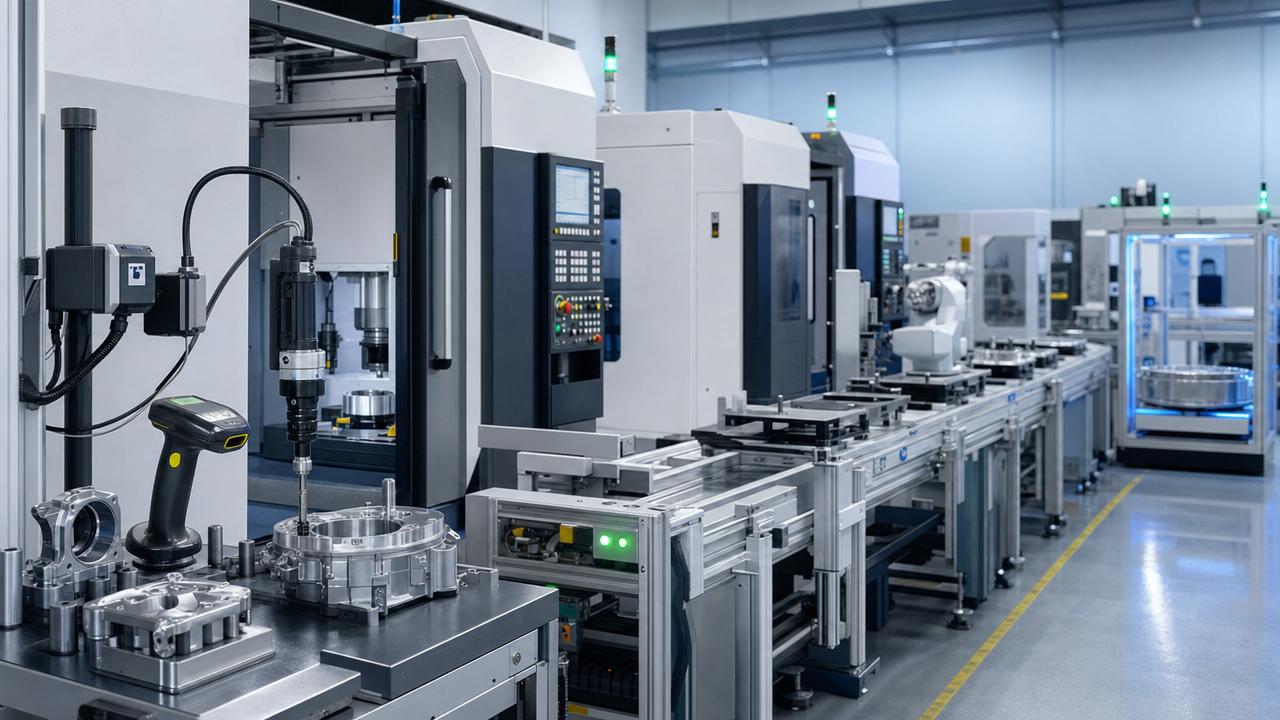
In hardware, electrical, tooling, and mold-related production environments, the promise of connected systems often meets the reality of fragmented execution. A line may include CNC tools, pneumatic units, torque stations, inspection gauges, barcode scanners, and ERP screens, yet operators still walk between stations to confirm status, re-enter values, or wait 10–20 minutes for updates that should be instant.
For frontline users, industrial digitalization is not an abstract transformation project. It shows up in cycle time, setup effort, scrap control, maintenance response, and handoff accuracy between shifts. In complex industrial parts manufacturing, even a gap of 2–3 manual steps per batch can multiply into hours of weekly lost productivity.
This article examines the most common digital gaps that slow daily operations, why they matter in mixed industrial environments, and how operators, supervisors, OEMs, and distributors can close them with practical priorities rather than oversized system rollouts.
Where Industrial Digitalization Breaks Down on the Shop Floor
Many industrial teams already use some digital tools, but partial adoption creates weak links. A machine may be connected, while quality records remain on paper. A dashboard may exist, while maintenance still depends on phone calls or handwritten notes. In daily operations, these gaps matter more than the presence of software alone.
1. Machine Connectivity Without Process Context
A machine can send run-time data every 5 seconds, but that does not automatically explain why output is delayed. Operators need context: tooling change status, material lot information, clamp setup, program revision, and inspection release. When data points are isolated, industrial digitalization becomes visibility without action.
This issue is common in precision manufacturing tools and mold-related production, where the same equipment may run 3–6 product variants within one shift. If the system only reports uptime and downtime, it misses the operational reasons behind variation.
Typical signs
- Operators must check 2–4 screens to confirm one job status.
- Part counts are visible, but rework causes are still logged manually.
- Setup delays over 15 minutes are recorded as generic downtime.
2. Digital Records That Still Require Manual Re-entry
One of the biggest industrial digitalization gaps is duplicate data entry. Operators may scan a job traveler, type the same lot code into a machine interface, then re-enter output values into a quality form. Each extra touchpoint adds seconds, but across 80–150 transactions per shift, the total burden becomes significant.
Manual re-entry also increases transcription risk. In hardware and electrical component workflows, a single digit error in torque, dimension, or batch ID can trigger wrong labeling, delayed release, or avoidable traceability checks.
3. People Workflows That Are Not Designed Into the System
Industrial digitalization often focuses on machines first and users second. Yet many delays occur at handoff points: maintenance request escalation, first-article approval, tooling issue reporting, or incoming material confirmation. If the system does not match how frontline users actually work, they return to messaging apps, verbal updates, or paper notes within 1–2 weeks.
This is especially relevant in mixed production cells where mechanical tools, pneumatic components, and electrical assemblies interact. The problem is not a lack of technology; it is a mismatch between digital flow and operational sequence.
The table below shows how common operational gaps appear in real industrial settings and what operators typically experience at the point of use.
The key takeaway is that industrial digitalization fails less from missing tools than from missing connections. Daily speed improves when machine data, operator actions, and decision steps are linked in one usable workflow.
Why These Gaps Matter More in Industrial Components and Precision Tooling
In general manufacturing, a delay may affect one station. In industrial components and precision tooling, delays often spread across the full chain: material prep, fixture readiness, machining, inspection, assembly, packing, and traceability. The tighter the tolerance and the higher the part variety, the more costly disconnected operations become.
Small Errors Scale Quickly
A fastener line, a mold insert cell, and an electrical subassembly station all depend on repeatable data. If a measurement offset is not updated, if a tooling life alert is missed, or if a revision note is buried in email, the impact may include 20–50 suspect parts before the issue is noticed.
For operators, this means more inspection loops and more waiting. For supervisors, it means reduced schedule confidence. For procurement and distribution teams, it means unstable lead times and increased exception handling.
Mixed Equipment Environments Increase Friction
Many facilities do not start with a clean digital foundation. They operate with machines from 3–8 suppliers, controllers of different ages, and software layers added over several years. This makes industrial digitalization more complex than a single-platform rollout.
A practical strategy must work across legacy equipment, semi-automated stations, and manual assembly areas. In many cases, the biggest gains come not from replacing everything, but from connecting the top 4–6 operational bottlenecks first.
Traceability Expectations Are Rising
Buyers in OEM and distributor channels increasingly expect fast access to batch records, process history, and compliance-relevant data. If operators spend 15 minutes retrieving one production record or cannot match a lot to a maintenance event, response speed suffers.
This is where industrial digitalization supports not only output but trust. Reliable records improve internal control and strengthen external communication when customers ask for process evidence, dimensional history, or deviation review.
The Most Common Operational Gaps and How to Spot Them Early
Frontline teams can identify digital gaps before they become major performance problems. The best signals are not always in a KPI dashboard. They often appear in repeated workarounds, recurring questions, and handoff delays that happen every day.
Gap A: Incomplete Real-Time Visibility
If operators rely on verbal confirmation for job release, tooling availability, or maintenance clearance, visibility is incomplete. Real-time should mean updates within seconds or low single-digit minutes, not end-of-shift summaries.
What to check
- Can users confirm order status in under 30 seconds?
- Are setup instructions linked to the correct revision automatically?
- Is downtime classified by reason within 3 clicks or fewer?
Gap B: Operator Interfaces Built for IT, Not for Production
When an interface requires too many fields, too many screens, or too much interpretation, users delay input or skip it entirely. In industrial digitalization, usability is not cosmetic. It directly influences data quality and response time.
A good operator interface usually supports 3 priorities: quick identification, guided action, and visible exception alerts. If a user needs training refreshers every 30–60 days just to complete basic tasks, the design is too heavy.
Gap C: Weak Integration Between Quality and Production
In mold and precision parts manufacturing, quality data should influence the next action immediately. If a dimension drifts beyond tolerance, the system should trigger a hold, escalation, or offset review. When quality records live separately, bad parts may continue moving.
The cost is not only scrap. It can also create delays in packaging, shipment release, and customer communication. A 5-minute delay in response can be manageable; a 3-hour delay often affects the full shift.
The following table helps teams evaluate which digital gaps are operationally urgent and which can be scheduled for later improvement.
If a team falls into the high-risk column in 2 or more rows, industrial digitalization is likely underperforming where it matters most: at the moment of execution.
Practical Ways to Close Industrial Digitalization Gaps
The most effective improvements are usually phased. Instead of launching a full digital transformation across every asset, many industrial teams see faster results by targeting a narrow process area, validating it in 2–4 weeks, and scaling from there.
Start With One Operator-Critical Workflow
Choose a workflow where delay is visible and measurable, such as job changeover, maintenance escalation, in-process inspection, or material issue reporting. If the selected use case removes 3 manual touches and saves even 45 seconds per cycle, the impact becomes visible quickly.
Good first targets
- Digital setup checklists for repeat jobs
- Tool-life or consumable alerts tied to machine events
- Single-screen production and quality confirmation
- Maintenance tickets with time stamp, reason, and closure status
Reduce Input Friction Before Expanding Analytics
Dashboards are useful, but they should not come before clean input design. If operators can complete a standard transaction in 10–15 seconds instead of 45–60 seconds, adoption improves and data quality usually improves with it.
This principle matters across hardware, electrical, and tooling operations because frontline users often work under cycle pressure. A practical industrial digitalization program respects glove use, noise, station layout, and shift pace.
Connect Quality, Maintenance, and Production Triggers
Daily operations slow down when each function reacts in isolation. Better performance comes from trigger-based coordination. For example, an abnormal spindle load, a dimension trend shift, or a pneumatic pressure drop should start a linked response path rather than three separate messages.
A simple 3-step logic often works well: detect, notify, confirm. That structure is easier to sustain than a large and highly customized process model that operators do not trust.
Measure Improvement With Shop-Floor Metrics
To judge whether industrial digitalization is helping, use practical indicators such as changeover time, first-response time, number of manual entries per batch, nonconformance reaction speed, and document retrieval time. These are easier for users to understand than purely abstract system KPIs.
A realistic pilot target may include reducing manual entries by 30%, cutting document lookup from 8 minutes to under 1 minute, or improving maintenance response from 25 minutes to 10 minutes. Measurable gains build confidence for wider rollout.
What Operators and Buyers Should Look for in a Digitalization Partner
Industrial digitalization is not only a software decision. It is also a process, tooling, and compliance decision. For businesses working with industrial parts, mechanical tools, electrical systems, and mold manufacturing, the right partner should understand physical production logic as well as data flow.
Evaluation Criteria That Matter
- Ability to work with mixed equipment rather than only one vendor ecosystem
- Understanding of traceability needs in precision and compliance-sensitive production
- Practical support for operators, not only management reporting
- Implementation path that can start small and scale in stages
Questions worth asking
Can the solution support both automated and manual stations? How many operator actions are required for a standard production confirmation? Can it handle revision control, inspection feedback, and maintenance escalation within one flow? What is the typical pilot period: 2 weeks, 6 weeks, or 3 months?
For organizations that rely on industrial insight across hardware, electrical, and mold sectors, a knowledge-driven partner can add value beyond software selection. It can help teams connect material decisions, tooling performance, compliance expectations, and shop-floor execution into one practical roadmap.
Moving From Fragmented Systems to Daily Flow
Industrial digitalization delivers real value when it removes friction from the operator’s day. The most damaging gaps are usually not dramatic system failures. They are small disconnects repeated dozens of times: extra entries, missing context, delayed approvals, and separate communication channels.
For industrial components and precision manufacturing environments, closing those gaps improves speed, traceability, and consistency at the same time. Teams do not need perfect digital maturity on day one. They need a clear sequence, user-centered workflows, and process links that reflect how production actually runs.
GHTN supports global OEMs, distributors, and industrial users with deep visibility into mechanical tools, electrical systems, mold manufacturing, and the operational realities behind them. If you are evaluating industrial digitalization priorities, refining frontline workflows, or looking for a more practical path from data to execution, contact us to get a tailored solution, discuss product details, or explore more industry-specific options.
Related News