
Greening industrial components without raising failure risk

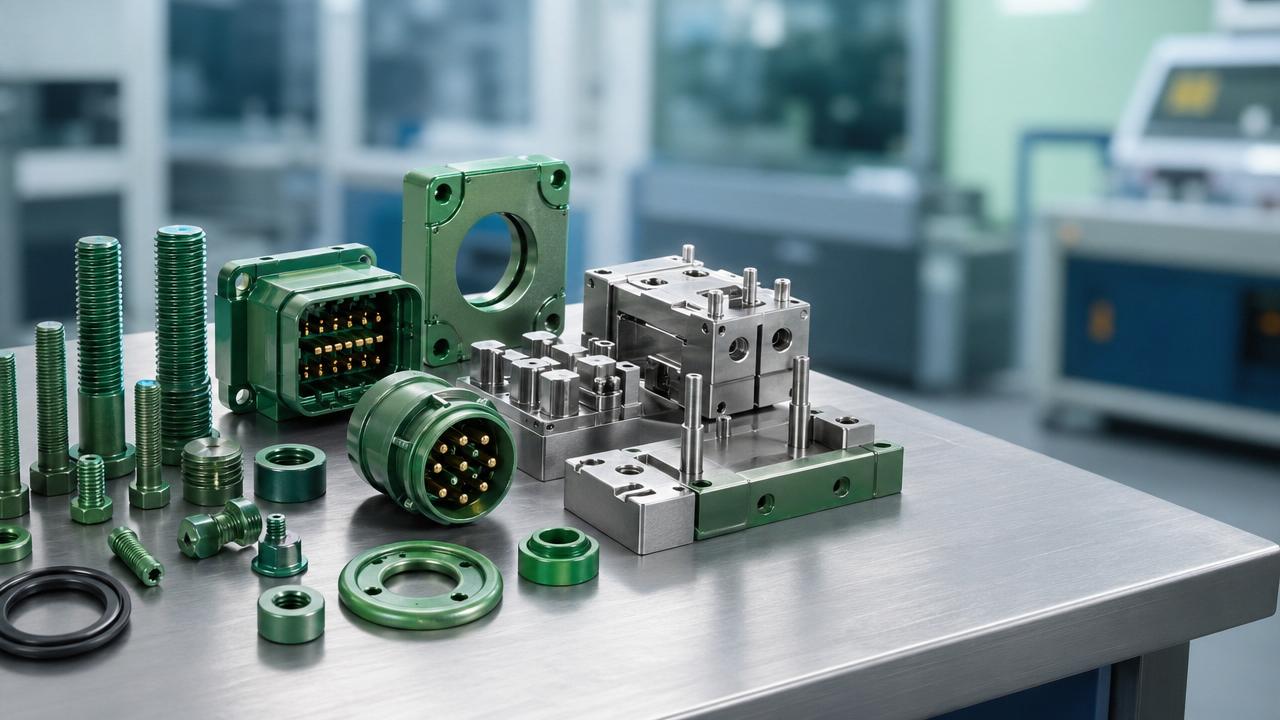
For quality and safety teams, greening industrial components is no longer just a sustainability goal—it is a risk-management challenge. The right materials, coatings, and process controls can reduce environmental impact without compromising durability, compliance, or operational reliability. This article explores how manufacturers can balance greener component choices with proven performance standards to avoid costly failures and protect system integrity.
Why quality and safety teams should use a checklist first
When teams discuss greening industrial components, the biggest mistake is treating sustainability as a single material substitution. In practice, failure risk often rises when one variable changes and five others are left unverified. A lower-VOC coating may alter torque consistency, a recycled alloy may affect fatigue behavior, and a new polymer may pass room-temperature testing but drift outside tolerance after 500 to 1,000 thermal cycles.
For quality control personnel and safety managers, checklist-based evaluation works better because industrial components sit inside systems, not in isolation. Fasteners, electrical connectors, pneumatic fittings, mold inserts, and stamped parts are all exposed to load, vibration, temperature, humidity, lubricants, and assembly variation. Greening industrial components without mapping these interactions can move risk from environmental impact to warranty claims, line stoppage, or field safety incidents.
A practical review should therefore start with three questions: what function cannot fail, what conditions create the highest stress, and what verification window is acceptable before release. In many factories, the answer is not a full redesign but a controlled transition over 8 to 16 weeks, with side-by-side qualification, limited-batch trials, and documented acceptance thresholds.
Use this first-pass screening logic
- Confirm whether the component is safety-critical, quality-critical, or cost-critical. Safety-critical parts should face the strictest change-control process.
- Identify the dominant failure mode: corrosion, fatigue, wear, creep, dielectric failure, dimensional drift, or seal leakage.
- Define the operating window in measurable terms such as temperature range, pressure range, vibration level, duty cycle, and service interval.
- Check whether the greener option changes raw material origin, coating chemistry, curing profile, machining route, or surface roughness.
- Decide whether validation needs laboratory testing only, pilot-line assembly checks, or field simulation lasting 30, 60, or 90 days.
This structured approach is especially relevant to the sectors covered by GHTN, where underlying hardware and tooling determine the reliability of larger mechanical, electrical, and mold-based systems. The greener the change appears on paper, the more important it becomes to verify how that change behaves under actual process loads.
Core checklist: what to verify before approving greener alternatives
The most effective way to reduce failure risk is to separate greening industrial components into checkable categories. Quality teams should not approve a new option because it sounds more sustainable; they should approve it because it passes a defined matrix of performance, process, compliance, and consistency checks. This is where many sourcing and engineering discussions become clearer.
The table below can be used as a pre-approval screening tool for common industrial components. It is designed for cross-functional review among quality, safety, purchasing, manufacturing engineering, and suppliers. The goal is not to slow decisions, but to ensure that green substitution does not create hidden reliability costs 3 to 12 months later.
A key lesson from greening industrial components is that environmental improvement should be measured together with functional margin. For example, if a fastener coating reduces hazardous chemistry but increases friction spread from one batch to another, clamp load variation can become the real issue. Likewise, a lower-energy mold process is beneficial only if cavity wear, flash rate, or dimensional drift remain within controlled limits over the planned production volume.
High-priority review points for release decisions
- Mechanical margin: compare baseline and alternative performance under representative load conditions, not only catalog values.
- Process repeatability: verify at least 3 production lots where possible, especially for plated, molded, or heat-treated parts.
- Assembly effect: confirm torque, fit, sealing force, insertion force, or electrical contact behavior on actual tools and fixtures.
- Aging behavior: assess thermal, humidity, chemical, and cyclic stress over a realistic validation duration.
- Documentation readiness: ensure material declarations, process change records, and inspection criteria are updated before scale-up.
For many buyers and OEM support teams, these checkpoints also improve supplier communication. Instead of asking a vendor whether a component is “green,” the team can ask whether the alternative maintains hardness range, corrosion resistance window, dielectric behavior, or dimensional capability over the required service life. That is a more reliable path to greening industrial components with lower operational risk.
How requirements differ by component type and operating scenario
Not all industrial parts respond the same way to greener materials or cleaner processes. A molded component may be sensitive to resin moisture and shrinkage behavior, while a metal fastener may be more sensitive to plating friction and hydrogen-related process concerns. Quality and safety teams should therefore adapt the checklist by function category, service environment, and failure consequence.
In general, mechanical joining parts, electrical connection parts, pneumatic or fluid-control parts, and tooling elements each require different validation priorities. This is especially important in mixed manufacturing environments where one line may handle outdoor-exposed assemblies and another runs clean indoor automation at 20°C to 28°C with high-cycle duty.
Scenario-based comparison for greener component adoption
Before the table below, it helps to define one rule: the harsher the environment, the less room there is for assumption. A component that performs well in low-vibration indoor equipment may fail early in coastal humidity, washdown conditions, or repeated thermal shock. Greening industrial components must therefore be matched to the real exposure profile.
The comparison shows why greening industrial components should never be approved through a single generic policy. In a connector, 10 to 20 milliohm drift may matter; in a sealing application, the critical measure may be pressure retention over 100,000 cycles; in tooling, the real question may be whether maintenance intervals remain stable across several production campaigns. The correct metric depends on where failure creates the highest business and safety impact.
A quick adaptation checklist by environment
- High humidity or outdoor exposure: prioritize corrosion resistance, galvanic compatibility, and seal integrity.
- High heat or thermal cycling: prioritize creep resistance, coating stability, conductivity retention, and dimensional repeatability.
- High vibration or dynamic loading: prioritize fatigue margin, clamp load retention, and wear resistance.
- Clean automation lines: prioritize particulate generation, lubrication control, and predictable assembly force.
Teams that document these scenario differences early are far more likely to make successful green transitions. They also avoid a common procurement problem: comparing two suppliers only on cost and declarations, while ignoring whether both can hold the same functional tolerance under real service conditions.
Common blind spots that raise failure risk during green transitions
Many greening programs do not fail because the sustainable idea is wrong. They fail because small implementation details are missed. In industrial components, these details can sit in surface finish, storage condition, curing time, tool wear, batch traceability, or installer behavior. Quality teams should treat these as routine audit items, not secondary concerns.
One common blind spot is assuming the new version is equivalent because nominal dimensions match. In reality, microscopic changes in roughness, hardness distribution, resin flow, or plating friction can change system behavior. Another blind spot is using laboratory pass/fail results without checking process capability during normal production shifts, especially across 2 or 3 separate lots.
Risk reminders that should trigger extra review
- The greener material comes from a broader scrap or recycled feedstock stream, increasing composition variability.
- A coating or resin change alters assembly torque, insertion force, cure time, or cooling profile by more than the current work instruction allows.
- The part is installed in low-access, high-consequence locations where replacement cost is 5 to 20 times the purchase price.
- The supplier can provide declarations but not enough process-control detail, retention samples, or batch traceability records.
- Testing covered static load only, while the real application experiences repeated cycling, mixed chemicals, or shock loading.
Another often-overlooked issue in greening industrial components is maintenance compatibility. If a new seal material requires different lubricant chemistry, or a new plated fastener behaves differently with existing tools, maintenance and assembly teams need updated instructions. Without that step, a technically acceptable change can still generate field issues because operating habits lag behind material changes.
What to record during pilot validation
Pilot validation should capture more than pass/fail outcomes. Record lot number, processing date, inspection method, ambient conditions, operator notes, and any deviation from normal settings. A 4-week pilot with incomplete traceability often teaches less than a 2-week pilot with disciplined records.
Where possible, compare baseline and greener versions side by side in the same production window. This reduces noise from seasonal humidity, tool changes, and operator differences. It also helps determine whether observed variation comes from the new component or from normal plant fluctuation.
For safety managers, the threshold for escalation should be defined in advance. If leakage, corrosion onset, contact resistance, torque scatter, or wear rate moves beyond the agreed band, the team should pause scale-up rather than rely on assumptions. That discipline is central to greening industrial components responsibly.
A practical rollout plan for greening industrial components without disruption
An effective rollout plan usually starts small, focuses on medium-risk categories first, and sets measurable gates. Rather than changing every item at once, many organizations begin with non-safety-critical parts, stable demand programs, and components with well-understood test methods. This reduces the chance that a sustainability initiative creates supply or quality instability.
The table below outlines a phased approach that quality and safety teams can adapt. It is especially useful for OEMs, distributors, and manufacturers working across hardware, electrical, and tooling categories where supplier readiness may vary by process type and documentation maturity.
This phased model helps teams align sustainability targets with operational discipline. It also creates clear internal ownership: sourcing gathers declarations, engineering defines fit-for-use tests, quality controls acceptance limits, and safety verifies that no new hazard is introduced in storage, handling, installation, or service. Greening industrial components becomes manageable when each function knows its gate.
Execution checklist for the next supplier or part review
- Prepare the current baseline specification, inspection plan, and known failure history.
- Ask the supplier to identify every material or process delta, not just the environmental benefit.
- Define 3 to 5 acceptance metrics linked to the actual failure mode of the part.
- Run pilot validation under normal production conditions and capture lot-level traceability.
- Release in stages, with a documented stop rule if measured performance drifts beyond the approved range.
For companies managing global supply chains, this approach also supports better communication with distributors and OEM buyers. It converts a broad sustainability request into an engineering-based review process grounded in service conditions, acceptable variation, and real manufacturing constraints.
Why work with a specialist network when evaluating greener component options
Greening industrial components is easier when decisions are supported by component-level expertise rather than generic sustainability language. Quality and safety teams often need help connecting material choice, tooling behavior, electrical compliance concerns, and supplier capability into one decision path. That is where a specialized industrial resource network adds value.
GHTN focuses on the granular core of manufacturing: hardware, electrical components, molds, and precision tooling. This matters because the success of greener transition programs depends on details such as coating friction behavior, mold wear pattern, connector reliability, process consistency, and documentation readiness. Those are the exact areas where hidden failure risk tends to appear.
If your team is assessing greening industrial components and wants to reduce approval risk, contact us to discuss parameter confirmation, component selection, delivery windows, customized sourcing options, compliance documentation, sample support, or quotation planning. We can help you compare alternative materials and process routes with a sharper focus on fit-for-use performance, quality control checkpoints, and practical supplier readiness. In short, we help link precision to sustainable manufacturing decisions—without losing sight of reliability.
Related News