
How industrial greening is reshaping factory costs

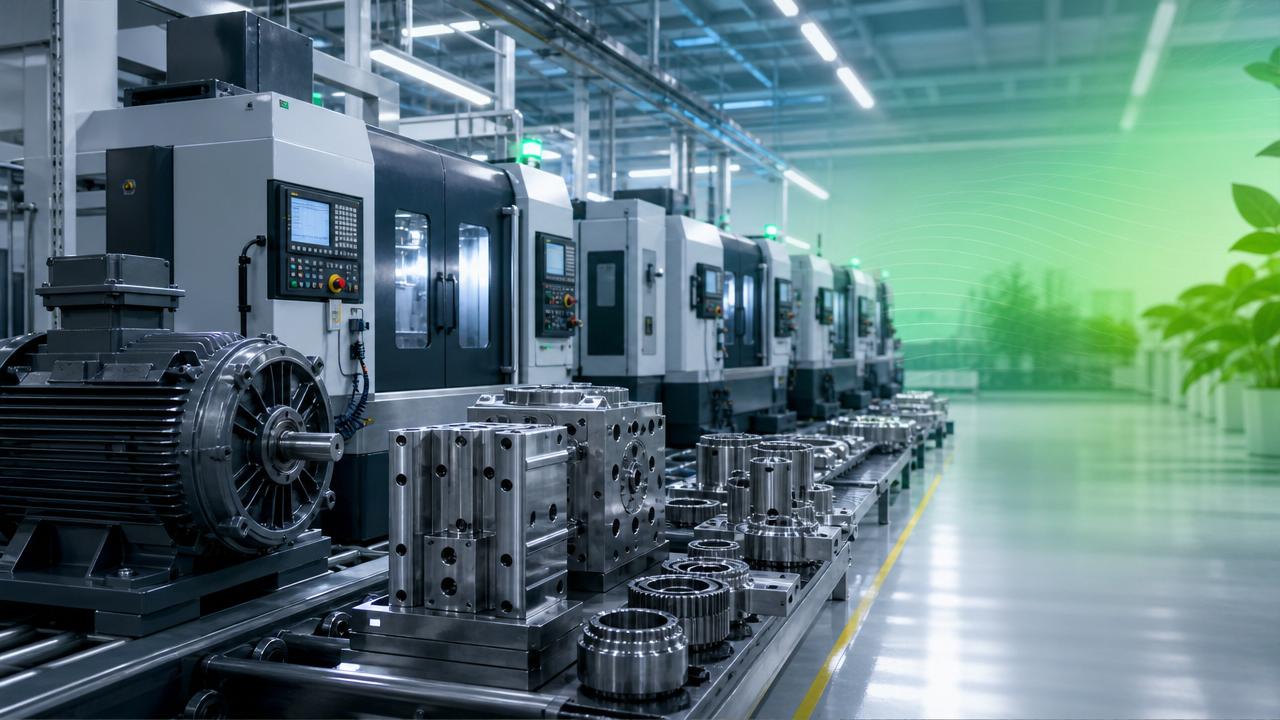
Industrial greening is no longer a compliance-driven side project; it is becoming a direct lever on factory costs, supplier competitiveness, and long-term margins.
For industrial enterprises, the shift affects energy use, material selection, tooling efficiency, component durability, and access to global buyers.
As standards tighten and operating pressure rises, industrial greening now determines whether a factory only adapts or gains cost strength.
Where industrial greening first changes the cost structure
The first cost impact usually appears in energy, scrap, maintenance, and compliance documentation.
These areas look separate, but industrial greening connects them through process discipline and better component choices.
A high-efficiency motor reduces electricity demand, but it also lowers heat stress on nearby electrical hubs.
A stronger fastener reduces replacement frequency, but it may also reduce downtime and emergency inventory.
A precision mold with better cooling design can reduce cycle time, scrap rate, and resin waste together.
This is why industrial greening must be assessed at process level, not only at equipment label level.
Scenario 1: Energy-intensive production lines need measurable efficiency gains
Energy-intensive lines are usually the fastest place to see financial returns from industrial greening.
Compressed air systems, heating units, CNC machining centers, and continuous conveying systems often hide avoidable losses.
The key judgment is not whether equipment is modern, but whether output per kilowatt is improving.
Factories should compare energy consumption by batch, material grade, tool life, and operating shift.
Industrial greening becomes valuable when savings are tied to production units, not only monthly utility bills.
Practical cost signals to monitor
- Power consumption per finished part.
- Air leakage rate in pneumatic systems.
- Idle energy during tool changes.
- Heat loss from ovens, dryers, and hydraulic stations.
- Maintenance cost after efficiency upgrades.
When these indicators move together, industrial greening creates a durable cost advantage.
Scenario 2: Precision tooling reshapes waste and cycle economics
Tooling is often treated as a capital expense, but it strongly affects daily factory costs.
In molding, stamping, cutting, and die-casting, industrial greening depends on precision, cooling, surface treatment, and wear resistance.
A mold that produces fewer defects reduces material waste, inspection pressure, and rework labor.
A cutting tool with stable edge geometry can reduce spindle load and extend machine availability.
The core judgment is whether tooling investment lowers total conversion cost across the production run.
Industrial greening here is not decorative sustainability; it is waste reduction through micron-level process control.
Tooling decisions that influence green cost performance
- Choose tool materials according to heat, friction, and corrosion exposure.
- Review coating selection against expected cycle volume.
- Validate cooling channels before full-scale mold production.
- Track defect types by cavity, tool position, and batch.
- Calculate tool cost per approved component.
Scenario 3: Component durability reduces hidden replacement costs
Industrial greening also changes how basic components are evaluated.
Fasteners, seals, bearings, connectors, pneumatic valves, and electrical terminals can all influence lifecycle cost.
Low-price components may increase failures, service visits, safety risks, and shutdown frequency.
Durable components support industrial greening because fewer replacements mean lower material throughput and less downtime.
The useful question is not only purchase price, but failure cost under real operating conditions.
A corrosion-resistant fastener may be cheaper over time than repeated maintenance in humid or chemical environments.
An electrical connector with higher compliance stability can reduce inspection disputes in export-oriented supply chains.
Scenario 4: Compliance requirements turn documentation into cost control
Many factories still view environmental documentation as administrative work.
However, industrial greening increasingly links documentation with customer qualification, trade access, and financing conditions.
Material declarations, carbon data, restricted substance records, and energy metrics are becoming commercial evidence.
Incomplete data can delay orders, weaken pricing power, or exclude a supplier from preferred lists.
The cost of industrial greening therefore includes data systems, supplier coordination, and traceability discipline.
Yet good documentation also prevents repeated audits and reduces uncertainty during international sourcing decisions.
Different factory scenarios require different green cost priorities
This comparison shows why industrial greening cannot use one universal budget model.
Each production scenario needs its own cost baseline, payback logic, and technical verification route.
How to judge whether a green investment is financially sound
A sound industrial greening project must connect technical change with measurable financial outcomes.
The evaluation should include direct savings, avoided losses, quality impact, and market access benefits.
Some projects produce quick savings, such as compressed air repair or motor load optimization.
Others need longer validation, such as mold redesign, material substitution, or supplier traceability systems.
Recommended evaluation sequence
- Build a cost baseline by product, line, and shift.
- Identify where energy, scrap, downtime, and compliance overlap.
- Rank projects by payback period and operational risk.
- Test changes in limited production before full rollout.
- Measure savings after stabilization, not only after installation.
This sequence keeps industrial greening practical, accountable, and connected to production reality.
Common mistakes that weaken industrial greening returns
The first mistake is treating industrial greening as a purchasing activity only.
Buying efficient equipment does not guarantee savings if process settings, maintenance, and operators remain unchanged.
The second mistake is ignoring small components because their unit prices are low.
In complex systems, a weak connector or fastener can cause expensive shutdowns and wasted output.
The third mistake is separating compliance data from production data.
When records are disconnected, audits become slower and improvement decisions become less reliable.
The fourth mistake is calculating payback without quality improvement and market access benefits.
Industrial greening often creates value through fewer rejected batches, stronger buyer confidence, and reduced supply chain risk.
Where hardware, electrical, and mold decisions become strategic
Industrial greening reaches its full value when basic industrial parts are selected with system performance in mind.
Mechanical tools affect cutting efficiency, surface quality, vibration, and tool replacement cycles.
Electrical components influence safety, energy stability, monitoring accuracy, and compliance readiness.
Molds determine material utilization, cooling balance, cycle consistency, and defect prevention.
For this reason, industrial greening should involve engineering, procurement, quality, maintenance, and financial analysis together.
A low-carbon factory is not built by isolated upgrades, but by coordinated decisions at component level.
Action path for factories seeking lower costs through industrial greening
The next step is to map cost pressure against production scenarios.
Start with one line, one product family, or one recurring failure category.
Then connect energy readings, scrap records, maintenance logs, and supplier data into one practical view.
Industrial greening becomes easier to finance when each improvement has a clear operational metric.
- Audit high-consumption equipment and hidden idle loads.
- Review tooling quality against scrap and cycle performance.
- Upgrade critical components where failure cost exceeds purchase savings.
- Standardize material and compliance documentation.
- Use verified data to negotiate with global buyers.
GHTN supports this shift by linking precision tools, reliable components, and technical trade insight.
Through deeper analysis of hardware, electrical systems, and mold manufacturing, industrial greening becomes a cost strategy.
Factories that act with scenario-based discipline can reduce waste, protect margins, and strengthen global competitiveness.
In that sense, industrial greening is not only about cleaner production. It is about tooling the future with measurable precision.
Related News