
Can industrial greening cut factory operating costs?

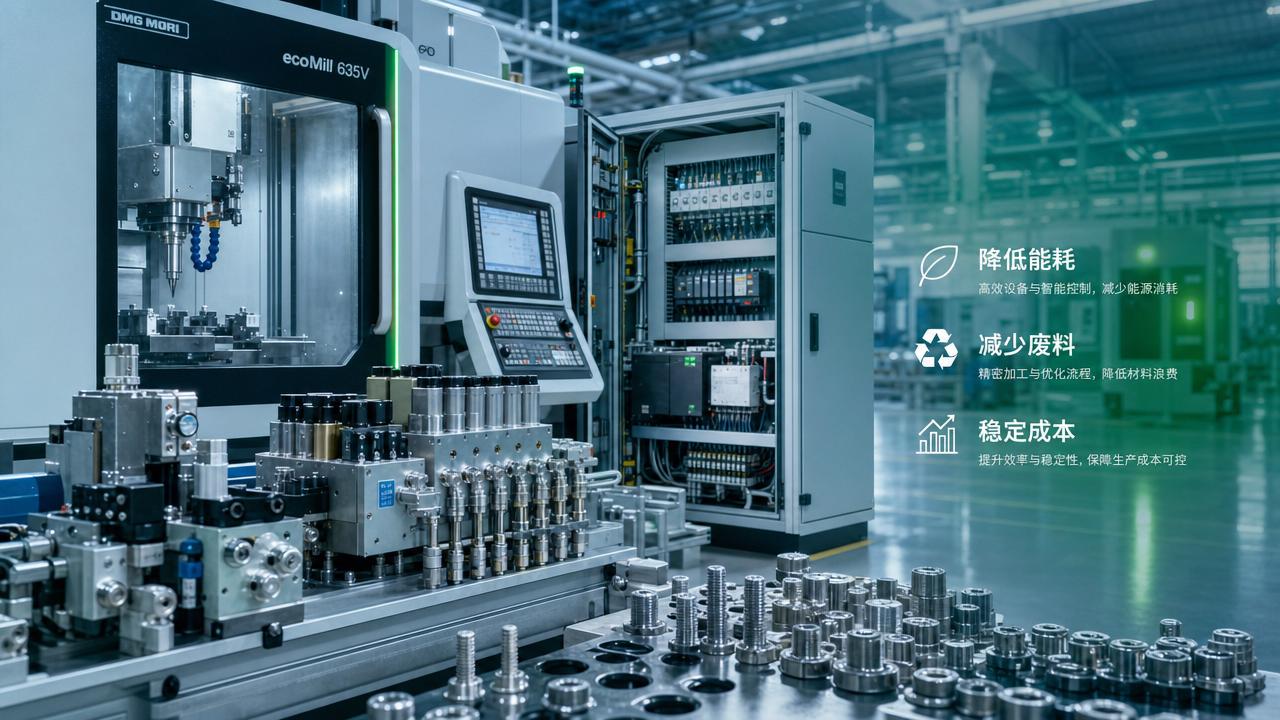
For finance approvers, industrial greening is no longer a branding expense—it is a measurable operating-cost strategy. From energy-efficient tooling and optimized pneumatic systems to greener fasteners, electrical components, and mold processes, each improvement can reduce waste, downtime, compliance risk, and utility spending. This article examines where greening initiatives create real factory savings, how to evaluate payback, and why precision component choices can turn sustainability budgets into long-term margin protection.
The key question is not whether a factory can become greener. It is whether industrial greening can pass a disciplined capital review within 12 to 36 months.
For CFOs, plant controllers, procurement heads, and financial approvers, the answer depends on component-level decisions. Bearings, fasteners, cutting tools, relays, molds, seals, and pneumatic valves quietly shape the cost base.
Where industrial greening creates measurable factory savings
Industrial greening is often discussed at plant level, but savings usually begin at process level. A 2% reduction in scrap can be more valuable than a visible branding campaign.
In precision manufacturing, small friction losses, compressed-air leakage, overheating electrical hubs, and premature tool wear compound across 2 or 3 shifts per day.
Energy consumption is the first financial checkpoint
Electricity, compressed air, cooling, and hydraulic power form a recurring operating-cost block. Industrial greening targets these loads without interrupting core production capacity.
Typical opportunities include variable-speed drives, low-loss electrical components, optimized pneumatic circuits, improved lubrication, and cutting tools that reduce spindle load by 5%–15%.
Waste reduction protects gross margin
Greener molds, better fastener materials, and precise tooling reduce reject rates. Even a 0.5 mm deviation can trigger rework in assembly-critical parts.
For finance teams, waste should be priced beyond raw material. Include labor, machine time, inspection, logistics, customer credits, and production rescheduling.
Cost areas finance teams should quantify
- Utility spending per production hour, separated by electricity, compressed air, heating, and cooling.
- Scrap and rework cost per batch, including inspection and secondary machining.
- Unplanned downtime frequency, especially stoppages lasting more than 30 minutes.
- Maintenance consumption, including seals, filters, lubricants, inserts, and replacement fasteners.
- Compliance exposure from restricted substances, energy audits, and customer supplier scorecards.
This cost mapping turns industrial greening from a vague sustainability line into an operating budget discussion with owners, numbers, and payback assumptions.
Component-level decisions with the strongest payback logic
A factory does not need to replace every asset at once. Industrial greening works best when finance teams prioritize components with high repetition and failure impact.
GHTN evaluates industrial parts through mechanical performance, electrical safety, mold precision, and trade feasibility. These lenses support purchasing decisions that balance cost and durability.
The following table shows where greening initiatives typically connect to measurable cost controls across hardware, electrical, tooling, and mold-related operations.
The strongest business cases combine at least 2 savings paths. For example, a greener mold may cut energy use and lower rejection risk simultaneously.
Fasteners and base components should not be ignored
Fasteners appear inexpensive, but failure can stop a line. Corrosion-resistant materials, better coatings, and correct torque specifications reduce replacement frequency.
For harsh environments, finance should compare purchase price against service life. A component lasting 3 years instead of 12 months changes the cost equation.
Precision molds can reduce recurring waste
Injection and die-casting molds influence energy, scrap, cooling water, and production stability. Micron-level deviations may create recurring defects across thousands of shots.
Industrial greening in mold design often means better thermal balance, durable inserts, repairable structures, and measurable dimensional control over 50,000 to 500,000 cycles.
How finance approvers should evaluate payback
Industrial greening should be reviewed with the same discipline as automation, tooling upgrades, or supplier changes. A clear model prevents both overinvestment and underinvestment.
The basic framework includes baseline cost, implementation expense, operational disruption, verified savings, and residual value. A 6-step review is usually sufficient.
A 6-step approval model
- Define the cost baseline for 3 to 6 months of production data.
- Separate avoidable waste from unavoidable process variance.
- Request technical alternatives with lifecycle assumptions, not only unit prices.
- Estimate installation impact, including downtime windows of 4–24 hours if relevant.
- Set verification metrics before approving the purchase order.
- Review savings after 30, 90, and 180 days of operation.
This method keeps industrial greening accountable. It also helps procurement negotiate specifications instead of merely pressing suppliers for lower prices.
Payback should include avoided risk
Many savings do not appear in the utility bill immediately. Fewer emergency purchases, safer electrical operation, and lower compliance exposure can be equally material.
A short payback target of 12–18 months fits leakage repair or tool optimization. Mold upgrades and electrical retrofits may justify 24–36 months.
Useful approval metrics
- Cost per qualified part, rather than cost per component purchased.
- Energy use per machine hour or per 1,000 production cycles.
- Mean time between failures for critical tooling and components.
- Scrap percentage by defect category and material type.
- Maintenance labor hours per month by line, cell, or asset group.
When these indicators improve together, industrial greening becomes margin protection. The benefit is not only a greener factory, but a more predictable factory.
Procurement criteria for greener industrial components
Finance approvers rarely choose components directly, but they approve the logic behind sourcing. Procurement criteria should convert technical claims into comparable commercial evidence.
A supplier proposal should explain materials, expected lifecycle, maintenance requirements, applicable standards, replacement availability, and delivery lead time within 2–8 weeks.
Before approving industrial greening expenditure, compare competing options with practical checks. The table below supports cross-functional review between finance, engineering, and purchasing.
The main conclusion is simple: greener components must be auditable. Finance teams should reject vague claims and ask for operating assumptions they can test.
Avoid lowest-price sourcing traps
A lower-priced component may increase energy, maintenance, and rejection costs. Industrial greening exposes these hidden expenses through lifecycle cost comparison.
For example, a cheaper pneumatic valve may leak more after 6 months. The purchase saving disappears if compressor load and service calls rise.
Use standards without turning them into paperwork
International standards and customer requirements matter, but they should support purchasing discipline. Electrical safety, material restriction, and dimensional tolerance checks reduce expensive surprises.
For SMEs entering higher-value markets, consistent documentation can improve quotation credibility. It also helps distributors compare suppliers across regions and technical categories.
Implementation risks and practical controls
Industrial greening can fail when projects are approved without process ownership. Savings depend on installation quality, operator adoption, maintenance routines, and verification discipline.
Finance approvers should require a control plan before release of funds. Even a small upgrade should have 3 milestones: installation, stabilization, and review.
Common implementation mistakes
- Approving equipment upgrades without measuring the current energy or scrap baseline.
- Treating industrial greening as a single department’s task instead of a finance-engineering-procurement project.
- Ignoring spare-part availability, especially for imported tooling or specialized electrical components.
- Accepting supplier claims without test conditions, tolerance ranges, or maintenance assumptions.
- Failing to train operators, leading to incorrect pressure settings, tool misuse, or bypassed controls.
These mistakes are avoidable. The best projects include a named owner, measurable baseline, and verification window of at least 90 days.
A practical rollout sequence
Start with high-loss areas. Compressed-air audits, tool-life reviews, mold cooling checks, and electrical thermal inspections often reveal quick opportunities.
Then classify projects into 3 tiers: no-regret repairs, medium-cost retrofits, and strategic replacement. This keeps capital allocation aligned with operating urgency.
Recommended rollout timing
A realistic plan may identify quick wins in 2 weeks, approve pilot upgrades within 30 days, and validate savings over 1 production quarter.
Larger mold redesigns, electrical panel improvements, or tooling standardization programs may need 8–16 weeks, especially when procurement qualification is required.
Why GHTN connects greening with precision purchasing
The Global Hardware & Tooling Network focuses on the granular core of industry: mechanical tools, electrical hubs, mold manufacturing, fasteners, and pneumatic components.
This perspective matters because industrial greening is not only about high-level policy. It is built through thousands of component choices across real production lines.
What finance teams gain from component intelligence
GHTN’s content and trade insights help decision-makers evaluate technical alternatives before capital is committed. The goal is better sourcing, not decorative sustainability.
Mechanical tool experts examine cutting efficiency, electrical engineers monitor compliance evolution, and mold specialists interpret micron-level design changes that affect cost.
For finance approvers, this translates into clearer questions: Which component saves energy, which reduces downtime, and which supplier supports long-term competitiveness?
From sustainability budget to margin protection
Industrial greening cuts factory operating costs when it is treated as a precision purchasing strategy. The strongest cases link environmental improvement to measurable financial control.
Energy-efficient tooling, optimized pneumatic systems, reliable fasteners, compliant electrical components, and durable molds can reduce waste, downtime, audit risk, and utility spending.
For finance teams, the next step is to review existing cost baselines, identify high-loss components, and compare greener alternatives through lifecycle economics.
If your team needs practical evaluation criteria for industrial components, greener tooling, or precision manufacturing sourcing, contact GHTN to explore tailored insights and solutions.
Related News