
What manufacturing trends will matter most in 2026?

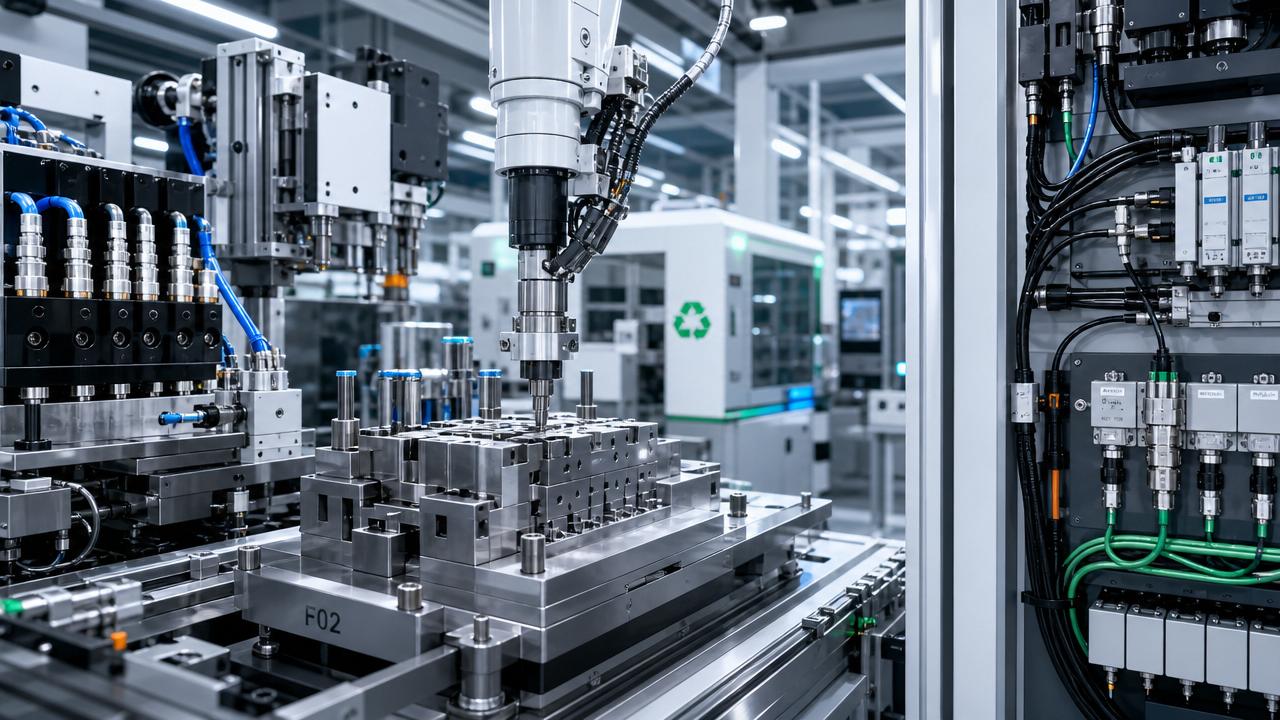
As global supply chains, automation systems, and precision tooling markets evolve, the manufacturing trends shaping 2026 will determine how companies compete, source, and scale.
From smarter industrial components to greener production standards, the next wave of manufacturing trends is moving from theory into daily operational decisions.
For precision molds, fasteners, electrical systems, pneumatic components, and tooling networks, 2026 will reward practical innovation over abstract digital ambition.
Manufacturing Trends in 2026 Will Be Measured by Operational Resilience
The most important manufacturing trends are no longer defined only by output speed, unit cost, or capacity expansion.
In 2026, resilience will become a measurable manufacturing capability across sourcing, maintenance, compliance, tooling, and material selection.
Recent disruptions exposed weak links hidden inside small components, subcontracted processes, and undocumented production dependencies.
That is why manufacturing trends now emphasize traceable inputs, interchangeable suppliers, validated tooling data, and faster production recovery.
The Global Hardware & Tooling Network observes this shift across mechanical tools, electrical hubs, mold manufacturing, and industrial component markets.
Precision is becoming a strategic language shared by engineering, sourcing, quality, and market-entry teams.
Trend Signals Already Visible Across Industrial Components
Several manufacturing trends are already visible in quoting behavior, supplier audits, product redesign, and automation investment.
Buyers are asking fewer generic price questions and more questions about fatigue life, compliance status, carbon data, and process repeatability.
Mold projects increasingly require shorter validation loops, tighter dimensional stability, and better prediction of cooling performance.
Electrical systems face stronger pressure from international safety standards, energy efficiency rules, and regional certification requirements.
Fasteners and pneumatic components are being evaluated under real working stress, not only catalog specifications.
These manufacturing trends show a clear direction: industrial value is moving deeper into component-level intelligence.
Core Forces Pushing Manufacturing Trends Forward
The next manufacturing trends are being driven by combined pressure from technology, regulation, trade risk, and end-market performance expectations.
These forces make manufacturing trends more concrete, especially for industrial parts hidden inside larger systems.
Smart Components Will Become the Granular Core of Automation
One of the strongest manufacturing trends for 2026 is the shift from smart factories to smart components.
Factories cannot become intelligent if basic tooling, connectors, fasteners, valves, and molds remain disconnected from performance evidence.
Smart components do not always need complex embedded electronics.
They need reliable identification, verified specifications, failure history, material traceability, and compatibility with automated production systems.
This changes how manufacturing trends affect supplier evaluation and product design.
- Fasteners require data on torque behavior, corrosion resistance, and vibration endurance.
- Pneumatic components require response consistency and predictable service cycles.
- Molds require thermal control data and micron-level repeatability.
- Electrical components require certification clarity and stable operating margins.
In this environment, manufacturing trends favor component intelligence that supports uptime, safety, and repeatable quality.
Advanced Tooling and Mold Precision Will Shape Product Economics
In 2026, mold and tooling decisions will influence not only manufacturing output but also product economics.
Among major manufacturing trends, advanced tooling is especially important because it links design intent with repeatable mass production.
The market will expect shorter development cycles, fewer trial molds, and more accurate prediction before steel is cut.
Simulation, conformal cooling, high-performance coatings, and modular mold structures will gain wider practical relevance.
However, these manufacturing trends will not eliminate craftsmanship.
They will raise the value of empirical tooling knowledge, inspection discipline, and defect interpretation.
A mold that saves cycle time, reduces scrap, and protects dimensional consistency becomes a strategic asset.
Green Manufacturing Will Move From Branding to Component Standards
Green manufacturing trends will become more technical and less promotional in 2026.
Markets will demand evidence behind material selection, process energy, coating chemistry, packaging choices, and component lifecycle performance.
This affects even low-visibility industrial parts.
A premium fastener, connector, mold insert, or cutting tool may need documentation beyond mechanical specifications.
Manufacturing trends in sustainability will focus on measurable improvements, not broad environmental claims.
- Lower scrap rates through better process control.
- Longer service life through improved materials and coatings.
- Reduced rework through stable tooling and inspection.
- Cleaner compliance records for cross-border trade.
These manufacturing trends support both environmental goals and stronger industrial margins.
Digital Collaboration Will Redefine Global Industrial Sourcing
Digital sourcing platforms will mature beyond listing catalogs and basic supplier discovery.
The most useful manufacturing trends will connect niche producers with verifiable capability data and application-specific demand.
This direction aligns with the GHTN mission of linking precision and driving manufacture.
The “Stitch Principle” matters because fragmented expertise often sits inside specialized workshops, not large visible brands.
Manufacturing trends will reward networks that translate hidden technical strengths into trusted global market signals.
That includes material capability, dimensional control, compliance readiness, delivery discipline, and after-sales technical response.
Trade insight will become more valuable when combined with engineering evidence.
How Manufacturing Trends Will Affect Business Functions
The practical impact of manufacturing trends will differ across production, engineering, sourcing, quality, and market expansion.
Production teams will need more stable processes, quicker diagnostics, and better visibility into machine-component interactions.
Engineering teams will evaluate components earlier, especially when tolerance, heat, pressure, or vibration can affect system behavior.
Quality systems will shift toward preventive assurance instead of late-stage rejection.
Market expansion will depend on certification readiness, localized standards, and documented industrial credibility.
- Design decisions will include lifecycle cost, not only part price.
- Supplier selection will rely more on evidence-based qualification.
- Maintenance planning will use component performance histories.
- Trade strategies will consider compliance and resilience together.
These manufacturing trends create a stronger link between operational detail and strategic competitiveness.
What Should Receive Priority Before 2026 Arrives
The most useful response to manufacturing trends is not chasing every new technology at once.
Priority should go to areas where better information changes cost, risk, reliability, or speed.
Key priorities for near-term preparation
- Map critical components inside high-value production systems.
- Build traceability for materials, coatings, tooling, and certifications.
- Identify single-source risks in specialized hardware and electrical parts.
- Compare suppliers by tested performance, not only quotation tables.
- Upgrade mold review with simulation, inspection, and failure feedback.
- Align sustainability targets with measurable manufacturing indicators.
These priorities make manufacturing trends actionable without unnecessary complexity.
A Practical Decision Framework for 2026
Manufacturing trends should be judged by their ability to improve specific business outcomes.
A simple framework can help separate useful signals from noise.
This approach turns manufacturing trends into decisions that can be tested, compared, and improved.
The Outlook: Precision Will Decide Competitiveness
By 2026, manufacturing trends will favor organizations that understand the industrial value of small details.
A fastener, connector, pneumatic valve, cutting tool, or mold insert can determine system stability.
The strongest manufacturing trends point toward precision, traceability, sustainability, and collaborative intelligence.
They also confirm that global manufacturing advantage is built at the granular core of industrial systems.
GHTN’s perspective is rooted in this reality: linking precision, tooling the future.
Next Steps for Turning Manufacturing Trends Into Action
Start with a focused audit of critical components, tooling dependencies, supplier evidence, and compliance exposure.
Then compare each finding against the manufacturing trends most relevant to cost, risk, performance, and market access.
Use data from testing, engineering reviews, and trade intelligence to define practical improvement priorities.
For deeper insight into industrial parts, precision tools, electrical systems, and mold evolution, follow GHTN’s technology and trade analysis.
The next advantage will come from reading manufacturing trends early and applying them where precision creates measurable value.
Related News