
Which manufacturing trends will matter most in 2026?

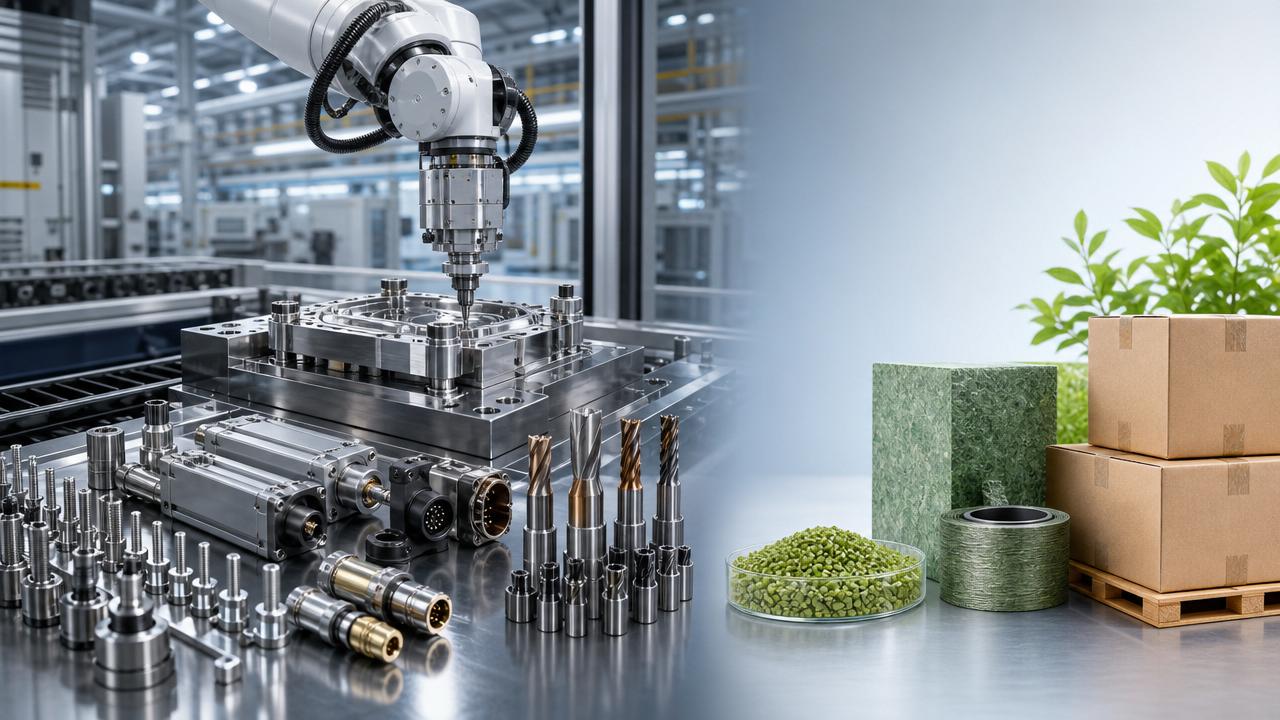
As 2026 approaches, enterprise leaders face a manufacturing landscape shaped by smarter automation, resilient supply chains, precision tooling, and stricter sustainability demands.
Understanding which manufacturing trends will truly influence productivity, cost control, and global competitiveness is no longer optional—it is a strategic necessity.
This article highlights the key shifts decision makers should watch, from advanced industrial components and digital collaboration to greener materials and high-performance tooling.
It also helps businesses prepare for the next stage of manufacturing transformation through clearer procurement logic, risk evaluation, and practical implementation priorities.
Why 2026 Manufacturing Trends Require Board-Level Attention
The most important manufacturing trends for 2026 are not isolated technologies. They are operating decisions that affect capital allocation, supplier choice, compliance exposure, and margin resilience.
For enterprise decision makers, the challenge is not identifying every innovation. The challenge is knowing which trends deserve budget, engineering resources, and supplier qualification work.
- Automation must be evaluated against downtime reduction, labor availability, safety requirements, and the reliability of pneumatic, electrical, and motion-control components.
- Supply chain resilience must include material traceability, tooling availability, logistics risk, and the financial stability of specialized component suppliers.
- Sustainability must move beyond branding and become measurable through energy use, recyclable materials, surface treatment choices, and waste reduction.
- Precision manufacturing must be connected to mold accuracy, cutting efficiency, fastening performance, and inspection capability across global production sites.
GHTN focuses on this granular core of industry. Fasteners, molds, electrical hubs, tooling systems, and pneumatic components often determine whether a strategic plan performs on the factory floor.
Which Manufacturing Trends Will Have the Highest Operational Impact?
Decision makers should compare manufacturing trends by operational impact, investment difficulty, supplier dependency, and implementation risk. The table below summarizes practical priorities for 2026.
This comparison shows why manufacturing trends must be translated into technical purchasing criteria. Strategy becomes measurable only when specifications, tolerances, and supplier evidence are reviewed together.
Trend 1: Smarter Automation Built on Reliable Industrial Components
Automation in 2026 will be less about replacing people and more about stabilizing mixed-product production. Shorter runs require repeatable motion, faster changeovers, and dependable sensing.
Pneumatic components, control valves, connectors, wiring systems, and machine guards become strategic assets. If these details fail, the automation investment loses credibility quickly.
Trend 2: Precision Tooling as a Profit Protection Strategy
High-performance tooling directly affects scrap rates, cycle time, surface finish, and mold life. These manufacturing trends matter strongly for automotive, electronics, appliances, and industrial equipment suppliers.
Enterprise buyers should ask how cutting edges, coatings, mold inserts, and heat treatment choices influence total cost per part, not only initial purchase price.
How Should Enterprises Prioritize Investments in Manufacturing Trends?
Not every factory needs the same roadmap. A high-mix assembly plant, a precision mold shop, and a distributor serving OEMs face different constraints.
The right investment sequence starts with production pain points. Bottlenecks, warranty claims, compliance gaps, and supplier instability should shape the priority list.
- Map failure points in components, tooling, and electrical control systems before selecting new equipment or digital platforms.
- Estimate the cost of downtime, rework, delayed delivery, and emergency sourcing to create a realistic investment baseline.
- Separate must-have compliance requirements from performance enhancements that can be phased into later procurement cycles.
- Request supplier documentation that supports tolerance, material, surface treatment, lifecycle, and relevant standards claims.
Scenario-Based Prioritization for Different Decision Makers
Manufacturing trends become actionable when matched with business scenarios. The table below helps executives connect strategic goals with practical component and tooling decisions.
The strongest investment cases link manufacturing trends to measurable outcomes. Leaders should require evidence from engineering, purchasing, quality, and sales before approving major changes.
What Role Will Digital Collaboration Play in Component Sourcing?
Digital collaboration is becoming one of the most practical manufacturing trends because it reduces ambiguity between buyers, engineers, suppliers, and production teams.
For industrial parts, unclear specifications create hidden costs. A fastener grade, connector rating, mold steel choice, or pneumatic response time can change production outcomes.
What Better Collaboration Should Include
- Structured technical data covering dimensions, materials, load conditions, temperature range, corrosion resistance, and compatible assembly methods.
- Clear revision management for drawings, mold changes, product substitutions, and approved alternative suppliers.
- Early discussion of certification needs, including common references such as ISO management systems, RoHS, REACH, CE, or UL where applicable.
- Traceable communication around samples, test feedback, price validity, lead time, packaging, and logistics responsibilities.
GHTN’s “Stitch Principle” reflects this need. It connects hidden champion suppliers in niche component fields with market demand that requires accurate industrial intelligence.
How Will Sustainability Change Manufacturing Procurement in 2026?
Sustainability is moving from corporate reporting into sourcing conversations. Enterprise buyers increasingly ask whether components support cleaner production and easier downstream compliance.
Among manufacturing trends, greener materials can be difficult to evaluate because environmental claims often lack sufficient technical context or process-level detail.
Practical Sustainability Checks for Industrial Components
Before changing materials or surface treatments, buyers should examine performance and compliance together. The following checks reduce procurement risk during greener sourcing initiatives.
Sustainable manufacturing trends should not be treated as separate from performance. The best decisions protect product reliability while meeting customer and regulatory expectations.
Procurement Guide: What Should Decision Makers Check Before Buying?
Procurement teams often face tight budgets, urgent delivery dates, and incomplete technical data. These pressures can turn promising manufacturing trends into expensive mistakes.
A disciplined selection process reduces risk. It also helps executives compare supplier proposals across price, performance, documentation, and long-term production suitability.
Selection Checklist for Hardware, Electrical, and Tooling Purchases
- Confirm the application environment, including load, vibration, speed, humidity, chemical exposure, temperature, and expected maintenance access.
- Request drawings, datasheets, material declarations, inspection reports, or sample validation records when the application is quality-critical.
- Compare lifecycle cost rather than only unit price, especially for cutting tools, molds, electrical connectors, and moving components.
- Check whether the supplier can support engineering changes, replacement parts, packaging requirements, and realistic lead-time commitments.
- Review applicable standards or customer requirements before approving substitutions, particularly for electrical components and export-oriented products.
Cost Decisions: When Is a Higher Unit Price Justified?
Many manufacturing trends increase upfront spending. The question is whether the improvement lowers total cost through fewer failures, shorter cycle time, or better compliance readiness.
A higher-spec purchase is justified when it reduces line interruptions, quality escapes, warranty exposure, or requalification effort. The cheapest component is rarely cheapest after failure.
Common Misconceptions About Manufacturing Trends
Some executives delay action because manufacturing trends seem too broad. Others invest too quickly without validating plant-level fit, supplier readiness, or technical constraints.
Misconception 1: Automation Solves Poor Process Discipline
Automation magnifies existing process quality. If drawings, maintenance routines, and component specifications are unclear, automated systems may create faster and more expensive defects.
Misconception 2: Standard Parts Are Always Interchangeable
Industrial components with similar dimensions may behave differently under vibration, heat, humidity, pressure, or repeated assembly. Substitution requires application-based verification.
Misconception 3: Sustainability Can Be Evaluated After Sourcing
Sustainability must be considered during material selection, finishing, packaging, and logistics planning. Late evaluation can cause redesign, documentation delays, or customer audit issues.
FAQ: Practical Questions About Manufacturing Trends in 2026
Which manufacturing trends should a mid-sized enterprise act on first?
Start with trends tied to measurable pain points. If downtime is high, evaluate critical components, maintenance data, and automation reliability before broader digital investment.
How can buyers reduce risk when changing suppliers?
Use sample validation, material checks, dimensional inspection, and controlled pilot orders. For critical parts, avoid full substitution until production behavior is confirmed.
Do greener materials always increase procurement costs?
Not always. Some greener choices reduce waste, improve customer acceptance, or simplify compliance. However, buyers must verify performance before changing material specifications.
What documentation matters most for global industrial sourcing?
Drawings, datasheets, material declarations, inspection records, and relevant compliance references are essential. The exact package depends on product risk and target market requirements.
Why Choose GHTN for Manufacturing Trend Intelligence and Sourcing Support?
GHTN helps decision makers interpret manufacturing trends through the lens of industrial components, precision tools, electrical systems, and mold manufacturing realities.
Our expert network examines cutting efficiency, electrical compliance evolution, pneumatic logic, mold iteration, fastener performance, and material selection from practical engineering perspectives.
- Consult GHTN when you need parameter confirmation for fasteners, connectors, cutting tools, pneumatic parts, or mold-related components.
- Request support when product selection must balance performance, delivery cycle, certification expectations, and budget pressure.
- Use GHTN insights to compare supplier options, understand market entry requirements, and prepare more accurate quotation discussions.
- Discuss custom requirements, sample support, documentation needs, and greener component alternatives before committing procurement resources.
As manufacturing trends reshape competition in 2026, the winners will not simply buy more technology. They will select better industrial foundations.
Contact GHTN to clarify specifications, compare sourcing routes, review certification requirements, plan sample validation, and align precision tooling with your next growth stage.
Linking Precision, Tooling the Future is more than a slogan. It is a practical approach to building stronger, greener, and more resilient manufacturing systems.
Related News
- industrial components
- electrical components
- mold manufacturing
- fasteners
- pneumatic components
- precision tools
- electrical systems
- material selection
- industrial intelligence
- industrial parts
- electrical hubs
- precision mold
- manufacturing trends
- electrical compliance
- market entry
- green manufacturing
- cutting tools