Industrial Automation Technical Analysis in Retrofit Projects

Industrial automation technical analysis is essential for retrofit projects where legacy equipment must meet modern performance, safety, and efficiency standards. For enterprise decision-makers, understanding control integration, component compatibility, and long-term ROI can reduce upgrade risks and improve production resilience. This introduction explores how strategic automation retrofits create measurable value across complex industrial environments.
Why does industrial automation technical analysis matter in retrofit projects?
Retrofit decisions are rarely just engineering upgrades. They affect capital planning, supply stability, maintenance strategy, workforce adaptation, and compliance exposure. In many plants, production lines still depend on mechanically reliable but digitally limited assets. Replacing the full line may be too disruptive or too expensive, so industrial automation technical analysis becomes the discipline that determines what should be retained, what should be upgraded, and what risks must be controlled before investment is approved.
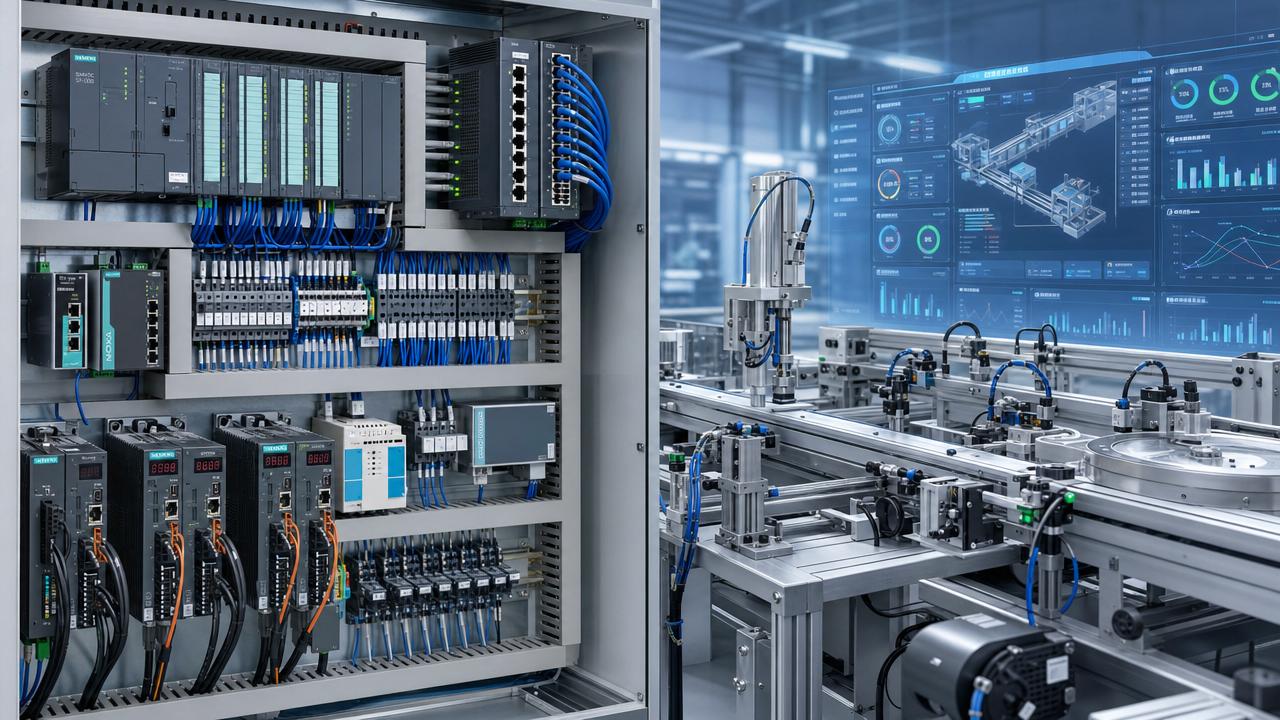
For business leaders in the broader industrial sector, the challenge is not simply adding PLCs, sensors, drives, or HMIs. The deeper issue is whether the existing mechanical tools, electrical distribution points, pneumatic logic, mold-related processes, and fastening systems can support a modern control architecture without introducing hidden failure points. That is why a technical review must connect automation logic with the physical realities of machines and components.
GHTN brings value here because retrofit outcomes often depend on granular industrial parts knowledge. A line may fail not because the software is weak, but because connectors overheat, enclosures are underspecified, fasteners loosen under vibration, or pneumatic response varies under pressure fluctuations. A strong industrial automation technical analysis therefore combines controls expertise with component-level insight across hardware, electrical systems, and precision tooling.
- It identifies bottlenecks that limit throughput, repeatability, or traceability on legacy assets.
- It clarifies whether retrofit is financially smarter than full equipment replacement.
- It reduces integration surprises involving wiring, field devices, communication protocols, and mechanical interfaces.
- It supports cross-functional decisions between operations, procurement, engineering, quality, and finance teams.
What should decision-makers assess before approving a retrofit?
An effective industrial automation technical analysis starts with a baseline assessment. Many projects underperform because the original approval focused on visible automation layers while ignoring legacy constraints in machine structure, power quality, tooling wear, cycle variation, or unsupported spare parts. Before budget is committed, decision-makers need a diagnostic view that links technical feasibility to commercial value.
Core evaluation dimensions
- Control architecture readiness: Review the current PLC platform, I/O density, fieldbus or industrial Ethernet support, and interface requirements for SCADA, MES, or data collection.
- Mechanical condition: Check backlash, vibration, thermal drift, wear patterns, bearing health, actuator precision, and frame rigidity before adding tighter automation logic.
- Electrical compatibility: Validate panel space, cable routing, grounding, short-circuit protection, power quality, and the condition of relays, contactors, terminal blocks, and connectors.
- Pneumatic or hydraulic behavior: Evaluate pressure stability, valve response time, leakage rates, and air preparation quality if the process uses fluid power on automated stations.
- Safety and compliance: Review guarding, emergency stop circuits, interlocks, electrical safety expectations, and relevant machine risk assessment obligations.
- Lifecycle support: Confirm spare parts availability, programming access, documentation quality, and maintenance team training requirements.
The table below helps frame a practical screening model for industrial automation technical analysis in retrofit planning, especially when multiple production assets compete for the same capital budget.
This structure turns a broad retrofit discussion into an approval-ready business case. It also prevents a common mistake: assuming that software modernization alone will unlock productivity while the underlying industrial components remain mismatched to new performance targets.
Which retrofit scenarios create the strongest business value?
Not every machine should be retrofitted. The best candidates are assets with durable mechanical foundations, stable production demand, and clear gaps in control, sensing, energy use, traceability, or safety. Industrial automation technical analysis is most valuable when it separates emotional attachment to old equipment from evidence-based upgrade potential.
High-value scenarios
- Packaging or assembly lines with recurring stoppages caused by obsolete relays, unstable sensors, or limited fault diagnostics.
- Machining or tool-handling systems where cycle consistency can improve through better motion control, HMI visibility, and condition monitoring.
- Mold-related production cells where repeatability, thermal control, and process feedback can reduce scrap or shorten setup time.
- Electrical or pneumatic stations where energy waste, leakage, poor response, or overloaded terminals create hidden operating cost.
- Facilities that need production data visibility for quality reporting, customer audits, or capacity planning without replacing full machine fleets.
The next table compares common retrofit scenarios from a decision-maker perspective, combining technical relevance and expected operational impact.
These scenarios show why industrial automation technical analysis should not be isolated inside the controls team. The greatest value often appears when component reliability, process capability, and data visibility improve together.
How should companies compare retrofit versus full replacement?
This is one of the most important boardroom questions. Full replacement may look cleaner on paper, but it can involve longer lead times, layout changes, operator retraining, tooling adaptation, and larger capital exposure. Retrofit can preserve proven mechanics and reduce disruption, but only if technical limitations are openly quantified. A disciplined industrial automation technical analysis makes the comparison credible.
Decision criteria that matter
- Remaining mechanical life of the existing asset.
- Required production increase and whether current mechanics can support it.
- Availability of spare parts, drawings, and legacy program access.
- Downtime tolerance during installation and commissioning.
- Compliance gaps that would force major redesign anyway.
- Need for digital integration with plant-wide monitoring or quality systems.
A useful rule is this: if the machine frame, main process mechanics, and tooling interfaces remain fundamentally sound, retrofit often deserves strong consideration. If the asset suffers from structural wear, unstable accuracy, severe safety deficiencies, or major capacity mismatch, replacement may be more economical over the lifecycle.
What technical details are most often overlooked?
Many retrofit projects fail not because the strategic concept is wrong, but because practical details are underestimated. Industrial automation technical analysis must go below the headline items and examine connection points across electrical, mechanical, and control domains.
Frequently missed technical risks
- Signal integrity issues caused by poor grounding, cable routing, or mixed legacy and modern devices in the same panel.
- Underspecified connectors, terminals, or fasteners that degrade under heat, oil mist, washdown, or vibration.
- Pneumatic lag or leakage that software changes cannot fix, even when new control logic is added.
- Insufficient enclosure ventilation or panel spacing after adding drives, communication modules, or power supplies.
- Mechanical backlash and repeatability drift that limit the benefit of servo or sensor upgrades.
- Poor documentation of legacy wiring and sequence logic, which extends commissioning time and troubleshooting cost.
This is exactly where GHTN’s cross-domain perspective is useful. Retrofit success depends on details such as tool wear behavior, electrical compliance pathways, mold-process sensitivity, and fastener performance under dynamic load. Strategic insight at the component level prevents expensive surprises at the system level.
How can procurement teams build a stronger selection framework?
Procurement is often asked to source around engineering uncertainty. To avoid short-term buying decisions that create long-term maintenance problems, companies need a structured selection model. Industrial automation technical analysis should translate engineering requirements into purchasing criteria that are easy to compare across suppliers and upgrade options.
Procurement checklist for retrofit components and solutions
- Confirm operating conditions, including temperature, vibration, dust, moisture, duty cycle, and electrical load.
- Map all compatibility requirements, such as voltage class, communication protocol, mounting constraints, and signal type.
- Review lifecycle support, including spare parts availability, firmware support, documentation quality, and training needs.
- Check compliance expectations for the destination market or customer audit environment.
- Evaluate total installed cost, not only purchase price, including downtime, engineering hours, and future service complexity.
For enterprises managing international sourcing, GHTN supports better decisions by connecting material selection, industrial parts intelligence, and market entry considerations. That is especially important when the retrofit spans mechanical tools, electrical hubs, pneumatic systems, and mold-related production assets across different supplier regions.
What standards and compliance issues should be reviewed?
Compliance in retrofit projects is often underestimated until the commissioning phase. Yet industrial automation technical analysis should assess compliance early, because safety circuits, panel design, wiring methods, labeling, documentation, and operator interfaces may all need revision. The exact requirements vary by region and application, but the review should remain systematic.
Typical compliance focus areas
- Machine risk assessment and safeguarding updates after control logic changes.
- Electrical panel suitability, including conductor management, protection coordination, and heat dissipation.
- Emergency stop architecture, interlock behavior, and reset logic.
- Documentation quality for schematics, component lists, I/O mapping, maintenance instructions, and change history.
- Environmental considerations such as ingress protection, material suitability, and energy-efficiency goals.
A compliant retrofit is not automatically an expensive retrofit. In many cases, early review reduces rework by aligning technical choices with accepted industrial practice before hardware is ordered or panel modifications begin.
FAQ: what do enterprise buyers ask most about industrial automation technical analysis?
How do we know whether a machine is a good retrofit candidate?
Start with three filters: mechanical soundness, stable production relevance, and manageable compliance gaps. If the base machine still performs its core process reliably but suffers from obsolete controls, weak diagnostics, or poor data visibility, retrofit is often justified. If structural wear or capacity mismatch dominates, replacement may deserve priority.
What usually drives hidden retrofit cost?
Common hidden costs include undocumented wiring, inadequate panel space, poor power quality, incompatible field devices, mechanical rework, and longer-than-expected commissioning. A thorough industrial automation technical analysis reduces these surprises by exposing weak interfaces before the purchase order stage.
Should we prioritize control upgrades or component-level renewal first?
Neither should be isolated. Controls upgrades deliver less value if connectors, sensors, valves, enclosures, or fasteners cannot support the operating environment. Component-level renewal also underperforms if the machine still lacks logic transparency or fault diagnostics. The best sequence depends on the baseline assessment.
How important is supplier documentation in retrofit projects?
It is critical. Accurate electrical diagrams, parts lists, programming backups, communication maps, and maintenance notes often determine how quickly a plant can recover from faults after the retrofit goes live. Documentation quality should be treated as a commercial criterion, not only an engineering preference.
Why are trend analysis and component intelligence becoming more important?
Retrofit strategy is evolving from one-time modernization toward phased industrial resilience. Companies now expect better traceability, lower energy waste, easier spare part planning, and stronger compatibility with digital production systems. That means industrial automation technical analysis must look beyond immediate controls replacement and consider long-term platform sustainability.
This is where GHTN’s role becomes practical. By analyzing technology trends in hardware, electrical systems, and mold manufacturing, GHTN helps OEMs, distributors, and industrial buyers understand which underlying components are becoming more critical to reliability, compliance, and cost control. Decision-makers benefit when market insight is tied directly to real factory constraints, from material selection to automated line logic.
Why choose us for retrofit-oriented industrial automation technical analysis?
GHTN supports enterprise decision-makers who need more than generic automation advice. Our strength is the ability to connect control modernization with the industrial parts reality underneath it: mechanical tools, electrical hubs, fasteners, pneumatic logic, and mold-process detail. That broader lens helps reduce project blind spots and improves the quality of retrofit planning.
If you are evaluating a retrofit project, you can consult us on specific issues such as parameter confirmation for legacy equipment, component compatibility checks, upgrade path comparison, delivery lead-time concerns, compliance review priorities, sample support for critical parts, and quotation communication for multi-supplier sourcing. We can also help frame selection logic for electrical components, precision tooling, and supporting industrial hardware that directly affect retrofit performance.
For companies seeking a practical, component-aware industrial automation technical analysis, GHTN offers a clear starting point: identify the hidden constraints, compare realistic upgrade paths, and build a retrofit plan that improves resilience without losing control of cost, risk, or schedule.
Related News