
Industrial automation solutions that fix repeat downtime issues

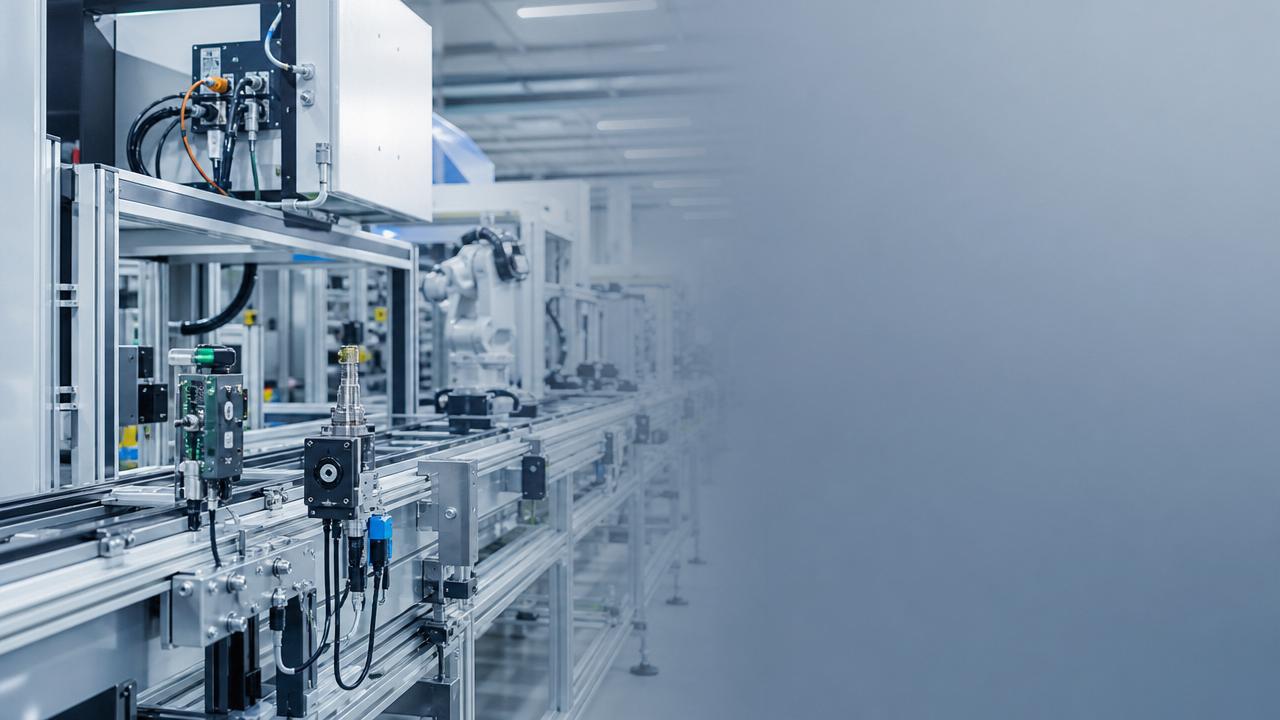
Repeat downtime drains output, frustrates operators, and raises hidden maintenance costs across production lines. Industrial automation solutions help identify root causes, stabilize workflows, and reduce recurring stoppages through smarter controls, sensor integration, and real-time monitoring. For users and operators, the right approach is not just about advanced technology—it is about keeping equipment reliable, processes predictable, and daily operations easier to manage.
Why repeat downtime is becoming a more urgent operations signal
Across manufacturing, warehousing, packaging, electrical assembly, tooling, and precision component production, the conversation around unplanned stoppages has changed. In the past, repeat downtime was often treated as a maintenance inconvenience. Today, it is increasingly viewed as a strategic warning sign. When the same machine stops for the same reason week after week, the issue is no longer isolated wear or operator error. It points to a deeper gap in process visibility, control logic, material handling, or equipment coordination.
This shift matters because production systems are now more tightly connected than before. A small interruption in one cell can delay upstream feeding, trigger downstream quality checks, and reduce overall line balance. For operators, repeat downtime means more manual resets, more pressure during shift changes, and less confidence in daily targets. For supervisors and plant managers, it means unstable throughput and difficulty planning labor, energy use, and inventory movement. That is why industrial automation solutions are moving from optional upgrades to practical reliability tools.
The trend is especially relevant in broad industrial environments where legacy equipment, mixed vendor systems, and variable product runs are common. In these settings, recurring stoppages rarely come from one dramatic failure. They typically result from many small weaknesses: sensor drift, poor alarm prioritization, inconsistent startup sequences, weak interlock design, slow fault diagnosis, or a mismatch between machine speed and material behavior.
What has changed in the market around industrial automation solutions
The market direction is no longer centered only on full-scale automation projects. A clear trend is the rise of targeted industrial automation solutions that solve repeat downtime without requiring a complete line replacement. Users and operators are seeing more modular controls, retrofit sensor packages, remote diagnostic tools, and condition-based monitoring systems designed for specific reliability problems. This matters because many facilities need practical gains faster than they need major capital expansion.
Another important change is that data is being used differently. Instead of collecting machine information only for reports, companies increasingly want actionable signals that explain why stoppages repeat. This has pushed automation suppliers and industrial platforms to focus more on event logging, fault traceability, alarm analysis, edge monitoring, and easier human-machine interface design. In other words, the value of industrial automation solutions is shifting from “automate more” to “understand and stabilize more.”
At the same time, labor dynamics are affecting decision-making. Skilled maintenance teams are stretched, while operators are expected to manage more complex equipment. That makes intuitive diagnostics, guided recovery steps, and clearer machine status displays more important than ever. The systems that gain attention now are not only technically advanced; they are easier to use under real production pressure.
Key signals showing how downtime prevention is evolving
What is driving this shift
Several forces are pushing repeat downtime higher on the operational agenda. First, production variability has increased. More plants now run shorter batches, faster changeovers, and mixed product formats. These conditions create more chances for timing errors, alignment issues, and parameter mismatch. Industrial automation solutions help by making transitions more controlled and less dependent on manual interpretation.
Second, uptime expectations are rising even where budgets are tight. Companies want better overall equipment effectiveness, but they may not be ready for a completely new line. This favors upgrades that deliver measurable gains in fault prevention, cycle consistency, and machine communication. A sensor package that catches feed jams early, or a control revision that stabilizes sequence logic, can create a strong return with less disruption than a major rebuild.
Third, compliance and quality pressure are influencing automation choices. In electrical, tooling, and mold-related operations, repeated stoppages often increase the risk of dimensional inconsistency, handling damage, heat variation, or missed process checks. As a result, industrial automation solutions are now evaluated not only for speed, but also for traceability and process discipline.
Finally, the spread of affordable monitoring technology has changed what is practical. It is easier than before to collect runtime signals, compare shift performance, and detect small abnormalities before they become routine downtime. This does not eliminate the need for operator judgment. Instead, it strengthens it by turning hidden machine behavior into visible operational evidence.
Where users and operators feel the impact most
For the target audience of users and operators, the biggest change is not abstract digitalization. It is the daily difference between a line that must be constantly nursed and a line that behaves predictably. Repeat downtime creates mental overload. When machines stop often for unclear reasons, operators spend more time checking sensors, clearing material, restarting sequences, and calling support. Over time, this reduces confidence and encourages workarounds that can introduce further instability.
Well-designed industrial automation solutions reduce that burden in several ways. They improve machine feedback, standardize fault response, simplify changeovers, and make cause-and-effect easier to see. They can also reduce disagreement between production and maintenance teams by providing a shared record of what happened before each stop. In facilities with multiple shifts, this is especially valuable because recurring downtime often worsens when troubleshooting knowledge stays informal.
The most important judgment shift: stop chasing symptoms
One of the clearest lessons in current industrial operations is that recurring downtime should not be treated as a series of separate incidents. If a conveyor faults every afternoon, a feeder jams every third product change, or a pneumatic actuator loses timing after each restart, the issue is likely systemic. The best industrial automation solutions are increasingly designed around this judgment shift. They do not just restore operation after a stop. They expose why the same stop keeps returning.
This is where trend-aware decision-making becomes useful. Instead of asking only which machine failed, teams should ask which patterns are emerging. Are faults linked to product variation, ambient conditions, wear timing, startup sequences, communication delays, or inconsistent human inputs? The answer determines whether the right response is sensor relocation, logic revision, buffering improvement, preventive maintenance adjustment, or HMI redesign.
What to monitor now if downtime keeps repeating
Companies and line users do not need to monitor everything at once. A more practical approach is to focus on the signals most connected to recurring stoppages. These usually include short-stop frequency, mean time between repeated faults, restart success rate, manual override usage, alarm stacking, component response timing, and performance differences across shifts or product types.
For many operations, the strongest warning sign is not a dramatic failure but an increase in recovery effort. When operators need more steps to get the same machine back online, instability is already growing. Industrial automation solutions should therefore be judged by how well they reduce friction in diagnosis and recovery, not just by how many features they offer. A simpler, clearer system often delivers greater uptime value than a more complex platform that users cannot navigate efficiently.
How to respond without overcommitting capital
A useful trend in the market is the move toward staged action. Companies do not always need to launch a full transformation to reduce repeat downtime. In many cases, the strongest results come from a layered approach: identify the top recurring stop, improve visibility, validate the cause, standardize the correction, then expand. This phased model suits mixed industrial environments where equipment age, process maturity, and budget conditions differ from line to line.
Why this matters for the broader industrial ecosystem
For a platform such as GHTN, which follows components, electrical systems, tooling, and mold-related production realities, this trend has wide relevance. Repeat downtime is rarely only a software issue or only a mechanical issue. It often sits at the intersection of component quality, sensor choice, pneumatic response, electrical compliance, tooling wear, and process design. That is why cross-disciplinary judgment is becoming more valuable than isolated troubleshooting.
The broader direction is clear: industrial automation solutions that fix repeat downtime issues will increasingly be judged by their integration value. Can they connect machine logic with physical process behavior? Can they help users understand whether the problem starts in the actuator, the wiring, the mold cycle, the feeding mechanism, or the line coordination? The providers and operations teams that answer these questions well will be better positioned to improve reliability without slowing production agility.
Practical decision points for users and operators
If repeat downtime is affecting your line, the next step is not to chase every new technology trend. It is to judge your operation against a few practical questions. Which stoppages repeat most often? Which ones consume the most recovery time? Which alarms are common but poorly understood? Where do operators depend on memory instead of clear machine guidance? And where does one small interruption trigger a wider line slowdown?
These questions help determine whether you need better sensing, cleaner control logic, improved HMI design, stronger preventive maintenance timing, or more connected industrial automation solutions. For many facilities, the right move begins with one highly visible pain point, solved well and documented clearly. That creates a repeatable model for future upgrades.
As downtime pressure grows across industrial sectors, the strongest signal is simple: reliability is becoming a competitive capability, not just a maintenance metric. If your business wants to judge how this trend affects daily operations, focus first on recurring stop patterns, operator recovery burden, and the quality of machine-level visibility. Those are often the clearest indicators of where industrial automation solutions can deliver the fastest and most sustainable gains.
Related News