
Manufacturing technology shifts that are changing cost planning

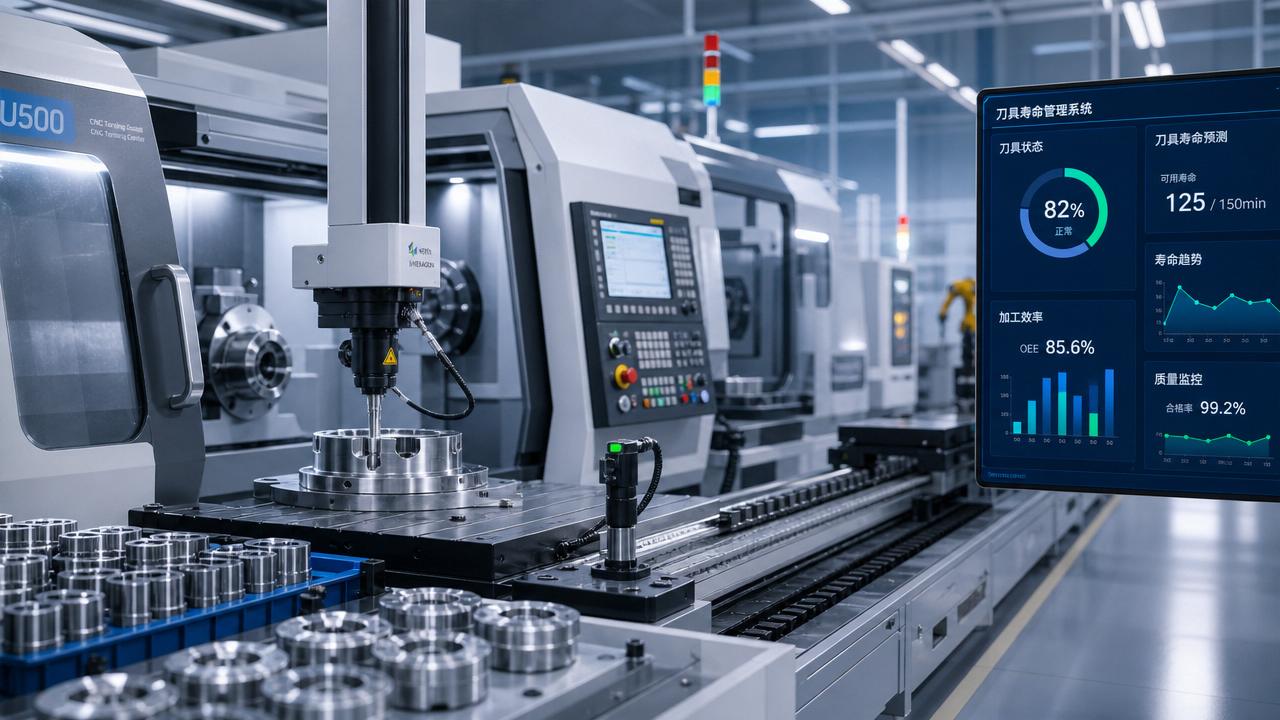
Manufacturing technology is reshaping how cost planning works, forcing finance approvers to look beyond unit price and consider automation, tooling life, compliance, and supply-chain resilience. As production methods evolve, smarter budgeting depends on understanding which technology shifts reduce total cost, protect margins, and support long-term competitiveness across complex industrial operations.
What manufacturing technology means for modern cost planning
For finance approvers, manufacturing technology is no longer just an engineering topic. It is a cost architecture issue that influences capital expenditure, operating efficiency, quality risk, working capital, and the long-term stability of supply. In broad industrial sectors, from hardware and electrical assemblies to mold production and precision tooling, technology choices now shape how companies forecast margins and approve budgets.
In the past, cost planning often centered on labor rates, machine hours, and raw material prices. Today, that approach is too narrow. Smart automation, digital inspection, advanced tooling materials, simulation software, and connected production systems are changing the real cost drivers behind output. A lower purchase price can quickly be offset by shorter tool life, higher scrap, slower changeovers, weak traceability, or non-compliance with customer and regulatory standards.
This is especially relevant to organizations operating across international supply networks. As a platform focused on industrial components and precision manufacturing tools, GHTN observes that many hidden costs emerge deep inside the production chain: fixture wear, mold rework, fastener performance failures in harsh environments, pneumatic instability in automated lines, and the rising burden of electrical compliance. These details matter because finance teams approve the investments that either reduce or amplify those risks.
Why the industry is paying closer attention
The current wave of manufacturing technology adoption is driven by more than a search for efficiency. Manufacturers face demand volatility, pressure for shorter lead times, tighter tolerance requirements, sustainability targets, and customer expectations for traceability. At the same time, skilled labor shortages and geopolitical uncertainty make traditional cost assumptions less reliable.
For finance approvers, this means budgets must account for resilience as well as productivity. A factory that invests in predictive maintenance, robust molds, and digital process control may appear more expensive at first. However, if that investment cuts downtime, prevents rejected batches, and shortens the time needed to switch between product variants, the total financial outcome can be significantly better. Cost planning is moving from static estimation to dynamic capability evaluation.
Another reason for heightened attention is the increasing interdependence between component quality and system performance. In hardware, electrical, and mold-related industries, a small defect can create expensive downstream failures. That is why manufacturing technology now plays a direct role in margin protection. Better process control at the component level supports better profitability at the enterprise level.
The major technology shifts changing cost assumptions
Several manufacturing technology shifts are changing how cost models should be built. Finance teams do not need to master every engineering detail, but they do need to understand how each shift affects cash flow, risk, and total cost of ownership.
1. Automation is shifting cost from labor to system performance
Automation reduces dependence on manual labor, but it increases the importance of uptime, integration quality, sensor reliability, and maintenance planning. The budget question is no longer simply “How many workers can be replaced?” but “How stable is the automated process over time?” Poorly integrated automation can create hidden losses through stoppages, spare parts issues, and extended commissioning periods.
2. Tooling innovation is changing lifecycle economics
Advanced coatings, harder alloys, precision mold design, and optimized cutting geometries often raise upfront tool cost. Yet they can reduce cycle time, improve repeatability, and extend service life. In industries where mold precision and cutting performance determine output quality, tooling decisions should be reviewed as lifecycle investments rather than consumable purchases.
3. Digital monitoring is turning quality into a measurable financial variable
Connected machines, inspection systems, and production analytics allow defects to be identified earlier. This changes the economics of rework, customer returns, and warranty exposure. Manufacturing technology that improves traceability also helps companies defend pricing, pass audits, and meet OEM requirements with less uncertainty.
4. Compliance and sustainability are becoming embedded cost factors
Electrical compliance, environmental standards, energy efficiency, and material traceability are no longer secondary issues. They increasingly affect market access, insurance exposure, and contract eligibility. A cheaper process that fails to satisfy required standards can become the most expensive option in practice.
Industry overview: where finance teams should focus
Across the broader industrial landscape, the financial effect of manufacturing technology varies by application. The table below highlights common areas where cost planning assumptions are changing.
Business value beyond direct production cost
One of the most important changes in manufacturing technology is that value increasingly appears outside the narrow factory cost sheet. Finance approvers should evaluate at least five layers of impact.
First, there is throughput value. A process that runs faster and more consistently improves capacity utilization without necessarily adding floor space. Second, there is quality value. Better process control reduces scrap, sorting, customer complaints, and reputational damage. Third, there is planning value. Connected production data supports more accurate forecasting and inventory management. Fourth, there is resilience value. More robust tooling, alternative process flexibility, and stronger compliance reduce disruption risk. Fifth, there is strategic value. Higher technical capability often opens access to premium customers and higher-margin projects.
This broader view is highly relevant in the GHTN ecosystem, where industrial parts may seem small individually but carry large system consequences. A precision mold, a cutting tool, a connector, or a fastener can influence production continuity, product safety, and aftermarket liability. That is why manufacturing technology should be assessed as a value enabler, not just a spending category.
Typical decision scenarios for finance approvers
Finance leaders often encounter manufacturing technology decisions in repeatable situations. Understanding the scenario helps define the right approval logic.
Practical evaluation principles for better budgeting
To evaluate manufacturing technology effectively, finance approvers should move beyond isolated quotations and request a structured business case. A useful review framework includes the following principles.
Measure total cost of ownership instead of acquisition cost alone. Include maintenance, calibration, training, downtime, spare parts, quality losses, and energy use. Distinguish between fixed savings and conditional savings. A technology may promise labor reduction, but only if demand volume and process stability actually support it. Test assumptions against real production conditions. Theoretical cycle-time improvements are less valuable if setup time or operator dependency remains high.
Finance teams should also ask whether the technology improves decision visibility. Better data can improve pricing discipline, capital allocation, and supplier management. In addition, approval should consider implementation readiness. Even strong manufacturing technology can underperform if the site lacks process discipline, technical support, or compliance documentation.
Finally, compare the cost of action with the cost of inaction. Delaying investment may preserve short-term cash, but it can also increase exposure to scrap, customer churn, unstable lead times, and lost bids. In many industrial categories, being technologically late carries a hidden financial penalty.
Common mistakes in cost planning
A frequent mistake is approving or rejecting manufacturing technology based only on payback speed. Fast payback is attractive, but it should not overshadow strategic importance, compliance necessity, or risk reduction. Another mistake is using average historical cost as the main benchmark when product complexity or customer standards have materially changed.
Some companies also underestimate tooling and process interactions. For example, a lower-cost mold or tool may appear acceptable on paper but create inconsistency that burdens quality teams, interrupts schedules, and damages delivery performance. Likewise, digital systems are sometimes treated as optional overhead when they are actually central to traceability and future customer qualification.
The best approvals come from cross-functional review. Operations, engineering, quality, procurement, and finance should align on what cost outcome is being protected or improved. This is particularly important in complex manufacturing environments where small component-level choices can affect entire production systems.
A practical path forward
For organizations reviewing manufacturing technology investment, the most practical approach is phased but disciplined. Start with the cost areas most vulnerable to hidden losses: tooling life, process variability, maintenance instability, compliance exposure, and traceability gaps. Build a baseline using current scrap, downtime, rework, warranty, and lead-time data. Then compare that baseline against the operational improvement expected from new technology.
Use suppliers and industry intelligence sources that can explain technical changes in commercial terms. In sectors connected to hardware, electrical systems, and mold manufacturing, expert insight is especially valuable because many cost drivers sit below the surface of standard budgeting models. Reliable analysis can help finance approvers distinguish between fashionable upgrades and genuinely margin-protective investments.
Manufacturing technology will continue to evolve, but the approval logic should remain clear: invest where technical change improves total cost, operational resilience, compliance confidence, and long-term competitiveness. Companies that treat cost planning as a strategic interpretation of manufacturing capability—not just a comparison of prices—will be better positioned to protect profit and grow in demanding industrial markets.
Related News