Industrial automation solutions that scale with demand

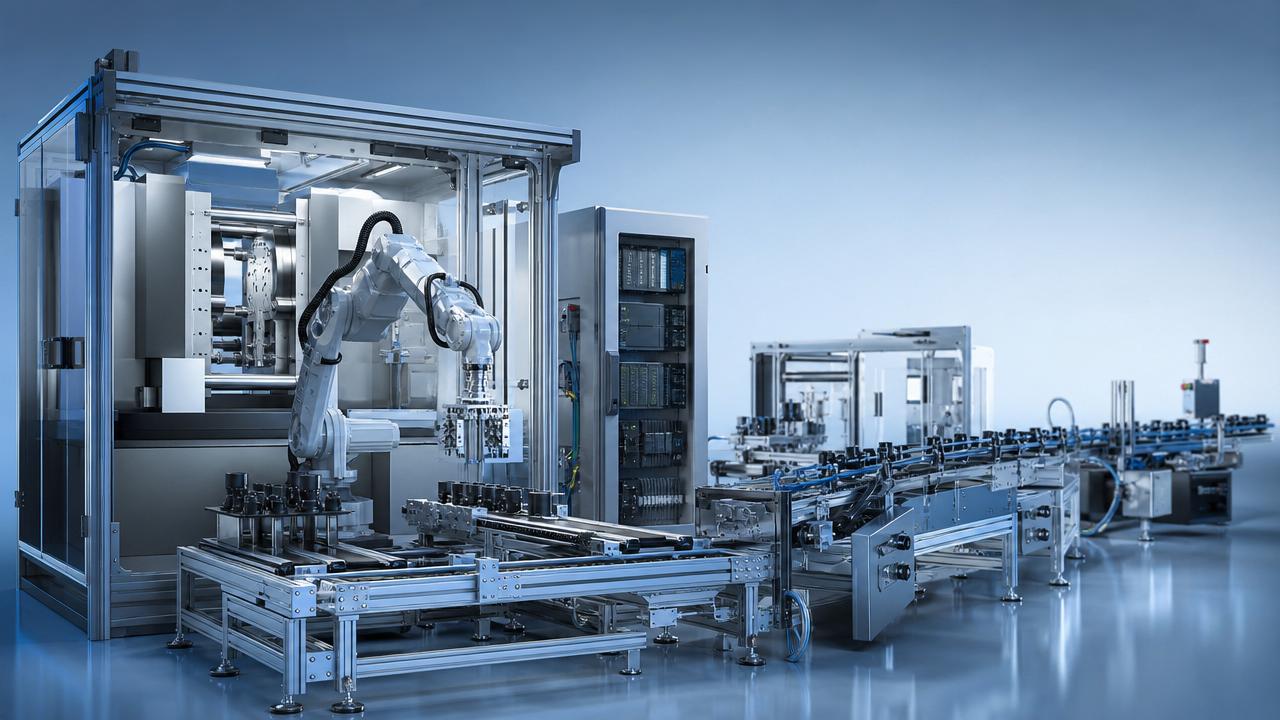
As production volumes shift and market expectations rise, businesses need industrial automation solutions that adapt without disrupting efficiency or quality. From precision tooling to electrical systems and mold-driven manufacturing, scalable automation helps reduce downtime, optimize resources, and support stable growth across complex industrial environments.
What are industrial automation solutions that scale with demand?
Industrial automation solutions combine hardware, software, controls, and data systems to improve production performance. Scalable solutions are designed to expand, reconfigure, or integrate as throughput, product mix, or compliance requirements change.
In practical terms, scalability means adding capacity without rebuilding the whole line. It also means preserving precision, safety, and process visibility during growth.
This matters across comprehensive industries, especially where tooling, electrical assemblies, pneumatic logic, and mold-based output intersect. Flexible architecture supports both stable production and faster response to demand peaks.
At GHTN, this logic aligns with a deeper view of components. A fastener, relay, sensor, die, or pneumatic valve is never isolated. Each part influences system reliability and automation readiness.
Key traits of scalable automation
- Modular machine cells that can be replicated
- Standardized electrical and control interfaces
- Tooling systems that support quick changeovers
- Data visibility for output, quality, and maintenance
- Compliance-ready design for different target markets
Which production environments benefit most from industrial automation solutions?
Industrial automation solutions are especially valuable where output variability is high, tolerances are strict, or downtime is expensive. They fit both discrete manufacturing and hybrid processes.
Tooling-intensive operations benefit from repeatable machine logic and faster setup control. Electrical product assembly gains traceability, test consistency, and reduced manual error.
Mold manufacturing and molded part production also benefit. Automated monitoring can stabilize temperature, pressure, cycle timing, and dimensional repeatability.
Environments with frequent SKU changes need flexible feeders, programmable motion, and adaptable fixtures. These features help maintain productivity even when demand is uneven.
Typical application scenarios
- Precision fastening and component insertion lines
- Electrical cabinet assembly and functional testing
- Injection molding cells with automated part handling
- Pneumatic sorting, pick-and-place, and packaging stations
- Multi-station machining with tool wear monitoring
How do you choose the right industrial automation solutions for future growth?
The best industrial automation solutions are not always the most complex. The right choice depends on process stability, expansion goals, upstream component quality, and digital integration needs.
Start by mapping production constraints. Identify where delays come from, where quality loss starts, and where manual intervention creates hidden cost.
Then evaluate whether bottlenecks are mechanical, electrical, tooling-related, or software-related. This prevents overinvestment in robotics when the real issue is poor fixture accuracy or inconsistent material flow.
A strong selection process also checks compatibility. Sensors, PLCs, drives, power distribution, and safety devices should support phased expansion.
Selection checklist
- Define current throughput, peak demand, and expected variation.
- Review tooling precision and part tolerance consistency.
- Check electrical capacity, control architecture, and safety compliance.
- Assess maintenance capability and spare parts availability.
- Confirm whether modules can be added without full redesign.
Decision table for scalable automation
What is the difference between fixed automation and scalable industrial automation solutions?
Fixed systems are built for stable output and limited variation. They can be efficient, but they often become restrictive when product design, volume, or compliance needs change.
Scalable industrial automation solutions are designed with modularity. They allow new stations, added sensing, updated tooling, or software upgrades without replacing the core system.
The difference is not only technical. It affects total lifecycle cost, response speed, and operational resilience.
In component-driven industries, this distinction is critical. A mold revision, a new fastener specification, or an updated electrical standard can force process changes quickly.
Comparison at a glance
What risks and mistakes should be avoided during implementation?
A common mistake is automating an unstable process. If dimensions vary, fixtures drift, or electrical quality is inconsistent, automation may only accelerate defects.
Another risk is choosing closed systems with poor interoperability. That can limit future upgrades and create expensive dependence on a single source.
Underestimating maintenance is also costly. Bearings, cutting tools, sensors, pneumatic seals, and connectors all affect long-term performance.
Implementation should include pilot validation, operator-safe workflows, spare strategy, and process documentation. Strong automation depends on disciplined engineering fundamentals.
Risk reminder list
- Do not automate poor tooling accuracy.
- Do not ignore cable management and electrical protection.
- Do not treat mold variation as a software problem only.
- Do not scale without data on cycle loss and failure modes.
How do cost, timeline, and return affect industrial automation solutions?
Cost should be measured beyond equipment purchase. Reliable industrial automation solutions influence scrap, labor exposure, energy use, compliance readiness, and uptime stability.
Timeline depends on process complexity, component lead times, validation depth, and integration scope. Tooling revisions and electrical approvals often shape the schedule more than software coding.
Return improves when implementation is phased. A pilot cell can prove quality logic, expose maintenance needs, and build a scalable template for later expansion.
The most durable value comes from systems that align with future product changes. That is where modular automation outperforms one-time optimization.
FAQ summary table
Scalable industrial automation solutions create more than output gains. They connect precision components, electrical integrity, tooling performance, and digital visibility into one growth-ready system.
For industries shaped by fasteners, molds, mechanical tools, and control systems, the smartest path is usually modular, measurable, and standards-aware. That approach lowers disruption while protecting long-term competitiveness.
Use a practical review of bottlenecks, component quality, and expansion scenarios before investing. With the right architecture, industrial automation solutions can scale with demand while supporting precision, resilience, and sustainable industrial progress.
Related News