
Manufacturing Technology Upgrades That Pay Off Slowly

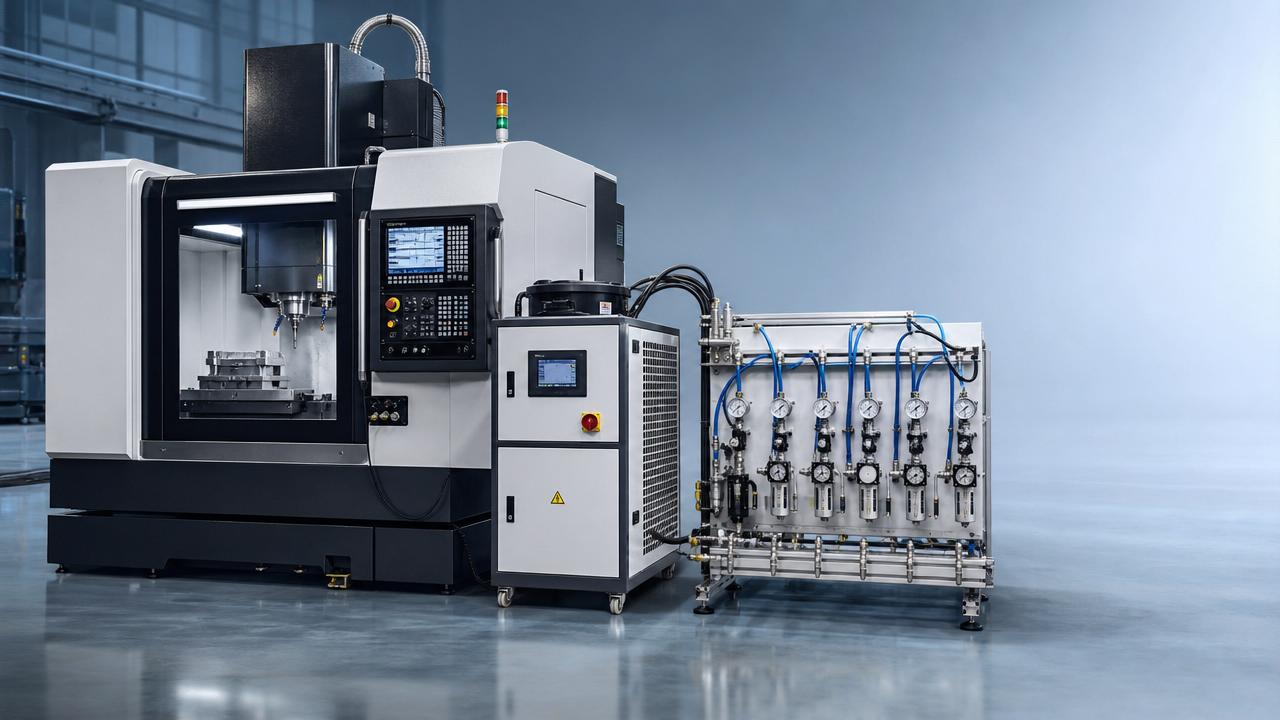
For finance leaders, manufacturing technology rarely delivers instant wins—but the right upgrades can quietly strengthen margins, reduce operational risk, and extend asset performance over time. In capital-intensive industries, the real value often lies not in short-term output spikes, but in lower downtime, better process stability, and stronger long-term competitiveness. This article explores which investments pay off slowly, and why patient capital can still produce measurable returns.
Why slow-payback manufacturing technology still deserves budget approval
Many capital requests in industry are rejected because the return profile looks too gradual. A new spindle monitoring system, upgraded mold cooling control, better pneumatic logic, or higher-grade fastening and tooling standards may not transform quarterly output. Yet these investments often improve the variables that matter most to financial approval: unplanned downtime, scrap drift, maintenance volatility, compliance exposure, and asset life.
For a finance reviewer, the question is not whether manufacturing technology is innovative. The question is whether it reduces total cost of ownership over a realistic time horizon. In hardware, electrical, mold, and precision component environments, small process inefficiencies compound for years. A modest reduction in tool wear, a tighter process window, or better traceability can produce cumulative gains that are easy to miss in an overly short payback model.
- Slow-payback upgrades usually improve reliability before they improve capacity, which means savings first appear in maintenance, scrap, warranty risk, and schedule stability.
- They are especially relevant where production uses expensive molds, tight-tolerance tools, electrical assemblies, or automated pneumatic systems that punish inconsistency.
- They often support future flexibility, making later automation or supplier qualification easier and less expensive.
What finance teams should measure beyond fast ROI
A narrow model based only on labor reduction can undervalue manufacturing technology. Finance teams should also examine downtime frequency, spare parts consumption, process capability, tool change intervals, quality claims, energy use, setup time, and exposure to compliance-related rework. In many plants, these categories create more predictable long-term value than a headline productivity claim.
Which manufacturing technology upgrades usually pay off slowly but reliably?
Not every upgrade fits the same risk-return profile. Some projects drive immediate throughput, while others stabilize the production foundation. The table below highlights common categories of manufacturing technology that often produce gradual but defensible returns in broad industrial operations.
These categories matter because they strengthen the hidden economics of production. A finance team may not see a dramatic jump in monthly output, but it can often observe fewer disruptions, tighter process performance, and better budgeting accuracy. In sectors built on molds, tools, electrical hubs, and industrial components, those gains support stronger margins over several planning cycles.
Why “slow” often means lower-risk
Fast-payback projects frequently rely on optimistic assumptions about throughput, labor redeployment, or market demand. Slow-payback manufacturing technology is different. It often produces returns through controllable engineering outcomes: reduced vibration, lower heat variation, fewer logic errors, better material consistency, or cleaner electrical compliance. Those are less exciting, but they are also easier to defend in a capital committee review.
How to judge these upgrades when budget is tight
When capital is constrained, finance leaders need a disciplined selection framework. The best projects are not always the cheapest, and the most advanced manufacturing technology is not always the best fit. Approval should be based on the operational bottleneck, failure cost, implementation burden, and the plant’s ability to sustain the change.
- Quantify the current pain. Measure downtime hours, scrap rate, tool replacement frequency, mold maintenance intervals, or compressed air losses before discussing any upgrade.
- Separate visible savings from hidden savings. Labor reduction may be small, but warranty avoidance, schedule reliability, and lower requalification cost can be significant.
- Check data readiness. Some manufacturing technology only pays when the site can track alarms, maintenance history, process drift, and material performance consistently.
- Review supplier support depth. Projects tied to tooling, electrical standards, or molds require application knowledge, not just hardware delivery.
- Model sensitivity. Ask what happens if savings arrive 20% slower than planned, or if adoption on one production line is delayed.
A practical approval matrix for finance reviewers
The following comparison table can help evaluate manufacturing technology proposals without overreliance on simple payback alone. It is especially useful for industrial parts, tooling, electrical systems, and mold-related projects where long-term process control matters.
A matrix like this helps financial approvers compare unlike projects on a common basis. It also keeps the discussion grounded in operational economics, not just supplier claims. In practice, the strongest manufacturing technology proposals combine measurable process pain with a manageable implementation path.
Where gradual-return manufacturing technology creates the most value
Mold-intensive production
Mold manufacturing and molding operations reward stability. Upgrades in cooling control, cavity pressure awareness, tool steel selection, and maintenance traceability can reduce wear patterns and dimensional drift. Financially, the value appears through fewer corrective actions, longer mold service intervals, and reduced disruption to qualified production schedules.
Mechanical tools and precision cutting
On machining lines, the wrong view of manufacturing technology focuses only on spindle speed or cycle time. The more durable gains often come from tool path consistency, insert life monitoring, better chip evacuation, and data-backed tool replacement timing. These upgrades limit surprise failures and stabilize dimensional performance, which is valuable when parts feed high-volume assemblies.
Electrical hubs and control-heavy assemblies
Electrical systems carry compliance and traceability implications. Gradual-return investments may include better test logging, terminal torque consistency controls, connector quality upgrades, or process documentation tied to international market requirements. These changes rarely deliver immediate volume expansion, but they can lower field risk and simplify audit readiness.
Pneumatic automation and line logic
Compressed air losses, unstable actuator timing, and inconsistent valve behavior are common silent cost sources. Manufacturing technology that improves pneumatic logic control, leak detection, and maintenance visibility pays back through smoother line balance and lower energy waste. The gains are incremental, which makes them easy to ignore and worthwhile to analyze carefully.
Common mistakes finance teams make when reviewing manufacturing technology
- Treating all technology projects as throughput projects. Many upgrades are really risk-control or asset-preservation projects and should be evaluated that way.
- Ignoring implementation discipline. A good technical concept can underperform if operators, maintenance staff, and purchasing teams do not align on usage, spare parts, and process ownership.
- Using one-year payback as the only approval rule. This can block investments that materially reduce lifecycle cost in mold, tooling, or electrical applications.
- Overlooking compatibility with current materials and components. An upgrade must fit existing fasteners, tooling interfaces, control architecture, and maintenance capabilities.
- Failing to ask what happens if nothing changes. Deferred upgrades also have a cost, especially where process instability damages delivery reliability or customer confidence.
The final point matters. The financial comparison is not only new investment versus zero cost. It is often new investment versus growing instability, rising maintenance uncertainty, and weakening competitiveness. In mature industrial environments, slow erosion is expensive.
What standards, compliance, and supply-chain considerations should be included?
Manufacturing technology decisions should be screened for standards alignment and supply-chain practicality. Even when a project is mainly operational, finance teams benefit from asking whether the change supports recognized quality and process frameworks such as ISO 9001-based quality management practices, equipment safety expectations, electrical compliance pathways, or customer-specific documentation demands.
- Confirm whether the upgrade affects process validation, calibration routines, or traceability requirements.
- Check spare part availability and lead times, especially for imported components or niche tooling systems.
- Review whether maintenance staff can support the new system without dependence on costly emergency service.
- Assess whether the supplier can provide documentation that supports audits, qualification, and buyer review.
These points are where an industry-focused intelligence resource becomes valuable. In sectors that connect mechanical tools, electrical systems, molds, and industrial parts, the best investment decisions come from understanding not only the hardware itself, but also the manufacturing logic behind its use. That is where cross-category insight makes approval decisions more accurate.
FAQ: what finance decision-makers often ask about manufacturing technology
How do I know whether a slow-payback upgrade is still worth funding?
Start with recurring pain that has a clear cost trail: downtime, scrap, unstable tool life, compressed air waste, mold intervention frequency, or qualification delays. If the upgrade targets a chronic source of cost and can be piloted with manageable execution risk, it may deserve approval even if the payback extends beyond a year.
Which manufacturing technology projects are easiest to defend to a capital committee?
Projects tied to measurable failure prevention are usually easier to defend than broad digital transformation claims. Examples include machine condition monitoring, mold temperature control, tool life management, pneumatic leak reduction, and traceability improvements for electrical assemblies. They connect directly to cost containment and operational reliability.
What procurement factors should be checked before approval?
Review compatibility with current assets, supplier documentation quality, spare parts strategy, integration effort, operator training needs, and service response expectations. A technically sound solution can still become a weak investment if support, lead time, or documentation are poor.
Are lower-cost alternatives sometimes the better choice?
Yes. In some cases, better maintenance discipline, improved tooling standards, air leak audits, or process parameter control can capture a portion of the benefit before a full capital upgrade. The right sequence may be to fix basic process control first, then invest in more advanced manufacturing technology where the residual loss remains significant.
Why GHTN is a practical partner for evaluating long-horizon manufacturing technology
Finance leaders do not need more generic innovation language. They need grounded analysis that connects industrial components, tools, molds, electrical systems, and production logic to real commercial outcomes. GHTN focuses on the granular core of industry, where seemingly small technical choices in fasteners, tooling performance, pneumatic control, and mold iteration can change long-term cost structure.
Because GHTN tracks technological trends and trade insight across mechanical tools, electrical hubs, and mold manufacturing, it is well positioned to support decisions that sit between engineering detail and capital discipline. That matters when an approver needs to compare materials, process routes, sourcing options, compliance considerations, and implementation timing rather than just read a product sheet.
- Parameter confirmation for tooling, components, and process-related upgrades
- Selection guidance across mechanical, electrical, pneumatic, and mold-related applications
- Lead-time and supply-chain discussion for industrial parts and precision manufacturing tools
- Support on certification pathways, documentation expectations, and market-entry considerations
- Custom solution review for OEMs and distributors balancing budget, reliability, and long-term competitiveness
If your next manufacturing technology proposal is hard to justify because the return is gradual rather than dramatic, a better decision framework can help. Contact GHTN to discuss parameter checks, product and process selection, delivery timing, custom solution options, certification requirements, sample support, and quotation planning. For finance-driven industrial purchasing, the right detail often makes the difference between a risky expense and a durable investment.
Related News
- industrial components
- precision manufacturing tools
- mechanical tools
- mold manufacturing
- fasteners
- electrical systems
- manufacturing technology
- industrial parts
- electrical hubs
- die-casting
- electrical standards
- electrical compliance
- technological trends
- manufacturing tools
- cutting tools
- manufacturing logic