
Where industrial innovation is changing factory payback cycles

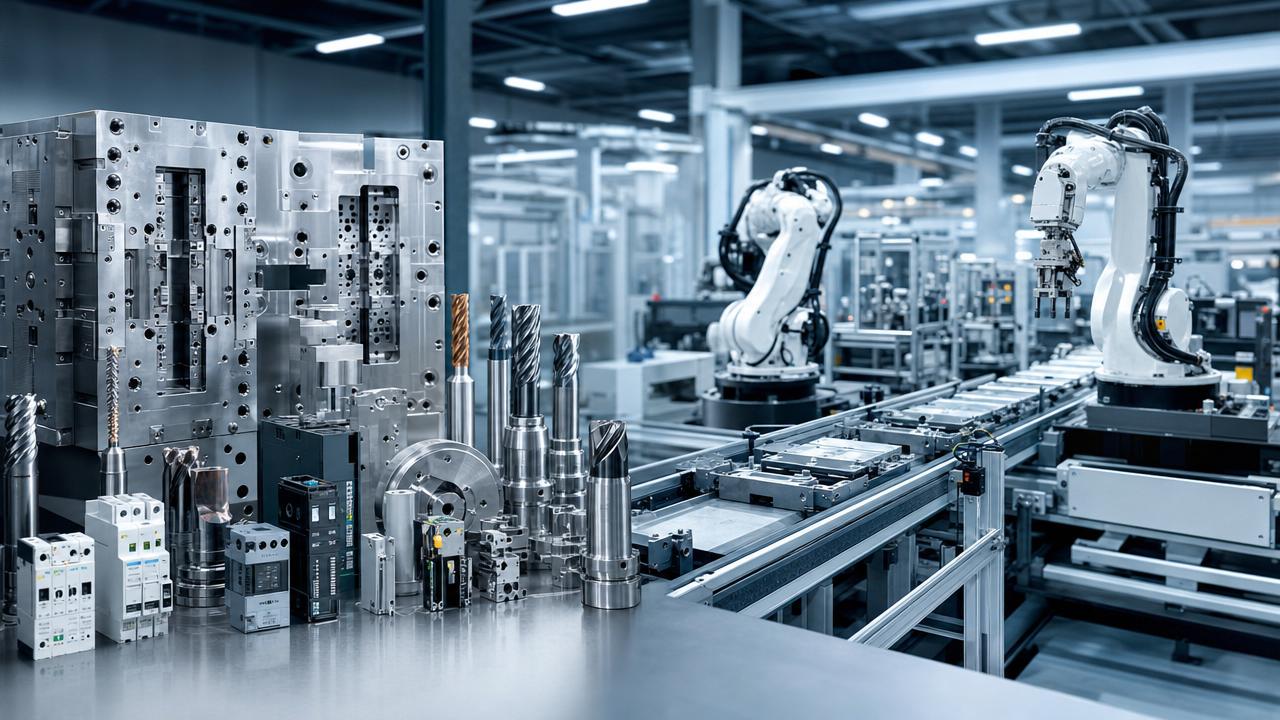
Industrial innovation is reshaping how factories calculate value, shortening payback cycles through smarter tooling, precision components, and data-driven production upgrades. For business decision-makers, the real question is not whether to modernize, but where investments in hardware, electrical systems, and mold technologies can deliver the fastest and most sustainable returns in an increasingly competitive global manufacturing landscape.
What does industrial innovation really mean for factory payback cycles?
For executives, plant managers, and sourcing leaders, industrial innovation should not be viewed as a vague promise of modernization. In practical terms, it means introducing better components, more efficient tools, smarter electrical systems, and higher-precision mold processes that reduce the time required to recover capital investment. A payback cycle shortens when a factory spends less to produce each unit, loses less time to downtime, improves quality, and responds faster to customer demand.
This is why industrial innovation is gaining attention across the broader manufacturing ecosystem. Rising labor costs, tighter compliance requirements, supply chain volatility, and pressure to decarbonize all force factories to justify spending with measurable return. Decision-makers are no longer impressed by technology alone. They want to know whether a new tooling strategy increases throughput, whether upgraded fasteners or pneumatic controls reduce maintenance events, and whether a redesigned mold can cut scrap enough to pay back in months rather than years.
At the component level, even small improvements can produce large economic effects. A more durable cutting tool may extend service intervals. A better electrical hub may reduce line instability. A mold with tighter dimensional consistency may lower rework and improve cycle time. These are not isolated technical gains; they are direct drivers of capital efficiency.
Why are precision tools, electrical systems, and molds often the fastest-return areas for industrial innovation?
Not every upgrade generates the same speed of return. For many factories, the fastest payback comes from foundational industrial elements rather than headline-grabbing automation projects. Precision tools, electrical systems, and mold technologies sit close to the production heartbeat. Because they affect uptime, quality, speed, and material utilization every day, they tend to create measurable value quickly.
In tooling, industrial innovation often improves cutting efficiency, process stability, and operator consistency. Better tool geometry, advanced coatings, and stronger material compatibility can reduce changeover frequency and support higher throughput. In a high-mix environment, this can have an immediate impact on output without requiring a complete line redesign.
In electrical systems, the return often comes from reliability and control. Smarter distribution, more robust connectors, compliance-ready components, and improved logic integration can reduce micro-stoppages that quietly erode profitability. Many factories underestimate the hidden cost of unstable power flow, intermittent faults, and non-standard control architecture until a targeted upgrade exposes the savings.
In mold manufacturing, the economics can be even more visible. Industrial innovation in injection molds and die-casting tools can improve fill balance, cooling efficiency, dimensional repeatability, and tool life. When that happens, factories can lower scrap, shorten cycle times, and improve part uniformity across large volumes. For OEM suppliers, those gains directly influence margin, customer retention, and quote competitiveness.
How can decision-makers tell which industrial innovation investment will pay back first?
A common mistake is to start with the newest technology instead of the biggest operational bottleneck. The better approach is to trace value loss inside the production system. Ask where defects occur, where downtime concentrates, where energy waste is highest, and where delivery delays begin. Industrial innovation pays back fastest when it attacks a constraint that already has measurable cost.
Leaders should compare projects using a structured screen: impact on throughput, effect on scrap, maintenance burden, compliance risk, operator adoption, and implementation complexity. A modest component upgrade with low disruption can outperform a larger automation investment if it removes a daily source of instability. In this sense, decision quality depends less on innovation scale and more on operational fit.
It is also useful to separate direct payback from strategic payback. Direct payback comes from immediate productivity gains. Strategic payback includes better market access, stronger quality reputation, easier certification, and future scalability. The strongest industrial innovation programs usually balance both. They solve current inefficiencies while building a platform for more advanced manufacturing later.
Quick decision table: where should a factory look first?
Which factories and business models benefit most from industrial innovation?
Industrial innovation is relevant across sectors, but the strongest short-term gains usually appear in operations with one or more of the following characteristics: high-volume output, tight tolerances, expensive downtime, recurring changeovers, or demanding customer standards. That includes OEM suppliers, component manufacturers, mold producers, contract manufacturers, and distributors supporting technically sensitive end users.
Factories with aging equipment often benefit because innovation does not always require a full replacement strategy. In many cases, upgrading the “granular core” of production—fasteners, cutting tools, connectors, pneumatic elements, control interfaces, or mold inserts—delivers practical gains while preserving existing capital assets. This is especially important for small and mid-sized manufacturers that need to improve margins without carrying the financial risk of full-scale transformation.
Distributors and sourcing platforms also benefit. As buyers become more ROI-driven, they increasingly seek suppliers who can explain not just specifications, but production impact. A network such as GHTN creates value here by linking technical trend analysis with trade insight, helping enterprises identify which industrial innovation pathways align with material performance, compliance needs, and commercial opportunity.
What are the most common mistakes companies make when evaluating industrial innovation?
One major error is evaluating payback only through purchase price. A cheaper tool, connector, or mold solution may create more hidden cost through shorter life, unstable performance, or greater maintenance demand. Industrial innovation should be assessed through total cost of ownership, including downtime exposure, labor effect, scrap, energy use, and quality consequences.
A second mistake is overestimating technology while underestimating process discipline. Even high-value industrial innovation can disappoint if operators are not trained, process parameters are not updated, or data collection remains weak. Return depends on implementation quality. Decision-makers should verify whether the factory has the engineering readiness to absorb the change.
A third mistake is ignoring standards and compatibility. Electrical upgrades must align with regional compliance expectations. Mold changes must match material behavior and downstream assembly requirements. Pneumatic and mechanical components must fit line conditions, not just catalog ratings. Innovation that looks strong on paper can become costly if it introduces integration friction.
Finally, some firms pursue industrial innovation as a one-time project instead of a continuous capability. The most resilient manufacturers build feedback loops between procurement, engineering, maintenance, and commercial teams. That structure helps them identify where small technical upgrades can create repeated commercial advantage.
FAQ summary: what should leaders check before approving investment?
How should companies build a practical industrial innovation roadmap instead of chasing trends?
A practical roadmap begins with production evidence, not vendor messaging. Start by ranking loss sources across tools, electrical infrastructure, molds, and control systems. Then identify which issues are persistent, measurable, and technically solvable. This creates a prioritized list of industrial innovation opportunities tied to business outcomes.
Next, segment opportunities into three layers. The first layer includes quick wins such as higher-performance fasteners, tool upgrades, connector improvements, or pneumatic adjustments. The second layer covers process refinement, including mold optimization, logic control changes, and maintenance redesign. The third layer includes broader digital and automation investments once the production base becomes more stable. This sequence matters because advanced systems generate better return when the underlying industrial components are already reliable.
Companies should also use external expertise wisely. Platforms with domain-specific industrial knowledge can help compare suppliers, understand international standards, track technology trends, and reduce sourcing blind spots. For organizations operating globally, this is critical. The right industrial innovation decision often depends on matching technical detail with regional market requirements and long-term sourcing resilience.
In that context, the role of GHTN is especially relevant. By connecting expertise in mechanical tools, electrical systems, and mold design with trade insight, it helps decision-makers evaluate innovation at the level where factory economics are actually shaped: the precision part, the control point, the wear surface, the compliance threshold, and the process interface.
What should decision-makers ask first if they want faster payback from industrial innovation?
The first question is simple: where is value currently leaking out of the factory? Once that is visible, the next questions become more useful. Which components fail under real operating conditions? Which tooling decisions drive quality variation? Which electrical or pneumatic systems create recurring interruptions? Which molds limit output or inflate scrap? Which standards could block customer expansion if ignored?
From there, leaders can evaluate timing, budget, and implementation path with much more confidence. Industrial innovation works best when it is treated as a disciplined investment system rather than a general modernization slogan. Faster payback usually comes from precision, not scale—from correcting the right bottleneck with the right technical upgrade at the right moment.
If you need to confirm a specific direction, parameters, upgrade sequence, lead time, quotation basis, or cooperation model, it is best to begin by discussing production pain points, compliance targets, material conditions, expected output gains, maintenance constraints, and supplier support capabilities. Those questions will reveal whether an industrial innovation initiative is merely interesting or genuinely ready to shorten factory payback cycles.
Related News