Industrial solutions that fix recurring line bottlenecks

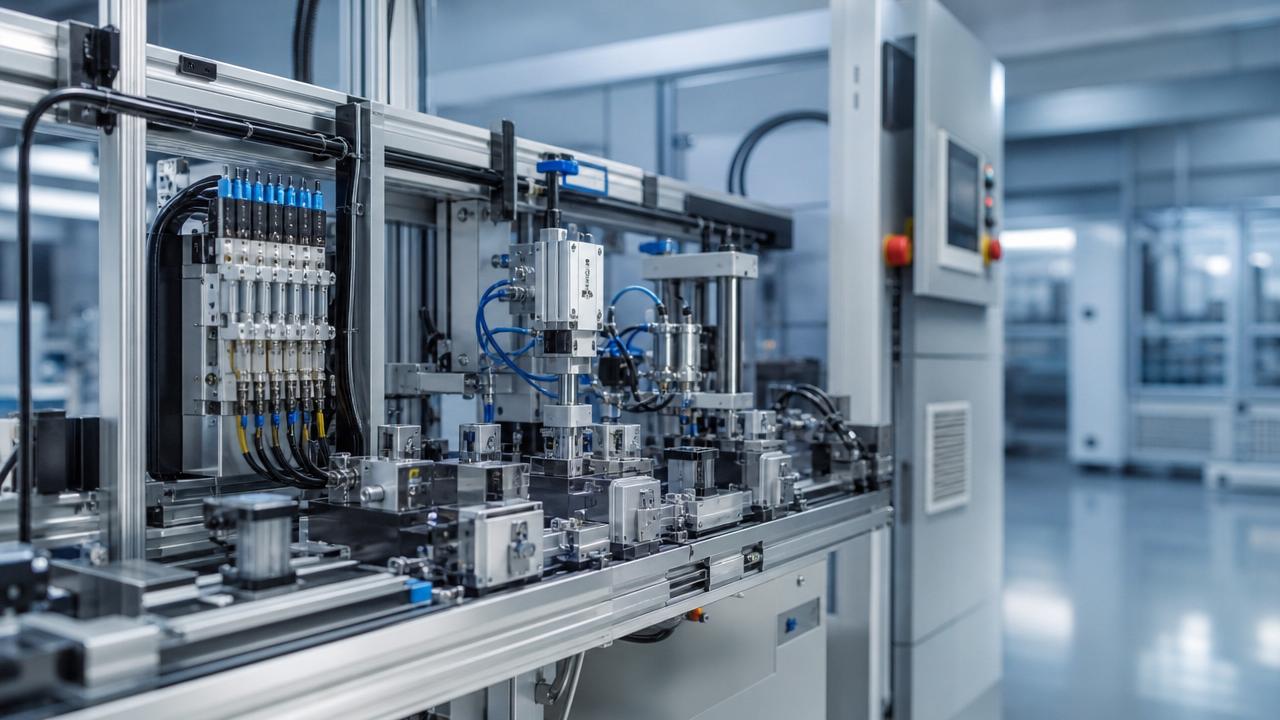
Recurring line bottlenecks drain uptime, raise maintenance pressure, and disrupt output targets. For after-sales maintenance teams, the right industrial solutions can turn repeated stoppages into predictable, controllable events. This article explores how data-backed diagnostics, precision components, and practical tooling strategies help identify root causes faster, reduce unplanned downtime, and keep complex production lines running with greater stability and efficiency.
Understanding industrial solutions in the context of recurring bottlenecks
In broad manufacturing environments, industrial solutions are not limited to a single machine upgrade or a replacement part. They refer to coordinated methods, components, diagnostic tools, control logic improvements, and maintenance practices used to remove repeated constraints from production flow. For after-sales maintenance personnel, this definition matters because bottlenecks are rarely caused by one obvious fault. More often, they emerge from the interaction of wear, timing drift, poor part matching, unstable air or power supply, inconsistent tooling, or insufficient feedback from sensors and controls.
A line bottleneck becomes “recurring” when the same station, subsystem, or process repeatedly slows output, triggers alarms, creates quality deviations, or causes restart delays. In such cases, industrial solutions must go beyond reactive repair. They should help teams determine whether the restriction comes from mechanics, electrics, pneumatics, molds, fixtures, fasteners, or software logic. This is where a technical resource perspective, such as the one promoted by GHTN, becomes valuable: production reliability depends on seemingly small industrial parts that serve as the granular core of larger systems.
For maintenance teams working across mixed equipment fleets, effective industrial solutions combine three principles: measurable evidence, precise component selection, and repeatable intervention methods. These principles reduce guesswork and create maintenance actions that are easier to standardize across shifts, sites, and suppliers.
Why the industry pays close attention to repeated line constraints
Manufacturing lines today are expected to deliver stable throughput under tighter tolerances, shorter changeover windows, and more complex product variation. This raises the importance of industrial solutions that address not only failure events but also chronic instability. A machine that never fully stops can still be the biggest hidden cost if its cycle time fluctuates, if operators must constantly intervene, or if downstream stations starve or block.
In mechanical tooling, a minor decline in cutting efficiency can push a station below takt time. In electrical systems, weak contact integrity, poor grounding, or noncompliant component substitution can create intermittent faults that are difficult to replicate. In mold-based production, micron-level wear, thermal imbalance, or ejection inconsistency can slow cycles and increase defect handling. These examples show why industrial solutions must be multidisciplinary. They are not just about fixing what breaks; they are about preserving process balance.
This is especially relevant for after-sales maintenance staff who often enter the problem after a line has already experienced repeated disruption. Their credibility depends on how quickly they can isolate the dominant cause, communicate practical options, and implement corrective actions without creating new incompatibility risks.
A practical overview of common bottleneck sources
Recurring bottlenecks usually cluster around a limited set of causes. The table below gives a structured view that maintenance teams can use when evaluating industrial solutions for mixed industrial environments.
Where industrial solutions create the most value for after-sales maintenance teams
For after-sales teams, the value of industrial solutions is strongest when they shorten diagnosis time and prevent repeat visits. Every recurring bottleneck carries direct and indirect costs: downtime, emergency parts, operator frustration, quality sorting, overtime, and damaged trust between service provider and plant. A better solution framework helps maintenance personnel move from “fix and leave” to “stabilize and document.”
One major benefit is root-cause clarity. If a line stalls at the same point every few hours, replacing a failed item may restore operation briefly, but it does not explain why the failure repeats. Industrial solutions that use trend analysis, event logs, thermal checks, vibration feedback, and wear inspection can reveal the upstream trigger. In many cases, the visible fault is only a symptom of an underlying mismatch between component specification and process demand.
Another benefit is parts precision. GHTN’s focus on underlying industrial components is highly relevant here. A standard part that is technically interchangeable on paper may still perform poorly if it cannot tolerate the line’s heat, contamination, vibration, duty cycle, or electrical load. Precision in selection matters for pneumatic valves, cutting tools, connectors, mold inserts, fastening systems, and many other categories that maintenance teams handle in the field.
A third benefit is cross-functional communication. Reliable industrial solutions make it easier to align maintenance, production, engineering, and procurement around evidence. When a service report includes measured causes, compatible replacement logic, and expected impact on throughput, decision-making becomes faster and less subjective.
Key application categories that help fix repeated stoppages
Not every bottleneck needs a major redesign. Many of the most effective industrial solutions are targeted interventions in high-impact areas. The following categories are especially relevant in comprehensive industrial settings.
These categories work best when treated as part of a system. For example, replacing a valve may improve actuation speed, but if air quality remains poor or sensor feedback is delayed, the bottleneck can return under a different symptom. High-quality industrial solutions therefore connect parts performance, process conditions, and maintenance routines rather than treating them separately.
How to assess bottlenecks with a structured maintenance mindset
A useful way to evaluate recurring restrictions is to divide them into flow, force, signal, and tolerance issues. Flow issues include product transfer delays, feeder inconsistency, cooling imbalance, and restricted air supply. Force issues include weak clamping, unstable torque, degraded cutting pressure, or actuator fatigue. Signal issues include noisy feedback, mistimed interlocks, or intermittent electrical contact. Tolerance issues include fixture drift, mold wear, alignment loss, and dimensional variation that causes jams or rejects.
This framework helps after-sales personnel choose industrial solutions more accurately. If the bottleneck is primarily a signal issue, replacing mechanical assemblies may waste time and budget. If it is a tolerance issue, repeated software resets will not restore stable throughput. The point is not to create rigid categories, but to reduce random troubleshooting and support a disciplined service process.
It is also important to compare apparent bottlenecks with actual bottlenecks. The noisiest station is not always the true line constraint. A downstream accumulation point, a slow recovery after microstops, or a quality hold loop may be the real throughput limiter. Good industrial solutions are therefore based on whole-line observation, not only on the station with the most visible alarms.
Practical recommendations when selecting industrial solutions
First, prioritize evidence over assumptions. Record stoppage frequency, mean recovery time, affected SKU, environmental conditions, and component age. Even simple trend logs can expose whether the issue is load-related, shift-related, or temperature-related.
Second, review component suitability at the application level. A fastener, pneumatic unit, sensor, cable, or mold insert should be evaluated by real duty cycle, contamination exposure, thermal load, and compliance needs. This is where specialized industrial intelligence is essential, because nominal specifications alone may not reflect plant reality.
Third, standardize the fix after validation. Once a solution proves effective, convert it into a repeatable package: approved part numbers, installation torque or clearance settings, inspection intervals, and fault signatures. This reduces dependence on individual memory and improves service consistency.
Fourth, pay attention to compatibility across the industrial chain. GHTN’s perspective on hardware, electrical systems, and mold processes highlights a key truth: one correction can influence multiple subsystems. A new connector may improve reliability but require updated routing. A harder tool grade may extend life but change heat behavior. The best industrial solutions account for these interactions early.
Common mistakes that keep bottlenecks coming back
One common mistake is confusing symptom removal with bottleneck elimination. Resetting drives, cleaning sensors, or tightening loose hardware may get a line moving, but recurring stoppages usually return unless the root condition is addressed. Another mistake is using generic replacement parts without checking operating stress, compliance standards, or fit with surrounding components.
A further issue is poor knowledge capture. When service teams solve a repeated problem but fail to document the evidence, settings, and validated parts, the plant remains vulnerable to the same bottleneck during future shifts or at other sites. Industrial solutions become more valuable when they are converted into usable maintenance knowledge rather than isolated repairs.
Moving from repeated firefighting to controlled line stability
Recurring bottlenecks are rarely solved by speed alone. They are solved by accurate diagnosis, component-level discipline, and a broader understanding of how industrial parts shape system behavior. For after-sales maintenance teams, strong industrial solutions create a practical path from reactive service to predictable performance. They help identify the real constraint, match precision components to actual operating conditions, and build maintenance standards that hold under production pressure.
As lines become more automated and tolerance demands rise, the importance of underlying hardware, electrical integrity, pneumatic control, and mold precision will only increase. Organizations that want better uptime should treat industrial solutions as an integrated reliability strategy, not a collection of emergency fixes. With the right technical insight, even recurring line bottlenecks can be turned into manageable, measurable improvement opportunities.
Related News