
Manufacturing technology choices that raise output quality

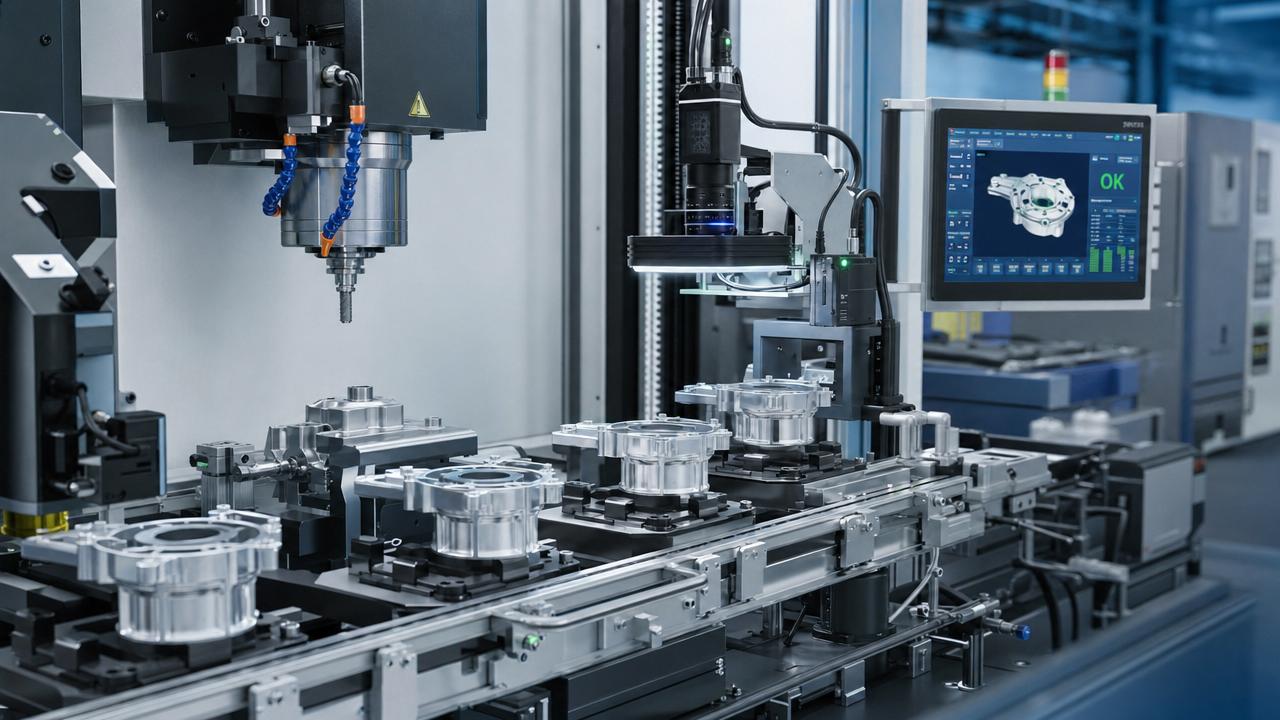
For quality control and safety leaders, the right manufacturing technology is more than a production upgrade—it is a direct path to higher consistency, lower risk, and stronger compliance. From precision tooling to automated inspection, smart technology choices can reduce defects, stabilize processes, and improve output quality across complex industrial environments.
Why manufacturing technology decisions are changing faster now
A clear shift is taking place across industrial production: manufacturers are no longer choosing equipment and process upgrades based only on speed or unit cost. The discussion has moved toward repeatability, traceability, workforce safety, and the ability to keep output quality stable under variable demand. For quality control teams and safety managers, this change matters because manufacturing technology now shapes not only how products are made, but also how reliably risk can be identified, controlled, and documented.
Several signals explain this transition. Product tolerance expectations are tightening. Customers want fewer defects, more process visibility, and better supplier accountability. At the same time, labor shortages and operator turnover are making manual consistency harder to maintain. Regulatory pressure is also expanding in many sectors, especially where electrical safety, tooling precision, machine guarding, and process validation affect downstream performance. In this environment, manufacturing technology is increasingly selected for its impact on quality assurance and safe operations rather than for output volume alone.
This is especially relevant for a cross-industry industrial ecosystem such as hardware, electrical components, mold manufacturing, and precision tooling. In these segments, a small process deviation can create assembly failure, reduced durability, electrical nonconformity, or repeated downtime in customer applications. As a result, technology choices are becoming strategic decisions tied to brand trust, compliance readiness, and long-term competitiveness.
The strongest trend signals behind higher-quality production
The most important trend is the move from reactive quality control to built-in quality prevention. Traditional inspection-heavy systems often catch defects after value has already been added. Newer manufacturing technology aims to reduce variation before defects occur. This includes better machine control, in-process sensing, adaptive tooling, digital parameter tracking, and automated inspection linked directly to production data.
Another major signal is the growing connection between quality and safety. Poor process control can increase rework, manual intervention, and unplanned machine access, all of which raise exposure to safety incidents. When manufacturing technology supports stable cycle behavior, clear alarms, and predictable maintenance windows, it improves both product conformity and workplace protection. Quality and safety are no longer separate conversations; they increasingly share the same process data and the same decision points.
A third trend is the rising value of precision at the component level. In fasteners, molds, pneumatic assemblies, cutting tools, and electrical interfaces, the market is rewarding suppliers that can hold tighter tolerances while proving consistency across batches. This is pushing companies toward manufacturing technology that supports micron-level repeatability, better material handling, and stronger verification systems.
A practical view of the technology shifts affecting output quality
Not every upgrade has equal influence. For quality-driven operations, the most valuable manufacturing technology choices usually improve one or more of the following: process stability, defect detection speed, root-cause visibility, operator dependence reduction, and compliance documentation. The table below shows how current technology choices are changing quality expectations.
What is driving these manufacturing technology choices
The shift is not caused by a single innovation. It is the result of converging pressures across the factory and the market. First, customer expectations have moved upward. Buyers increasingly expect suppliers to show process capability, not just deliver parts that passed final inspection. That means quality performance must be supported by robust manufacturing technology, documented controls, and reliable evidence.
Second, hidden costs are receiving more attention. Scrap and rework are easy to measure, but many organizations now see the broader cost of instability: machine stoppages, expedited shipments, repeated customer complaints, line-side sorting, and higher injury exposure during corrective action. Investing in better manufacturing technology often becomes justified when these indirect losses are included.
Third, process complexity is increasing. Multi-material assemblies, tighter tolerances, and more demanding electrical or mechanical performance requirements leave less room for trial-and-error production. In mold production, for example, tiny deviations in machining or cooling design can affect cycle stability and downstream part quality. In fastener production, material consistency and surface treatment control can directly influence fatigue performance and corrosion resistance. These realities reward factories that choose technology based on control depth rather than surface-level automation claims.
Finally, quality and safety governance are becoming more data-driven. It is no longer enough to say a process is under control; teams are expected to prove it. Manufacturing technology that captures usable, time-stamped, process-linked data gives quality and safety leaders a stronger foundation for audits, investigations, corrective actions, and supplier communication.
Where the impact is strongest for quality control and safety teams
For quality control personnel, the biggest benefit of upgraded manufacturing technology is earlier visibility into variation. Instead of discovering a problem after a batch is complete, teams can identify trend changes while the process is still running. That changes the role of quality from gatekeeper to active process partner. It also improves root-cause accuracy because data is tied to actual machine conditions, tooling status, and production timing.
For safety managers, the strongest impact appears in reduced manual exposure. Stable and well-monitored processes require fewer emergency adjustments, fewer rushed interventions, and fewer repeated checks in hazard zones. Automated inspection can reduce direct handling. Predictive maintenance signals can lower the frequency of sudden equipment failures. Better interlocks and digital alerts also help teams separate normal variation from conditions that create immediate operational risk.
The effect is also significant for procurement and supplier development teams. When suppliers adopt stronger manufacturing technology, buyers gain more confidence in lot consistency, traceability, and specification compliance. That matters in sectors where a low-cost component failure can trigger expensive field problems or product liability concerns. Technology maturity is therefore becoming an increasingly useful supplier evaluation criterion.
How to judge whether a technology upgrade will truly raise output quality
A common mistake is to assume that more automation automatically means better quality. In reality, some investments increase speed without reducing variation. Others create more data but little actionable insight. Quality and safety leaders should evaluate manufacturing technology through a disciplined lens: what source of variation does it control, how quickly does it reveal abnormalities, and how clearly does it support standard response actions?
The most useful evaluation questions include whether the technology improves repeatability at the critical process step, whether it reduces dependence on individual skill, whether it strengthens traceability, and whether it lowers the need for manual rework or reinspection. If the answer is unclear, the upgrade may not deliver the quality outcome being promised.
Signals worth monitoring over the next phase
Looking ahead, several developments deserve close attention. One is the deeper integration of sensing, machine control, and inspection data. As systems become more connected, quality decisions can shift from isolated checkpoints to closed-loop correction. Another signal is the wider use of predictive maintenance as a quality tool, not just a reliability tool. Tool wear, vibration change, and thermal instability often appear before defects become visible, making maintenance intelligence a practical part of output quality strategy.
A second signal is the rising importance of compliance-ready manufacturing technology. Companies serving international customers are under growing pressure to demonstrate consistent control, documented procedures, and safer machine interaction. Technologies that simplify validation, record retention, and change management will likely gain more value than systems focused only on cycle time.
A third signal is the continued move toward precision-enabled competitiveness. In tooling, mold work, and industrial components, suppliers that can combine fine process control with strong documentation are better positioned to win higher-value business. This aligns closely with the mission of industrial knowledge networks such as GHTN, where component-level understanding, material behavior insight, and process discipline shape market access and long-term trust.
What companies should do now
The best response is not to chase every new manufacturing technology trend at once. Instead, organizations should map technology decisions to their most costly quality and safety risks. Start with processes where variation causes customer complaints, repeated downtime, heavy inspection effort, or elevated manual exposure. Then identify whether the true constraint is tooling precision, process feedback, inspection timing, data visibility, or workforce standardization.
It is also wise to involve both quality control and safety leadership early in capital planning. Too many projects are approved based on productivity claims, only for quality and compliance gaps to be discovered later. Cross-functional review leads to better specifications, better acceptance criteria, and more realistic expectations from equipment suppliers and integrators.
Training should be treated as part of the technology decision, not as a separate afterthought. Even advanced manufacturing technology can fail to improve output quality if alarm logic, measurement meaning, or response procedures are poorly understood. Strong implementation includes clear escalation rules, maintenance ownership, and documented links between process data and quality release decisions.
Final judgment for decision-makers
The direction of travel is clear: manufacturing technology is becoming a quality and risk management tool before it is simply a production tool. The companies that benefit most will be those that evaluate technology through the lens of variation control, traceability, safe execution, and long-term process discipline. For quality control and safety leaders, the central question is not whether to modernize, but which upgrades directly improve control where defects and hazards actually begin.
If a business wants to judge the impact of manufacturing technology on its own operations, it should confirm a few practical points: where process drift is currently hardest to detect, which steps rely too heavily on operator judgment, where rework creates safety exposure, and what evidence customers or auditors increasingly expect. The answers to those questions will reveal which technology choices are most likely to raise output quality in a measurable, sustainable way.
Related News