
Why greening industrial components now affects bids

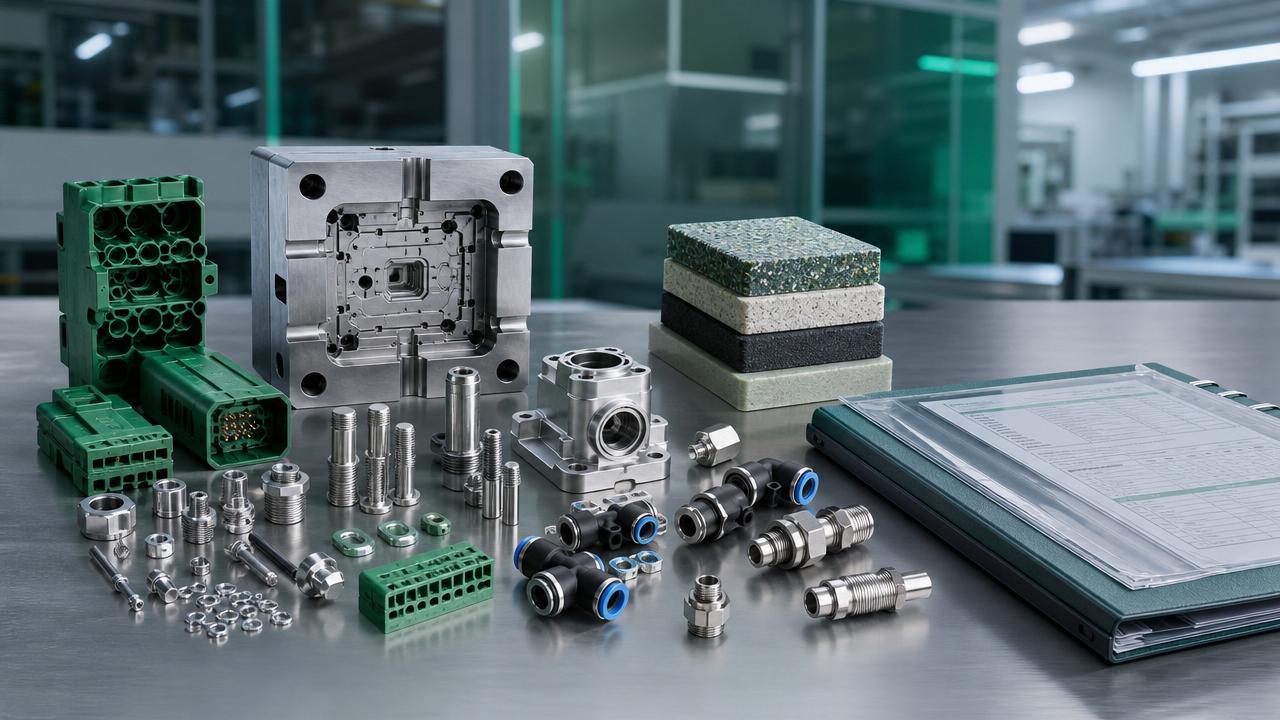
Why are more bid teams treating greening industrial components as a commercial requirement rather than a branding choice? For business evaluators, sustainability now influences supplier qualification, compliance scoring, lifecycle cost, and risk control. As global procurement standards tighten, understanding how greener components affect bids can help manufacturers and distributors strengthen competitiveness and win higher-value opportunities.
Why does greening industrial components now influence bid outcomes?
In many industrial tenders, greening industrial components is no longer treated as a soft value statement. It increasingly affects prequalification, technical evaluation, total cost assessment, and even post-award audit exposure.
Business evaluators are under pressure from multiple sides. End users want stable supply, procurement teams want defensible scoring, compliance teams want traceable documentation, and finance teams want fewer hidden lifecycle costs.
This shift is especially visible in hardware, electrical, fastener, mold, and tooling supply chains. Components that once competed mainly on price and mechanical performance are now judged on material transparency, energy footprint, recyclability, and compliance readiness.
- Bid documents increasingly ask for environmental declarations, restricted substance statements, or evidence of process control.
- OEMs want assurance that upstream parts will not create downstream certification or customer claim risks.
- Large buyers compare not only unit price, but also scrap rates, maintenance frequency, transport efficiency, and expected replacement cycles.
For evaluators, the question is not whether sustainability matters. The real question is how to convert greening industrial components into measurable bid advantages without losing cost discipline.
What does greening industrial components mean in practical procurement terms?
In industrial sourcing, “green” should not be reduced to vague marketing claims. Evaluators need a practical definition tied to component design, manufacturing process, compliance evidence, use-phase efficiency, and end-of-life considerations.
The working definition many bid teams use
Greening industrial components usually means improving environmental performance while keeping required function, safety, durability, and manufacturability intact. A greener fastener, connector, mold insert, or pneumatic fitting must still perform under its intended load, temperature, and cycle conditions.
- Lower-impact materials, including recycled content where technically appropriate.
- Cleaner finishing or coating routes with better substance control.
- Longer service life that reduces replacement frequency and waste.
- Design optimization that reduces mass, scrap, or energy use in production and operation.
- Better traceability for declarations, test records, and supplier process data.
This is where a technical intelligence platform such as GHTN becomes useful. In underlying industrial components, green decisions cannot be separated from material behavior, machining tolerances, coating compatibility, electrical compliance pathways, and mold process realities.
Which bid evaluation criteria are most affected?
When procurement teams review suppliers for hardware, electrical, and tooling categories, greening industrial components often influences more than one scoring section. It can affect technical merit, commercial risk, operational fit, and future compliance exposure at the same time.
The table below summarizes how business evaluators commonly connect greener component strategies with bid decision criteria.
The key insight is simple: greener components matter because they reshape risk-adjusted value. If a supplier can document lower maintenance, cleaner compliance status, and more stable material control, bid evaluators often see a stronger long-term offer even when the quoted unit price is not the lowest.
Where is the strongest impact across hardware, electrical, and mold supply chains?
The impact of greening industrial components is not uniform. In some categories, the main gain comes from compliance. In others, it comes from durability, yield improvement, or energy savings in operation.
Mechanical hardware and fasteners
For fasteners and structural hardware, greener sourcing often centers on steel grade selection, coating chemistry, salt spray performance, packaging reduction, and service life under harsh conditions. A lower-failure fastener can reduce field claims far more than a small price gap suggests.
Electrical components and connection systems
In electrical hubs, terminals, connectors, and related components, evaluators focus on material declarations, thermal stability, insulation performance, and alignment with destination market requirements. Here, greening industrial components often intersects directly with export readiness.
Molds, tooling, and precision manufacturing
For molds and tooling, greener decisions may include longer tool life, improved cooling efficiency, less scrap during trial runs, and more controlled surface treatment processes. Even small gains in cycle time or reject reduction can materially change the buyer’s cost model.
- If the tender emphasizes uptime, focus on durability and maintenance intervals.
- If the tender targets export markets, focus on declarations and compliance traceability.
- If the tender is for automated production, focus on precision stability, scrap reduction, and energy efficiency.
How should evaluators compare conventional and greener component offers?
A frequent mistake in bid review is comparing only the quoted unit price. In industrial applications, this approach can hide major cost and risk differences. Greening industrial components should be assessed against functional outcomes and supply-chain resilience.
The comparison below helps evaluators structure a more realistic review between a conventional offer and a greener alternative.
This does not mean the greener option is always the right one. It means evaluators need a broader cost lens. In sectors where downtime, export compliance, or service failure is expensive, greener components can become the financially safer bid choice.
What standards and compliance signals should business evaluators request?
Business evaluators often face a documentation overload. The goal is not to request every possible certificate. The goal is to ask for evidence that fits the component category, target market, and customer contract requirements.
Useful evidence categories
- Material composition or restricted substance declarations where relevant to the target market.
- Process control records for plating, heat treatment, molding, machining, or assembly steps that affect performance and environmental risk.
- Test summaries linked to corrosion resistance, mechanical strength, electrical safety, dimensional stability, or lifecycle durability.
- Packaging and logistics information if tenders include waste reduction or shipping efficiency goals.
Common references may include RoHS, REACH-related declarations, or sector-specific customer requirements, but the right request depends on the actual application. A precision mold component and an electrical connector do not carry the same risk profile.
This is where GHTN’s cross-disciplinary coverage matters. Mechanical tool analysis, electrical compliance tracking, and mold design expertise help evaluators interpret which signals are technically meaningful and which are only paperwork noise.
How can procurement teams build a greener component bid strategy without losing cost control?
The strongest bid strategies do not treat greening industrial components as an isolated sustainability add-on. They integrate it into sourcing logic, engineering review, supplier communication, and commercial justification.
A practical evaluation sequence
- Define the application boundary. Identify whether the component is critical for safety, uptime, electrical compliance, corrosion resistance, or dimensional precision.
- Separate mandatory requirements from value-add features. This prevents overbuying on noncritical attributes.
- Request targeted environmental and technical evidence. Ask only for documents connected to bid risks and customer expectations.
- Evaluate lifecycle impact. Include maintenance, scrap, changeover loss, return risk, and replacement intervals.
- Stress-test supplier responsiveness. A green claim is stronger when the supplier can answer technical and compliance questions quickly and clearly.
This approach is particularly valuable for SMEs and distributors bidding into more demanding supply chains. With the right data, greening industrial components can justify premium positioning instead of forcing a race to the bottom.
What common mistakes weaken bids built around greener components?
Many bids fail not because the supplier lacks capability, but because the value case is poorly translated for evaluators. Procurement teams need evidence, context, and relevance, not slogans.
- Using broad environmental claims without linking them to component performance, quality stability, or contract risk reduction.
- Submitting generic documents that do not match the actual product family, process route, or destination market.
- Ignoring lifecycle economics and focusing only on higher purchase price as a barrier.
- Assuming recycled or lower-impact materials automatically fit every mechanical or electrical application without validation.
- Failing to coordinate engineering, sourcing, and sales responses during the tender stage.
For business evaluators, these mistakes create uncertainty. Uncertainty lowers scores. A disciplined, technically grounded presentation usually wins more trust than ambitious language alone.
FAQ: what do evaluators most often ask about greening industrial components?
Does greening industrial components always increase bid cost?
Not always. Some greener options do increase initial unit cost, especially when they involve upgraded materials, improved coatings, or tighter process control. However, the real decision should include service life, scrap reduction, documentation effort, downtime risk, and warranty exposure.
Which component categories benefit most from a greener bid position?
Categories with high compliance sensitivity, harsh operating conditions, or expensive failure consequences usually benefit the most. That includes fasteners in corrosive settings, electrical parts for export markets, and precision tooling where reject rates and cycle efficiency strongly affect downstream cost.
What should procurement request first from suppliers?
Start with application-specific material information, relevant declarations, and process traceability tied to the critical risks of the tender. Then request supporting test data for durability, safety, or dimensional performance. This keeps the evaluation focused and avoids irrelevant paperwork.
How can distributors use greening industrial components without owning factories?
Distributors can still strengthen bids by selecting qualified manufacturers, organizing declarations and technical files, comparing compliant alternatives, and translating supplier data into customer-facing bid logic. Documentation discipline often becomes a major competitive advantage.
Why is this trend likely to strengthen in the next bidding cycle?
The direction is clear. Buyers want stronger visibility into upstream manufacturing risk. Regulators and large OEMs are asking more questions about substances, traceability, energy use, and supply-chain resilience. At the same time, rising operating costs make lifecycle efficiency more valuable.
As a result, greening industrial components will increasingly influence not just sustainability sections, but also core bid areas such as qualification, technical acceptance, and total value scoring. Suppliers who can connect green improvements to industrial realities will be better positioned than those relying only on low price.
Why choose us for bid-focused component intelligence and sourcing support?
GHTN supports business evaluators with a deeper view of underlying industrial components, from mechanical tools and electrical systems to mold manufacturing details. Our strength is not generic commentary. It is the ability to connect material choice, precision manufacturing logic, compliance direction, and market-entry considerations.
If you are evaluating greening industrial components for upcoming bids, you can consult us on practical decision points that directly affect tender competitiveness.
- Parameter confirmation for fasteners, electrical parts, pneumatic components, mold elements, and related industrial parts.
- Product selection support based on operating environment, cost targets, and customer specifications.
- Delivery cycle discussions for standard and customized industrial component programs.
- Guidance on documentation priorities, certification-related questions, and compliance preparation.
- Sample support planning, alternative sourcing comparisons, and quotation communication for bid packages.
When a tender requires more than a low quote, the right technical and trade insight matters. GHTN helps you assess greener component pathways with clearer logic, stronger documentation direction, and a more commercially defensible bid strategy.
Related News