
Industrial digitalization works best when data is usable

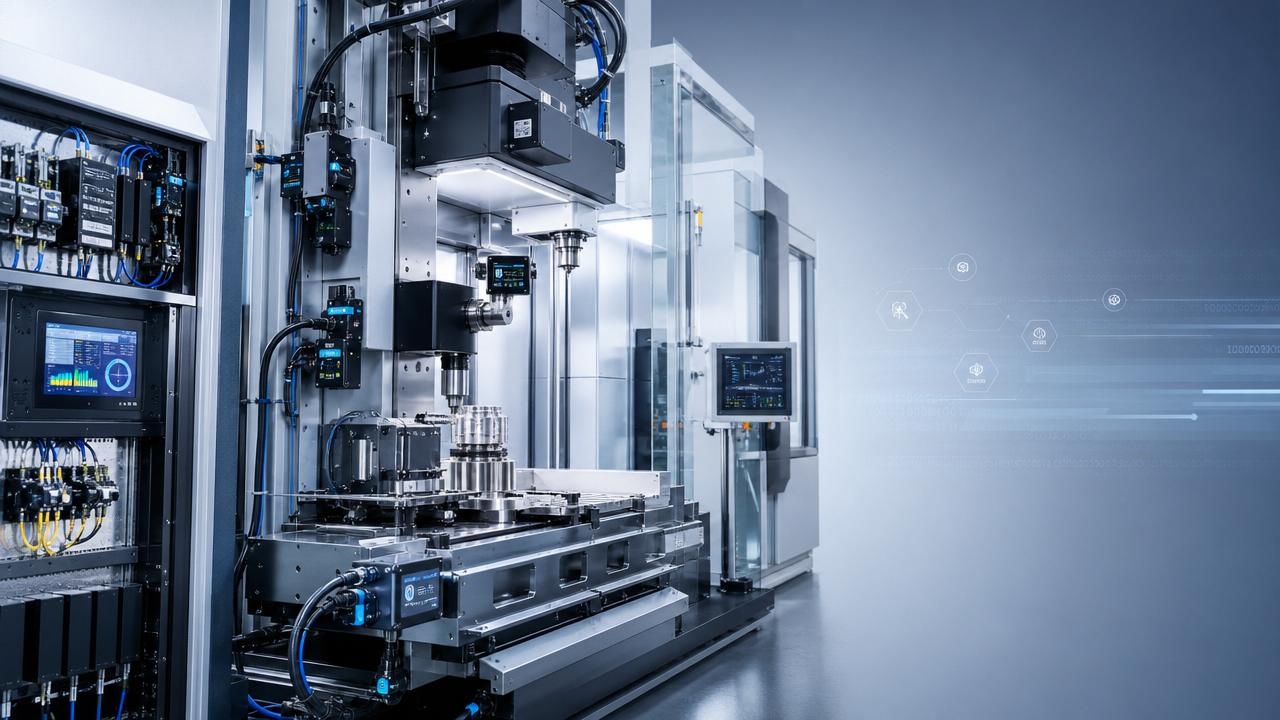
Industrial digitalization creates real value only when data is usable, connected, and actionable across the production chain. For business decision-makers, this means turning fragmented information from tools, components, and manufacturing systems into insights that improve efficiency, compliance, and market responsiveness. In today’s competitive industrial landscape, usable data is no longer a technical advantage—it is a strategic foundation for smarter growth.
Why industrial digitalization often underdelivers in real operations
Many companies invest in sensors, MES platforms, ERP upgrades, or connected equipment, yet still struggle to convert industrial digitalization into measurable business value. The core problem is rarely the lack of data. It is the lack of usable data.
In manufacturing, hardware, electrical, and mold-related operations, information often sits in separate islands. Machine status may live in one system, tool wear history in another, quality records in spreadsheets, and supplier specifications in email threads. Decision-makers then receive reports that are delayed, incomplete, or difficult to compare.
That gap matters because production decisions are rarely isolated. A fastener selected for corrosion resistance affects procurement cost, assembly performance, compliance exposure, and downstream maintenance. A mold change for cycle-time reduction influences material behavior, scrap rate, and delivery schedules. Industrial digitalization works best when such data can be linked, interpreted, and acted on quickly.
- Data is collected without a clear decision use case, so dashboards look active but do not guide action.
- Technical data lacks business context, making it hard for executives to connect plant data to margin, lead time, or risk.
- Component-level information is inconsistent, especially across suppliers, regions, and standards.
- Teams cannot trust the data enough to base sourcing, compliance, or scheduling decisions on it.
What usable data means in an industrial context
Usable data is not just machine-readable. It is decision-ready. It should be structured, current, comparable across sources, and tied to operational outcomes. For enterprise leaders, this means data that can answer practical questions: Which tooling option lowers total cost per output? Which electrical component meets regional compliance needs? Which mold process variable is causing repeat defects?
This is where specialized industrial intelligence becomes critical. Broad digital systems can process large volumes of information, but they do not automatically understand cutting performance, pneumatic logic behavior, mold wear patterns, or international electrical compliance implications. Usability depends on industrial interpretation.
Where usable data creates the strongest business impact
The value of industrial digitalization becomes clearer when tied to high-impact operational scenarios. In complex supply chains, data usability is most important where speed, precision, and accountability must align.
Application scenarios that matter to decision-makers
The following table shows where usable data supports stronger decisions across industrial components, tooling, electrical systems, and mold manufacturing.
For business leaders, the lesson is direct: industrial digitalization should begin where bad data has the highest cost. That cost may appear as scrap, slow approvals, overstock, failed audits, delayed launches, or weak supplier control.
Why component-level visibility matters
Executives often focus digital transformation budgets on large systems first. That is understandable. Yet many recurring disruptions begin at the component and tooling level. Small deviations in insert wear, connector specification, or pneumatic response can multiply across an entire line.
GHTN’s sector focus is especially relevant here. By following the granular core of industry—from mechanical tools to electrical hubs to mold design details—it becomes easier to connect process data with actual manufacturing logic. This supports more reliable interpretation than generic reporting alone.
How to judge whether your industrial data is truly usable
Not all digital maturity models help procurement and operations leaders make better choices. A practical evaluation should test whether data can support action across sourcing, production, quality, and compliance.
A decision-oriented evaluation checklist
- Can engineering, procurement, and plant teams access the same component and process definitions without manual rework?
- Can the business compare suppliers using equivalent technical fields, not just price sheets?
- Can quality deviations be traced to tooling, material batch, settings, or maintenance timing within a useful decision window?
- Can compliance-related information be checked early, before shipment or market-entry delays occur?
- Can management link operational data to cost, risk, throughput, and customer responsiveness?
If the answer is no to several of these questions, the priority is not more data collection. The priority is better data structure, stronger taxonomy, and more reliable industrial interpretation.
Comparison: connected data vs usable data
Industrial digitalization is often described as connectivity. In reality, connectivity is only the first step. The table below highlights the difference between data that is merely connected and data that is actually usable.
This distinction is critical for executives approving digital budgets. Systems that connect everything but clarify nothing rarely sustain internal support. Usable data, by contrast, improves confidence in daily and strategic decisions.
What enterprise buyers should prioritize before investing further
For procurement leaders and cross-functional decision-makers, the next phase of industrial digitalization should be selective, not expansive. The goal is to strengthen data quality at the points where purchasing choices affect operational continuity.
Procurement and selection priorities
- Define critical data fields before comparing suppliers. For example, ask for load conditions, material grade, tolerance, service environment, and documentation scope, not just unit price.
- Separate must-have compliance needs from optional features. This avoids overbuying in low-risk applications and under-specifying in regulated ones.
- Check whether component data can travel downstream into quality, maintenance, and service systems without manual translation.
- Review lead-time sensitivity. A technically ideal component may still be a poor decision if it creates supply bottlenecks or regional availability risks.
A practical selection table for digital-ready industrial sourcing
When buyers assess components, tools, or process-supporting suppliers under an industrial digitalization strategy, the evaluation should include more than technical fit and price.
This framework helps decision-makers compare options on total operational value, not just initial purchase cost. It also creates a stronger foundation for digital traceability and scalable supplier collaboration.
Standards, compliance, and the hidden cost of unusable data
In many industrial sectors, poor data usability becomes most visible during audits, export preparation, product qualification, or customer approval cycles. Teams may technically have the required information, but if it is inconsistent, outdated, or difficult to verify, the business still absorbs delay and risk.
This is especially important for electrical systems, safety-related components, and tooling used in regulated production environments. Decision-makers should treat compliance data as an operating asset, not as a document archive. Relevant references may include ISO-based quality processes, regional electrical requirements, material declarations, and customer-specific traceability expectations.
Common risk signals
- The same component is described differently across sourcing, engineering, and quality teams.
- Supporting records cannot be matched to the current revision or approved supplier batch.
- Market-entry documentation is checked late, after purchase commitments are already made.
- Maintenance and failure data are not linked back to material or tooling choices.
Industrial digitalization reduces these risks only when information is governed with enough precision to support traceability, engineering change control, and supplier accountability.
FAQ: practical questions leaders ask about industrial digitalization
How should a company start if data is scattered across many systems?
Start with one high-cost decision chain rather than a full enterprise rollout. Good starting points include tooling life management, export-compliant electrical sourcing, or mold defect reduction. Map the current data sources, identify repeated manual handoffs, and standardize the fields that directly affect decisions. Early wins come from reducing ambiguity, not from collecting more signals.
Which teams should own usable data in industrial digitalization?
Ownership should be shared, but not vague. Engineering defines critical technical attributes. Procurement manages supplier-facing consistency. Quality validates traceability and control requirements. Operations confirms whether the data improves plant execution. Senior leadership should align these functions around business outcomes such as lower scrap, faster approvals, shorter lead times, and stronger compliance readiness.
What is the most common mistake in digital transformation for industrial businesses?
The most common mistake is treating all data as equally useful. In practice, a smaller set of well-defined, trusted industrial data often creates more value than a much larger volume of disconnected information. Another frequent mistake is ignoring component-level intelligence, even though many quality and downtime issues begin there.
How does usable data improve sourcing decisions?
It allows buyers to compare equivalent specifications, understand lifecycle implications, anticipate compliance demands, and identify delivery risks earlier. This shifts sourcing from reactive price comparison to informed total-value evaluation. In industrial digitalization, the best procurement decisions are usually made before a problem reaches production.
Why GHTN is a practical resource for decision-makers
For enterprise leaders, industrial digitalization becomes more effective when supported by domain-specific intelligence. GHTN focuses on the underlying industrial components and precision manufacturing tools that shape performance at the operational level. That matters because strategic outcomes often depend on granular decisions.
Its coverage across mechanical tools, electrical hubs, mold manufacturing, fasteners, and pneumatic logic helps decision-makers connect technical details with procurement timing, manufacturing efficiency, and market-entry considerations. Instead of treating industrial parts as background items, GHTN examines how they influence the broader production system.
This perspective is valuable for OEMs, distributors, and industrial SMEs that need better visibility from material selection to commercialization. When industrial data must support decisions rather than just reporting, a specialized network with technical depth can shorten evaluation cycles and improve judgment quality.
Why choose us and what you can discuss with us
If your industrial digitalization program is generating data but not enough decision clarity, GHTN can help you focus on the technical details that materially affect procurement, production, and compliance. Our strength is not broad generic commentary. It is the ability to connect industrial part intelligence with practical business decisions.
- Parameter confirmation for components, tooling, and process-related specifications that influence selection accuracy.
- Product and solution selection guidance for mechanical tools, electrical components, mold-related applications, and supporting industrial parts.
- Lead time and supply planning discussions when delivery windows are tight or regional sourcing conditions vary.
- Customized information support for application scenarios, material choices, tooling trade-offs, and market-entry considerations.
- Compliance and documentation review needs, especially where technical data must align with customer or export requirements.
- Sample support and quotation communication when you are narrowing options and need faster evaluation.
For decision-makers under pressure to improve responsiveness without increasing avoidable risk, usable data is the real engine of industrial digitalization. If you need sharper visibility into parts, tools, specifications, and industrial trade insights, GHTN offers a more targeted starting point for informed action.
Related News
- industrial components
- precision manufacturing tools
- mechanical tools
- electrical components
- mold manufacturing
- fasteners
- electrical systems
- mold design
- material selection
- trade insights
- industrial intelligence
- industrial parts
- electrical hubs
- industrial digitalization
- electrical compliance
- manufacturing tools
- manufacturing logic