
Why niche manufacturing is gaining ground in 2026

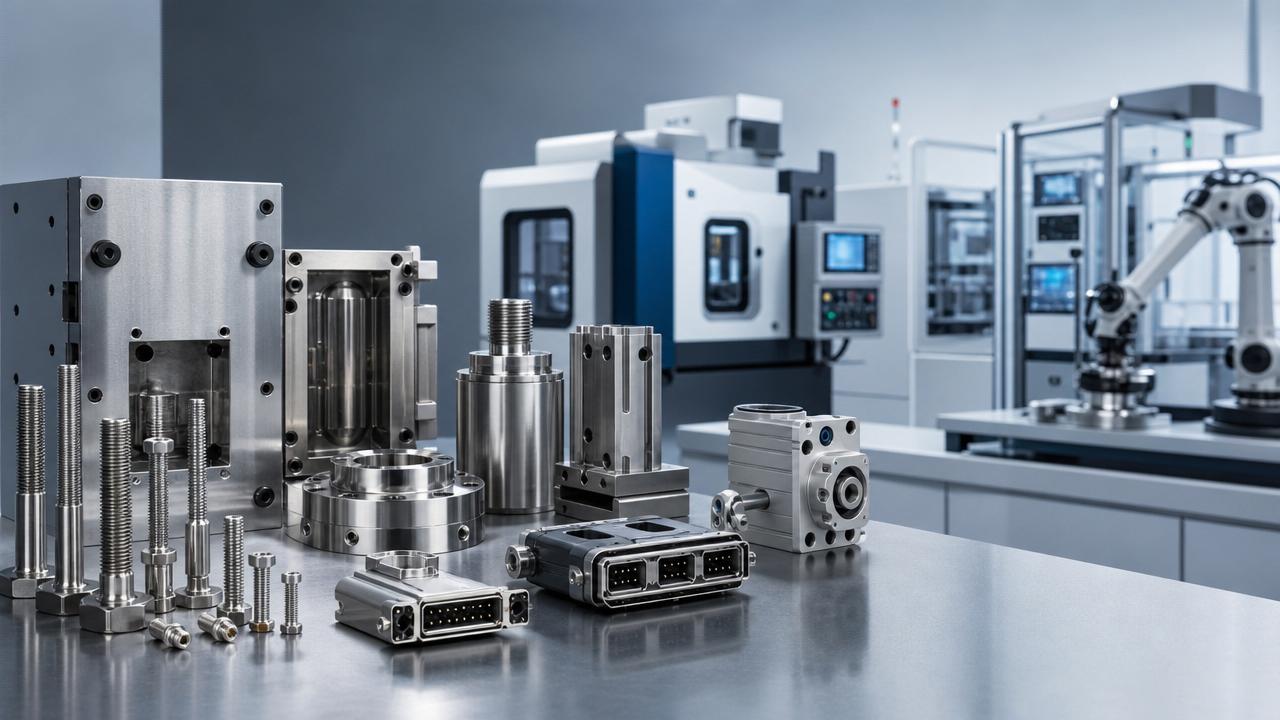
In 2026, niche manufacturing is moving from a specialist topic to a strategic priority. Global buyers increasingly value resilience, customization, and technical accuracy over sheer production volume.
This shift is reshaping sourcing logic across hardware, electrical systems, tooling, molds, fasteners, and automated production components. It also changes how industrial value is created and defended.
For industrial supply chains, niche manufacturing offers more than flexibility. It creates room for higher margins, lower failure risks, faster design response, and stronger alignment with exact application demands.
GHTN tracks this movement closely because precision components often determine the real performance of complex systems. In many sectors, the smallest part drives the biggest operational outcome.
What does niche manufacturing mean in 2026?
Niche manufacturing refers to specialized production focused on narrow applications, strict tolerances, difficult materials, or demanding operating environments. It is not simply small-scale manufacturing.
In 2026, niche manufacturing usually combines deep process knowledge with targeted engineering capability. The value comes from precision, repeatability, compliance, and problem-solving depth.
Examples include corrosion-resistant fasteners for offshore systems, high-cycle molds for engineering plastics, custom pneumatic assemblies for automated lines, and tooling optimized for hard-to-machine alloys.
Unlike mass manufacturing, niche manufacturing often starts with a performance question. The supplier is expected to understand why a part fails, how a process drifts, or where hidden efficiency can be unlocked.
- Tighter tolerances and stricter validation
- More material and process specialization
- Smaller batches with higher value density
- Longer technical collaboration before production
- Greater importance of standards and traceability
Why is niche manufacturing gaining ground now?
Several forces are pushing niche manufacturing forward in 2026. The first is supply chain resilience. Large-volume suppliers can still struggle when disruptions affect transport, energy, or regional regulations.
Specialized producers often operate with narrower but more controlled process windows. That helps maintain consistency when requirements are too specific for generic sourcing models.
The second force is product complexity. Equipment now integrates electronics, software, advanced materials, and tighter mechanical interactions. Standard parts cannot always support these performance thresholds.
The third driver is customization economics. Digital machining, simulation, process monitoring, and modular tooling have made lower-volume specialization more commercially viable than before.
Regulatory pressure also matters. Electrical compliance, environmental targets, and documented quality systems increasingly reward suppliers that can prove process control at a detailed level.
At the market level, buyers want fewer surprises. Niche manufacturing reduces the risk of hidden mismatch between component design and real operating conditions.
Key 2026 growth drivers behind niche manufacturing
Which industries and applications benefit most from niche manufacturing?
Niche manufacturing is especially valuable where failure costs are high, operating conditions are harsh, or design constraints are unusual. These conditions appear across many industrial sectors.
In hardware, specialized fasteners, inserts, and structural elements must survive vibration, temperature swings, corrosion, and repeated assembly cycles without losing integrity.
In electrical systems, connectors, housings, terminals, and insulation-related components often need precise compliance alignment. Small deviations can cause safety or performance issues.
In tooling and mold production, niche manufacturing supports complex cavities, superior surface finish, shortened cycle times, and better wear resistance across long production runs.
Automation systems also rely on niche manufacturing. Pneumatic valves, brackets, sensor mounts, and precision-machined interfaces must work reliably under repetitive, tightly controlled motion.
- High-performance industrial hardware
- Electrical and control assemblies
- Injection mold and die-casting tooling
- Automotive subcomponents
- Energy, marine, and outdoor equipment parts
- OEM spare parts with low-volume demand
How is niche manufacturing different from mass manufacturing?
Mass manufacturing is optimized for repeat scale, low unit cost, and standardized output. Niche manufacturing is optimized for exact performance under defined technical conditions.
The difference is not only batch size. It also includes engineering input, material qualification, change responsiveness, and depth of process verification.
In mass production, the part usually adapts to the process. In niche manufacturing, the process is often adapted to the part and its final use case.
This can increase unit pricing, yet lower total ownership cost. Better durability, fewer defects, and reduced downtime often outweigh a higher purchase price.
Quick comparison
How can you judge whether a niche manufacturing partner is the right fit?
A strong niche manufacturing partner should show process discipline, not just marketing claims. The first checkpoint is application understanding.
Ask whether the supplier can explain material behavior, tolerance risks, tool wear patterns, failure modes, and validation steps in your actual operating environment.
The second checkpoint is evidence. Look for inspection systems, sample documentation, test records, traceability methods, and familiarity with relevant international standards.
The third checkpoint is engineering responsiveness. Niche manufacturing often requires fast iteration during prototyping, approval, and early production transfer.
Capacity matters too, but the question is different. The goal is not maximum volume. The goal is stable delivery within a specialized process window.
Practical evaluation checklist
- Can the supplier define the critical-to-function dimensions?
- Do they recommend suitable materials with clear trade-offs?
- Can they support prototypes and controlled pilot runs?
- Is their quality system appropriate for the application risk?
- Do they understand export, safety, and compliance requirements?
- Can they communicate process limitations honestly?
What risks and misconceptions should be avoided in niche manufacturing?
One common mistake is assuming niche manufacturing is always expensive. Unit prices may rise, but lifecycle economics often improve through fewer failures and longer service intervals.
Another misconception is that specialization means fragile capacity. In reality, many niche manufacturing operations are highly stable because they focus on controlled variables.
A more serious risk is under-specification. If technical requirements are vague, even a capable specialized supplier may optimize for the wrong target.
There is also the risk of over-customization. Not every part needs a bespoke solution. The strongest programs balance standardization with targeted specialization.
Lead time should be discussed early. Niche manufacturing may involve tooling validation, sample approvals, or material sourcing steps that differ from catalog purchasing.
FAQ summary table
What should be done next as niche manufacturing expands in 2026?
The rise of niche manufacturing signals a broader industrial change. Competitive advantage now depends less on scale alone and more on precision, adaptability, and application knowledge.
The most effective next step is to review where specialized production can reduce hidden costs. Focus on components linked to failure rates, compliance pressure, or performance bottlenecks.
Document exact functional requirements before requesting quotations. Clear drawings, tolerance priorities, material expectations, and usage conditions improve outcomes in niche manufacturing.
GHTN supports this process by connecting industrial decision-making with deeper technical and trade insight. In sectors built on precision parts, better information creates better sourcing choices.
As niche manufacturing gains ground, the strongest results will come from partnerships built on measurable performance, not generic capacity claims. Linking precision remains the most practical path to durable industrial value.
Related News