
Why the tooling industry is changing faster now

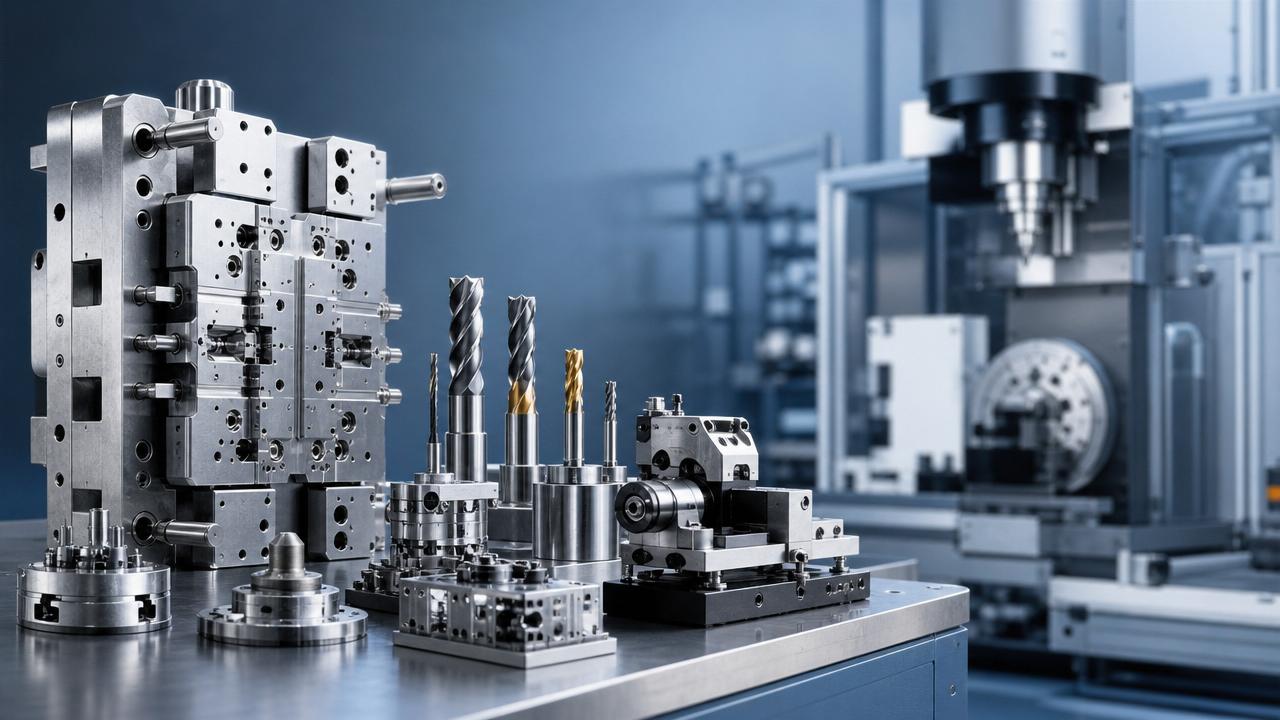
The tooling industry is changing faster now as global manufacturing faces sharper cost pressure, stricter standards, and rising demand for precision.
This acceleration affects component quality, delivery speed, compliance, and long-term competitiveness across industrial supply networks.
For market participants, the tooling industry now demands better technical judgment, closer supplier visibility, and stronger response to shifting demand.
GHTN tracks these movements across hardware, electrical systems, and mold manufacturing, linking precision with practical trade intelligence.
What the tooling industry includes today
The tooling industry covers the tools, molds, dies, fixtures, fasteners, and process-support components behind modern manufacturing.
It supports automotive, electronics, construction, energy, medical devices, household equipment, and industrial automation.
In practical terms, the tooling industry shapes how accurately materials are cut, formed, joined, tested, and assembled.
Its performance influences product consistency, cycle time, equipment uptime, maintenance cost, and compliance outcomes.
Core segments inside the tooling industry
- Cutting tools for machining, drilling, milling, and finishing.
- Molds and dies for injection, stamping, forging, and die-casting.
- Jigs, fixtures, and gauges for alignment, holding, and inspection.
- Fasteners and mechanical parts for secure structural integration.
- Pneumatic and electrical tooling elements for automated production lines.
Why the tooling industry is changing faster now
Several forces now overlap, causing the tooling industry to evolve faster than in previous cycles.
These forces are technological, commercial, regulatory, and operational at the same time.
Major change drivers
The tooling industry also faces faster product refresh cycles in downstream sectors such as electronics and new energy systems.
That shortens tooling validation windows and raises the importance of agile engineering support.
Current signals shaping the tooling industry
Recent market signals show that the tooling industry is moving toward deeper specialization rather than simple volume expansion.
Performance data, lifecycle value, and compliance readiness now carry more weight than unit price alone.
Signals worth watching
- Advanced coatings improve durability under heat, friction, and corrosive conditions.
- Special alloys and engineered steels support lighter structures and harder materials.
- Smart maintenance tools reduce unplanned downtime through condition tracking.
- Micro-precision mold design supports miniaturized electronics and compact assemblies.
- Electrical tooling components must align with changing international safety expectations.
- Greener production increases attention to material waste, energy use, and tool longevity.
For the tooling industry, these signals indicate a market where engineering credibility and responsive service increasingly determine value.
Business value created by a faster-moving tooling industry
A changing tooling industry does not only create disruption. It also opens better pathways for differentiation and stronger market positioning.
Better tooling decisions often improve yield, reduce rework, extend maintenance intervals, and support premium pricing.
Where value appears most clearly
In the tooling industry, small gains in reliability often create outsized commercial advantages across the wider production chain.
Typical application paths across industrial segments
The tooling industry serves different sectors through distinct performance priorities, validation methods, and delivery expectations.
Representative application categories
This variety explains why the tooling industry now rewards niche expertise and application-specific insight more than broad generic inventory.
Practical considerations when evaluating tooling industry changes
Faster change in the tooling industry requires disciplined evaluation, not reactive switching based only on price or trend language.
Useful checkpoints
- Check material specifications against the real operating environment.
- Review coating, hardness, and wear data with application context.
- Confirm dimensional consistency and repeatability over production batches.
- Assess supplier documentation for testing, traceability, and standards alignment.
- Compare total lifecycle value, not only initial purchase cost.
- Track lead times, engineering response speed, and after-sales problem resolution.
In the tooling industry, weak validation often leads to hidden losses through downtime, scrap, compliance issues, and unstable field performance.
How informed market intelligence supports better decisions
Because the tooling industry is increasingly technical, decision quality depends on reliable intelligence as much as on product availability.
GHTN approaches the tooling industry through component-level analysis, expert interpretation, and cross-market visibility.
Its coverage spans mechanical tools, electrical hubs, mold manufacturing, fastener performance, and pneumatic logic in automated environments.
That perspective helps connect micron-level design changes with broader trade, sourcing, and market-entry implications.
Next-step priorities for navigating the tooling industry
The tooling industry is changing faster now because manufacturing itself is becoming more connected, precise, regulated, and time-sensitive.
Those shifts make technical depth, supply resilience, and application fit central to long-term performance.
A practical next step is to map high-risk product categories, review current tooling specifications, and compare them with emerging standards and market needs.
Following expert-led tooling industry analysis can also reveal overlooked opportunities in premium components, precision molds, and compliant electrical tooling systems.
With the right intelligence, faster change in the tooling industry becomes a basis for stronger selection, better margins, and more durable industrial positioning.
Related News